
We’ve all been there: the frantic search for fresh AAAs as the remote dies mid-show, or the dreaded ‘low battery’ warning on a critical wireless mouse. For decades, our solution has been a choice between an endless stream of single-use alkalines, destined for the landfill, or the often-clunky world of traditional rechargeables, complete with their proprietary chargers and dedicated slots that invariably go missing. It was a compromise, never a true solution, often leading to frustration and contributing to growing electronic waste.
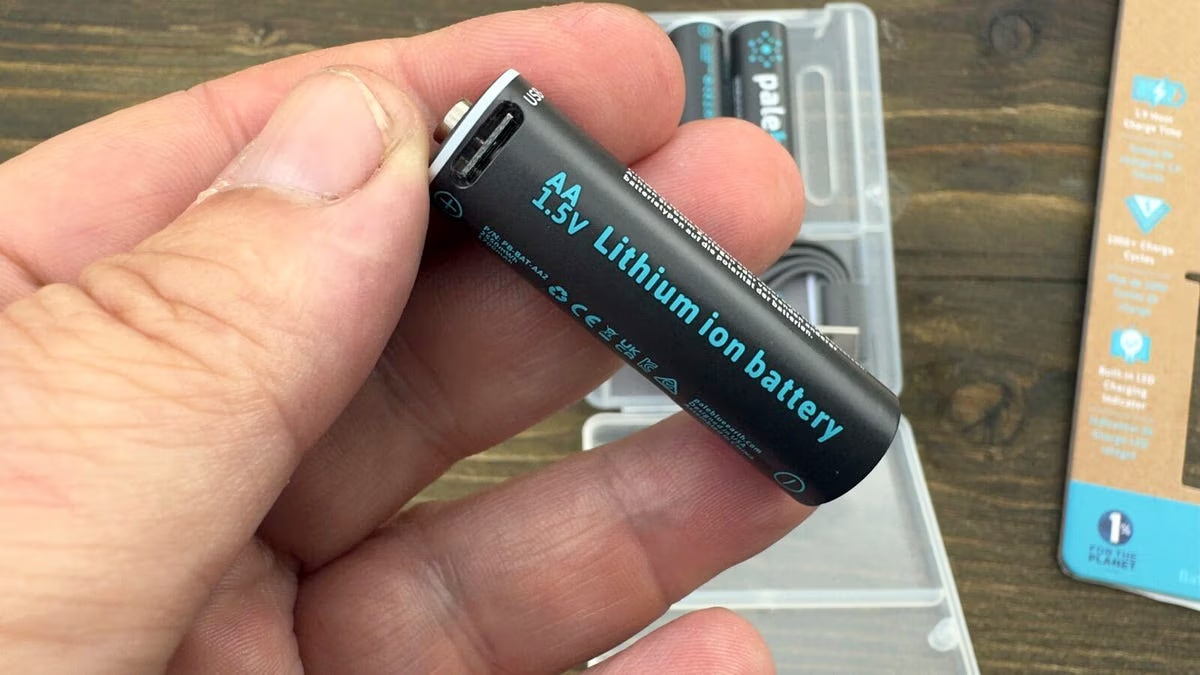
The landscape of personal power is undergoing a dramatic transformation, however, largely thanks to a connector we’ve all come to love and rely on: USB-C. Forget the bulky, single-purpose charging stations of old that often became another piece of forgotten tech clutter. The latest wave of rechargeable batteries, particularly the ever-present AA and AAA sizes, are now sporting integrated USB-C ports. This isn’t just a minor tweak or a niche product; it’s a fundamental paradigm shift that promises to finally make rechargeable batteries a no-brainer for the everyday consumer, fundamentally altering our relationship with portable power and simplifying our lives.

The Ubiquity Advantage: Why USB-C Rechargeable Batteries are Different Now
The timing of this innovation, especially as we approach 2025, is incredibly crucial. It’s all about the sheer ubiquity and seamless integration of USB-C across our digital lives. What started as a promising standard for our smartphones and laptops has rapidly evolved into the universal connector for power delivery and data transfer across an ever-expanding array of devices. From tablets and smartwatches to headphones, portable speakers, and external hard drives, USB-C is everywhere. This widespread adoption means the very same cable you use to juice up your smartphone can now effortlessly breathe new life into your TV remote, your wireless keyboard, your critical wireless mouse, your gaming controller, or even your kid’s favorite battery-powered toy.
The friction points that once made traditional rechargeable batteries a ‘sometimes’ convenience – the need for a specific, often lost, charger, or dedicated wall warts taking up precious outlet space – are rapidly disappearing. Imagine no more rummaging through that infamous ‘junk drawer’ for a proprietary charger that only fits one type of battery, only to find the battery dead anyway. The “battery drawer” of the future won’t be a graveyard of dead cells and forgotten charging docks, but rather a hub of perpetually ready power, easily topped off with the same universal infrastructure we use for everything else. This streamlined approach saves time, reduces frustration, and makes the decision to go rechargeable an easy, almost thoughtless one.
Seamless Integration into Your Digital Ecosystem
The true power of USB-C lies in its versatility and intelligence. It supports various power delivery profiles, allowing for efficient and often faster charging compared to older, less standardized methods. This means that a USB-C rechargeable battery can intelligently draw the optimal power from whatever source it’s connected to, whether that’s a high-wattage laptop charger, a standard phone adapter, a portable power bank, or even a USB-C port on your computer. This level of compatibility ensures that wherever you have access to a USB-C port – which is virtually everywhere these days, from your home to your car to your office – you have a convenient and ready charging solution for your batteries.
Consider the modern home or office setup. Most desks feature USB-C hubs, monitors with integrated USB-C ports, or dedicated charging docks for multiple devices. Your vehicle likely has USB-C ports for charging on the go. Even smart home devices and appliances are beginning to adopt the standard. This means that topping up your batteries becomes an incidental action, seamlessly woven into your daily routine rather than a separate, tedious chore. Just plug it in where you’d charge your phone, leave it for a bit, and you’re good to go. This unparalleled convenience factor alone is powerful enough to convert even the most hesitant consumers to the rechargeable revolution, making single-use batteries feel truly archaic.
Future-Proofing Your Power Needs with USB-C Batteries
The widespread standardization of USB-C also offers a significant degree of future-proofing for your power solutions. As technology continues to evolve, USB-C is unequivocally set to remain the dominant connector for the foreseeable future, particularly with global initiatives like the European Union’s common charger mandate reinforcing its position. Investing in USB-C rechargeable AA and AAA batteries now means you’re adopting a system that will remain relevant and compatible for years to come, avoiding the frustrating obsolescence often associated with proprietary charging solutions and unique battery types. This long-term thinking makes these batteries not just a convenient choice, but a genuinely smart economic and environmental investment for any tech-savvy individual or household.
Beyond Convenience: A Sustainable Shift for a Greener Planet
The implications of USB-C rechargeable batteries stretch far beyond just saving a few bucks and decluttering our tech lives. Imagine a world where your ‘dead battery’ crisis is solved not by rummaging for new disposables, but by simply plugging your AA into your laptop’s port for a quick boost, or into any available USB-C power adapter. This future is not only more convenient and efficient but also significantly more sustainable, offering a tangible solution to a pervasive and growing environmental problem.
The environmental toll of billions of discarded single-use batteries is staggering. Each alkaline battery represents a significant investment in raw materials (like zinc, manganese, and steel), manufacturing energy, and eventual waste that often ends up in landfills. According to some estimates, billions of alkaline batteries are purchased globally each year, with a substantial portion not being recycled due to lack of accessible infrastructure or consumer knowledge. These batteries can leach toxic heavy metals and chemicals into the environment as they degrade, posing long-term risks to soil, water, and wildlife. USB-C rechargeable batteries offer a tangible, accessible way for everyone to significantly reduce their ecological footprint without sacrificing an ounce of convenience.
Reducing Waste and Resource Consumption with Rechargeable Power
By opting for USB-C rechargeable batteries, consumers can drastically cut down on the volume of battery waste generated. A single quality rechargeable battery can replace hundreds, if not thousands, of single-use batteries over its lifespan, effectively multiplying its value and environmental benefit. This translates directly to fewer raw materials needing to be extracted from the earth, less energy consumed in manufacturing and transportation, and significantly less toxic waste accumulating in landfills. These integrated USB-C batteries remove a significant barrier to entry for eco-conscious consumption: the perceived hassle. When sustainable choices are also the easiest choices, widespread adoption becomes not just possible, but highly probable and genuinely impactful.
Moreover, this simple innovation accelerates the broader trend towards a more streamlined, less cluttered tech existence. Fewer specialized chargers and power bricks means less electronic waste overall. More universal compatibility leads to greater efficiency and less reliance on disposable items. It’s a win for minimalism and practicality, encouraging us to rethink our relationship with disposable power sources and embrace a smarter, more resilient energy cycle. This aligns perfectly with the growing global movement towards sustainable living and responsible consumption, making it easier for individuals to make a positive impact without drastically altering their daily habits.
Economic Benefits and Long-Term Value of USB-C Rechargeable Batteries
While the initial cost of USB-C rechargeable batteries might be slightly higher than a large pack of single-use alkalines, the long-term economic benefits are undeniable and substantial. Over their lifespan, these batteries pay for themselves many times over, offering significant savings. No more weekly or monthly trips to the store for replacement packs, which often feel like a hidden, recurring expense. For devices that consume a lot of power, such as wireless gaming controllers, high-power flashlights, remote-controlled vehicles, or children’s electronic toys, the savings can add up dramatically within a single year. This makes them not just an environmentally friendly choice, but also a financially savvy one for households and businesses alike, providing excellent long-term value.
Choosing the Right USB-C Rechargeable Batteries for Your Needs
As the market for USB-C rechargeable batteries expands and matures, you’ll find various options available, primarily in AA and AAA sizes, with different capacities and chemistries. Most commonly, they use Nickel-Metal Hydride (NiMH) technology, but increasingly, you’ll find Lithium-ion (Li-ion) versions for higher energy density and longer life. When selecting your USB-C rechargeable batteries, consider the following key factors:
- Capacity (mAh): The milliamp-hour (mAh) rating indicates how much charge the battery can hold. Higher mAh ratings generally mean longer run times between charges. Match the capacity to your device’s power requirements; high-drain devices benefit from higher mAh.
- Chemistry: NiMH batteries are common, affordable, and excellent for most everyday uses, offering good cycle life. Li-ion batteries typically offer higher voltage (often 1.5V, mimicking alkalines), higher energy density, and can sometimes provide more consistent power output, but may have a higher initial cost.
- Brand Reputation: Always stick to reputable brands known for quality control, safety, and reliability. This ensures you’re getting a durable product that performs as advertised and, importantly, is safe to use.
- Charging Speed: While USB-C generally offers efficient charging, the actual speed will depend on the battery’s internal design and the power output of your charging source. Some batteries may offer faster charging features.
- Indicator Lights: Many USB-C rechargeable batteries feature small LED indicator lights to show charging status (e.g., red for charging, green for full), adding to the user-friendly experience.
Making the switch is as simple as purchasing a few packs of these innovative batteries and integrating them into your existing USB-C charging routine. The convenience alone will quickly make you wonder how you ever managed without them.
The Future is Here: Powering a Smarter, Greener World
So, when the question arises in 2025 – “should I buy rechargeable batteries?” – the answer, thanks to the humble yet mighty USB-C, is a resounding and emphatic yes. We’re finally moving from a world of ‘maybe later’ or ‘too much hassle’ to ‘why not now?’ The future of portable power is universal, incredibly convenient, economically advantageous, and refreshingly simple. It’s a powerful win for our wallets, our daily convenience, and most importantly, our planet, offering a straightforward path to a more sustainable tech lifestyle.
You can read more about this innovative shift and a review of specific models at ZDNet’s original story on USB-C rechargeable batteries.
What are your thoughts on this significant shift in battery technology? Do you plan to switch to USB-C rechargeable batteries for your home electronics, or have you already made the change and experienced the benefits firsthand?