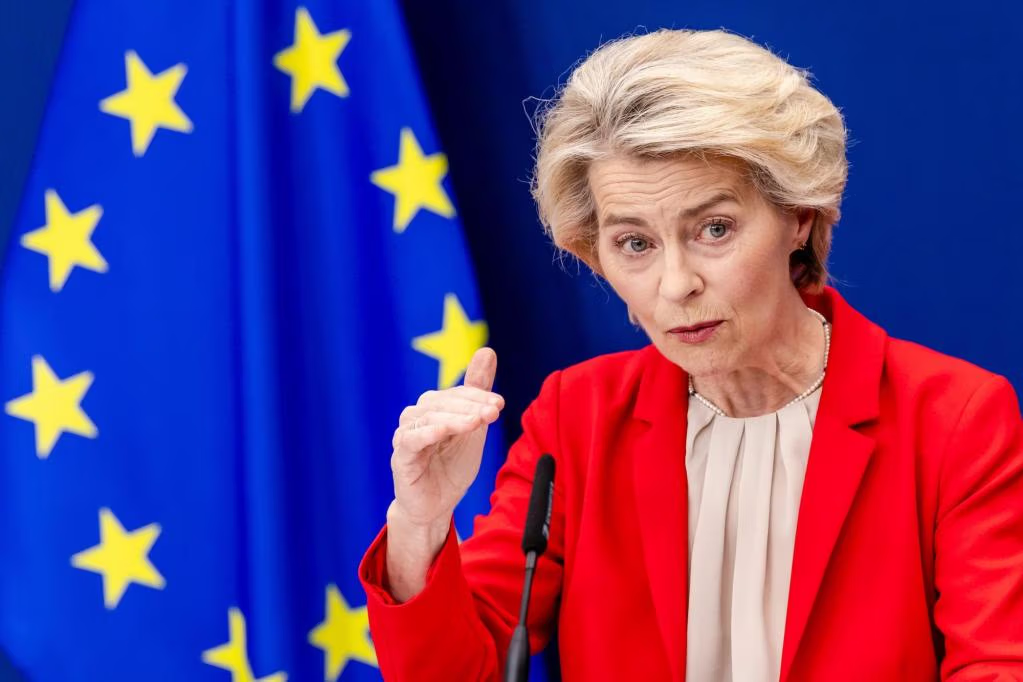
The geopolitical chessboard is shifting, the global economy is in flux, and the planet is demanding action. Against this backdrop, Ursula von der Leyen’s recent address, outlining the European Union’s strategic direction, wasn’t just another political speech. It was a critical blueprint for how Europe intends to navigate its most profound challenges, and for us in the tech sphere, it’s clear: the future of European innovation, digital leadership, and technological resilience is being forged right now.
Forget the dry policy talk for a moment. What this moment signifies is a concerted effort to define Europe’s role in a rapidly evolving world, with technology as both a core challenge and an indispensable solution. Europe’s digital future is at a crossroads, where strategic decisions made today will determine its standing on the global tech stage for decades to come.

The Geopolitical Tech Chessboard: Autonomy in the Digital Age
One of the most pressing undercurrents of the past few years has been the urgent need for strategic autonomy. From the devastating war on its doorstep to the delicate dance of global supply chains, Europe is keenly aware of its vulnerabilities. The reliance on external tech giants and the fragmented nature of its digital ecosystem have highlighted significant weaknesses that must be addressed head-on. For the tech sector, this translates into a powerful imperative: resilience.
This pursuit of digital sovereignty goes far beyond merely boosting semiconductor production, though that remains a crucial component. It’s about securing the entirety of Europe’s digital infrastructure, from critical network components to data storage. It involves fostering home-grown cybersecurity capabilities that can withstand sophisticated state-sponsored attacks, ensuring that the fundamental technologies driving our societies—our communications, our energy grids, our financial systems—aren’t exclusively controlled by external powers or vulnerable to geopolitical whims.
Expect to see continued, substantial emphasis on ambitious projects that bolster European cloud solutions, providing secure and compliant alternatives to dominant non-European providers. Significant investments will flow into cutting-edge research in quantum computing, aiming to position Europe at the forefront of the next technological revolution. Furthermore, the development of ethical and trustworthy AI is paramount, not just for competitive advantage but also to ensure that AI systems align with European values. All these efforts are underpinned by a shared vision of reducing dependencies, strengthening a uniquely European digital sovereignty, and ensuring that Europe can control its own technological destiny.
The drive for technological resilience also extends to critical raw materials and manufacturing capabilities for essential digital components. Supply chain diversification, reshoring of key production, and the establishment of robust, crisis-proof industrial ecosystems are all part of this overarching strategy to protect Europe’s digital future.
Greening with Digits: Tech as the Engine of Sustainability
Europe’s ambitious Green Deal isn’t slowing down; if anything, the energy crisis and the undeniable impacts of climate change have only underscored the urgency of its objectives. But achieving climate neutrality isn’t solely about policy and regulation – it’s profoundly about innovation, and here’s where advanced digital technologies truly shine as indispensable tools for sustainability.
We anticipate a renewed and intensified push for smart grid technologies, leveraging advanced AI algorithms and machine learning to optimize energy consumption across entire regions and integrate renewable energy sources more efficiently into national grids. Imagine sophisticated data analytics platforms providing real-time insights for precision agriculture, reducing waste, optimizing resource use, and enhancing food security. Consider the transformative potential of IoT sensors for urban planning, creating smart cities that minimize energy footprints, manage waste effectively, and improve air quality through intelligent traffic management and infrastructure monitoring.
Beyond energy and agriculture, cutting-edge materials science, fueled by digital simulation and AI-driven discovery, will be crucial for developing circular economies, where products are designed for durability, reuse, and recycling, dramatically reducing waste and resource depletion. The investment in green tech isn’t just an environmental imperative; it’s a massive economic opportunity, positioning Europe as a leading innovator and exporter in a global market desperate for sustainable solutions. This strategic direction means more funding, more incentives, and more cross-border collaboration for companies building the tools to decarbonize our world, fostering a sustainable digital future.
From hydrogen technologies to carbon capture and storage, from sustainable mobility solutions to intelligent waste management systems, digital innovation is the thread connecting Europe’s green ambitions to tangible, scalable solutions. This presents a unique opportunity for European tech companies to lead, not just follow, in critical global markets.
Forging a Digital Future (Made in Europe): Beyond Regulation
For a long time, Europe was often seen primarily as a digital regulator – with landmark achievements like GDPR setting global standards for data privacy. While ethical AI, robust data governance, and consumer protection remain paramount (and rightly so), the key takeaway from von der Leyen’s outlook is a clear, decisive ambition to become a digital leader, not just a rule-setter. This pivot is critical for Europe’s long-term prosperity and global competitiveness.
This means fostering a vibrant, competitive ecosystem for European tech champions. We can expect a suite of new initiatives designed to streamline access to capital, significantly improve funding mechanisms for high-growth startups, and provide robust support for scaling European businesses to compete globally. Attracting and retaining top tech talent from around the world, alongside nurturing home-grown expertise, will also be a central pillar of this strategy, with renewed focus on innovation hubs and research excellence.
The conversation will shift further towards how Europe can not only participate but actively compete and win in the global AI race, building on its strengths in industrial data and manufacturing. The focus will be on harnessing Europe’s vast industrial data assets – often siloed but immensely valuable – to drive innovation in sectors like advanced manufacturing, smart logistics, and healthcare. Furthermore, there will be renewed emphasis on building a truly robust and integrated digital single market that genuinely empowers cross-border innovation, removes existing barriers, and creates a unified platform for European businesses to thrive.
This forward-looking approach understands that leadership is built on innovation and execution, not solely on regulation. It’s about creating the conditions for success, providing the infrastructure, and empowering entrepreneurs to build the next generation of world-leading technologies right here in Europe. The future isn’t just about what Europe regulates, but emphatically about what it builds and pioneers.
The Human Element: Skills, Ethics, and Inclusion
Ultimately, none of these grand visions for a digital Europe can materialize without the people who drive innovation and the principles that guide its application. The future of Europe’s digital economy hinges fundamentally on addressing the pervasive skills gap, ensuring genuine digital inclusion for all citizens, and embedding ethical considerations into every layer of technological advancement.
This necessitates substantial, long-term investments in digital education, starting from primary schools and extending through vocational training and university programs. Reskilling and upskilling programs for the existing workforce are vital to prepare individuals for the jobs of tomorrow and to ensure that no one is left behind by rapid technological change. The goal is to create a digitally literate and agile workforce capable of adapting to new technologies and contributing to the digital transformation.
Furthermore, ensuring digital inclusion means bridging the access gap, both in terms of broadband connectivity and digital literacy, for all segments of society, regardless of age, socio-economic status, or geographic location. The benefits of the digital revolution must be broadly shared, not concentrated among a privileged few. This involves designing accessible technologies, promoting affordable access, and providing support for those who need it most.
Finally, Europe’s commitment to ethical AI and human-centric technology remains a cornerstone. As AI becomes more integrated into daily life, questions of bias, transparency, accountability, and privacy become even more critical. Europe aims to lead the world in developing AI that serves humanity, upholds fundamental rights, and operates within clear ethical frameworks. This approach positions Europe as a beacon for responsible technological development, balancing innovation with societal well-being.
A Pivotal Moment
Europe stands at a pivotal juncture. The strategic direction outlined by its leadership underscores a deep and urgent commitment to harness technology not just as a tool, but as a foundational pillar for its resilience, sustainability, and global influence. This isn’t just about adapting to change; it’s about proactively shaping a digital future that reflects European values and empowers its citizens and businesses.
For the tech industry across the continent and for global partners looking to collaborate, this isn’t just news – it’s a clear call to action and a detailed roadmap for where the innovation, investment, and impact will be centered in the coming years. Those who align with Europe’s vision for digital autonomy, green tech leadership, and ethical innovation will find fertile ground for growth and significant opportunities to contribute to a transformative chapter in European history.
What do you believe is the single most critical challenge Europe faces in realizing its ambitious digital future?
Read the original story at Ocregister.