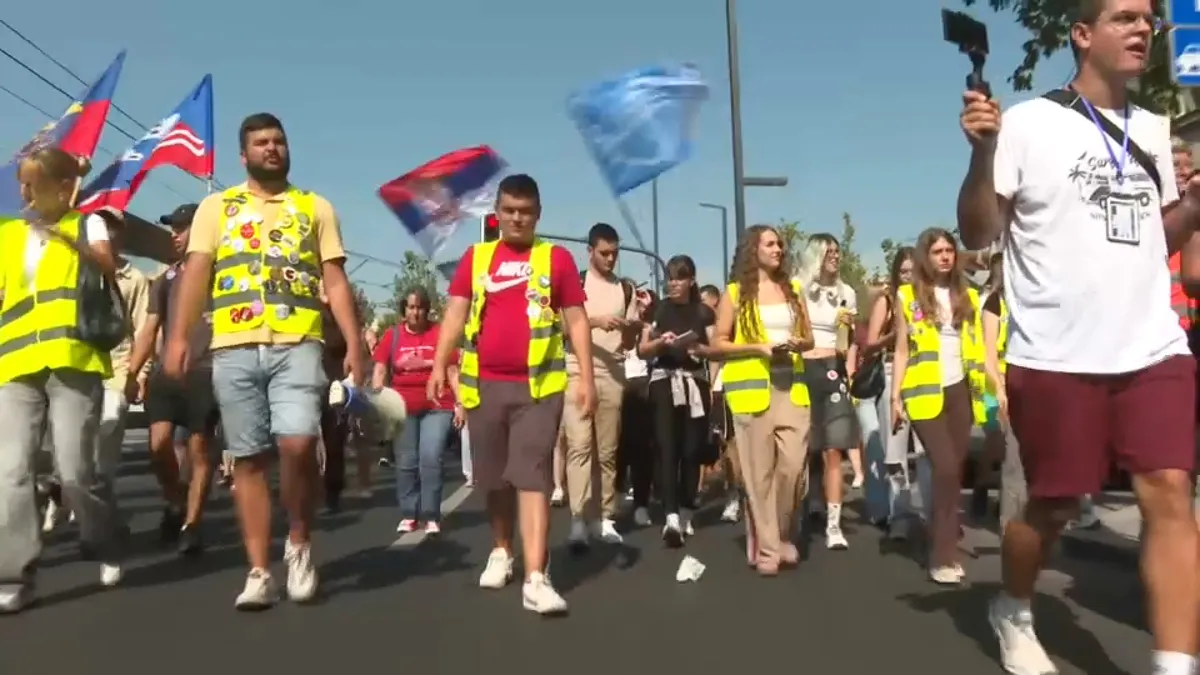
The winter chill of Belgrade’s streets may have faded, but the echoes of the protests that defined it are now reverberating through the corridors of the European Parliament. In a move that is as much a political statement as it is an accolade, the Renew Europe Group has nominated the **Serbian student activists** who led demonstrations against alleged electoral fraud for the prestigious Sakharov Prize for Freedom of Thought. This isn’t just a pat on the back for youthful idealism; it’s a calculated and significant maneuver that elevates a domestic struggle into a continental debate about the future of democracy, directly impacting the perception of **Serbian democracy** on the global stage.
The **Sakharov Prize**, established in 1988, is the European Union’s highest tribute to human rights work. Its previous laureates form a pantheon of global defenders of liberty, from Nelson Mandela and Malala Yousafzai to Alexei Navalny. To place **Serbian student activists** within this revered lineage is to recognize their courage and the profound implications of their stand against alleged **electoral fraud** in Serbia. It signals a shift from mere observation to active endorsement of the pro-democracy movement, highlighting the **Renew Europe Group’s** commitment to fundamental European values and its strategic role in shaping the EU’s foreign policy.

The Key Takeaway: This is European Politics in Action
By putting **Serbian student activists** on the same shortlist as global icons, **Renew Europe** is sending an unmistakable message to the government in Belgrade. This nomination transcends a simple gesture of commendation; it is a meticulously calculated political maneuver designed to exert pressure and draw international attention to the state of **Serbian democracy**. It signals that a powerful bloc within the EU is not only watching the situation in Serbia with keen interest but is actively siding with the pro-democracy movement, providing it with invaluable moral and political capital.
Elevating a Domestic Struggle to a Continental Debate
The immediate impact of this nomination is the internationalization of a domestic issue. What began as local protests in the streets of Belgrade against alleged **electoral fraud** is now formally recognized as a matter of European concern. This act by **Renew Europe** transforms the narrative, moving it from a localized political dispute to a significant discussion within the broader context of European values and the health of democratic institutions across the continent. Such an elevation means the Serbian government can no longer easily dismiss the protests as internal affairs or isolate the activists; their struggle has gained undeniable global resonance.
An Unmistakable Message to Belgrade
The significance of this move as a direct message to President Aleksandar Vučić’s government cannot be overstated. The EU has often been criticized for its cautious diplomacy, but the **Sakharov Prize** nomination is a remarkably unambiguous statement. It implies that the current political climate in Serbia, characterized by allegations of **electoral fraud** and a perceived erosion of democratic norms, is unacceptable to a significant portion of the European Parliament. This is a clear indicator that the EU’s patience with democratic backsliding in aspiring member states is wearing thin, and it underscores the importance of rule of law and transparent governance in the **EU accession** process.
A “Beacon of Hope” for a European Serbia
The group’s statement that the students represent a “beacon of hope” for a European Serbia is a powerful framing that cleverly contrasts two visions for the country. On one hand, there is the vision embodied by the **Serbian student activists**—one based on rule of law, transparent democracy, and genuine alignment with European values. On the other, there is the current political reality, which has drawn consistent criticism from international observers regarding media freedom, judicial independence, and the fairness of elections. This framing positions the students not merely as dissidents but as proponents of the very future the EU purportedly desires for Serbia, linking their aspirations directly to the nation’s European destiny.
From Local Protesters to Symbols of a Pan-European Struggle
The nomination has successfully transformed the **Serbian student activists** from local protesters into symbols of a pan-European struggle for core values. Their demands for transparent elections and accountability echo concerns about democratic integrity found in various forms across the EU and its neighborhood. By elevating them to the shortlist for the **Sakharov Prize**, the **Renew Europe Group** is implicitly suggesting that the challenges faced by **Serbian democracy** are not unique but are part of a broader, ongoing contest to uphold and defend democratic principles against populist and authoritarian tendencies that can threaten any European nation. This makes their cause intrinsically linked to the collective future of European liberal democracy.
What This Means for the Future
The implications of this nomination are profound and will likely shape the next chapter of Serbia’s political journey, potentially altering the dynamics of **EU accession** and domestic political discourse. This act of international recognition sets a new precedent for how the EU engages with democratic movements in candidate countries, making it clear that civil society voices will be heard and amplified in Brussels.
A Massive Boost of Legitimacy and a Shield of International Visibility for Activists
For the **Serbian student activists** and the broader civil society movement, this nomination provides an immeasurable boost of legitimacy and a crucial shield of international visibility. The Serbian government will find it infinitely harder to dismiss, marginalize, or persecute a movement that is being considered for the EU’s highest human rights honor. This international recognition offers a powerful layer of protection against potential crackdowns, making any repressive actions far more costly in terms of international reputation and political consequences. Furthermore, this validation can significantly re-energize civil society within Serbia, offering a renewed sense of purpose and courage to those working for democratic change. It also enhances their access to international forums and support networks, providing resources and platforms they might not otherwise have had.
Direct Pressure on President Aleksandar Vučić’s Government and Complicating Serbia’s EU Accession Path
The nomination serves as a public ledger of the EU’s deep-seated concerns regarding the state of **Serbian democracy**. It places direct, unambiguous pressure on President Aleksandar Vučić’s government, forcing it to confront these issues on an international stage. This move unequivocally complicates Serbia’s **EU accession** path. Brussels is signaling that progress on membership isn’t just about ticking bureaucratic boxes related to chapters and regulations; it’s fundamentally about the health and vibrancy of a nation’s democracy, its respect for rule of law, and the integrity of its electoral processes. As MEP Klemen Grošelj put it, the “struggle” of the students is now being framed as Europe’s struggle, meaning that the EU’s commitment to its own enlargement policy is tied directly to the democratic standards upheld by its prospective members. This adds a critical ethical and political dimension to the technical aspects of negotiations.
Forcing a Conversation About What Kind of Partner the EU Wants
Finally, this moment forces a crucial conversation within the EU about what kind of partner it truly wants to cultivate in its immediate neighborhood, particularly among aspiring members. Is it a Serbia governed by the status quo, where allegations of **electoral fraud** persist and democratic institutions face ongoing challenges? Or is it the Serbia envisioned by the thousands of young people who took to the streets demanding accountability, transparency, and a genuine commitment to European values? The **Sakharov Prize** nomination places this choice squarely in the spotlight, suggesting that for many in Europe, particularly within the influential **Renew Europe Group**, the answer is clear. This internal EU debate could lead to a more assertive and principled approach to enlargement, prioritizing democratic credentials over geopolitical expediency, and setting a higher bar for all candidate countries.
While the **Serbian student activists** may or may not ultimately win the prestigious **Sakharov Prize**, the nomination itself is a monumental victory. It has successfully internationalized their cause, fortified their standing both domestically and abroad, and placed the state of **Serbian democracy** firmly on the European agenda. This isn’t just about an award; it’s about the battle for the soul of a nation, and Europe has just made it clear which side it is on. This critical intervention provides hope and a clear direction for those striving for a more democratic and transparent future in Serbia.
Read the original story at N1.
What do you believe is the most significant long-term impact of this Sakharov Prize nomination on Serbia’s path towards greater democracy and its relationship with the EU?