Washington vs. Brussels: A New Front Opens in the Economic War on Russia
The united front the West has displayed against Moscow since the invasion of Ukraine was always a marvel of modern diplomacy. It represented a rare moment of transatlantic cohesion, designed to inflict maximum economic pain on the Kremlin and cripple its war machine. But as the conflict grinds on, approaching its third year, that remarkable unity is being tested not by Russian tanks on the battlefield, but by a far more complex and insidious challenge: the relentless pressures of the global economy. A significant and growing fissure has emerged across the Atlantic, one that pits American impatience against European pragmatism and threatens to redefine the very nature of the next phase of the economic war against the Kremlin.
At the heart of this intensifying dispute is a simple, yet profoundly difficult question that has vexed policymakers for months: What do you do when your primary sanctions aren’t enough to achieve the desired outcome? When the initial shock-and-awe tactics have settled into a new, uncomfortable equilibrium, and the target of your economic wrath continues to fund its aggression, what further steps can legitimately be taken without inflicting unacceptable collateral damage on the global system?

This escalating disagreement between Washington and Brussels is more than just a minor policy squabble; it reflects fundamental differences in strategic outlook, economic vulnerability, and geopolitical ambition. It’s a debate that could fundamentally alter the West’s approach to global power dynamics, trade relationships, and the delicate art of international diplomacy in an increasingly multipolar world.
Washington’s Hawkish Stance: The Case for Secondary Sanctions Against Russian Oil Buyers
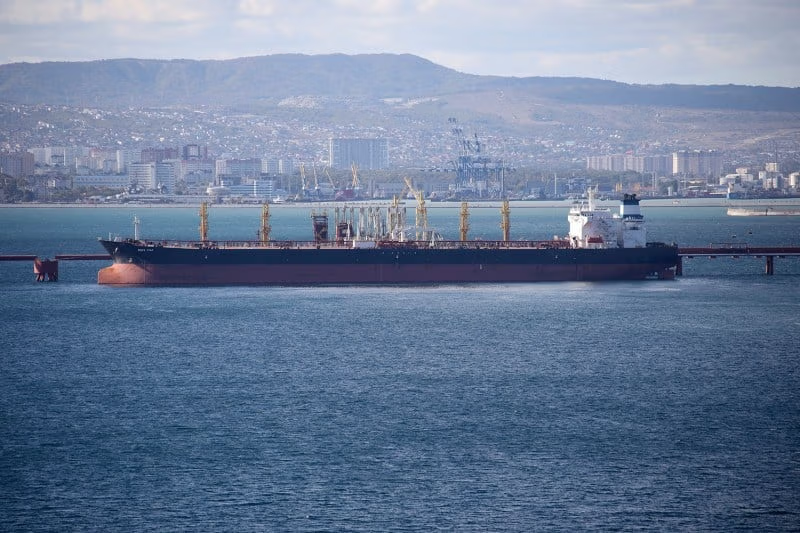
From the perspective of Washington, the current situation is untenable. U.S. policymakers are increasingly frustrated by the torrent of petrodollars still flowing into Moscow’s coffers, largely from major Asian economies. Despite unprecedented sanctions aimed at Russia’s energy sector, the Kremlin continues to rake in billions, effectively subsidizing its war efforts and undermining the very purpose of the Western sanctions regime. The G7’s much-vaunted price cap on Russian oil, intended to limit Moscow’s revenue while keeping oil on global markets, has proven to be a leaky bucket at best. Clever circumvention tactics, the emergence of a “shadow fleet” of tankers operating outside Western jurisdiction, and the willingness of non-Western buyers to disregard the cap have significantly blunted its impact, allowing Russia to sell its oil at or near market rates to willing buyers.
Driven by this frustration and a desire to escalate economic pressure, the White House is now pushing for a hawkish new strategy: secondary sanctions. The plan, gaining significant traction within U.S. government circles, would effectively punish countries like India and China, as well as any other nation, entity, or individual, for continuing to buy Russian oil beyond the G7 price cap or engaging in transactions that significantly support Russia’s war economy. This would likely manifest through a new wave of punitive measures, potentially including tariffs on their goods, restrictions on their access to the U.S. financial system, or even broader trade penalties affecting their ability to conduct business globally.
The American logic for this aggressive approach is straightforward and, from their perspective, eminently practical: if you can’t effectively stop the seller from finding buyers, you must pressure the buyers to stop purchasing. U.S. policymakers believe that America’s unparalleled economic dominance and the indispensable role of the dollar in global finance provide sufficient leverage to enforce such a policy. They argue that the urgency of the conflict in Ukraine demands decisive action, and that merely observing Russia’s continued financial resilience while hoping for a change of heart from non-aligned nations is simply not enough. For Washington, it’s time to stop patching minor holes and start taking bolder steps to effectively cut off Russia’s financial lifeline, even if it means challenging key economic partners in the process.
Brussels’ Alarm Bells: The Perils of a Global Economic Wrecking Ball
Across the ocean, in Brussels and other key European capitals, this proposed strategy is being met not with agreement, but with deep-seated alarm and a profound sense of foreboding. For Europe, which is already grappling with an acute energy crisis stemming from its prior reliance on Russian gas and oil, and the ever-present threat of a continent-wide recession, Washington’s economic hammer looks less like a targeted weapon designed to incapacitate Russia and more like a wrecking ball aimed squarely at the already fragile global financial and trading system. European leaders harbor significant reservations, viewing secondary sanctions as a dangerously escalatory move with potentially catastrophic consequences for their own economies.
This European opposition isn’t just about immediate economic self-preservation, though that is undoubtedly a major factor. The concerns emanating from Brussels are multifaceted, extending to broader strategic and geopolitical considerations. European leaders see a move against major trading partners like India and China not merely as a misstep, but as a monumental strategic blunder that could backfire spectacularly on the West. Their fear is twofold, encompassing both economic and diplomatic dimensions that could undermine long-term Western interests.
Economic Ricochet: The Threat of a Global Downturn
First, there is the palpable fear of a devastating economic ricochet. Europe’s economy is deeply intertwined with global supply chains and international trade. Initiating a trade war with two of the world’s largest and fastest-growing economies—China and India—could easily plunge the global economy into a severe and prolonged downturn. Such an event would disproportionately hurt European industries, which are already struggling with high energy costs, persistent inflation, and reduced consumer demand. European manufacturers and exporters rely heavily on these markets, and retaliatory measures from Beijing and New Delhi could lead to lost sales, factory closures, and mass unemployment across the continent. The ripple effects on global financial markets, commodity prices, and investor confidence could create a cascading crisis far more damaging than the ongoing impact of the war in Ukraine, potentially overshadowing the very goal of punishing Russia.
Diplomatic Blunder: Pushing the Global South Towards Beijing-Moscow
Second, and perhaps even more critically from a long-term strategic perspective, European leaders worry about shattering the delicate diplomatic game of trying to persuade, rather than coerce, the “global south” to align with Western democratic values and international norms. Forcing nations like India, a vital democratic partner and a major player in its own right, to choose sides in a new Cold War-esque confrontation could irrevocably push them closer to a burgeoning Beijing-Moscow axis. Europe has invested decades in diplomatic outreach, trade relationships, and development aid to build bridges with these emerging powers. Imposing punitive measures would be seen as an act of economic bullying, undermining a generation of careful diplomatic work and potentially alienating a vast segment of the world’s population and economic activity. Such a move would inadvertently strengthen the very authoritarian alliance the West seeks to counter, creating a more divided and volatile global landscape where Western influence is significantly diminished.
A Fundamental Shift: Engaging a Multipolar World
What this transatlantic divide ultimately reveals is a fundamental shift in the nature of the conflict and, indeed, in global geopolitics. The initial phase of the Western response to Russia’s invasion was primarily about isolating Russia. This involved a concerted effort to sever Russia from global financial systems, restrict its access to technology, and choke off its energy exports to traditional Western markets. The goal was clear: make Moscow a pariah state, unable to sustain its aggression. While this effort has had significant impacts, it has not achieved complete isolation, largely due to the emergence of alternative markets and the reluctance of many nations to fully commit to the Western stance.
This next phase, exemplified by the debate over secondary sanctions, is no longer solely about isolating a single belligerent. It is about how the West engages with a newly emerging multipolar world that refuses to be neatly divided into two rigid camps. The idea that all nations will automatically align with the West’s moral and strategic imperatives has been severely tested. Countries like India, China, Brazil, South Africa, and many others in Asia, Africa, and Latin America have demonstrated a clear desire to maintain independent foreign policies, prioritize their own economic interests, and avoid being drawn into what they perceive as a proxy conflict between major powers. They often view Western sanctions through a lens of historical grievances, sovereignty, and perceived hypocrisy, making them highly resistant to external coercion.
This reality forces the Western alliance to confront uncomfortable truths about the limits of its power and influence. It necessitates a more nuanced and sophisticated approach to international relations, one that balances assertive action against Russia with the imperative of maintaining broad international cooperation on other global challenges, from climate change to pandemics and future economic stability. The question is no longer just “How do we punish Russia?” but “How do we navigate a world where a significant portion of humanity is charting its own course, and how do we ensure our actions don’t inadvertently push them further away, undermining our own long-term strategic goals?”
Two Strategies, One Alliance’s Future in the Economic War on Russia
The future of the West’s Russia strategy, and indeed the cohesion of the transatlantic alliance itself, hinges critically on the resolution of this profound debate between Washington and Brussels. Two distinct philosophies are on display, each with its own inherent risks and potential rewards for the global economy and the international order.
Washington’s Bet: Economic Dominance Through Secondary Sanctions
If Washington ultimately pushes ahead with its plan for secondary sanctions, it will be making a high-stakes bet that the U.S. economy is resilient enough to withstand the inevitable fallout from a potential global trade war. This strategy rests on the conviction that the threat of American financial power and the dollar’s status as the world’s reserve currency can still force global compliance, even from major economic players like India and China. It is a strategy of economic dominance, predicated on the belief that the costs of defying U.S. financial muscle will ultimately outweigh the benefits of continuing to engage with Russia. This approach prioritizes immediate, decisive action against Moscow, even if it means jeopardizing broader diplomatic relationships and risking significant disruption to global trade and supply chains. It signals a willingness to act unilaterally or with a limited coalition, leveraging America’s unique position to impose its will on the international economic order.
Europe’s Endurance Play: Recognizing the Limits of Western Power
If, however, the more cautious and pragmatic European view prevails—perhaps through intense diplomatic pressure from Brussels and its member states—it would signal a significant recognition of the inherent limits of Western power in a multipolar world. This strategy would mean accepting that the economic war against Russia will be a longer, far messier, and more protracted affair. It would necessitate a shift away from immediate “shock and awe” tactics towards a more patient approach, reliant more on persistent diplomacy, market competition, technological decoupling, and the gradual erosion of Russia’s economic base rather than on sudden, overwhelming financial coercion. This is a strategy of economic endurance, acknowledging that forcing the entire world to choose sides might be counterproductive and that a more incremental approach, focused on reinforcing existing sanctions, plugging current loopholes, and offering alternatives to Russian energy, may ultimately prove more effective in the long run without fragmenting the global order or alienating crucial partners. It prioritizes the preservation of the broader international economic system and diplomatic relationships over an immediate, potentially destabilizing escalation of sanctions.
The Kremlin’s Cynical Hope: A Divided Western Alliance
Ultimately, this is far more than a mere policy disagreement or a bureaucratic tussle. It’s a stress test of the Western alliance’s core assumptions about its unity, its influence, and its place in the rapidly evolving global landscape. Russia’s gambit, since the very beginning of its full-scale invasion, has consistently been to wait for the West’s resolve to crack under economic and political pressure. Moscow has banked on internal divisions, economic pain, and declining public support within Western nations to eventually erode the united front. In this growing and increasingly vocal divide between Washington and its European allies over the future of sanctions policy, the Kremlin may well be seeing the first, crucial signs that its cynical, long-game strategy is beginning to work, providing a glimmer of hope that the united Western front could yet splinter.
The choice facing the West is stark: risk further destabilizing the global economy and alienating key non-aligned nations for a potentially faster, but more volatile, push against Russia, or embrace a longer, more patient strategy that prioritizes global stability and diplomatic outreach. The outcome of this debate will profoundly shape not only the future of the conflict in Ukraine but also the contours of global power for years to come, defining the effectiveness and scope of the economic war on Russia.
Read the original story at Foreign Policy.
What do you think is the best way for the Western alliance to balance pressure on Russia with maintaining global economic stability and diplomatic unity with the Global South?