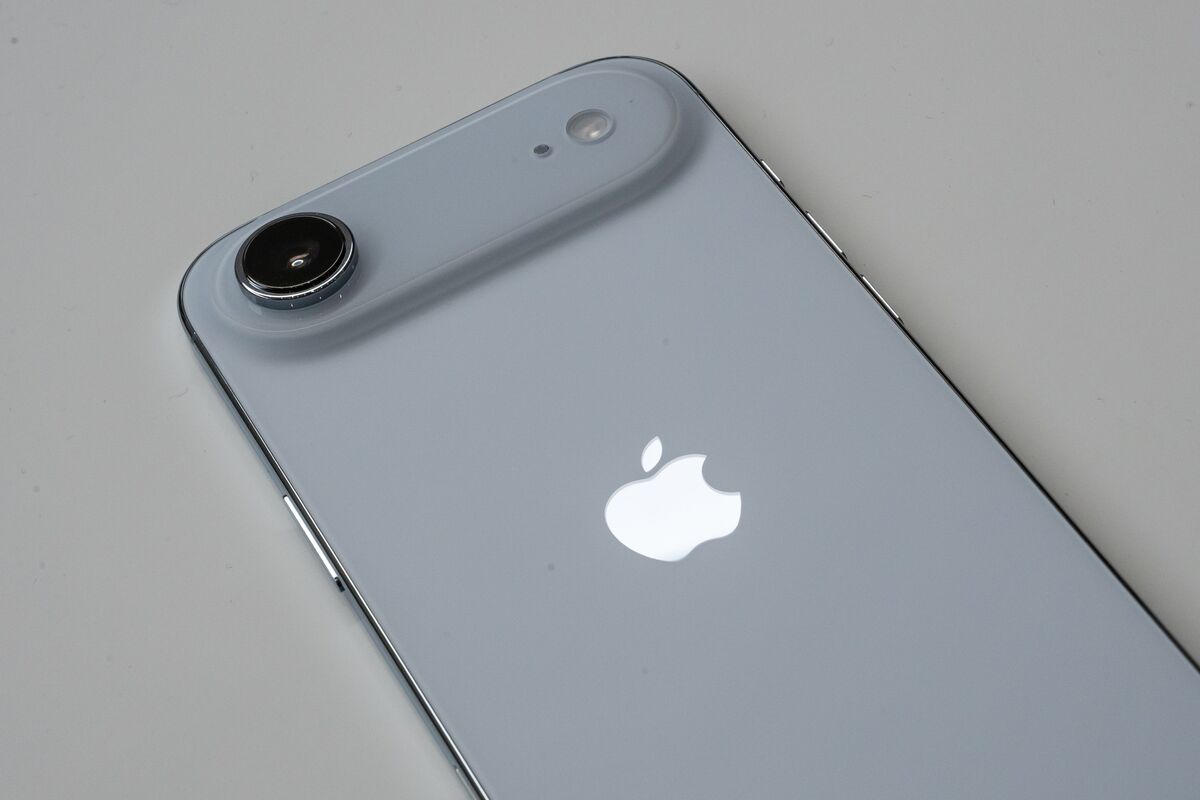
For the past six years, the tech world has been asking the same quiet question: What is Apple without Jony Ive? The answer, so far, has been… competent. Practical, even. iPhones got thicker for better batteries, MacBooks regained beloved ports, and the relentless pursuit of thinness at all costs was finally laid to rest. The products are excellent. But the magic, that indefinable spark of seeing something that feels not just new, but inevitable? That’s been harder to find.
Now, a bombshell report from Bloomberg suggests that deep within the spaceship campus, Apple is orchestrating a profound course correction. The company is reportedly pitching a return to its foundational design roots—a move that signals more than just a change in aesthetics. It signals a potential battle for the very soul of the company.

The Post-Ive Design Wilderness
Since Ive’s departure, Apple’s design has felt more collaborative, more democratic, and, frankly, more driven by operations than by a singular, obsessive vision. This isn’t necessarily a bad thing. It gave us products that addressed long-standing user complaints. The butterfly keyboard is a distant nightmare, and we can finally charge our MacBooks and plug in an SD card at the same time.
But in fixing the functional flaws, some of the philosophical clarity was lost. The Ive era, for all its faults, had a clear thesis: technology should be unobtrusive, minimal, and distilled to its purest form. It was a vision that, for better or worse, dragged the entire industry along with it. In its absence, Apple’s design has felt safe. Iterative. It’s been a series of well-executed refinements, not revolutions.
What Does “A Return to Roots” Actually Mean?
This is the multi-trillion-dollar question. This isn’t about slapping a beige case on the next iPhone or bringing back the 30-pin connector. A true “return to roots” for Apple is about resurrecting a mindset.
It could mean a return to the Dieter Rams-inspired ethos of “less, but better” that Steve Jobs and Jony Ive championed. A focus on products that are so intuitive they need no instruction, where the form is an honest and direct expression of its function. Think less about shaving off another millimeter and more about rethinking how an object should fundamentally feel and work in your hands.
Or, it could harken back to an even earlier era: the playful, colorful spirit of the original iMac. A time when Apple wasn’t afraid to be bold, personal, and a little bit weird. In a sea of minimalist black, white, and silver devices, a splash of genuine personality could be the most disruptive design choice of all.
The most exciting possibility is that it’s not about copying the past, but re-applying its principles. How would the Apple of 1998 or 2007, with its daring and user-centric focus, design a device for our AI-driven future? It almost certainly wouldn’t be another sleek, anonymous glass rectangle. It would be something new, something brave, and something built from the ground up around the human experience.
The Future is Unwritten, But the Blueprint May Be Old
This internal pitch, as reported by Bloomberg, is the most significant clue yet about Apple’s next chapter. It suggests a recognition that the company cannot thrive on operational excellence alone. The Tim Cook era has been a masterclass in optimization and scale, but Apple’s legend was built on design-led innovation that took astonishing risks.
If this new philosophy takes hold, the implications are huge. We could be on the cusp of a new golden age of industrial design, one that moves beyond the safe, monolithic forms that have dominated tech for over a decade. It could mean new product categories that don’t just feel like extensions of the iPhone, but entirely new ideas.
This isn’t just about what the iPhone 18 will look like. It’s a fundamental question of identity. Is Apple the company that perfects the present, or the one that invents the future? For the first time in a long time, it seems like they’re ready to bet on the future, by remembering what made them great in the first place.
Read the original story at Bloomberg.
What do you think? Is a return to Apple’s design roots the key to its next wave of innovation, or should it continue to forge an entirely new path?