Another Nintendo Direct has come and gone, leaving a whirlwind of hype, fresh trailers, and a dozen new dates circled on our calendars. It’s a familiar, wonderful chaos that consistently re-energizes the gaming community. This latest showcase, much like its predecessors, provided a tantalizing glimpse into the immediate future of one of the industry’s most beloved brands. However, this particular event carried an unusually heavy weight, as it served as a pivotal moment in Nintendo’s long-anticipated console transition.
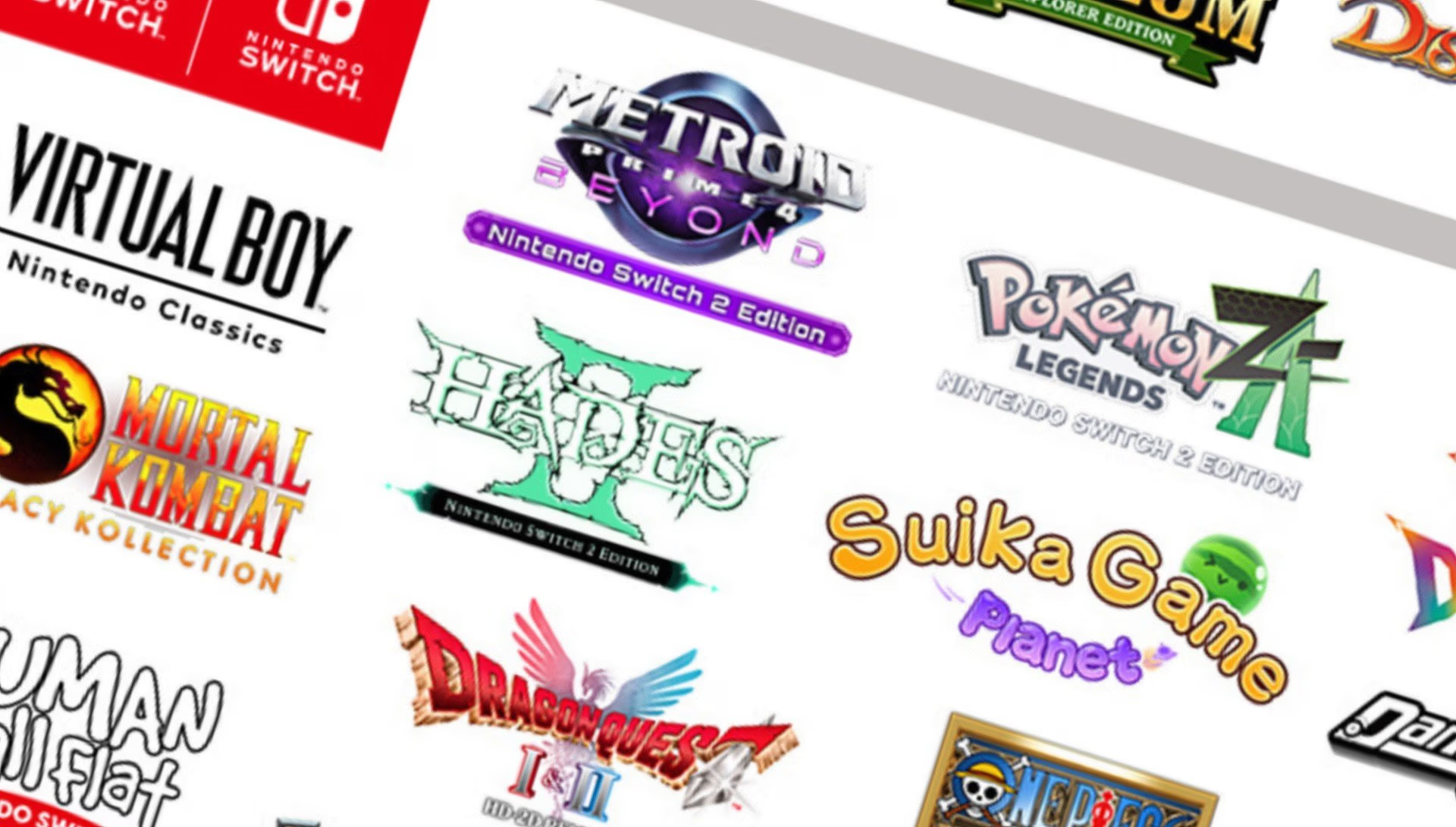
But once the digital applause subsided and the initial flurry of social media reactions settled, Nintendo did something unusually strategic and subtly profound. They released a single, clean infographic. This wasn’t just a recap; it was a meticulously organized visual summary, laying out every single announcement for both the beloved Nintendo Switch and its highly anticipated successor, widely referred to as the “Switch 2.” This seemingly simple act, often overlooked amidst the excitement, holds the key to understanding Nintendo’s sophisticated approach to generational change.

And in that simple image lies a masterclass in strategic communication and long-term planning. Sure, the individual game announcements are thrilling – the promise of a new 3D Mario adventure designed specifically for the Switch 2, finally seeing the long-awaited Metroid Prime 4 confirmed as a cross-generational title, and the myriad of exciting new experiences. These are the sparks that ignite player passion. But the real, deeper story isn’t just what was announced. It’s how Nintendo is meticulously architecting one of the most delicate, challenging, and often perilous moments in any console maker’s journey: the generational handover.
For decades, console manufacturers have grappled with the inherent difficulties of transitioning from one successful platform to its successor. The goal is always to entice players to upgrade without alienating the massive existing user base. Nintendo, with its unique hardware philosophies and a colossal install base for the original Switch, faced an even more formidable challenge. This Direct, and the subsequent infographic, provided the clearest, most reassuring answer yet.
The Takeaway: A Bridge, Not a Cliff – Navigating the Generational Handover
For months, if not years, the biggest question dominating discussions among gamers, analysts, and investors alike was how Nintendo would manage the transition from the incredibly successful Switch, a console with a historic, monolithic install base exceeding 140 million units worldwide, to its new hardware. Would they adopt an aggressive, almost cut-and-run strategy, effectively leaving over 140 million loyal players behind with a sudden cessation of support? Or would they overly hamstring the new console’s potential by forcing it to cater extensively to the technical limitations of the older one, diluting the “next-gen” experience?
This latest Nintendo Direct, powerfully reinforced by the clarity of the infographic that followed, gives us a definitive and surprisingly elegant answer: they’re not building a wall, nor are they initiating a hard reset; they’re building a bridge. A carefully constructed, multi-lane bridge designed to facilitate a smooth, respectful, and profitable journey from one generation to the next. This approach is a testament to Nintendo’s understanding of its unique audience and ecosystem.
By showcasing a robust and exciting lineup for both platforms simultaneously – with dedicated Switch exclusives and promising cross-gen titles – Nintendo is sending an incredibly powerful and comforting message to its colossal current user base: “We’re not forgetting you. Your investment in our ecosystem is valued, and your adventures on the original Switch are far from over.” This isn’t a hard stop to the original Switch’s lifecycle; it’s a victory lap, an extended curtain call for a console that has redefined portable gaming.
This strategic decision ensures that the vibrant Switch community remains engaged and that the original Switch continues to be a viable, relevant, and exciting platform for at least another year or two, if not longer for certain types of releases. This move respects the significant financial and emotional investment of millions of players and, crucially, maintains their goodwill towards the brand. In an industry often criticized for planned obsolescence, Nintendo is once again charting its own course, prioritizing player satisfaction and the long-term health of its ecosystem.
Learning from Past Console Transitions
Nintendo’s strategy stands in stark contrast to some of the more abrupt or poorly managed console transitions seen in the past. Historically, console makers have struggled to balance supporting the old while championing the new. The Wii U, for example, suffered from a lack of clear messaging and initial software support, failing to convince Wii owners to upgrade. Conversely, an overly sudden cutoff can alienate loyal fans, as some felt during the transition from PlayStation 2 to PlayStation 3, where initial backward compatibility was limited.
Nintendo appears to have meticulously studied these precedents. Their “bridge” approach mitigates several risks. It prevents the new console from launching into a software drought, as many developers can target both platforms. It allows players time to save up for the new hardware without feeling pressured or left behind. And perhaps most importantly, it nurtures a consistent positive sentiment towards the Nintendo brand, fostering loyalty that transcends individual hardware cycles. This extended overlap provides a gradual ramp-up for the Switch 2’s sales while ensuring the original Switch continues to generate revenue from software sales and accessories.
Decoding the Blueprint for Tomorrow: Nintendo’s Next-Gen Strategy
Now, let’s look even closer at that infographic. It’s far more than a simple list of upcoming games; it’s a comprehensive blueprint of Nintendo’s future strategy, clearly delineating roles for each piece of hardware. You can begin to clearly see the defined shape of Nintendo’s future, a future where both current players and early adopters of the new hardware feel catered to.
The most graphically demanding, technically ambitious, and innovation-showcasing titles — the true system-sellers designed to make you crave and ultimately purchase new hardware — are squarely placed in the “Switch 2” column. This is Nintendo flexing its next-gen muscles, unequivocally demonstrating to both developers and players what the new machine is truly capable of. Imagine highly detailed worlds, advanced physics, ray tracing capabilities, and potentially revolutionary new control schemes that only the Switch 2 can deliver. This clear differentiation is crucial for justifying the upgrade.
Meanwhile, the cross-gen titles and the continued stream of original Switch exclusives tell another, equally vital story. They represent the shared DNA that will keep the entire Nintendo ecosystem unified and thriving during this critical period. This approach ensures that massive online communities aren’t fractured overnight. Players of Mario Kart, Smash Bros., or Splatoon won’t suddenly find themselves segregated, unable to play with friends who haven’t yet upgraded. Furthermore, it ensures that families with multiple Switches, both old and new, can still enjoy gaming together seamlessly. It’s an astute, player-first approach that stands in stark contrast to some of the more abrupt console transitions of the past, which often left early adopters feeling isolated and existing owners feeling abandoned.
The Role of First-Party Exclusives on Switch 2
The new 3D Mario adventure, confirmed for Switch 2, serves as the quintessential example of a system-seller. These titles are meticulously crafted to highlight the unique capabilities of the new hardware. They often introduce innovative gameplay mechanics, stunning visual fidelity, and a level of polish that sets a new benchmark. Such exclusives are not just games; they are powerful marketing tools designed to drive early adoption and establish the Switch 2’s identity. Other potential Switch 2 exclusives might leverage rumored features like enhanced HD Rumble, more precise motion controls, or a larger, higher-resolution screen, creating experiences simply impossible on the original hardware.
The Power of Cross-Gen Titles
The confirmation of Metroid Prime 4 as a cross-gen title is a significant indicator of this strategy. For a highly anticipated game with a long development cycle, releasing it on both platforms maximizes its audience reach at launch. Current Switch owners get to experience a landmark title they’ve waited years for, while Switch 2 owners get to experience it with enhanced visuals, performance, and potentially exclusive features. This dual-platform release serves to bridge the gap, preventing a mass exodus of players while simultaneously showcasing the improvements available on the new machine. This approach also eases the development burden for third-party studios, allowing them to target a wider audience during the transition period, which is healthy for the entire gaming ecosystem.
Sustaining the Indie Darling Ecosystem
Beyond the major first-party and triple-A titles, the infographic also hinted at continued strong support for indie games on the original Switch. The Switch has become a haven for independent developers, known for its portability and a massive, engaged user base. Maintaining a steady flow of new, innovative indie titles for the original Switch ensures that the platform remains fresh and attractive, even as its successor enters the market. This long tail of software support is crucial for extending the console’s lifespan and ensuring a diverse library of content for all players.
Nintendo’s Unique Position and the Future of Gaming
Nintendo has always occupied a unique space in the console market, often marching to the beat of its own drum. While competitors focus on raw power and iterative graphical upgrades, Nintendo often prioritizes innovative gameplay, unique hardware concepts, and accessibility. This distinct identity is a major asset during a generational transition.
By opting for a “bridge” strategy, Nintendo isn’t just launching a console; it’s meticulously evolving an entire ecosystem. This approach fosters an environment where player loyalty is rewarded, developers have a clear roadmap, and the transition feels like a natural progression rather than an abrupt shift. It sets a new standard for how console manufacturers can manage these pivotal moments, prioritizing the community’s experience without sacrificing technological advancement.
The clarity provided by this Direct and the subsequent infographic is more than just exciting news for gamers. It’s a strategic masterstroke that reaffirms Nintendo’s position as an industry leader with a profound understanding of its audience and the delicate balance required to usher in a new era of gaming. The future is bright, and thankfully, it looks like everyone’s invited to participate in the next chapter of Nintendo’s remarkable journey.
Read the original story detailing Nintendo’s strategic infographic at Nintendo Life.
What are your thoughts on Nintendo’s strategy for the Switch to Switch 2 transition? Do you think this “bridge” approach is the best way forward for the gaming giant, and what games are you most excited to play on either platform?