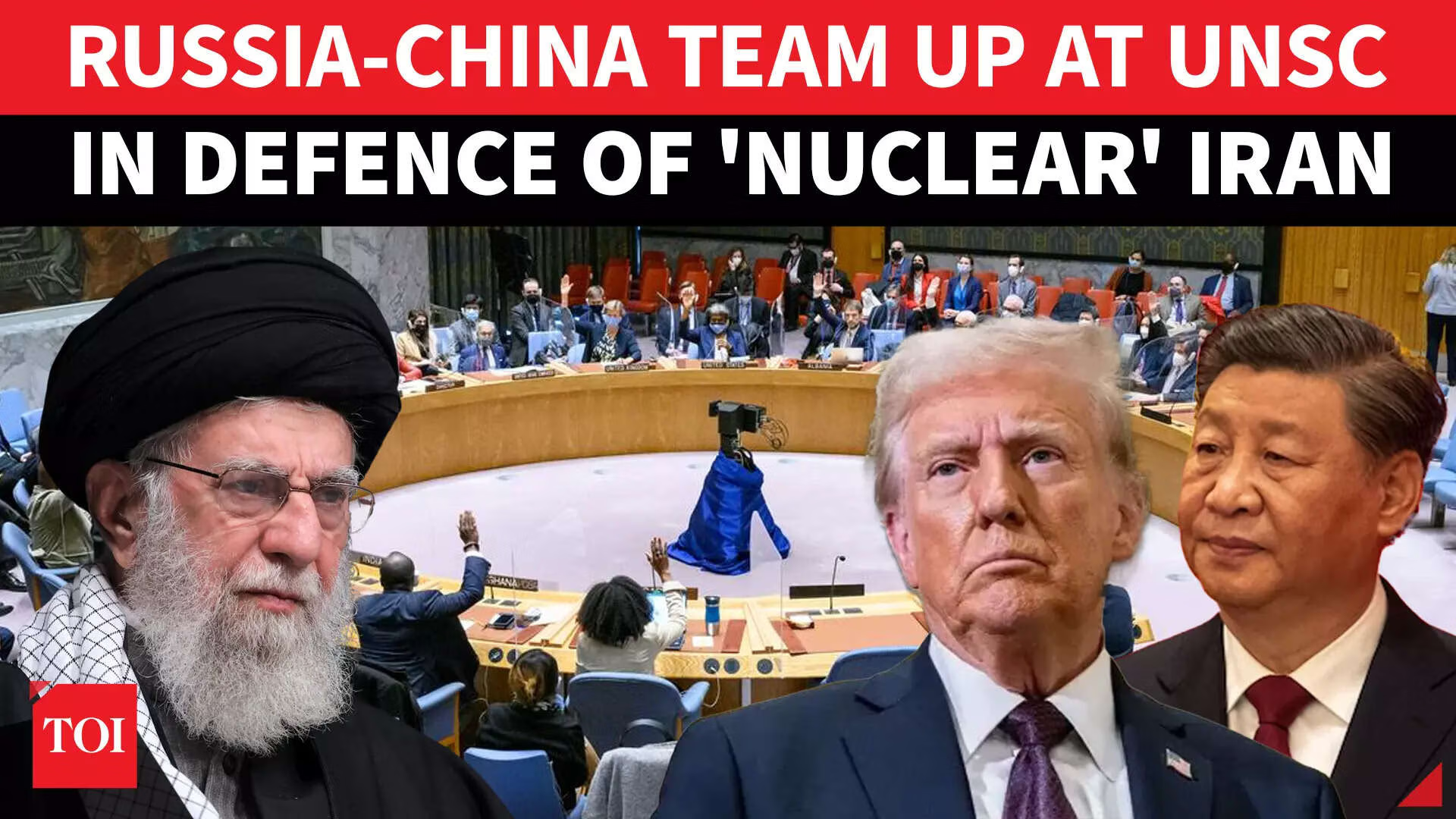
In what can only be described as diplomatic fireworks at the United Nations, the world recently witnessed a carefully choreographed display of a rapidly evolving geopolitical reality. The hallowed chamber of the UN Security Council, a venue theoretically designed for global consensus and cooperation, instead became the stage for a blistering takedown of Western foreign policy, with Russia leading the charge and China providing powerful, unwavering backup. This pivotal confrontation, spearheaded by a top aide to Vladimir Putin, was far more than just a procedural disagreement over existing sanctions on Iran; it was a clear and forceful declaration that the era of uncontested Western dominance in international diplomacy and the very architecture of global governance is definitively over.
The Russian envoy didn’t just offer mild criticism of the United States and its European allies; he launched a direct assault, accusing them of profound hypocrisy and acting in bad faith. His argument effectively posited that these Western powers had unilaterally dismantled the very diplomatic frameworks and international agreements they now vigorously seek to enforce, particularly concerning the contentious issue of Iran’s nuclear program. This bold stance, immediately amplified by Beijing, signals a seismic shift in global power dynamics, challenging the established norms and presenting a united front against what Moscow and Beijing perceive as unilateral Western coercion.
The core of this powerful argument rests squarely on the ghost of the 2015 Iran Nuclear Deal, formally known as the Joint Comprehensive Plan of Action (JCPOA). From Moscow’s deeply entrenched perspective, the West, led decisively by the United States’ unilateral withdrawal from the agreement in 2018, flagrantly abandoned a landmark multilateral diplomatic achievement. Having initiated this abandonment, Russia argues, the same Western powers then unjustly punish Iran for responding to that fundamental breach. This public denunciation by Russia, wholeheartedly endorsed by China, aims to fundamentally reframe the international narrative, painting the West not as diligent enforcers of international norms and stability, but rather as the primary architects of the current instability and escalating tensions in the Middle East.
The Russian Federation has consistently maintained that the JCPOA, painstakingly negotiated by the P5+1 (China, France, Germany, Russia, the United Kingdom, and the United States, plus the European Union), was a robust and effective mechanism for preventing Iran from developing nuclear weapons while integrating it into the global community. The agreement imposed strict limits on Iran’s uranium enrichment capacity, required extensive international inspections, and facilitated the removal of international sanctions, thereby offering Iran economic relief. The U.S. withdrawal, under the Trump administration’s “maximum pressure” campaign, was viewed by Moscow as a catastrophic error that not only undermined international law but also demonstrated that solemn diplomatic commitments could be easily discarded. Russia’s argument is that once the U.S. reneged on its commitments, particularly the lifting of sanctions in exchange for nuclear restrictions, Iran was left with little choice but to gradually scale back its own compliance in an effort to regain leverage and pressure the remaining signatories to uphold their end of the bargain. This cyclical escalation, driven by the initial U.S. departure, forms the bedrock of Russia’s accusation of Western hypocrisy.
What elevates this familiar Russian grievance into a truly significant global event is the immediate, robust, and unequivocal support it received from Beijing. China’s move to echo and amplify Russia’s condemnation solidifies what is now recognized as a formidable and increasingly cohesive diplomatic bloc on the world stage. This isn’t merely a one-off alignment of convenience or a momentary confluence of interests; it is the strategic “no-limits partnership” between Moscow and Beijing playing out with full force in the most important international forum. Both nations have consistently articulated a shared vision for global governance that challenges unipolar dominance and advocates for a multipolar world where power is distributed among several major poles. Together, these two nuclear-armed powers are presenting a unified and potent challenge to the sanctions-heavy, confrontational approach traditionally favored by Washington and Brussels in dealing with states like Iran.
This coordinated diplomatic assault underscores a deepening strategic convergence between Russia and China, rooted in shared grievances and complementary geopolitical objectives. Both nations share a common skepticism, if not outright disdain, for what they often describe as the U.S.-led “rules-based international order,” which they contend is selectively applied to serve Western interests rather than truly universal principles. Their collaboration extends beyond merely defensive reactions; it is an assertive effort to reshape international norms and create alternative pathways for states seeking to resist Western pressure. By standing together at the UN, they are not only defending Iran against perceived injustices but also projecting their collective vision for a more inclusive and multipolar world. This joint stance offers tangible political and diplomatic cover to nations facing Western pressure, sending a clear message that an alternative avenue of support and resistance exists, thereby strengthening the hand of countries that defy Western policy prescriptions.
What This Means for the Future
The implications of this coordinated diplomatic assault by Russia and China at the UN Security Council are profound and far-reaching, signaling fundamental shifts in the global geopolitical landscape. These developments will undoubtedly reshape international relations, particularly concerning contentious issues like nuclear proliferation, regional stability, and the very architecture of international cooperation.
The Definitive End of the P5+1 Consensus
Firstly, this event signals the definitive end of the P5+1 consensus that once governed the complex Iran nuclear issue. The P5+1 mechanism, which brought together the permanent members of the UN Security Council (China, France, Russia, the United Kingdom, and the United States) plus Germany and the European Union, was a testament to multilateral diplomacy. For years, it allowed for a united front to address a critical global security challenge, reaching a landmark agreement in 2015. However, that unity is now irrevocably shattered. The permanent members of the Security Council are openly fractured into two distinct and opposing camps: the Western trio (United States, United Kingdom, France) on one side, and the Sino-Russian axis on the other. This overt division makes any unified, legally binding action on Iran through the Security Council nearly impossible to achieve, as any substantive resolution would face an almost certain veto from either Russia or China.
The practical consequence of this diplomatic deadlock is significant. It provides substantial diplomatic and political cover for Tehran, effectively neutralizing attempts by Western powers to tighten the screws through internationally sanctioned measures. With Russia and China holding veto power and aligning their narratives, the impact of Western sanctions is inherently weakened, and Iran’s international isolation, which Washington and Brussels aim to intensify, is significantly reduced. This fractured consensus allows Iran greater flexibility in its nuclear program and foreign policy, confident that it has powerful allies willing to block adverse resolutions and champion its narrative on the global stage. This complicates any future attempts at renewed negotiations and emboldens Tehran to continue its current trajectory, potentially increasing regional instability as other actors react to a less constrained Iran.
A Powerful Advertisement for a New, Multipolar World Order
Secondly, this event serves as a powerful and highly visible advertisement for a new, multipolar world order, one actively championed and proactively constructed by Moscow and Beijing. Russia and China are not just reacting to Western policies; they are consciously and strategically demonstrating to other nations worldwide, particularly those in the Global South, that there is a viable and powerful alternative to aligning solely with the West. For countries that frequently find themselves under Western pressure, whether through economic sanctions, diplomatic isolation, or ideological demands concerning human rights or governance models, the message from Moscow and Beijing is unambiguously clear: they are willing to be your steadfast advocates and defenders against what they portray as Western overreach and unilateralism.
This evolving dynamic fundamentally challenges the so-called “rules-based order” that Washington and its allies often promote. Russia and China argue that this order is not truly universal or equitable but rather a thinly veiled mechanism to preserve Western interests and hegemony, often at the expense of developing nations’ sovereignty and self-determination. By openly defying Western consensus at the UN and offering an alternative framework for international cooperation, based on principles like non-interference and mutual respect, they are actively attempting to cultivate a broader coalition of states that seek to dilute Western influence and foster a more balanced distribution of global power. This makes their partnership increasingly attractive to states looking to assert greater sovereignty and resist perceived external pressures, thereby accelerating the shift towards a truly multipolar international system where multiple centers of power exert influence and no single hegemon dictates global affairs.
Sharpening the Global Divide and Raising the Stakes
Finally, this coordinated action at the UN sharply intensifies the global divide and raises the stakes in the ongoing great power competition. As diplomacy at the highest levels, particularly within the UN Security Council, becomes another overt battlefield in this competition, the risk of miscalculation, unintended escalation, and direct confrontation grows significantly. The West now faces a stark reality where its primary tools of influence—economic sanctions, diplomatic pressure, and institutional leverage (like leveraging UN resolutions)—are being systematically and effectively countered by two nuclear-armed rivals who possess the capacity to shape international narratives, exercise veto power over critical resolutions, and offer alternative economic and security partnerships.
This standoff over Iran is therefore not an isolated or peripheral issue; it is a critical preview of the geopolitical tug-of-war that will define international relations for years, if not decades, to come. It highlights the growing limitations of Western power when confronted by a unified Sino-Russian front and necessitates a profound reassessment of diplomatic strategies. The world is unequivocally moving towards a more fragmented, contentious, and less predictable international environment, where achieving consensus is harder than ever, and geopolitical rivalries increasingly play out in every major global forum, from trade negotiations to climate action. Navigating this complex new reality will demand unprecedented diplomatic skill, strategic foresight, and a clear understanding of the evolving global power dynamics from all major actors, as the risk of an unravelling international order becomes increasingly palpable.
Read the original story at The Times Of India.
What are your thoughts on this emerging axis of defiance? Do you believe Russia and China’s united front will fundamentally alter the future of international diplomacy, or is it a temporary alignment of convenience that will eventually dissipate?