The Trump Charm Offensive: Why Europe Can’t Afford to Be Fooled by a Smile
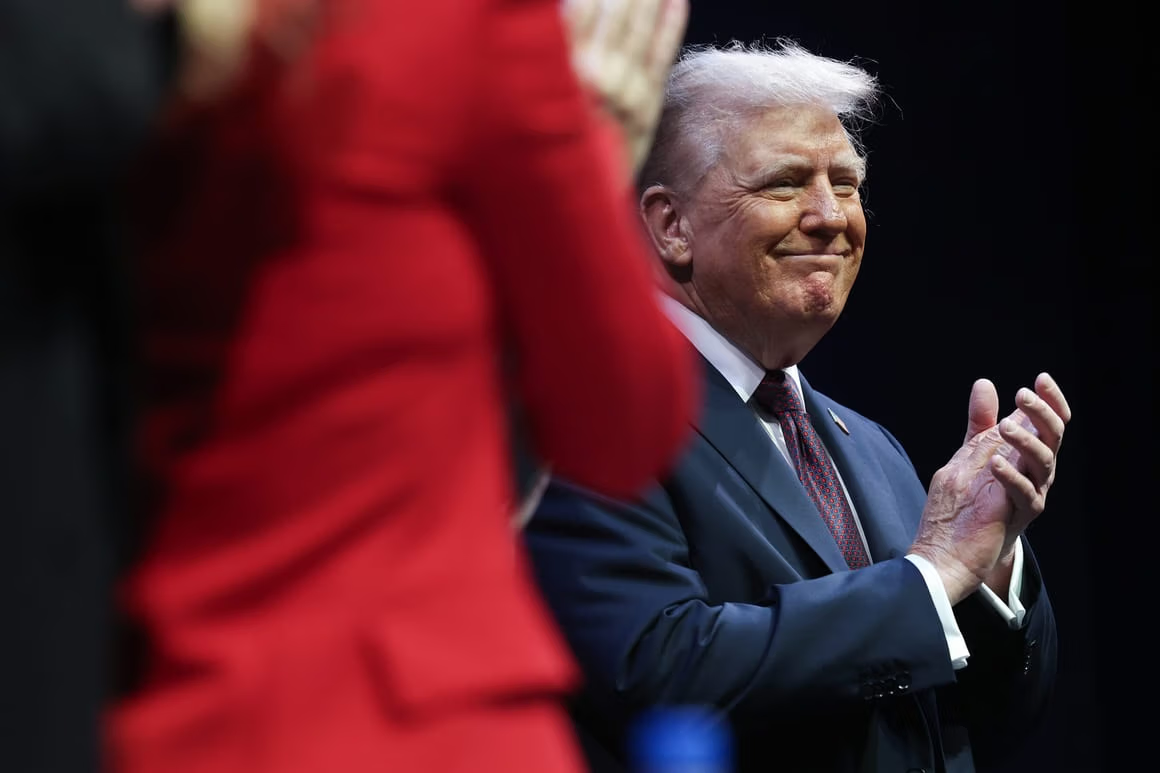
In the high-stakes world of transatlantic politics, a sudden compliment from Donald Trump can be more disorienting than an insult. After four years of strained relations, marked by significant policy divergences, trade skirmishes, and a persistent undercurrent of anxiety, European leaders are now encountering a new, far more perplexing diplomatic gambit: a Trump charm offensive. This unexpected shift has injected a complex layer of ambiguity into the already intricate relationship between the United States and its European allies.
Recent public gestures and statements—such as warm words for European Commission President Ursula von der Leyen, whom Trump notably described as “terrific” and a “very good negotiator,” alongside a surprisingly cordial meeting with U.K. Foreign Secretary David Cameron—have not gone unnoticed. These overtures have sent ripples of cautious speculation, mixed with a healthy dose of skepticism, through Brussels and other European capitals. Has the famously transactional and resolutely “America First” former president, whose previous tenure often challenged traditional alliances, truly had a change of heart? Is this a genuine effort to mend fences, or something far more strategic?

The short answer, according to a consensus of seasoned diplomatic observers, policy analysts, and those intimately familiar with Trump’s political playbook, is a resounding no. What Europe is likely witnessing is not a fundamental pivot in policy or a newfound appreciation for transatlantic unity, but rather a meticulously choreographed masterclass in political stagecraft. It’s a sophisticated maneuver, best understood as a “flattery trap” – a calculated strategy designed to lull the continent into a potentially dangerous false sense of security, distract from underlying intentions, and disarm potential opposition.
Understanding the Strategic Calculus Behind Trump’s Outreach
This unexpected shift from confrontation to charm is not about building lasting bridges of cooperation; it’s primarily about adeptly managing perceptions, both at home and abroad. As Donald Trump increasingly gears up for a potential return to the White House in the upcoming November elections, his strategic calculus is remarkably clear and multi-faceted. The goal is to optimize his political standing on several fronts, preparing the ground for a second term that would likely pick up where the first left off, albeit with a refined approach to messaging.
Domestically, projecting a more statesmanlike, less chaotic, and seemingly more conciliatory image holds significant appeal for undecided voters who might have been alienated by the turbulence of his previous administration. By engaging in seemingly conventional diplomacy and offering compliments, Trump aims to broaden his appeal, signaling a potential maturity in his approach to international relations. This softened public persona serves to reassure those who might fear renewed instability, making him appear as a more palatable choice for the nation’s highest office. It’s a carefully constructed facade intended to calm anxieties and win over moderate voters who value stability.
Simultaneously, by extending a rhetorical olive branch to European leaders, Trump can preemptively soften European opposition and make it considerably harder for them to form a unified, coherent front against his agenda should he win the presidency. A Europe that feels acknowledged, even flattered, might find it more challenging to vocally or institutionally resist policies that could be detrimental to its interests. This strategy fragments potential dissent, sowing confusion and making concerted resistance more difficult to organize. It’s a classic divide-and-conquer tactic, leveraging goodwill—or the illusion of it—to weaken future counter-moves.
This approach subtly shifts the narrative. Instead of being perceived as an immediate threat, his administration might be initially viewed with a misguided sense of hope or cautious optimism, delaying the inevitable realization that core policy objectives remain unchanged. The charm offensive, therefore, is a potent psychological tool, designed to buy time, neutralize criticism, and create a more favorable political landscape for the implementation of his “America First” policies.
Unmasking the Unchanged Core: The Enduring Trump Doctrine
Despite the fresh veneer of diplomacy and the unexpected pleasantries, it is crucial for European leaders to understand that the core tenets of the Trump doctrine remain firmly in place. These foundational principles, which guided his first term and continue to animate his political philosophy, represent significant challenges to the established transatlantic order. Peeling back this thin layer of superficial engagement reveals a consistent, uncompromising vision for America’s role in the world, one that places national self-interest above multilateral cooperation and often views alliances through a purely transactional lens.
The Imminent and Tangible Threat of Trade Wars
Perhaps the most immediate and tangible threat posed by a potential second Trump administration lies in the realm of international trade. The Trump campaign has not been shy about openly floating radical proposals that would fundamentally reshape global commerce. Key among these is the idea of a blanket 10 percent tariff on virtually all imports entering the United States. This audacious proposal would be further compounded by a staggering 60 percent tariff specifically targeting Chinese goods. Such a move would not merely be a tweak to existing trade agreements; it would be a tectonic shock to the global economy, sending reverberations through every major trading bloc and supply chain.
Europe, with its intricate web of export-heavy powerhouses and highly specialized manufacturing sectors, would be directly and severely in the line of fire. Countries like Germany, with its formidable automotive industry and advanced machinery exports, would face immense pressure. France, Italy, and other nations reliant on robust international trade for their economic vitality would also feel the brunt. The praise recently bestowed upon Ursula von der Leyen as a “very good negotiator” rings particularly hollow when viewed against the backdrop of a policy framework that could systematically cripple the continent’s most vital economic sectors, leading to job losses, reduced competitiveness, and a significant downturn in economic growth.
The introduction of such sweeping tariffs would inevitably trigger retaliatory measures from trading partners, escalating into a full-blown global trade war. European industries, already navigating complex geopolitical challenges and supply chain vulnerabilities, would be forced to absorb increased costs, lose market access, and face unprecedented uncertainty. This economic weaponization of trade would not only undermine the rules-based international order but also profoundly test the resilience and unity of the European single market. The message is clear: the smiles and compliments are unlikely to deter a protectionist agenda if it aligns with the perceived interests of “America First.”
Transatlantic Security on Shaky Ground: NATO’s Uncertain Future
Beyond the immediate concerns for balance sheets and economic stability, the foundational pillar of transatlantic security remains on profoundly shaky ground. Donald Trump’s long-held skepticism of NATO, the cornerstone of collective defense for over 70 years, and his deeply transactional view of military alliances have not dissipated; if anything, they have hardened. His message regarding defense spending is largely unchanged: Europe must pay more for its own defense, and the United States’ commitment is contingent on what he perceives as a fair contribution.
While this sentiment has undeniably spurred increased defense spending across the continent—a development many analysts view as necessary regardless of who occupies the Oval Office—Trump’s fundamental approach treats the alliance not as a pact forged in shared values and mutual security interests, but rather as a protection racket. In this transactional worldview, Article 5, the principle of collective defense where an attack on one is an attack on all, is not an immutable commitment but a negotiable contract, subject to the whims and calculations of Washington.
In a world where large-scale conventional war has tragically returned to European soil, with Russia’s aggression in Ukraine serving as a stark reminder of existential threats, this ambiguity over America’s unconditional commitment to collective defense is a source of profound and debilitating strategic anxiety. European leaders are forced to grapple with the chilling prospect that, in a moment of crisis, the reliability of their most powerful ally could be called into question. The rhetoric of a “charm offensive” does little to assuage these deeply entrenched concerns, as the underlying strategic doctrine appears to prioritize American unilateralism over the historical bonds of alliance.
This transactional view not only weakens NATO’s deterrent capability but also forces European nations to consider scenarios where they might be left to fend for themselves. It undermines decades of shared military planning, intelligence cooperation, and strategic alignment, pushing Europe towards a more independent, albeit potentially isolated, security posture. The smiles and warm words may temporarily soothe diplomatic tensions, but they cannot obscure the fundamental questions about the future of global security architecture that a second Trump presidency would inevitably pose.
Europe’s Delicate Balancing Act: Engage, But Prepare
Given this complex and potentially perilous landscape, European leaders are unequivocally facing a delicate balancing act. To ignore the outreach, however superficial or strategically motivated, would be seen as needlessly antagonistic, potentially closing off vital channels of communication and exacerbating tensions prematurely. Diplomacy, even with a challenging partner, necessitates engagement. However, to embrace Trump’s compliments and overtures uncritically would be dangerously naive, exposing the continent to significant risks and potentially leaving it unprepared for the policy shocks that a second administration could deliver.
The key takeaway for Europe, therefore, is that it must operate resolutely on two parallel tracks. The first track involves maintaining open lines of communication: Europe should engage with the Trump campaign and, if he wins, with a potential second administration. This means facilitating dialogue, seeking common ground where it can be found, and attempting to manage potential disputes through direct engagement. Diplomacy, however fraught, is always preferable to a vacuum of communication.
But this engagement must not, under any circumstances, allow pleasantries or temporary diplomatic thaws to distract from the urgent, existential task of preparing for a potential storm. The second, and arguably more critical, track demands proactive, robust preparation for a period of intensified “America First” policies that could profoundly challenge European unity, economic stability, and security architecture. This dual approach recognizes the political realities while prioritizing Europe’s long-term strategic interests.
Accelerating Europe’s Strategic Autonomy
This imperative to prepare means significantly accelerating the push for what European leaders increasingly refer to as “strategic autonomy.” This concept, born out of past geopolitical shifts and now amplified by the prospect of an unpredictable US partner, is no longer an academic discussion but an urgent strategic necessity. It embodies Europe’s ambition to be a more sovereign and resilient global actor, less reliant on external powers for its fundamental security and prosperity.
Specifically, this involves several critical components. Firstly, there is the urgent need to substantially build up Europe’s own defense capabilities. This means not just increasing spending, but investing in joint procurement, developing advanced military technologies, enhancing interoperability among European forces, and fostering a stronger common defense industry. The goal is to move towards a genuine European defense pillar within NATO, or, if necessary, an independent capacity to deter and respond to threats, thereby reducing over-reliance on the United States and bolstering European security. This includes strengthening institutions like the European Defence Fund and Permanent Structured Cooperation (PESCO).
Secondly, Europe must prioritize securing critical supply chains. The COVID-19 pandemic and subsequent geopolitical disruptions highlighted severe vulnerabilities in areas ranging from medical supplies to semiconductors and rare earth minerals. Achieving strategic autonomy requires diversifying sources, investing in domestic production capabilities, and forging resilient partnerships with trusted allies beyond the immediate transatlantic sphere. This minimizes susceptibility to external shocks, whether they stem from trade disputes or geopolitical conflicts.
Thirdly, forging economic resilience is paramount. This encompasses strengthening the internal market, investing in green technologies and digital infrastructure, and developing robust mechanisms to withstand the shock of aggressive American tariffs or other protectionist measures. It means enhancing Europe’s competitiveness on the global stage, ensuring its industries can thrive even amidst economic headwinds and unpredictable trade policies. This includes diversifying trade relationships and reinforcing trade defense instruments.
The Trump charm offensive, paradoxically, should serve not as a reassurance, but as an unequivocal wake-up call. It’s a stark reminder that Europe’s security and prosperity cannot, and indeed must not, be dependent on the mood swings, political calculations, or flattering words of any single American president. The era of unquestioning reliance on Washington is drawing to a close, and Europe must be prepared to chart its own course, guided by its own interests and values.
Europe’s Future: Defined by Strength, Not Compliments
Ultimately, the continent’s future will be defined not by its ability to intricately interpret Donald Trump’s compliments or to decode the subtleties of his diplomatic maneuvers, but by its intrinsic capacity to build its own strength and resilience. It means fostering genuine unity among member states, making difficult but necessary investments in collective defense and economic sovereignty, and developing a strategic vision that looks beyond the immediate electoral cycle of any single partner nation. Europe must be ready to stand its ground, to protect its interests, and to uphold its values, no matter who occupies the Oval Office or what rhetorical approach they choose to employ.
The smile from Donald Trump may be a new, perhaps even unsettling, development in transatlantic relations. But beneath the surface, the geopolitical game, and the fundamental challenges facing Europe, remain precisely the same. The time for naive optimism or passive waiting is over; the time for strategic foresight and determined action is now.
Read the original story at Politico Europe.
What do you believe is the most critical step European leaders must take right now to prepare for a potential second Trump presidency?