The flashpoint wasn’t on land, but on the open waters of the Mediterranean. Yet, the fallout is shaking the foundations of European capitals. The Israeli military’s raid on a Gaza-bound humanitarian aid flotilla has done more than just halt a convoy; it has ignited a firestorm of public outrage across Europe, forcing a political reckoning that leaders can no longer ignore. This unprecedented incident, involving the interception of civilian vessels carrying crucial aid, has dramatically escalated tensions and brought the long-standing Israeli-Palestinian conflict to the forefront of international discourse in a visceral and immediate way.
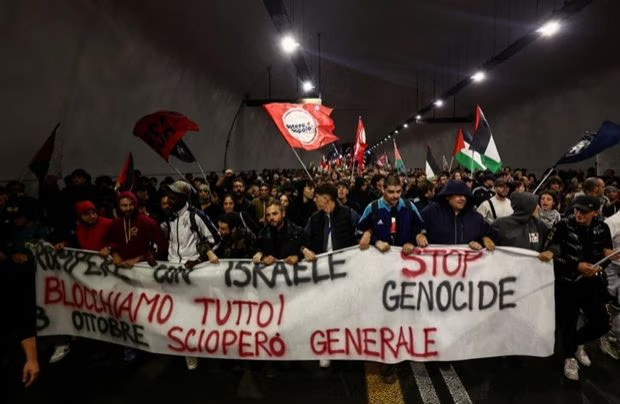
From the cobblestones of Paris to the Brandenburg Gate in Berlin, and across the bustling squares of London and Stockholm, thousands have taken to the streets. These are not just token protests; they represent a groundswell of public emotion and moral indignation that transcends typical political divisions. The images broadcast from city after city show a raw, visceral anger. Banners condemning the attack and demanding an immediate end to the Gaza blockade are held aloft by a diverse and growing coalition of citizens—students, long-time human rights activists, established politicians, and everyday people moved to action by the perceived injustice of the situation. The sheer scale and sustained nature of these demonstrations signal a profound shift in public sentiment across the continent.

But these demonstrations are more than just a fleeting expression of outrage. They represent a significant and potentially pivotal moment in Europe’s long and complex relationship with the Israeli-Palestinian conflict. This incident has punctured the veneer of diplomatic normalcy and forced a direct confrontation with the ethical and legal implications of the Gaza blockade. It compels European leaders to re-evaluate their positions, not just in terms of foreign policy, but also in response to the demands of their own electorates. Here are the key takeaways from this erupting crisis and what it signals for the future:
Key Takeaways from the Flotilla Incident and European Fallout
The Diplomatic Tightrope Just Snapped
For years, European governments have walked a delicate diplomatic tightrope, attempting to balance their historic ties and crucial security cooperation with Israel against their stated support for Palestinian rights, international law, and humanitarian principles. This intricate dance has often resulted in cautious statements and a preference for behind-the-scenes diplomacy. However, the Gaza flotilla incident forces their hand in an unmistakable way. The sheer scale and intensity of public fury make official statements of “concern” and calls for “restraint” sound not just hollow, but increasingly inadequate and out of step with popular opinion. Leaders are now under immense domestic pressure, from both their constituencies and opposition parties, to move beyond mere rhetoric and take concrete, decisive action. This could manifest in various forms, whether through formal condemnations in international bodies like the UN Security Council, the consideration of targeted sanctions against individuals or entities deemed responsible, a fundamental reassessment of their Middle East policy, or even the recall of ambassadors for consultations. The era of diplomatic ambiguity, where European nations could afford to equivocate on such contentious issues, appears to be decisively over. The incident demands clarity and a definitive stance, potentially redefining the parameters of Europe’s engagement in the region for decades to come.
The Court of Public Opinion is in Session
While governments deliberate, the European public has, in many respects, already delivered its verdict. For countless individuals across the continent, the attack on a civilian aid vessel has dramatically pierced the veil of geopolitical complexities and historical narratives, framing the issue in starkly moral and easily digestible terms: a heavily armed military power intercepting an unarmed humanitarian mission carrying essential supplies to a besieged population. This narrative, amplified rapidly and powerfully across social media platforms, citizen journalism channels, and traditional news outlets alike, is profoundly shaping a new generation’s view of the conflict. Israel’s immediate strategic goal may have been to enforce its Gaza blockade and deter future aid convoys, but in the court of global public opinion, particularly in Europe, it appears to have suffered a significant and arguably self-inflicted defeat. This shift in perception is not merely transient; it will have profound and long-term consequences for Israel’s standing, legitimacy, and diplomatic leverage in the West, potentially fueling movements for boycotts, divestment, and sanctions (BDS) and making it harder for European governments to maintain traditional levels of support or cooperation.
A Question of Strategy
The incident raises profound and unavoidable questions about the long-term viability and effectiveness of Israel’s Gaza strategy, specifically the maritime and land blockade imposed on the territory. The blockade, which Israel maintains is essential for its security, intended to weaken Hamas and prevent weapons smuggling, is now the direct cause of a massive international diplomatic and public relations crisis. Instead of effectively isolating Gaza, the raid has inadvertently placed the blockade itself under an intense global microscope, scrutinizing its legality, its humanitarian impact, and its stated objectives. This scrutiny has galvanized support for the Palestinian cause in a way that years of political negotiation and diplomatic efforts have not, attracting new allies and energizing existing advocacy groups. The political cost of maintaining the Gaza blockade, in terms of international condemnation, damaged reputation, and diplomatic isolation, has just skyrocketed. Israeli policymakers will now be forced to undertake a difficult cost-benefit analysis, weighing whether the perceived security benefits of the blockade are truly worth the escalating international isolation, the erosion of legitimacy, and the deepening diplomatic chasm with key European partners. The incident may force a fundamental re-evaluation of how Israel manages its security concerns in Gaza, potentially leading to calls for alternative strategies that are more compliant with international law and less detrimental to its global standing.
Looking ahead, the waves from this confrontation are only just beginning to reach the shores of European capitals. The immediate crisis may be about the fate of the activists, the investigation into the raid, and the urgent delivery of humanitarian aid to Gaza, but the larger story unfolding is about a potential sea-change in European policy towards the Middle East. The protests on the streets are a clear and unequivocal signal that the status quo is no longer tenable, and that public expectations for a more principled and proactive European foreign policy are at an all-time high. How Europe’s leaders choose to navigate these turbulent waters – whether they yield to public pressure, seek to re-establish a diplomatic balance, or chart an entirely new course – will profoundly define their role and influence in the complex Middle East for years to come. The incident has thrust Europe into a critical moment of decision, where inaction may prove to be as consequential as any overt policy shift.
Read the original story at The Star.
Given the intense public and diplomatic fallout from the flotilla incident, what concrete actions do you believe European governments should take to address the humanitarian situation in Gaza and re-evaluate their relationship with all parties in the conflict?