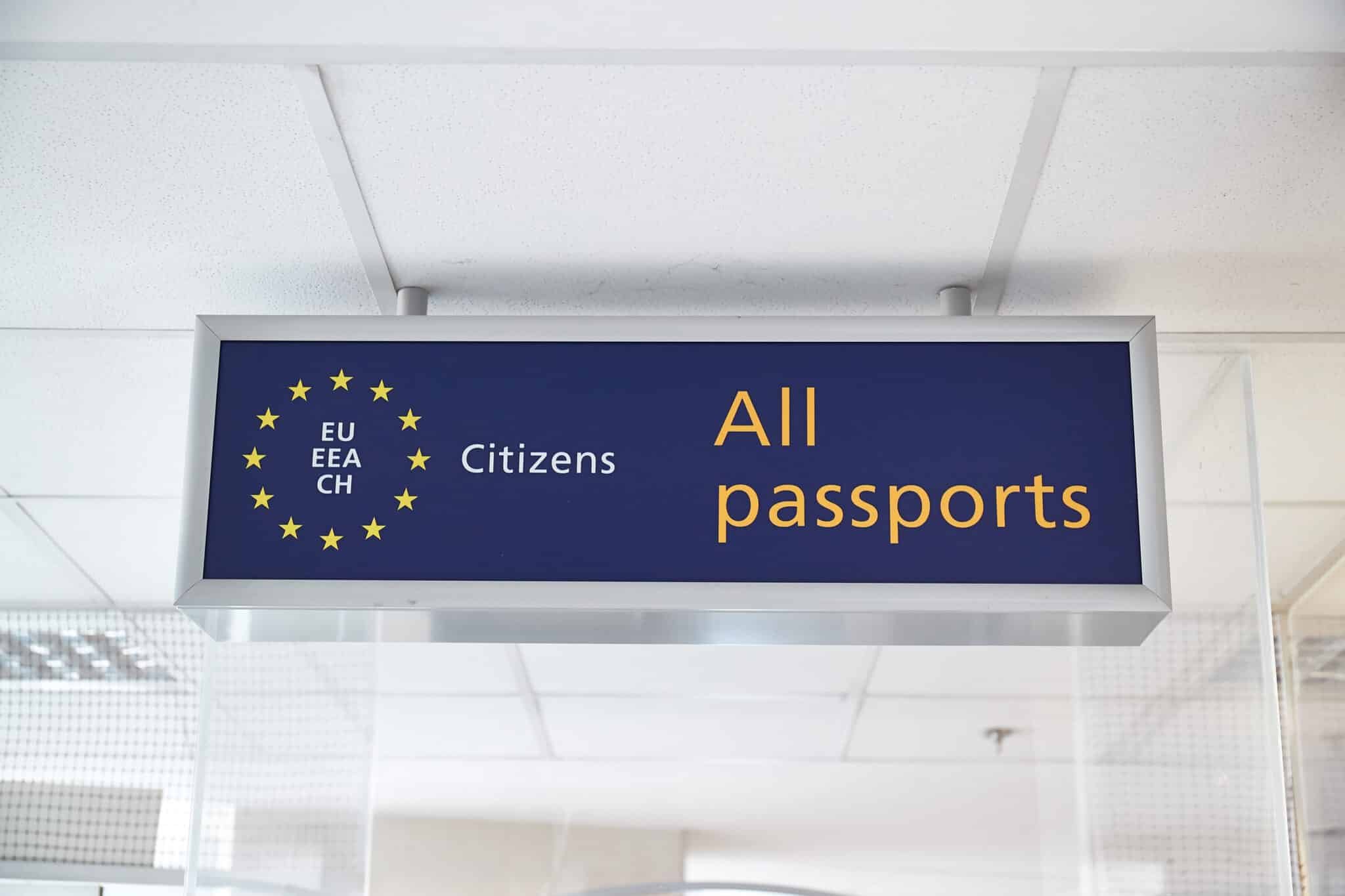
For decades, the humble passport stamp has been the traveler’s tangible proof of crossing a border—a smudged, colorful souvenir of journeys taken. But that era is officially coming to a close. The European Commission has just fired the starting gun on a massive public awareness campaign, signaling that Europe’s long-awaited, high-tech biometric border is no longer a distant concept, but an imminent reality.
This isn’t just a simple tech upgrade; it’s a fundamental reimagining of what a border is in the 21st century. Brussels is preparing to launch two interconnected systems—the Entry/Exit System (EES) and the European Travel Information and Authorisation System (ETIAS)—that will transform the continent’s external frontiers into a vast, data-driven network. The new campaign is a tacit admission of the scale of this change and the urgent need to prevent chaos as millions of travelers adapt.

What’s Actually Changing? A Two-Step Revolution
The transition will happen in two main phases, fundamentally altering the travel experience for non-EU citizens.
Entry/Exit System (EES)
First, slated for Autumn 2024, comes the Entry/Exit System (EES). This is the system that kills the passport stamp. Instead of a manual check and a flick of the wrist from a border guard, travelers will have their facial image and fingerprints registered in a centralized database upon their first entry. EES will automatically calculate permitted stays, instantly flagging anyone who overstays their 90-day limit within any 180-day period. For Europe, this solves a massive enforcement headache. For travelers, it means your biometrics are now your entry ticket.
ETIAS
Then, in mid-2025, the second piece of the puzzle clicks into place: ETIAS. This system targets travelers from over 60 visa-exempt countries, including the United States, the United Kingdom, Canada, and Australia. Similar to the U.S. ESTA program, these travelers will need to apply online for a pre-travel authorization before they even book a flight. The €7 application, valid for three years, will screen individuals against a host of security and immigration databases. It represents a monumental shift from a system of trust to one of pre-vetting.
Beyond Convenience: The Political Future of Fortress Europe
While the EU frames this as a move toward “smarter and more efficient borders,” the implications run much deeper. This is the culmination of years of political will, accelerated by the security and migration crises of the last decade. The EES and ETIAS together create one of the largest biometric databases on the planet, giving member states and EU agencies like Frontex an unprecedented, real-time view of who is entering, leaving, and staying within the Schengen Area.
The success of this rollout is far from guaranteed. The sheer technical complexity has already led to significant delays. The challenge now is human. The new awareness campaign—with its dedicated website, leaflets, and social media push—is designed to educate not just travelers but also airlines, ferry operators, and international transport staff who will be on the front lines of implementation. A misinformed public could lead to significant delays at airports and ports, turning the dream of a seamless border into a logistical nightmare.
Ultimately, this initiative marks a pivotal moment in the evolution of the European project. It is the construction of a digital wall around the Schengen Area, one built on data and biometrics rather than bricks and mortar. As travelers prepare to scan their faces instead of collecting ink stamps, they are stepping into a new era where entry into Europe is no longer just a right for many, but a pre-approved, digitally-monitored privilege. The quiet launch of a website this week is the first echo of that profound change.
What are your thoughts on this significant shift towards biometric borders, and how do you think it will impact your future travel experiences to Europe?
Read the original story at Biometric Update.