The Xbox Clearance: More Than Just a Sale, It’s a Strategic Tell
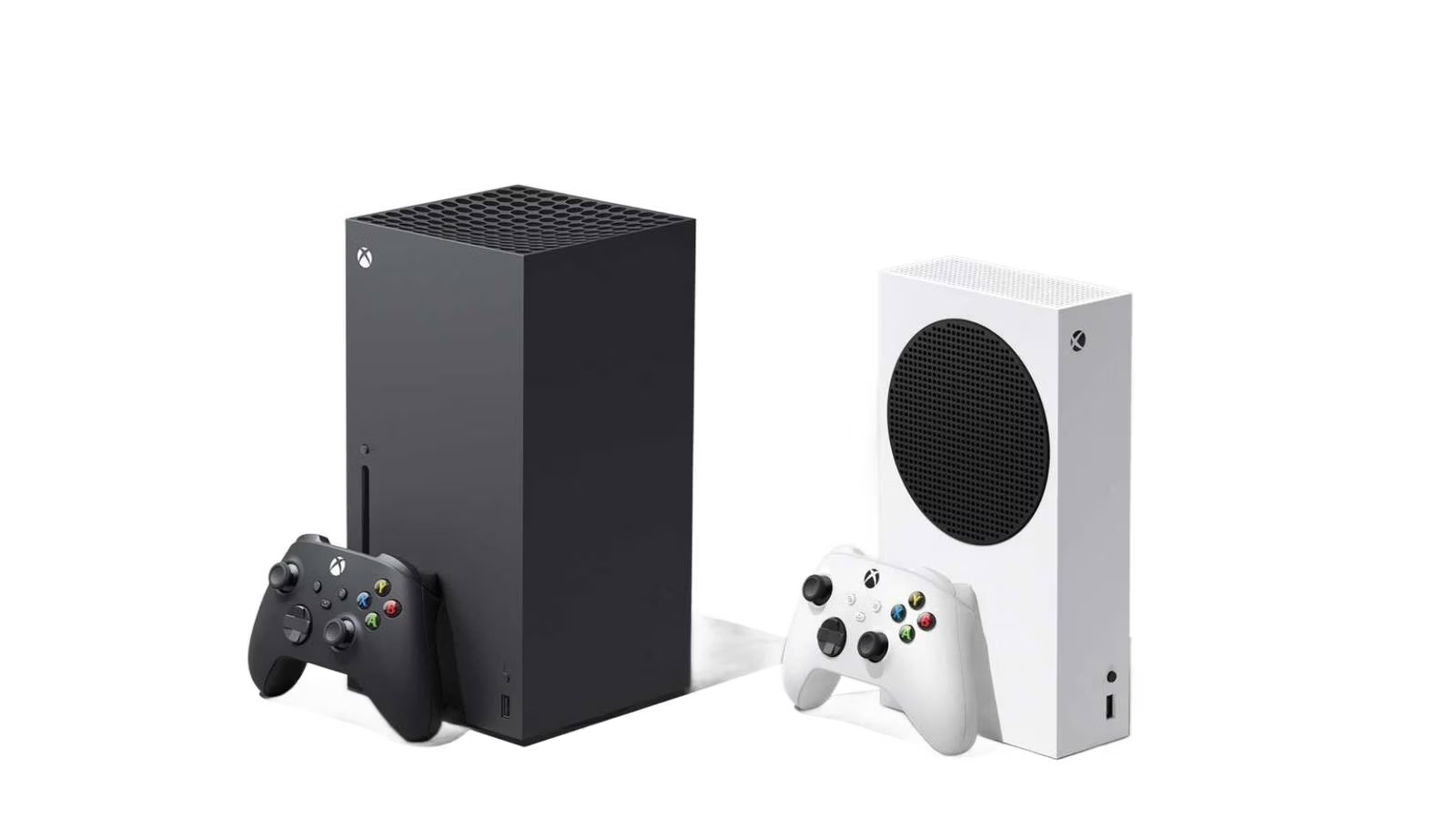
Something genuinely intriguing is unfolding in the retail landscape of America, and it carries significant implications for the future of console gaming. Initially, reports began to circulate about Costco significantly clearancing Xbox Series X and S consoles, signaling a potential shift. Now, Sam’s Club appears to be following suit, implementing substantial price reductions on current-generation Xbox hardware. This isn’t just about snagging a cheap console; it’s a fascinating look into Microsoft’s long-term vision.
On the surface, it might simply appear to be another routine retail markdown – perhaps an attempt to adjust pre-holiday inventory or a response to fluctuating demand. However, when two major warehouse clubs, institutions renowned for their ability to move products in massive volumes, simultaneously and aggressively slash prices on their *current-generation* console stock, it sends a powerful message. This isn’t merely a fleeting good deal for budget-conscious gamers; it’s a strong “tell” about Microsoft’s evolving hardware strategy, the current health of the console market, and the intriguing direction the future of Xbox might be headed.

These deep discounts suggest a strategic recalibration, moving beyond the traditional console sales metrics and pointing towards a broader ecosystem play. It’s an observable symptom of a gaming giant re-evaluating its approach to hardware in a world increasingly defined by digital services and multi-platform accessibility. What appears as a simple clearance sale could, in fact, be a cornerstone in a much larger, more ambitious plan for Xbox.
The Immediate Read: Slowing Xbox Hardware Sales
The most straightforward and immediate interpretation of these widespread Xbox clearances is that hardware sales for the Series X and Series S aren’t quite meeting Microsoft’s or retailers’ expectations. While the Xbox Series X initially experienced robust demand, particularly during its launch window and subsequent supply chain challenges, and the more affordable Xbox Series S successfully carved out a valuable niche as an accessible entry point into the current generation, sustaining that momentum appears to be an uphill battle.
Industry analysts and sales figures have consistently shown PlayStation 5 maintaining a significant lead in traditional console hardware sales globally. As the current console generation, launched in late 2020, now moves into its fourth year, it’s natural for demand for the initial SKUs to begin to taper off. This lifecycle dynamic, combined with fierce competition and potentially slower adoption rates for Xbox hardware compared to its rival, puts pressure on retailers to adjust their inventory strategies.
Retailers like Costco and Sam’s Club operate on a model of high volume and efficient inventory turnover. Holding onto slow-moving, high-value inventory like gaming consoles represents a significant capital cost. Therefore, when these giants resort to deep discounts, it strongly suggests they are experiencing an excess of Xbox consoles that they need to move quickly. This isn’t just about making room for potential new stock; it’s about optimizing their financial position and making way for whatever they perceive will be the next big draw.
This situation also raises questions about consumer preferences and market saturation. Have potential Xbox buyers already committed to the ecosystem, or are they waiting for something else? The price cuts could be a direct response to these market realities, a reactive measure to stimulate demand where it has otherwise softened. The challenge for Microsoft here is to distinguish between a general market slowdown and specific underperformance relative to its competitors, both of which likely contribute to these aggressive clearance events.
The Strategic Shift: Beyond the Box and Towards an Ecosystem
However, framing these Xbox clearances solely as a sign of struggling sales might be too simplistic. This retail phenomenon isn’t occurring in a vacuum; it aligns perfectly with Microsoft’s increasingly vocal and deliberate shift towards an ecosystem-first, multi-platform strategy. For years now, Xbox has been meticulously building out Game Pass – a subscription service that has become the undeniable cornerstone of its gaming vision. Game Pass offers a vast, rotating library of games, including all first-party Xbox titles on day one, playable across console, PC, and via cloud streaming.
Microsoft CEO Satya Nadella has consistently and emphatically reiterated that their gaming vision extends far beyond the confines of console-specific sales. He has emphasized that their core goal is to reach billions of gamers wherever they are, on whatever device they choose. In this grander strategic context, the physical Xbox console itself transforms from being the sole profit center into more of a gateway, an access point designed to onboard users into the lucrative and sticky Xbox ecosystem, with Game Pass at its heart.
If the overarching objective is to get as many people as possible immersed in the Xbox ecosystem, actively subscribing to Game Pass, and regularly enjoying first-party titles and other offerings, then the console’s individual profitability becomes secondary. In this scenario, selling consoles at a lower margin, or even strategically at a slight loss, to entice new subscribers into a recurring revenue stream like Game Pass could be an exceptionally shrewd long-term play. The value proposition shifts from a one-time hardware purchase to an ongoing digital relationship.
From this perspective, significant hardware clearances aren’t necessarily a sign of failure or distress, but rather a tactical maneuver to broaden the reach of the Xbox brand. By making the hardware more affordable and accessible, Microsoft can lower the barrier to entry for potential Game Pass subscribers. This strategy echoes models seen in other tech sectors, where initial device sales act as a loss leader for subsequent service subscriptions. It’s about optimizing lifetime customer value rather than maximizing the profit on a single box. This proactive approach underscores a confidence in the Game Pass model to drive future revenue.
What’s Next? The Mid-Gen Refresh Question Looms
Another tantalizing possibility stemming from these deep Xbox discounts is that they are strategically paving the way for the introduction of new hardware. The history of console generations is replete with examples of mid-cycle refreshes – more powerful or redesigned versions of existing consoles that aim to inject new life into the market. Think of the PlayStation 4 Pro, which offered enhanced graphics and performance, or the Xbox One X, which delivered a significant power boost for 4K gaming. Microsoft has a track record of such upgrades, and the current timing for a Series X/S refresh seems ripe.
For several months, whispers and leaks have circulated within the gaming community regarding potential new Xbox hardware. These rumors include an “all-digital” Xbox Series X, which would eliminate the disc drive for a sleeker profile and potentially lower manufacturing costs, as well as a more powerful “Pro” model, designed to push graphics and frame rates even further for enthusiasts with high-end displays. Clearing out existing stock now would make eminent sense if Microsoft plans to unveil such new iterations of its consoles, perhaps even a more significant redesign, in the coming months or next year.
The benefits of a mid-gen refresh are multifaceted. Such a move could significantly boost hardware sales, particularly among early adopters looking for the absolute best performance or those who delayed their purchase hoping for a more advanced model. A refresh could also introduce new form factors, like a smaller, more aesthetically pleasing console, or offer an even more premium experience for gamers with high-resolution 4K or even 8K displays and high refresh rate monitors. It’s a way to re-energize the market without committing to a full next-generation leap.
Historically, substantial retail clearance events are often the calm before the storm of new product announcements. Manufacturers rarely let old inventory linger once new, improved models are on the horizon. By aggressively clearing out current Series X and S models now, Microsoft would be setting the stage for a dramatic reveal, ensuring that retailers have ample space and incentive to stock the upcoming hardware. This strategy minimizes potential cannibalization of new sales by old stock and allows for a clean transition, creating renewed excitement and driving consumer spending.
The Future: A Console-Agnostic Xbox?
Ultimately, this widespread Costco and Sam’s Club Xbox clearance offers more than just a momentary pricing advantage; it provides a tangible glimpse into a future where the traditional “console war” might, for Microsoft, become an increasingly irrelevant concept. If the physical console itself becomes less of a walled garden – a singular, exclusive portal to the Xbox experience – and more of a preferred access point among many options, then its price point and retail availability shift from being competitive battlegrounds to strategic levers within a much larger, more fluid ecosystem strategy.
In this evolving landscape, the Xbox console functions as one strong pillar within a broader gaming architecture that includes robust PC gaming integration, expansive cloud streaming capabilities accessible on various devices, and potentially even the availability of some first-party Xbox titles on rival consoles. This approach redefines Xbox’s identity, moving it away from being solely a hardware manufacturer to becoming a comprehensive content and service provider. The console becomes just one, albeit important, conduit to Game Pass and Microsoft’s expansive library of games.
For consumers, this strategic pivot holds significant promise. It could translate into more competitive hardware pricing, as seen with these current clearances, making the entry barrier to the Xbox ecosystem lower than ever. It also implies a greater focus on service value – emphasizing the vastness of the Game Pass library and the convenience of cloud gaming over the raw power of a single box. Most importantly, it promises greater flexibility in how and where gamers access their favorite titles, fostering an environment of choice rather than restriction.
Microsoft’s gaming division appears to be moving decisively towards an identity that transcends the specific hardware it produces. Instead, it aims to define itself by its compelling content, its innovative services like Game Pass, and the vibrant, interconnected community it fosters across all platforms. The discounts observed in warehouse clubs aren’t just about moving units off shelves; they are a clear and tangible symptom of this grander, evolving vision taking shape, signaling a fundamental shift in how Xbox intends to compete and thrive in the ever-changing world of video games.
Read the original story at TheGamer.
What do you think these aggressive Xbox clearances signify for the future of Microsoft’s gaming strategy and the broader console market?