The Future is Familiar: Nintendo’s Masterclass in Building Bridges to the Switch 2
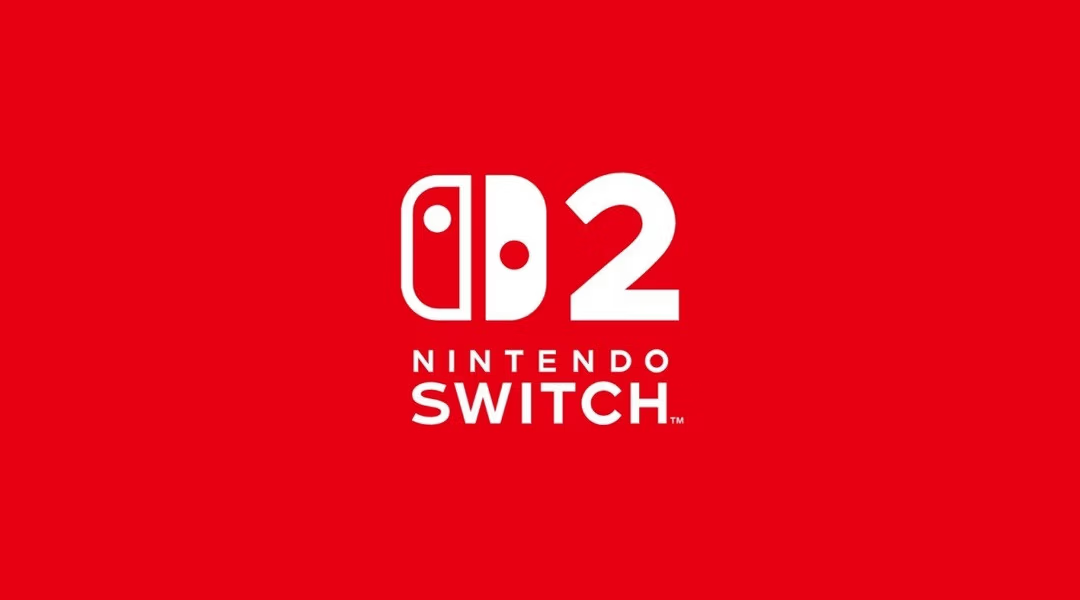
The air around Nintendo’s next console, affectionately (and unofficially) dubbed the “Switch 2,” is thick with speculation. What will it look like? How powerful will it be? But perhaps the most fundamental question for many loyal players is: will my existing library come with me? If a recent report is anything to go by, Nintendo isn’t just listening – they’re meticulously building the future, one backward-compatible fix at a time.
News has surfaced that Nintendo is actively issuing “backwards compatibility fixes” for original Switch games, specifically for their eventual deployment on the Switch 2, with a particular focus on an October 2025 deadline. This isn’t just a quiet technical exercise; it’s a profound strategic statement, speaking volumes about Nintendo’s vision for its next-generation hardware and its commitment to its sprawling player base.

This commitment to preserving the extensive library of original Switch titles is a testament to Nintendo’s understanding of its audience. In an era where digital libraries represent significant investments for gamers, ensuring these purchases carry forward is not merely a convenience but a cornerstone of consumer trust and loyalty. It transforms the console upgrade experience from a potential loss of access into a seamless evolution.
The implications of these proactive “backwards compatibility fixes” extend far beyond mere functionality. They paint a picture of a Nintendo that is deliberately crafting a soft landing for its millions of Switch owners, aiming to make the transition to the new hardware as appealing and frictionless as possible. This approach stands in stark contrast to previous console generations where a new machine often meant leaving a beloved game collection behind, forcing players to repurchase or simply move on from their old favorites.
What “Backwards Compatibility Fixes” Really Means
This isn’t about simply flipping a switch and hoping older games run. The term “fixes” suggests a more intricate, labor-intensive process. It implies that Nintendo is actively scrutinizing the vast Switch library, identifying potential issues that might arise when these titles run on new hardware architecture. This isn’t a passive emulation strategy; it’s an active, game-by-game optimization effort.
Performance Optimization: Elevating the Experience
One of the primary goals of these fixes will undoubtedly be performance optimization. While the original Switch games were designed for specific hardware specifications, the Switch 2 is expected to boast significantly more powerful components. This presents both an opportunity and a challenge. Nintendo will likely be ensuring stable frame rates and smooth gameplay, eliminating any unforeseen dips or stutters that might occur on the new, more complex architecture. But beyond just stability, these fixes could also allow for subtle, yet meaningful, enhancements without necessitating a full-blown remaster. Imagine slightly faster loading times, improved resolution scaling for docked mode, or more consistent visual fidelity across demanding scenes – all delivered through these compatibility updates.
Hardware Compatibility: Bridging Architectural Gaps
The transition to new hardware is rarely a straightforward port. Differences in CPU, GPU, memory, or storage components in the Switch 2 could lead to unforeseen glitches or unexpected behaviors in existing games. These “fixes” are crucial for addressing these potential discrepancies. This involves deep dives into game code to ensure that the logic, rendering pipelines, and data access methods translate seamlessly to the new machine. It’s about preventing graphical artifacts, audio desynchronization, or even game-breaking bugs that could emerge from the architectural shift. Nintendo’s meticulous approach here safeguards the integrity of every title, ensuring a reliable and consistent experience for players.
Feature Integration: Preserving the Nintendo Touch
Beyond raw performance, Nintendo consoles are defined by their unique features. The Joy-Cons, for instance, offer a distinct set of functionalities, including HD Rumble, motion controls, and IR cameras. These compatibility fixes would also ensure that existing functionalities translate seamlessly to the Switch 2. If the new console features updated Joy-Cons or new peripherals, these fixes would bridge the gap, allowing older games to leverage them appropriately or at least function as intended. Moreover, online services, saved data migration, and potential new system-level features will need to integrate effortlessly with the existing game library, ensuring that a player’s entire gaming ecosystem moves forward together. The fact that a “full list” of these fixes is being compiled indicates a comprehensive, systematic approach rather than a patchwork solution, underpinning Nintendo’s commitment to quality control.
The October 2025 Enigma
The October 2025 date is a significant breadcrumb, stirring considerable speculation within the gaming community. While it could simply be an internal development milestone for final checks on backward compatibility, it’s hard to ignore its potential implications. This date could signal a readiness target for the console itself, hinting at a potential launch window, or at the very least, a period when Nintendo aims to have its foundational software support fully locked down. Such a methodical timeline suggests a highly deliberate launch strategy, designed to avoid the pitfalls of rushing hardware to market without robust software support – a lesson potentially learned from past console generations, where a sparse launch lineup proved challenging.
If October 2025 represents a launch window, it provides Nintendo with ample time to refine the hardware, optimize the operating system, and build a strong slate of first-party launch titles, all while ensuring a vast existing library is ready to go. Alternatively, if it’s merely a software compatibility deadline, it means Nintendo is setting an aggressive internal target to ensure that by Q4 2025, their entire back catalog is primed and ready, giving them flexibility for a potential late 2025 or early 2026 hardware release. Regardless of the exact interpretation, this precise deadline speaks volumes about Nintendo’s methodical approach to its next-generation gaming experience.
Why This is a Game-Changer for Gamers and Nintendo Alike
Nintendo’s proactive stance on backwards compatibility isn’t just a technical achievement; it’s a strategic masterstroke that will resonate deeply with its player base and solidify its market position.
For Gamers: Unprecedented Value and a Seamless Future
- Value Retention: Perhaps the most immediate and profound benefit for gamers is the preservation of their existing Switch library. Your meticulously built collection of physical cartridges and digital downloads, representing hundreds or even thousands of hours of gameplay and significant financial investment, isn’t suddenly obsolete. This policy respects your past purchases and provides immense peace of mind, knowing your favorite games will migrate with you to the new platform.
- Day One Library: Imagine buying a new console and instantly having access to hundreds of high-quality titles. This eliminates the dreaded “launch drought” – a common issue with new console releases where the initial library is sparse. The Switch 2 will offer an unparalleled value proposition from day one, allowing players to dive into their beloved classics or explore games they missed, all on enhanced hardware. This reduces buyer’s remorse and fuels early adoption.
- Seamless Transition: Moving to the Switch 2 becomes less about “starting over” and more about “upgrading” your gaming experience. With improved performance, potentially sharper visuals, and new features enhancing familiar favorites, the transition will feel natural and rewarding. Saved data, digital entitlements, and friendships will carry over, fostering a sense of continuity that reinforces the player’s connection to the Nintendo ecosystem.
- Enhanced Experiences: Beyond just playing, these fixes could bring subtle yet impactful improvements. Games that struggled with occasional frame drops on the original Switch might run flawlessly on the Switch 2. Titles designed for the original hardware could see improved resolution scaling or faster loading times, breathing new life into cherished classics without requiring developers to create expensive remasters.
For Nintendo: A Strategic Blueprint for Success
- Strategic Advantage and Consumer Trust: This is a clear lesson learned from past console transitions, where a lack of robust backward compatibility (like with the GameCube to Wii, or even the initial Wii U struggles with adoption) could hinder momentum. By ensuring backward compatibility, Nintendo strengthens its ecosystem, builds immense consumer trust, and offers a compelling differentiator against competitors who have often struggled with seamless cross-generational play. It tells consumers: “Your investment in our platform is safe.”
- Strong Launch and Reduced Pressure: A vast, immediately playable library on day one is an enormous selling point, minimizing the pressure on new first-party titles. Developers can take their time to polish and perfect new games, launching them when truly ready, rather than being rushed to fill a barren launch window. This allows Nintendo to focus on quality over quantity for its initial exclusive lineup, setting a high standard for the new console.
- Ecosystem Reinforcement and Digital Sales: It ties players more deeply into the Nintendo platform, encouraging continued investment in digital titles knowing they’ll carry forward. This strategy bolsters the Nintendo eShop, potentially increasing digital sales as players feel more secure in building their digital collection. It creates a robust, self-sustaining ecosystem that makes leaving the Nintendo platform less appealing.
- Developer Goodwill: While these fixes are largely done by Nintendo, the assurance of backward compatibility is also beneficial for third-party developers. It means their existing Switch games will have a renewed life on the new console, potentially driving new sales to those who adopt the Switch 2. This fosters stronger relationships with publishing partners, making the Switch 2 an attractive platform for future development.
This quiet, technical endeavor by Nintendo isn’t just about fixing code; it’s about building confidence. It signals that the Switch 2 isn’t just a new piece of hardware, but a thoughtful evolution designed to honor its past while charting an exciting future. It’s a masterclass in strategic planning, ensuring that when the “Switch 2” finally arrives, it will feel both incredibly fresh and wonderfully familiar.
Read the original story at Nintendoeverything.com.
What are your thoughts on Nintendo’s proactive approach to backward compatibility for the Switch 2, and which of your existing Switch games are you most excited to revisit on the new hardware?