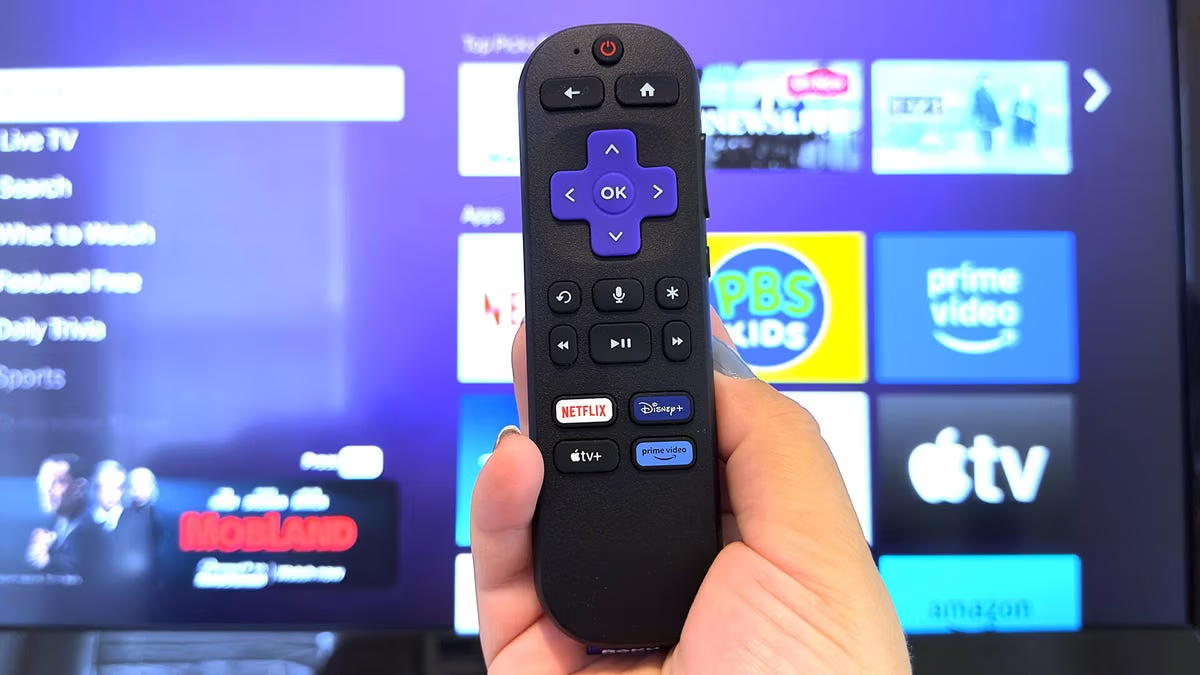
Beyond the Apps: Roku’s Bold Move to Untangle Your Streaming Mess
Remember the early days of cord-cutting? The promise was intoxicating: ditch expensive cable bundles, select only the services you truly wanted, and dive into a brave new world of on-demand content. This vision promised unparalleled freedom and significant savings. Yet, fast forward just a few years, and many of us found ourselves staring at a different kind of screen paralysis. The initial euphoria of liberation morphed into a pervasive sense of fragmentation, and the sheer abundance of choice began to feel more like chaos. We are now undeniably deep into the era of “streaming fatigue,” a widespread exhaustion that stems from the very systems designed to entertain us, and frankly, it’s profoundly exhausting.
The core issue isn’t a scarcity of compelling content – quite the opposite. It’s the bewildering labyrinth of individual apps, each with its own idiosyncratic interface, its own endless scroll through a siloed library, and its own proprietary algorithm trying to guess “what you should watch next.” For the average household, this often translates into a multitude of subscriptions: Netflix for prestige dramas, Hulu for network shows, Max for blockbuster movies, Disney+ for family entertainment, Peacock for sports and exclusives, Paramount+ for its unique catalog, perhaps an additional specialized sports package, and maybe even a few niche services catering to specific interests. Each of these platforms demands its own separate launch, its own login, and its own mental framework. The simple act of finding a live sports event, catching up on breaking news, or even just idly browsing for something to unwind with has become a Herculean task, demanding multiple app launches, a fair bit of mental gymnastics, and often, a surprising amount of time.

This escalating frustration, this digital disarray, represents the single biggest pain point in modern home TV streaming. While consumers have been vocal about these challenges, a definitive, elegant solution has remained elusive. It seems Roku, a veteran player in the streaming hardware and software space, has been quietly observing these evolving frustrations, because they’ve just rolled out a monumental update that possesses the potential to fundamentally reshape how millions of us interact with our living room screens, moving us beyond mere app-launching to genuine content discovery.
The Return of Simplicity: Roku’s Unified Live TV Revolution
Roku’s latest strategic move isn’t about injecting yet another streaming service into an already saturated market; instead, it’s a direct assault on the pervasive navigational nightmare that has plagued streaming enthusiasts. They are addressing the core problem by integrating a sophisticated new “Live TV” section directly into their operating system. This isn’t just a new menu item; it’s a centralized, intelligent hub designed to aggregate all your live content, effectively bringing order to the chaos and restoring a sense of familiarity to the modern viewing experience.
Imagine the comfort and convenience of a single, familiar channel guide, much like the electronic program guides (EPGs) we effortlessly navigated in the heyday of traditional cable. Now, envision that same intuitive guide, but infinitely more powerful and expansive. This isn’t merely a directory for Roku’s own extensive collection of free “Roku Channel” live streams, which already boasts hundreds of channels covering news, entertainment, and niche interests. The true innovation lies in its seamless integration capabilities. It intelligently pulls in a vast array of free ad-supported TV (FAST) services, such as the ever-popular Tubi and Pluto TV, renowned for their extensive libraries of movies and TV shows, alongside your premium, paid live TV streaming subscriptions like Sling TV or FuboTV, which offer access to major networks and sports. But here’s where Roku truly distinguishes itself: if you’ve got a traditional cable box or even a simple over-the-air antenna connected directly to your Roku TV via HDMI, those broadcast or cable channels are also meticulously integrated into this very same unified guide. This means local news, major sporting events, and prime-time network programming are now discoverable right alongside your streaming favorites, all from one central interface.
The real magic of this system unfolds discreetly behind the scenes, offering a truly frictionless user experience. When you intuitively select a channel from this newly unified guide, Roku’s operating system doesn’t just display a logo; it intelligently determines the correct source, whether it’s The Roku Channel’s native player, the Sling TV app, or another specific service. It then swiftly launches the appropriate application and, crucially, takes you directly to the live content you selected. This eliminates the exasperating ritual of manually switching between disparate apps, trying to recall which specific service carries which live channel, or endlessly toggling inputs. It’s a profound shift, meticulously engineered to make content discovery intuitive, immediate, and utterly user-centric again, deliberately putting the viewing experience – the simple act of watching what you want, when you want – not the fragmented underlying app, at the undisputed forefront.
Strategic Implications: What This Means for the Future of TV
To characterize this as merely a “minor software update” would be a significant understatement. Roku’s unified Live TV feature represents a strategic masterstroke with far-reaching implications, not just for the company itself, but for the entire trajectory of home entertainment and the evolving streaming landscape. This isn’t just a quality-of-life improvement; it’s a declaration of intent, signaling a deeper integration and a bold vision for how consumers will interact with their digital media for years to come.
1. Reclaiming the Remote: Beyond App-Launching
For far too long, the humble TV remote control, once a powerful tool for effortless channel surfing, had devolved into little more than a launcher for individual applications. This shift necessitated a “lean forward” approach to TV viewing, where intentional decisions and multiple clicks replaced casual browsing. Roku’s innovation fundamentally repositions the remote, transforming it back into a powerful tool for content discovery and immediate access. By cutting through the overwhelming clutter of disparate apps and services, Roku significantly reduces decision fatigue. The ability to simply “surf” through a comprehensive list of live channels, regardless of their origin, restores the simple, almost nostalgic joy of channel surfing. This empowers users to find something interesting without prior knowledge of its platform, mimicking the beloved ease of traditional linear television while maintaining the expansive choice of the streaming era. This shift can reinvigorate the casual viewing experience, allowing users to relax and browse rather than actively search and launch.
2. Elevating the Platform: Roku as the Central Nexus
Historically, Roku’s operating system has functioned largely as an agnostic launcher, providing a clean interface from which users could access third-party applications. This new initiative signals a profound transformation: Roku is moving beyond being merely an operating system that hosts other apps to becoming a true content aggregator and a central nexus of your entire home entertainment ecosystem. By consolidating live content from diverse sources – free, paid, and traditional broadcast – Roku significantly enhances the stickiness of its platform. This solidifies their competitive edge against other smart TV platforms like Amazon Fire TV, Google TV, Apple TV, and even proprietary smart TV operating systems from manufacturers like Samsung (Tizen) and LG (webOS). For advertisers, this means more time spent within the Roku environment, offering greater opportunities for targeted advertising and increased ad revenue, further strengthening Roku’s financial model and market position.
3. A New Standard for Streaming? The Inevitable Race to Unify
If this unified Live TV feature proves as popular and effective as its initial reception suggests, it’s highly probable that we will witness a rapid movement from other major players to adopt similar, unified live TV experiences. The market has been crying out for this kind of simplification, a cohesive viewing experience that respects the user’s time and reduces friction. Consumers are tired of platform-specific silos; they simply want to watch their content. Roku has seemingly hit upon a winning formula that directly addresses this widespread frustration. Competitors who fail to offer a similar level of integration risk falling behind, as users migrate to platforms that prioritize convenience and comprehensive content discovery. This could ignite an innovation race among streaming OS providers, ultimately benefiting consumers through more integrated and user-friendly interfaces across the board.
4. The “Best of Both Worlds”: Blending Tradition and Innovation
This groundbreaking update masterfully marries the familiarity and unparalleled ease of use inherent in traditional linear television with the expansive choice, flexibility, and on-demand nature of modern streaming services. It elegantly resolves the false dichotomy that has long existed between these two modes of consumption. It’s about having your cake and eating it too – a thoughtfully curated, eminently easy-to-navigate experience that feels intuitive and comprehensive, without simultaneously being locked into the expensive, rigid, and often bloated bundles that characterized traditional cable. Users gain access to an unprecedented breadth of content, from obscure niche channels to major network broadcasts, all presented in a unified, digestible format. This hybrid approach represents a significant evolution, showing that the future of TV isn’t about abandoning one model for another, but about intelligently integrating the best aspects of both.
5. A Brighter Future for FAST Channels: Enhanced Visibility and Legitimacy
The rise of Free Ad-Supported TV (FAST) channels has been a quiet revolution in the streaming world, offering a vast array of content without a subscription fee, supported entirely by advertising. Services like Tubi, Pluto TV, Freevee, and hundreds of others provide an invaluable resource for budget-conscious viewers or those seeking supplementary content. However, their visibility has often been limited, buried within their own apps or niche sections. By seamlessly integrating these free ad-supported channels into a prominent, easy-to-find, and universally accessible channel guide, Roku is granting these services a significant and immediate boost in visibility, discoverability, and overall accessibility. This strategic move further legitimizes their place within the broader streaming ecosystem, introducing them to millions of users who might not have actively sought them out before. This increased exposure is not only beneficial for consumers seeking free content but also for the FAST providers themselves, leading to higher viewership, more robust ad impressions, and ultimately, a healthier, more diverse streaming landscape.
Roku’s latest innovation feels like a truly significant step forward in the ongoing, dynamic evolution of television. It courageously acknowledges the profound challenges and growing frustrations of the fragmented streaming age head-on, and in response, offers a refreshingly elegant, user-centric solution. By relentlessly prioritizing the user experience and meticulously crafting a system that makes content discovery utterly frictionless, Roku might just have untangled the biggest, most persistent problem with modern home TV streaming. This bold move doesn’t just improve a product; it charts a clear course towards a more intuitive, more enjoyable, and ultimately, a less exhausting future for all of us who love to watch TV.
You can read the original story and learn more details about this exciting development at ZDNet.
What are your thoughts on Roku’s unified Live TV guide? Do you believe this innovation will genuinely solve the problem of streaming fatigue, or are there other factors at play?