A Changing of the Guard in Apple’s AI Kingdom: What a Key Executive’s Exit Really Means
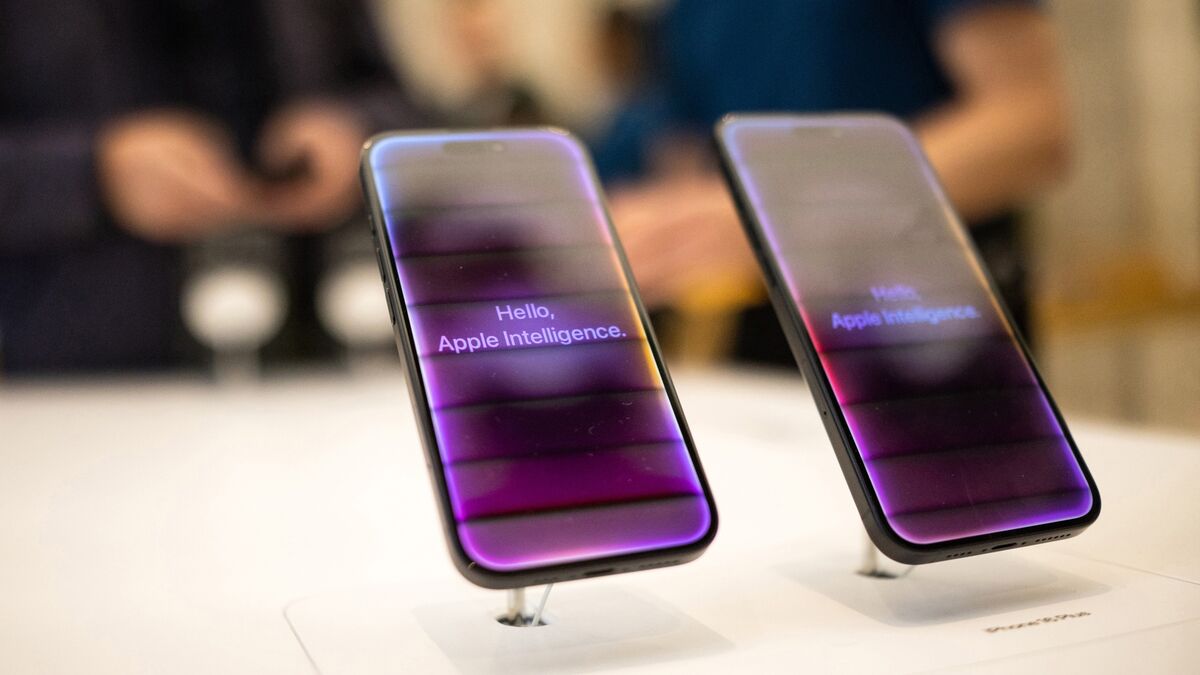
Just as the digital confetti from Apple’s grand “Apple Intelligence” reveal has settled, a quiet but profoundly significant tremor has run through the hallowed halls of Cupertino. Robby Walker, a senior director instrumental in building the very foundations of Apple’s search and artificial intelligence capabilities for over a decade, is leaving the company. This departure, confirmed shortly after the monumental Worldwide Developers Conference (WWDC) keynote that showcased Apple’s ambitious new generative AI vision, signals more than just another executive reshuffle in the relentless churn of Silicon Valley; it feels like the symbolic end of an era—and the true, unvarnished beginning of a new, generative AI-powered one.
Walker’s influence at Apple is deeply embedded in the everyday functionality millions of users worldwide rely on. His teams were the unseen architects, meticulously crafting the “smarts” that anticipate our needs, organize our digital lives, and make our devices feel intuitively intelligent. His exit, coming hot on the heels of Apple’s most ambitious AI announcement to date, prompts a crucial question for industry watchers and users alike: What does this strategic transition mean for the future direction of Apple’s artificial intelligence efforts, particularly as it pivots from a decade of foundational knowledge graphs and structured data to the cutting edge of Large Language Models (LLMs) and creative generative capabilities?

Understanding the gravity of this transition requires a deep dive into the technological groundwork Walker painstakingly laid and a forward look to the bold new world Apple Intelligence promises. His legacy is one of precision, structured data, and proactive assistance—a testament to Apple’s methodical, privacy-first approach to integrating intelligence discreetly and efficiently. Now, as the company embraces a more creative, conversational, and context-aware paradigm, the implications of such a foundational departure become profoundly clear, shaping the very definition of personal AI for years to come.
The Architect of “What You Know”: Robby Walker’s Foundational Legacy
To truly grasp the significance of Robby Walker’s departure, one must delve into the “what” and “how” of his extensive contributions to Apple’s AI and search endeavors. Walker wasn’t merely a senior director; he was a pivotal figure, joining Apple in 2013 through the acquisition of his innovative search startup, Cue. Cue was an early pioneer in intelligent personal assistants, renowned for its uncanny ability to pull together disparate pieces of information—emails, calendar entries, contacts, location data, documents—and present them contextually, often before the user even realized they needed it. This proactive, intelligent synthesis of personal data deeply resonated with Apple’s own goals for a more intelligent, user-centric ecosystem.
For over a decade, Walker served as a key architect of the “smarts” that have been quietly humming beneath the surface of your iPhone, iPad, and Mac. His domain was the foundational layer of intelligence: the knowledge graph and proactive assistance. These systems are about meticulously organizing vast amounts of information—both public facts and personal data (securely on-device)—and creating a network of relationships between entities. Think about the seamless experiences we often take for granted, which are direct descendants of the groundwork laid by Walker’s teams:
- When you pull down on your home screen and Spotlight instantly finds an app, a specific contact, a snippet from a message, or even performs a currency conversion or a complex mathematical calculation directly from the search bar—that’s the world Walker helped build. It’s an intricate system of indexing, semantic understanding, and on-device processing, designed for unparalleled speed, relevance, and above all, privacy. Spotlight’s ability to prioritize local, personal results over generic web searches truly defined Apple’s approach.
- When you ask Siri a factual question, such as “What’s the highest mountain in the world?” or “How far is it to the moon?”, and it pulls from a meticulously organized knowledge graph, often leveraging partnerships like Wolfram Alpha for computational facts, providing concise and accurate answers, it’s a direct result of the infrastructure his teams developed. This wasn’t about generating creative text; it was about retrieving verified, structured information and presenting it intelligently and reliably.
- When your iPhone proactively suggests a location in Apple Maps based on your calendar events, suggests an app you might need based on your routine or location, or offers a specific contact to share a photo with, you’re seeing the fruits of his team’s labor in proactive intelligence. These features are about anticipating user needs through learned patterns and contextual cues, all designed with a deep commitment to on-device processing and user privacy. This “knowledge-first” approach minimized the reliance on sending personal data to the cloud, a core tenet of Apple’s philosophy.
This was Apple’s robust, first-generation AI strategy: structured, reliable, and deeply integrated into the operating system. It was about knowing, organizing, and retrieving information with unparalleled efficiency. The focus was on augmenting user capabilities through intelligent access to data, creating a deeply personal and private layer of intelligence that became a hallmark of the Apple experience. Walker’s expertise lay in building these robust, often on-device, systems that understood and organized the user’s digital universe, creating a foundation of trust and utility that few competitors could match.
The Pivot from Knowing to Creating: Apple Intelligence and Generative AI
And that’s precisely why the timing of Robby Walker’s exit is so profoundly fascinating. Apple’s recent, monumental push with “Apple Intelligence” represents a fundamental, almost seismic, pivot from the old model of “knowing” to a brave new world of “creating.” While the new generative capabilities are undeniably built *on top* of the stable and privacy-focused foundation Walker helped lay, their core philosophy is fundamentally generative. It’s a conceptual shift from a meticulously organized, expertly curated library, where every piece of information has its designated place, to a creative author who can write a new story, summarize complex narratives, or generate vivid imagery on demand.
Apple Intelligence isn’t merely an incremental update; it’s a paradigm shift towards Large Language Models (LLMs) and diffusion models that enable functionalities previously considered science fiction for mainstream devices. While knowledge graphs are about structured facts and relationships, LLMs are statistical models that learn patterns from vast datasets to predict and generate human-like text, code, images, and more. This transition signifies Apple’s full embrace of generative AI, moving beyond static data retrieval to dynamic content creation and deep semantic understanding. We’re talking about:
- Advanced Text Generation: Drafting emails with a specific tone, rewriting notes for clarity, proofreading documents, or even brainstorming creative ideas with a keen understanding of context and nuance. This goes far beyond simple auto-correct.
- Intelligent Summarization: Condensing lengthy articles, emails, meeting transcripts, or entire web pages into digestible snippets, instantly, allowing users to quickly grasp essential information.
- Deep Contextual Understanding: The ability for Siri to retain conversational context across multiple turns, understand personal information stored securely on your device, and execute complex, multi-step actions across various applications, making interactions far more natural and useful than ever before.
- Creative Image Generation: Features like Image Playground, allowing users to create novel images based on text prompts, sketches, or even photos of friends, directly on their devices, opening up new avenues for personal expression.
This embrace of generative AI requires a different set of technical challenges, a new approach to model training (often involving immense datasets), and an emphasis on sophisticated inferencing capabilities that can run efficiently on Apple Silicon, often on-device for paramount privacy and speed. For tasks requiring greater computational power, Apple introduced “Private Cloud Compute,” an innovative architecture that extends the privacy protections of the iPhone to the cloud by using Apple Silicon servers that can verify that no data is stored or exposed.
Walker’s departure, coming immediately after the launch of this new vision, can therefore be read in two significant, albeit intertwined, ways. It could be seen as a “mission accomplished” moment—the veteran who meticulously engineered the original engine stepping aside now that the new, supercharged generative motor is being installed. From this perspective, he fulfilled his crucial role in building the robust, privacy-centric architecture upon which the next generation of AI could confidently stand.
However, a more compelling and arguably more likely interpretation is that it signals a profound strategic realignment within Apple’s AI division, perhaps even a cultural shift. The center of gravity is shifting decisively toward Large Language Models (LLMs), neural networks, and the new wave of generative AI. The highly specialized skills that built yesterday’s smart assistant, focusing on structured data, knowledge graphs, and precise retrieval, are not necessarily the identical skill sets that will build tomorrow’s creative, conversational, and context-aware digital partner. This isn’t to diminish Walker’s immense contributions, but rather to acknowledge that the demands of the new frontier—which require extensive research into foundation models, novel training techniques, and scaling infrastructure—often call for a different emphasis, perhaps even a different organizational philosophy, for driving innovation in generative AI at scale.
What This Means for the Future of Siri, Spotlight, and Apple’s AI Vision
So, what happens next for Apple’s foundational AI systems in the wake of Robby Walker’s exit, and more broadly, for the company’s ambitious new generative AI vision? John Giannandrea, Apple’s Vice President of Machine Learning and Artificial Intelligence Strategy, remains firmly at the helm, a testament to the overarching strategic direction set years ago. Walker’s responsibilities, critical as they were, will be distributed among other seasoned leaders and newly appointed directors within the AI and search teams. This isn’t a sign of chaos or instability, but rather a calculated evolution, likely consolidating power and focus under the new generative AI mandate to streamline development and accelerate integration.
This move strongly suggests that Apple is going all-in on a future where search, knowledge retrieval, and proactive assistance are not just about retrieving static facts but about synthesizing information, understanding user intent in unprecedented depth, and interacting in real-time. The era of simply returning predefined search results or canned Siri responses is giving way to an era of truly intelligent, dynamic, and personalized interaction. The future iterations of these core Apple services will undeniably reflect this generative-first approach, augmenting Walker’s legacy rather than replacing it:
- The Future of Spotlight: Imagine Spotlight evolving far beyond a simple search bar. It won’t just find a document; it could summarize its key arguments, extract relevant figures, or even draft a response based on its content and your email context. Spotlight could transform into a true on-device knowledge worker, helping you manage, understand, and even create information rather than just locate it. This transformation will blend the precision and privacy of Walker’s knowledge graph with the interpretive and generative power of LLMs, creating a formidable personal intelligence assistant.
- The Future of Siri: The transformation of Siri is perhaps the most anticipated and impactful. It won’t just be answering “What is the capital of Australia?” but helping you draft a multi-point email to your colleague in Canberra, summarizing a recent team meeting you missed, or helping you brainstorm ideas for a new project based on your documents. Siri is poised to become a truly conversational, context-aware, and creative digital assistant, capable of understanding personal context across apps, remembering past interactions, and taking meaningful, multi-step actions across various applications to accomplish complex tasks on your behalf. This re-imagined Siri will rely heavily on the advanced reasoning and language generation capabilities of Apple Intelligence, operating with an unprecedented level of personalized utility.
- Broader AI Integration: Beyond specific apps, this shift signals a deeper, more pervasive integration of generative AI across the entire Apple ecosystem. From intelligent photo editing suggestions to proactive task management, personalized notifications, and even enhanced accessibility features, the underlying AI models will become more sophisticated, personalized, and capable of complex reasoning. Crucially, this will all be accomplished while upholding Apple’s stringent privacy standards through extensive on-device processing where possible, and securely with Private Cloud Compute for more intensive, cloud-based tasks, maintaining user trust as a core differentiator.
The departure of a foundational architect like Robby Walker is always a calculated risk. It inevitably raises questions about the continuity of institutional knowledge, the maintenance of the stability and quality of the underlying systems even as the shiny new generative features get all the attention. The critical challenge for Apple will be to seamlessly merge the proven reliability and privacy of its existing “knowing” infrastructure with the innovative, but inherently more complex, “creating” capabilities of generative AI. Ensuring that the new layers of Apple Intelligence are robust, accurate, truly enhance the user experience, and avoid common pitfalls like “hallucinations” without compromising the core dependability of the system Walker helped build will be paramount.
But more than the potential risks, Walker’s departure is a clear and powerful signal to the industry and to Apple users worldwide. The era of just building a smarter search bar and a more efficient knowledge base is indeed over at Apple. The company has decisively turned a new page, fully committing to the transformative potential of generative AI. The era of building a truly intelligent, context-aware, and creative digital assistant that deeply understands and interacts with your personal world has just begun, promising a future where our devices don’t just know things, but can also think, create, and anticipate in entirely new, profoundly personal ways.
What are your thoughts on this significant shift in Apple’s AI strategy, and how do you envision the future of personal intelligence on your Apple devices?
Read the original story at Bloomberg.