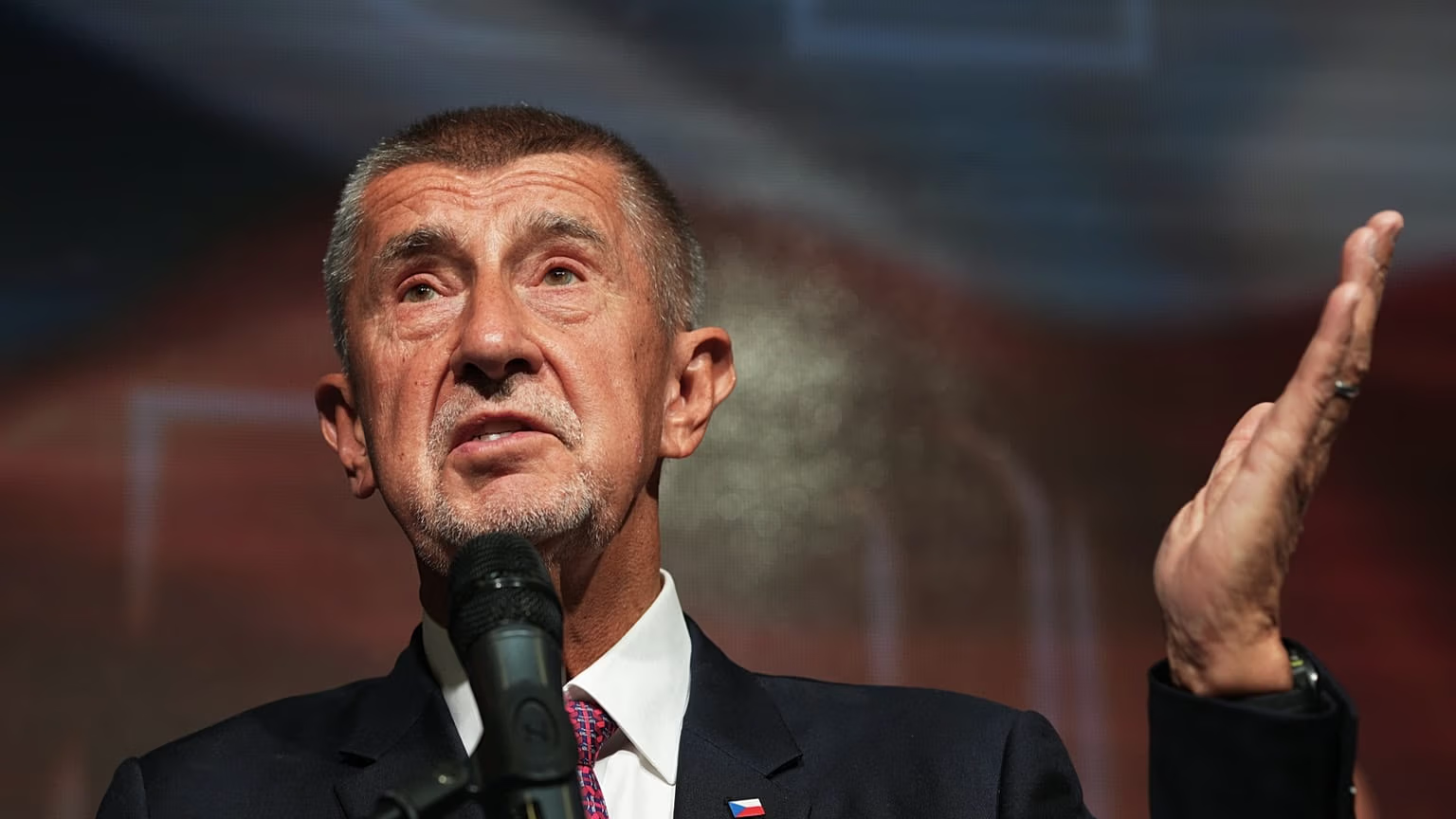
The Prague Pivot: Babiš Courts Europe, But Can Brussels Trust Him?
In the charged aftermath of the Czech election, a familiar political drama is unfolding with an unfamiliar script. Andrej Babiš, the billionaire populist who has long cultivated an image as a eurosceptic thorn in Brussels’ side, is now extending an olive branch. As the intricate dance of coalition talks begins, Babiš has made a conspicuous pledge of loyalty to the European project—a tactical pivot that has left political observers in both Prague and across the continent asking one crucial question: Is this a genuine change of heart or a calculated political ploy?
The immediate takeaway is one of pure political pragmatism. To govern, Babiš needs partners. His ANO party, while likely the largest, cannot rule alone. Any potential coalition ally, particularly from the more centrist or traditionally pro-European camps, would demand a clear commitment to the EU as a non-negotiable starting point. Babiš’s softened rhetoric is, therefore, less a sudden conversion and more the price of admission to power. He is signaling to would-be partners that he is willing to moderate his tone to build a stable government.

But this move signifies something far deeper about the shifting political landscape in Central Europe. The era of defiant, chest-thumping populism, which once paid handsome electoral dividends, may be facing the harsh realities of a continent grappling with economic uncertainty and the persistent shadow of war in the east. For a nation as economically integrated into the EU’s single market as the Czech Republic, the allure of antagonizing Brussels has faded. Stability, access to EU funds, and a united front on security are no longer abstract ideals but urgent necessities. Babiš, ever the pragmatist, is reading the room, keenly aware that the political tides have turned.
The Tactical Shift: Andrej Babiš’s Pragmatic Approach to Power
Andrej Babiš’s recent pronouncements, emphasizing a commitment to the European Union, are a clear testament to his unparalleled political opportunism and strategic acumen. While his past rhetoric often painted the EU as an overly bureaucratic entity infringing on national sovereignty, the current post-election environment demands a different narrative. The ANO party, despite its strong showing, lacks a parliamentary majority, making the formation of a stable government dependent on securing coalition partners. This necessity inherently limits Babiš’s negotiating leverage and forces a moderation of his historically eurosceptic stance.
Coalition Calculus and the EU Mandate
The political spectrum in the Czech Republic, even among potential coalition allies, largely favors a robust and constructive relationship with the European Union. Centrist parties and even some on the right understand the fundamental importance of EU membership to the Czech national interest. Therefore, any party entering into coalition talks with Babiš’s ANO would undoubtedly prioritize a clear, unambiguous commitment to the EU as a foundational principle of any governing agreement. This isn’t merely a symbolic gesture; it’s a non-negotiable prerequisite that ensures stability and predictable foreign policy. Babiš’s pivot is designed to make him a more palatable partner, demonstrating a willingness to align with mainstream European policy to achieve domestic power.
Beyond the immediate need for partners, this shift also reflects a broader recognition of the electorate’s evolving priorities. While some segments of Czech society may still harbor eurosceptic sentiments, a growing majority appreciates the tangible benefits of EU membership. From seamless trade within the single market to critical investment and development funds, the practical advantages outweigh the appeal of isolationist posturing. Babiš, a businessman first and a politician second, is adept at understanding market demands—and in this political market, a pro-European stance has become a more valuable commodity.
The Shifting Sands of Central European Populism
The political landscape across Central Europe has undergone a profound transformation, moving away from the era when “defiant, chest-thumping populism” offered easy electoral wins. The allure of antagonizing Brussels has significantly diminished, giving way to a more sober assessment of regional and global realities. This shift is particularly pronounced in countries like the Czech Republic, deeply integrated into the European economic and security architecture.
From Defiance to Necessity: A Regional Reassessment
For years, the populist playbook in Central Europe often involved casting the EU as an external threat, a distant power dictating terms and undermining national identity. Leaders like Viktor Orbán in Hungary or the Law and Justice party in Poland successfully leveraged this narrative to consolidate power. However, several critical factors have converged to erode the effectiveness of this strategy. Firstly, persistent economic uncertainty, exacerbated by global supply chain disruptions and inflationary pressures, has highlighted the indispensable role of the EU’s single market and its cohesive economic policies. Secondly, and perhaps more significantly, the shadow of war in Ukraine has underscored the vital importance of collective security and a united European front. The abstract ideals of sovereignty versus integration have been replaced by the urgent necessities of stability, economic resilience, and geopolitical solidarity.
The Czech Republic, situated at the heart of Europe, feels these pressures acutely. Its economy is heavily reliant on exports to the EU, and its security is inextricably linked to NATO and EU defense structures. Antagonizing Brussels now carries a far greater cost, not just in terms of political isolation but also in jeopardizing crucial economic ties and undermining national security. Andrej Babiš, ever the pragmatist, is responding to this changed environment. His move suggests that he understands the limited appeal, and indeed the potential peril, of continuing a purely eurosceptic line in the current climate. It indicates a pragmatic adaptation to a populace increasingly aware of the direct benefits of EU membership and the dangers of its erosion.
Czechia’s Unique Position within the EU
Unlike some of its Visegrád partners, the Czech Republic has historically maintained a more nuanced relationship with the EU, often characterized by a pragmatic approach rather than outright ideological opposition. While there have been tensions, particularly concerning migration policy and the adoption of the Euro, Czech politicians have generally acknowledged the country’s deep economic integration. German industry, for instance, relies heavily on Czech manufacturing and supply chains, making any significant disruption to EU relations economically painful for Prague.
Access to EU structural and cohesion funds has also been a cornerstone of Czech development, funding critical infrastructure projects, agricultural subsidies, and regional development initiatives. These funds are not abstract figures; they translate directly into schools, roads, hospitals, and job creation, making EU membership a palpable benefit for ordinary citizens. Furthermore, the Czech Republic plays a significant role in European research and innovation programs, fostering scientific collaboration and economic competitiveness. For Babiš to ignore these realities would be political suicide, demonstrating a disconnect from the very economic engines that drive Czech prosperity. His “reading of the room” therefore encompasses both political expediency and a genuine acknowledgment of the nation’s fundamental alignment with the European project.
Brussels’ Long Memory: A Trust Deficit to Overcome
Despite Andrej Babiš’s newfound pro-European rhetoric, skepticism in European capitals remains immense, and for good reason. Brussels has a long and detailed memory of his past interactions, which have often been marked by clashes and accusations of undermining the very principles he now professes to uphold. The journey from eurosceptic critic to EU loyalist is a significant one, and officials will require more than just verbal assurances to be convinced of a genuine transformation.
A History of Conflict: Rule of Law and Subsidies
Babiš’s relationship with EU institutions has been fraught with tension, particularly concerning issues of the rule of law and the transparent distribution of European funds. The most prominent example is the ongoing controversy surrounding his alleged conflict of interest related to Agrofert, the sprawling agricultural and chemical conglomerate he founded. EU audits and investigations by the European Anti-Fraud Office (OLAF) have repeatedly flagged concerns that Babiš, while serving as Prime Minister, continued to exert influence over Agrofert, thus benefiting from EU subsidies directed towards his former businesses. This has led to the suspension of some EU funding for Agrofert and a significant amount of reputational damage for the Czech Republic.
These allegations strike at the heart of the EU’s values, particularly its commitment to good governance, accountability, and the prevention of corruption. From Brussels’ perspective, the rule of law is not merely a legalistic principle but the foundational pillar upon which the entire European project rests. Babiš’s government has also faced criticism regarding judicial independence and media freedom, aligning him more with leaders like Orbán than with mainstream European democrats. These past conflicts have created a deep trust deficit that will not be easily erased by a few well-placed statements.
Beyond Rhetoric: Demanding Concrete Actions
For European officials, the true test of Babiš’s commitment will lie in his administration’s concrete actions, not just its opening declarations. They will be watching closely to see if the new pro-European stance translates into a genuine alignment on core values, including:
- Upholding the Rule of Law: Will Babiš’s government robustly defend judicial independence, ensure transparent governance, and address outstanding concerns about conflicts of interest?
- Commitment to Democratic Standards: Will there be a clear commitment to media freedom and civil society engagement?
- Cooperation on EU Priorities: Will the Czech Republic actively engage in areas like climate change policy, migration, and the common foreign and security policy, rather than adopting a obstructionist approach?
- Engagement with EU Institutions: Will there be a constructive dialogue with the European Commission, Parliament, and Council, or a return to confrontational tactics?
Skepticism dictates that Brussels will assume this is merely a “flag of convenience” to be lowered once a government is securely in place and domestic political needs dictate a different posture. Therefore, Babiš must demonstrate a sustained and tangible commitment to European values and cooperation to rebuild trust and prove that his pivot is indeed genuine.
Reshaping the Visegrád Dynamics
Andrej Babiš’s potential steering of the Czech Republic towards the European mainstream could have profound and lasting implications for the Visegrád Group (V4), a regional alliance comprising Czechia, Hungary, Poland, and Slovakia. For years, the V4 has often been characterized by a unified, and sometimes confrontational, stance against Brussels, particularly on issues such as migration, the rule of law, and climate policy. This perceived bloc of opposition has been a significant force within the EU, at times frustrating the efforts of the wider European consensus.
The Potential Isolation of Orbán
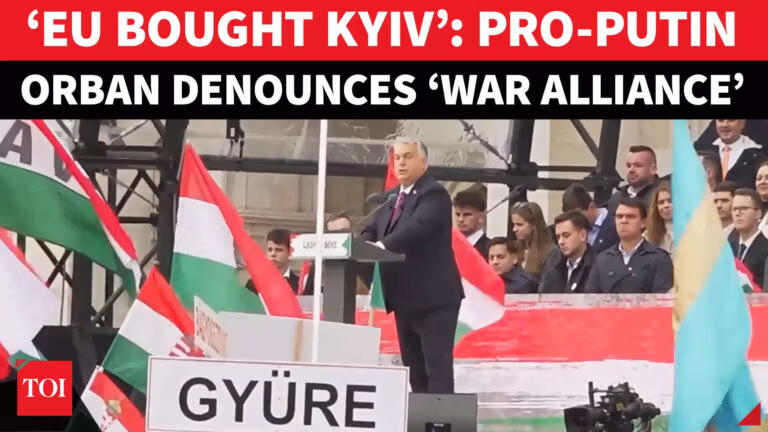
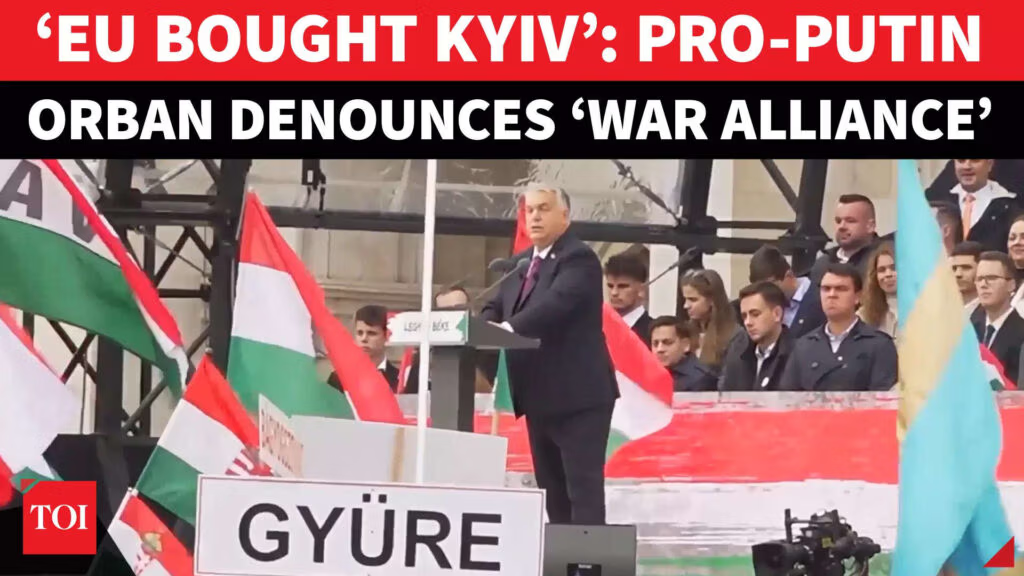
Perhaps the most significant consequence of a Czech pivot would be the further isolation of Hungarian Prime Minister Viktor Orbán. Orbán has consistently been the most vocal critic of the EU’s liberal-democratic values and has skillfully leveraged the V4 platform to amplify his defiance. If the Czech Republic, a key member, were to align more closely with mainstream European policy, it would significantly weaken Orbán’s ability to form a strong regional counter-bloc against Brussels. His influence would diminish, and Hungary’s position within the EU could become even more peripheral and challenging.
Poland, under its previous Law and Justice (PiS) government, often stood shoulder-to-shoulder with Hungary on many contentious issues, creating a formidable axis of opposition. However, the recent change in Polish government has seen a pronounced shift towards reconciliation with Brussels. Should Babiš’s Czech Republic follow suit, Orbán could find himself increasingly isolated, lacking the regional allies he has historically relied upon to challenge EU decisions or slow down integration efforts. This could fundamentally alter the power dynamics within the region, potentially fostering new alignments or weakening the V4’s collective bargaining power on the European stage.
A New Direction for Central European Cooperation
A more pro-European Czech Republic could also encourage a broader re-evaluation of regional cooperation. Slovakia, the fourth V4 member, has often navigated a more pragmatic, though sometimes inconsistent, path within the EU, balancing regional solidarity with its own national interests. A Czech shift might encourage Slovakia to further consolidate its position within the European mainstream, potentially leading to a more unified Central European voice that is constructive rather than consistently confrontational towards Brussels. This isn’t to say the V4 would cease to exist, but its character and purpose might evolve, focusing more on shared economic interests and regional development within the EU framework, rather than acting as a bloc of resistance.
The implications extend beyond the V4. A Czech Republic that is genuinely committed to EU values and actively engaged in European policy-making could serve as a bridge between Western and Eastern Europe, fostering greater understanding and cooperation. It could contribute to a more unified and effective EU, particularly at a time when global challenges demand internal cohesion. This would represent a fundamental shift from the past decade and could pave the way for a more integrated and less fractured European continent.
The Road Ahead: Actions, Not Just Words
Ultimately, Andrej Babiš’s future government—should he succeed in forming one—will not be judged on its opening declarations, but on its actions. The coming weeks of coalition negotiations will be telling, as the precise commitments and policy directions of any new administration begin to take shape. However, the true test of this “Prague Pivot” will unfold over the long term, as his administration engages with key European issues that cut to the core of EU membership and its underlying values.
Key Policy Battlegrounds
The areas where Babiš’s government will be scrutinized most intensely are diverse and critical. On climate policy, Europe is pushing forward with ambitious Green Deal targets. Will the Czech Republic under Babiš actively support and implement these initiatives, or will it seek derogations and delays, as some Central European leaders have in the past? This will be a significant indicator of his commitment to shared European goals.
Regarding judicial independence and the rule of law, Brussels will be looking for concrete steps to strengthen democratic institutions, ensure transparent governance, and address any lingering concerns about conflicts of interest. This includes the appointment of independent judges, safeguarding the autonomy of public prosecutors, and ensuring a free and diverse media landscape. Any attempts to undermine these pillars would quickly erode the credibility of his pro-European pronouncements.
Further, his government’s approach to EU budget negotiations, migration policy, and common foreign and security policy will provide crucial insights. Will Czechia be a constructive partner, contributing to solutions and compromises, or will it revert to previous patterns of opposition and obstruction? The world watches as Europe navigates complex geopolitical challenges, and a unified, proactive Czech voice could be invaluable.
The Test of Genuine Alignment
The “chameleon of Czech politics,” as Babiš has often been called, has indeed changed his colours. Now, Europe waits to see if those colours will run. A genuine shift would involve not just adopting the language of European cooperation but actively embodying its spirit in policy decisions and diplomatic engagements. This means moving beyond transactional relationships and embracing a deeper commitment to the shared values that underpin the European project.
The challenge for Babiš will be to balance domestic political pressures, which may still include elements of euroscepticism, with the growing recognition of the strategic and economic imperatives of full EU engagement. His capacity to navigate this complex landscape, while delivering on his newfound promises to Brussels, will define his legacy and the trajectory of the Czech Republic’s place within Europe for years to come.
Read the original story at Euronews.
Given Andrej Babiš’s complex political history, what do you believe will be the most significant challenge for him to convince Brussels and the wider European community that his pro-European pivot is truly sincere and not just a temporary political maneuver?