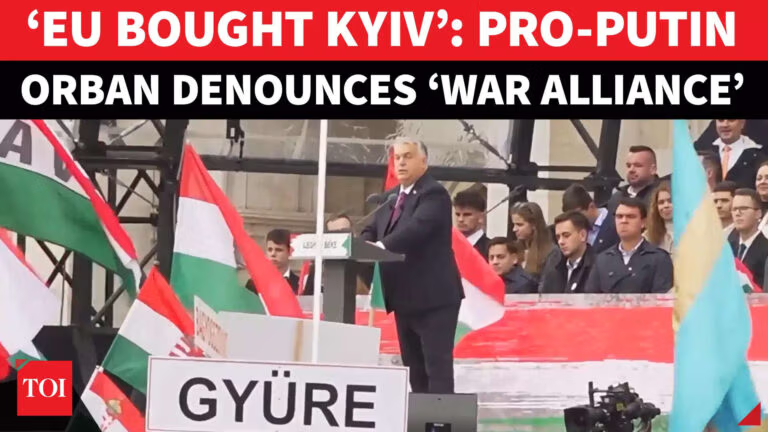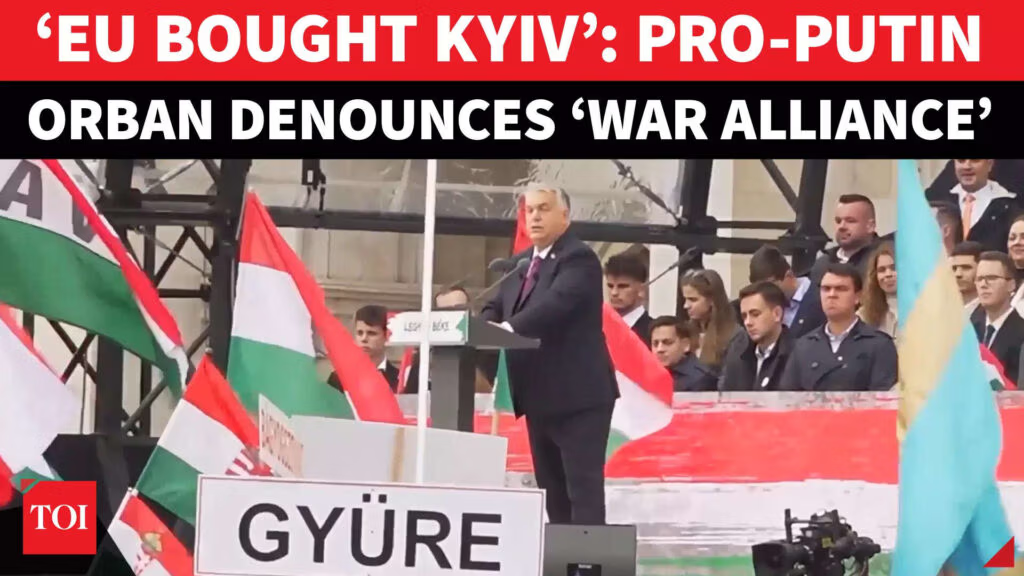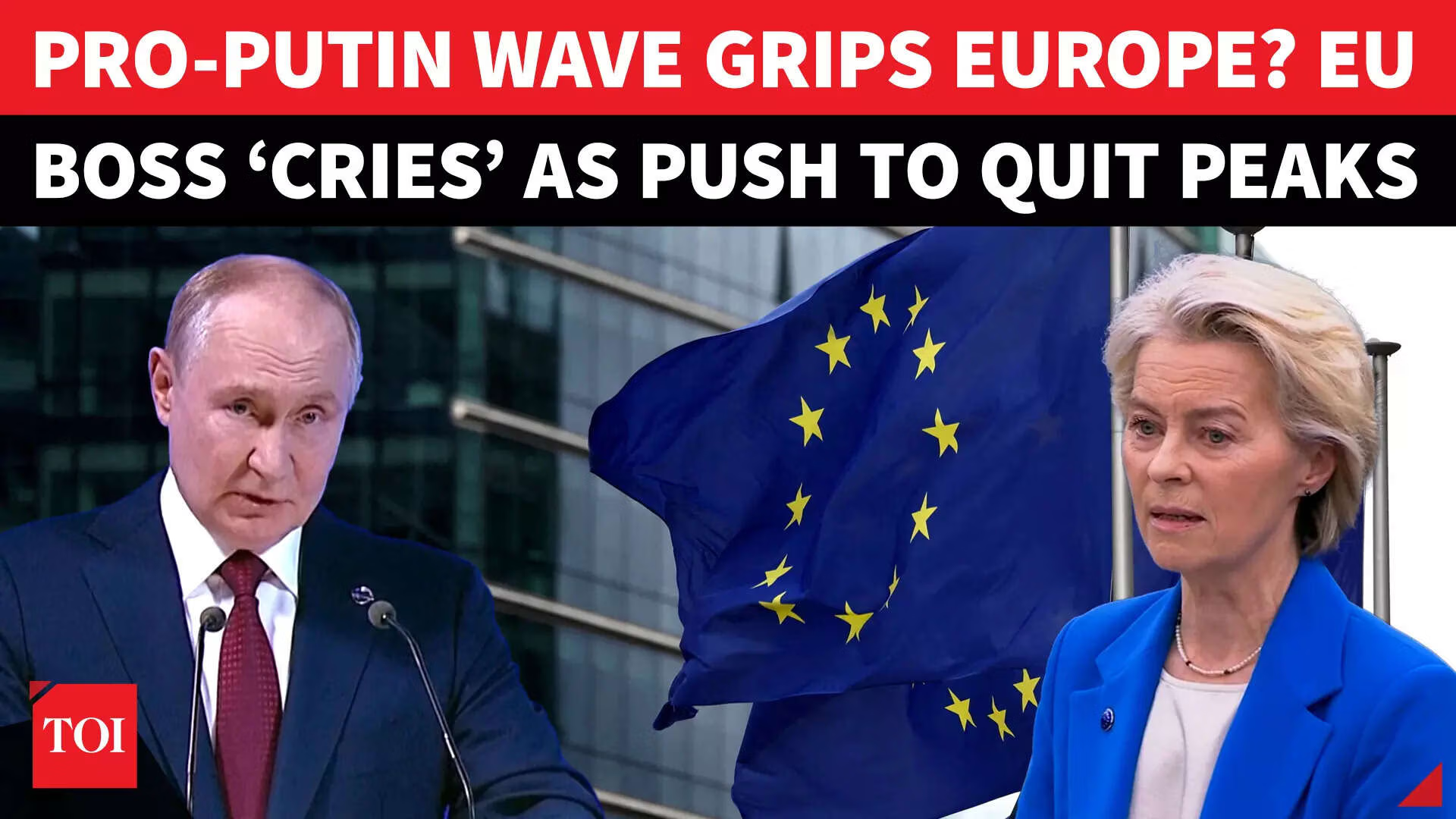
In the charged prelude to the crucial European Parliament elections this June, European Commission President Ursula von der Leyen has drawn a stark and unambiguous battle line. This isn’t just about policy debates or political maneuvering, she warns; it’s a fight against a coordinated effort by Vladimir Putin’s allies to “destroy” the European Union from within. This forceful declaration by the EU’s top official underscores the gravity of the upcoming vote, positioning it not merely as a democratic exercise but as a pivotal moment for the continent’s very survival amidst mounting external pressures and internal divisions. Her message resonates with an urgency that seeks to awaken European citizens to the profound implications of their choices at the ballot box.
Speaking with a gravity befitting the continent’s top official, von der Leyen’s recent declaration frames the upcoming vote as a fundamental choice between a united, resilient Europe and one fractured by internal proxies of the Kremlin. She alleges that a pincer movement of far-right and far-left populist parties are acting as conduits for Putin’s agenda, leveraging disinformation and hybrid attacks to polarize societies and erode public trust in democratic institutions. This isn’t a speculative claim but a pointed accusation, suggesting a deliberate and calculated strategy by foreign powers to destabilize the European project by exploiting existing societal fault lines. The stakes, she implies, couldn’t be higher for the future of European democracy and stability.

Key Takeaways: More Than Just a Warning – A Strategic Maneuver
This pronouncement from Ursula von der Leyen is far more than a simple accusation; it’s a high-stakes political gambit with profound implications for the future of Europe. It represents a deliberate and strategic effort to shape the discourse surrounding the upcoming European Parliament elections, attempting to reframe the narrative from internal policy disagreements to an existential battle against external threats. This approach is designed to rally a broad coalition of pro-European forces and to highlight the perceived dangers of political fragmentation in the face of a determined adversary.
Framing the Narrative: A Referendum on European Identity and Security
Von der Leyen is deliberately casting the June elections as a referendum on European identity and security. By linking the populist surge directly to a hostile foreign power like Russia, she aims to consolidate the fragmented pro-EU center, transcending traditional left-right divides. The message is clear: a vote for the fringes is not merely a vote for different policies but a vote for instability, and crucially, a win for Moscow. This transforms the election from a series of domestic squabbles over national issues into a matter of continental defense, urging voters to consider the geopolitical repercussions of their choices.
This strategic framing taps into a deeper historical consciousness within Europe, reminding citizens of the foundational purpose of the European Union – to prevent conflict and foster unity after centuries of strife. By invoking the spectre of an external enemy, von der Leyen seeks to reignite a sense of shared purpose and collective responsibility. This rhetorical move aims to make voters wary of parties that advocate for policies potentially aligning with Russia’s strategic interests, such as weakening sanctions, questioning support for Ukraine, or undermining EU solidarity. The psychological impact of linking internal political choices to foreign aggression is profound, designed to consolidate a broad coalition against perceived threats to the European project itself.
The concept of “continental defense” extends beyond military preparedness to encompass the resilience of democratic institutions and societal cohesion. Von der Leyen’s narrative suggests that hybrid warfare, primarily through disinformation and propaganda, is just as dangerous as conventional military threats, as it seeks to erode trust and polarize populations from within. Therefore, defending Europe means not only bolstering its borders but also safeguarding its democratic processes and the very fabric of its societies from foreign manipulation. This elevates the upcoming elections beyond routine political contests to a defining moment for Europe’s future trajectory.
The Critical Timing: A Preemptive Strike Against Euroscepticism and Russian Influence
With polls predicting significant gains for nationalist and euroskeptic parties across member states, this warning is a preemptive strike. It’s an attempt to inoculate voters against what she portrays as foreign-backed narratives and to force these populist parties to defend their positions on Russia—a topic where many have shown a conspicuous ambivalence or even sympathy. The timing is critical, coming just weeks before voters head to the polls, giving her message maximum impact in shaping the final weeks of campaigning.
This preemptive strategy aims to expose the contradictions or perceived weaknesses in populist platforms regarding foreign policy and national security. Many of these parties, while often vociferously nationalistic, have also expressed admiration for strongmen like Putin or have been critical of EU and NATO responses to Russian aggression. Von der Leyen’s intervention directly challenges them to clarify their stance, effectively making their relationship with Moscow a litmus test for their fitness to govern or represent European interests. By doing so, she hopes to sway undecided voters who might be drawn to populist promises on domestic issues but are deeply concerned about Russia’s actions, particularly in light of the ongoing war in Ukraine.
The “ambivalence or sympathy” von der Leyen highlights covers a spectrum of behaviors, from echoing Kremlin talking points to opposing sanctions against Russia, or even celebrating perceived cracks in Western unity. This strategic challenge from the European Commission President seeks to put these parties on the defensive, forcing them to either distance themselves from Moscow or openly embrace positions that could be unpopular with mainstream European voters. This tactical move is an attempt to define the electoral battlefield on terms favorable to pro-European integration, emphasizing collective security and shared values over nationalistic isolationism.
A Personal and Political Fight: Von der Leyen’s Bid for a Second Term and EU Leadership
For von der Leyen, the stakes are also deeply personal. As she campaigns for a second term as European Commission President, she faces headwinds and skepticism from various quarters, including some within her own political family and from member states critical of the Commission’s perceived overreach. By positioning herself as the continent’s bulwark against Putin’s machinations, she elevates her candidacy beyond mere bureaucracy, presenting herself as the indispensable leader needed in times of crisis. She is making the case that in an era of geopolitical turmoil and profound uncertainty, Europe needs her steady, experienced hand at the helm to navigate the storm and maintain its unity and resolve.
This strategy is not just about defending Europe; it’s also a powerful argument for her continued EU leadership. Her first term was dominated by unprecedented crises, from the COVID-19 pandemic and its economic fallout to the war in Ukraine and the energy crisis. Her supporters would argue that she demonstrated resilience and decisive action, consolidating the EU’s collective response. By framing the current election through the lens of a direct confrontation with Moscow, she reinforces the idea that her experienced leadership is essential for continuity and stability, especially when Europe faces continuous hybrid attacks and disinformation campaigns orchestrated by foreign adversaries.
Her ability to rally member states and forge consensus on crucial issues like sanctions against Russia, support for Ukraine, and the Green Deal has been a hallmark of her tenure. Now, by framing the electoral contest as a battle for Europe’s very soul against external enemies, she aims to leverage her track record and gravitas to secure the necessary political backing for another term. It’s a calculated risk, but one she evidently believes is necessary to underscore the importance of strong, unified leadership in a world grappling with insurgent authoritarianism and global instability.
What This Means for the Future: Defining Europe’s Path
Ursula von der Leyen’s salvo signals a new, more confrontational phase in the ideological war for Europe. The outcome of the June European Parliament elections will be a critical bellwether, not just for the composition of the next European Parliament, but for the fundamental direction and future capabilities of the European Union itself. A significant shift could dramatically alter the EU’s geopolitical standing, its internal dynamics, and its ability to act cohesively on the world stage.
A strong showing for the parties she has implicitly accused of being conduits for Moscow would not only complicate her bid for a second term but could fundamentally alter the EU’s trajectory. Imagine a European Parliament with a larger, more vocal bloc of lawmakers skeptical of aid to Ukraine, hostile to climate change initiatives (like the EU Green Deal), and eager to reclaim national sovereignty at the expense of Brussels’ centralized decision-making. Such a shift could paralyze EU decision-making, leading to gridlock on critical policies ranging from foreign affairs and defense to environmental regulations and economic integration.
The implications for European support for Ukraine are particularly acute. A rise in pro-Russian or Russia-sympathetic voices could lead to reduced financial and military aid, undermining Ukraine’s defense efforts and potentially emboldening Moscow. This would have cascading effects on global security, weakening the collective resolve against Russian aggression and potentially encouraging other autocrats worldwide to challenge the international rules-based order. Furthermore, it could severely strain relations within the transatlantic alliance, as key European partners diverge on fundamental security priorities.
Beyond foreign policy, such an outcome could also weaken the EU’s internal cohesion. The push for greater national sovereignty by populist parties often translates into resistance against common European policies, whether on migration, economic reforms, or environmental protection. This fragmentation would not only slow down progress on key European challenges but could also erode the very principle of European unity, making the Union less effective and more vulnerable to external pressures. Von der Leyen’s warning is an attempt to highlight this potential future, urging voters to consider the long-term consequences of a fractured Europe.
Ursula von der Leyen has laid her cards on the table. She is betting that European voters, when faced with a stark choice between a cohesive union capable of collective action and the chaos she claims is being sown by Putin’s “friends,” will ultimately choose unity and resilience. The vote in June will reveal whether that bet pays off, and in doing so, will define the continent’s path for years to come, shaping its role in a rapidly changing and increasingly complex global landscape.
Read the original story at The Times Of India.
Given von der Leyen’s strong warning, how do you think European citizens will balance their domestic concerns with the broader geopolitical threat framed by the European Commission President in the upcoming elections?