A Tale of Two Disasters: Why the Borderlands 4 Switch 2 Delay is a Red Flag We Can’t Ignore
In the chaotic world of video game launches, we’ve grown accustomed to a certain level of turbulence. Day-one patches, server woes, the occasional bug—it’s all part of the modern gaming landscape, a frustrating but often anticipated rite of passage for new titles. We’ve learned to brace for impact, expecting that not every game will hit the ground running flawlessly. But every now and then, a company pulls the emergency brake so hard it sends shockwaves through the entire industry, redefining what constitutes a “turbulent” launch. This week, Gearbox did just that, not with a patch, but with a full-blown retreat.
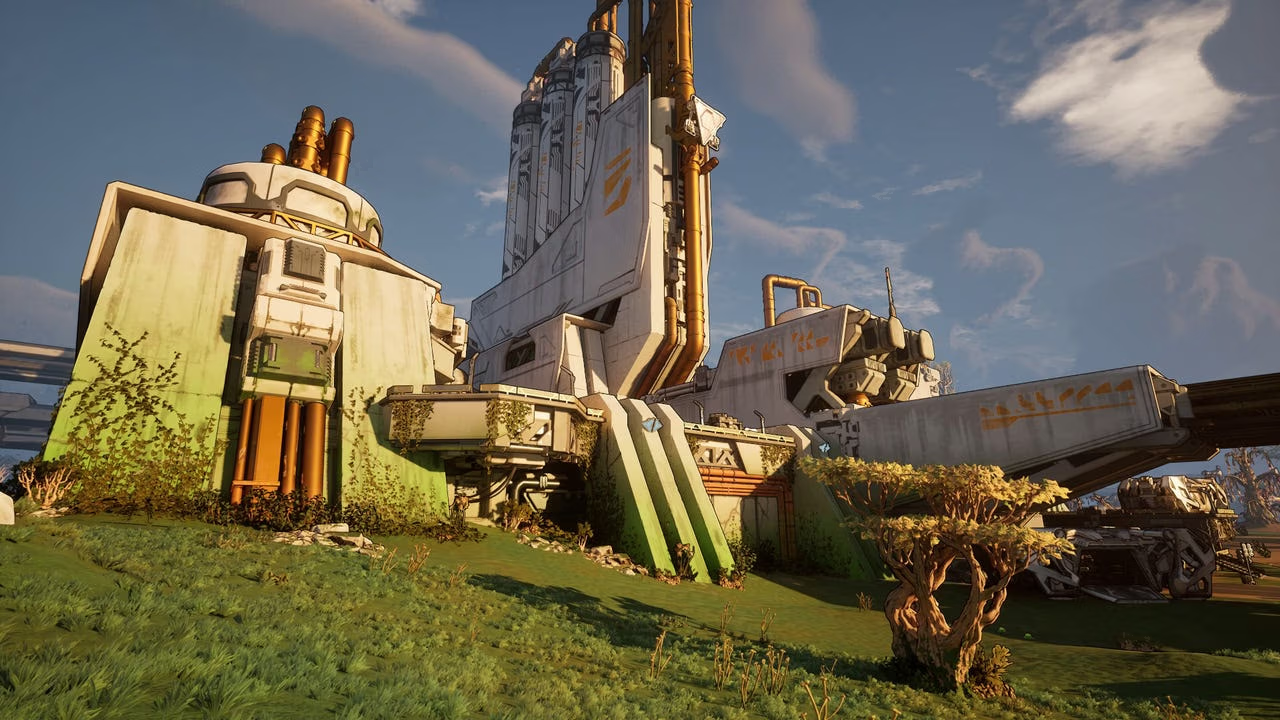
The news is stark, and frankly, alarming: Borderlands 4 on the Nintendo Switch 2 has been delayed indefinitely, just one week before its scheduled release. To add salt to the wound, all digital pre-orders have been canceled and will be refunded. This isn’t just a minor setback or a typical two-week pushback; it’s a full-blown, last-minute emergency evacuation from a burning platform. And it’s happening while the already-released versions of the game on PC, Xbox, and PlayStation are struggling with their own significant, widely reported performance issues, painting a grim picture of the overall state of the game.

This isn’t just one story of a troubled launch. It’s two distinct, yet deeply intertwined, narratives of failure that highlight systemic issues within game development and publishing. To truly understand the gravity of the Switch 2 delay, and what it signals for both Gearbox and the wider industry, we have to look at the raging fire Gearbox is already fighting on multiple fronts.
The Context: A Launch Already Under Fire
The launch of a flagship title like Borderlands 4 should have been a triumphant victory lap for Gearbox, the culmination of years of development, heralded by excited fans and positive reviews. Instead, it’s been a frantic, desperate exercise in damage control, a public relations nightmare unfolding in real-time. Players across PC, PlayStation, and Xbox platforms have been overwhelmingly vocal about a host of egregious problems, turning what should have been a celebration into a collective groan of frustration. Reports flood social media and forums detailing unstable frame rates that plummet into single digits during intense firefights, game-breaking bugs that halt progression, visual glitches that detract from immersion, and unexpected crashes that send players back to their desktop. The studio is in full patch-and-pray mode, scrambling to deploy hotfixes and updates, trying to mend a game that’s already in the hands of millions, hoping to salvage its reputation before it’s too late. The initial excitement has been replaced by a pervasive sense of disappointment, leading to a significant dip in player goodwill and early sales momentum.
Now, picture the scene inside Gearbox HQ. While one dedicated team is desperately trying to patch the flagship versions of Borderlands 4—working overtime, facing immense pressure, and responding to a torrent of negative feedback—another team is focused on the Nintendo Switch 2 port. This second team, likely months into their optimization efforts, is meticulously testing the game on Nintendo’s new hardware. As they push closer to the scheduled launch, they are forced to confront an uncomfortable, undeniable truth: they are not just encountering minor hiccups; they are on the brink of an even greater catastrophe. The core game’s existing technical problems, already straining high-end PCs and current-gen consoles, are exacerbated exponentially on the Switch 2’s more constrained hardware. What they are seeing is likely a build that is fundamentally unplayable, riddled with performance issues that make the existing problems on other platforms look minor by comparison.
The decision to pull the plug just a week from launch, a move that incurs massive financial penalties and significant reputational damage, tells us one thing with chilling, undeniable certainty: the Switch 2 version was in a truly dire, catastrophic state. This wasn’t a choice to add a little more polish, to tweak a few textures, or to fix a couple of minor bugs. This was a grave decision made to avoid shipping a product they knew, without a shadow of a doubt, was fundamentally and irrevocably broken. It represents a clear admission that the game, in its current Switch 2 iteration, failed to meet even the most basic standards of quality and playability. The cost of this delay, both in terms of lost revenue, incurred marketing expenses, and eroded consumer trust, is immense, yet it was deemed a necessary evil to prevent an even larger, more damaging fallout.
The Ghost of Cyberpunk 2077
Let’s call this what it likely is: a studio desperately, and wisely, trying to avoid its own “Cyberpunk on the PS4” moment. The disastrous launch of Cyberpunk 2077 on last-gen consoles (PlayStation 4 and Xbox One) in 2020 left an indelible scar on the entire video game industry, serving as the ultimate cautionary tale of what happens when a developer pushes a game onto hardware that simply cannot handle its ambitious scope and technical demands. CD Projekt Red, the beloved studio behind The Witcher 3, saw its reputation plummet overnight. The widespread reports of game-breaking bugs, abysmal performance, and graphics far below advertised standards led to unprecedented consequences: mass refunds, a formal delisting from the PlayStation Store for months, and a prolonged, costly effort to fix the game, which only truly became enjoyable years later. The reputational damage, the financial implications of refunds and lost sales, and the sheer effort required to rebuild trust were immense, representing a nightmare scenario for any developer.
Gearbox, acutely aware of this recent history and undoubtedly seeing the writing on the wall with their own multi-platform struggles, chose what they perceived to be the lesser of two evils. A last-minute, indefinite delay is undeniably embarrassing and incredibly costly, impacting not only immediate revenue but also future projections and investor confidence. However, it absolutely pales in comparison to the long-term, potentially irreversible brand destruction that comes from knowingly releasing a fundamentally broken product, especially on a highly anticipated new console like the Nintendo Switch 2. The memory of Cyberpunk 2077‘s fallout is still fresh, a stark reminder that consumers have reached a breaking point with unfinished games. Gearbox’s decision is a painful but strategic move to safeguard its future and the long-term viability of the Borderlands franchise.
The cancellation of all digital pre-orders is the most tell-tale, and perhaps the most chilling, sign of the severity of the situation. This isn’t just a postponement with a new date penciled in for next month. Canceling pre-orders is an admission that they don’t have a new release date in sight, that the timeline for fixing the Switch 2 version is completely unknown, and that the road to a playable, polished version is likely a long and arduous one. It suggests fundamental issues that cannot be quickly patched. They are, for all intents and purposes, going back to the drawing board, indicating a significant overhaul is required, possibly involving a complete re-evaluation of how the game can even run on the Switch 2 hardware. This level of retraction implies deep-seated technical challenges, making this a far more significant event than a typical delay.
What This Means for the Future
Beyond the immediate drama and the significant challenges for Gearbox, this event raises critical questions and sends important signals across the entire video game industry. Its ramifications will likely be felt for months, if not years, influencing development strategies, marketing plans, and consumer expectations for upcoming titles.
A Reality Check for the Nintendo Switch 2
First and foremost, this delay is a massive, albeit premature, reality check for the anticipated capabilities and development complexities of the Nintendo Switch 2. While the successor to the immensely popular Switch is widely anticipated to be a significant leap over its predecessor in terms of processing power and graphical fidelity, it is still inherently a portable console. By its very nature, a handheld device will always have architectural and thermal constraints that desktop PCs and dedicated home consoles do not. A game that is already struggling to maintain stable frame rates and resolve bugs on high-end gaming PCs, Xbox Series X, and PlayStation 5 was always going to be an immense, perhaps insurmountable, challenge to port effectively to a portable system. This delay is the first major, highly public signal to other third-party developers, publishers, and even Nintendo itself: be very, very careful with your ambitions on Nintendo’s new hardware. Optimization for the Switch 2 will not be a trivial task. Developers cannot simply expect games to scale down effortlessly; they will require significant, dedicated resources, clever engineering, and realistic expectations to ensure quality. This incident could influence which games get ported, how long those ports take, and the level of graphical fidelity and performance players can realistically expect from AAA titles on the new console, potentially tempering initial excitement about the Switch 2’s power.
The End of “Launch Now, Fix Later” (Hopefully)
Second, and perhaps more broadly impactful, this is another nail in the coffin for the increasingly reviled “launch now, fix later” mentality that has plagued the industry for the past decade. The backlash against unfinished, buggy, and often misleadingly marketed games has reached a fever pitch. While Gearbox is undeniably already guilty of this with the current, struggling versions of Borderlands 4 on other platforms, this last-minute Switch 2 delay shows that there is a discernible line even they are unwilling to cross. They’ve seemingly learned that while patching a broken game post-launch is bad, releasing an absolutely unplayable one is catastrophic. This public, painful admission signifies a potential turning point. It’s a stark reminder that quality control has to mean something, even if that lesson is learned in the eleventh hour, moments before impact. Developers and publishers are slowly, but surely, realizing that the long-term costs of a disastrous launch—in terms of consumer trust, brand loyalty, and sales trajectory—far outweigh the short-term gains of rushing a product out the door. The increasing power of player reviews, social media, and digital storefront policies (like refund windows) are holding companies more accountable than ever before.
The Gamer’s Perspective: Patience and Prudence
For gamers, the message emanating from this chaotic scenario is clear: be patient, but also be perpetually wary. While it’s undoubtedly disappointing for prospective Switch 2 owners who were eagerly anticipating the game, this delay is ultimately a pro-consumer move. As the old adage goes, “A delayed game is eventually good, but a bad game is bad forever.” Receiving a broken product that fails to deliver on its promises is far worse for long-term enjoyment and trust than waiting a bit longer for a polished experience. This incident should serve as a stark reminder for players to approach pre-orders with extreme caution, particularly for cross-platform titles on new hardware. Wait for reviews, wait for actual gameplay footage of the specific platform you intend to play on, and prioritize product quality over immediate gratification. The real test for Gearbox begins now. They not only have to fix their existing mess on PC, Xbox, and PlayStation and eventually deliver a Switch 2 port that justifies this chaotic, last-minute upheaval, but they must also meticulously communicate their progress and plans. The trust of their audience, a commodity far more valuable than any day-one sales figure, hangs precariously in the balance.
Read the original story at IGN.
What are your thoughts on Gearbox’s decision to delay *Borderlands 4* on Switch 2? Do you think this signals a positive shift towards quality control in the gaming industry, or is it merely a symptom of deeper, ongoing issues?