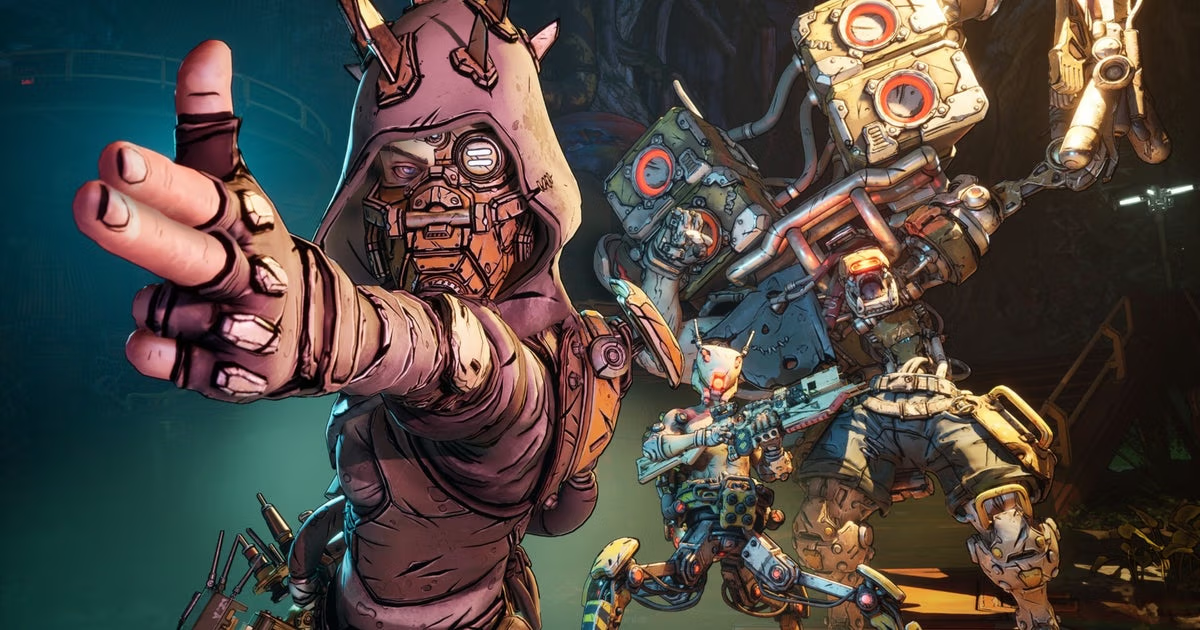
The Borderlands universe is known for many things: its iconic cel-shaded art style, its bazillions of guns, its irreverent humor, and perhaps most of all, its cast of wildly eccentric characters. From the charmingly unhinged Tiny Tina to the delightfully villainous Handsome Jack, these personalities are the glue that holds Pandora and its various cosmic offshoots together. For years, the charisma, distinct voices, and memorable quirks of its NPCs have been a cornerstone of the franchise’s enduring appeal, creating indelible moments that transcend typical gameplay interactions and often define a player’s experience.
But what happens when one of those meticulously crafted characters, intended to enhance the narrative and comedic relief, misses the mark spectacularly? And what does it mean for the gaming world when developers actually *listen* intently to a vocal community, especially when that community’s voice has been amplified to an unprecedented degree through the pervasive influence of digital platforms and social media? This delicate, often fraught dance between artistic intent and audience reception is becoming an increasingly critical and defining aspect of modern game development.

Recent whispers from the digital grapevine suggest a significant shake-up for the eagerly anticipated next main Borderlands title (often referred to as Borderlands 4). It appears that Frette, the chatty and often polarizing robot companion from Tiny Tina’s Wonderlands, may not be making a return. The hints come from none other than Ashley Burch, the highly esteemed voice actress behind Frette (and the beloved Tiny Tina herself), who, in a recent interview, subtly suggested the character was unlikely to appear in a future “mainline” Borderlands game, subtly hinting at a direct response to prevailing player feedback.
This isn’t just about one character’s potential absence; it’s a fascinating and telling look into the evolving, often complex, relationship between game developers and their communities. More profoundly, it offers a revealing signal for the future direction of beloved franchises like Borderlands, indicating a potential shift in how new elements are introduced, integrated, and ultimately judged by the very audience they are meant to entertain.
The Power of Player Sentiment and the Digital Echo Chamber
Frette, designed as an almost perpetually optimistic and intensely talkative character, was intended to be a comedic foil to the player’s journey through the fantastical world of Bunkers & Badasses in Tiny Tina’s Wonderlands. Her role was to provide constant commentary, exposition, and lighthearted banter, theoretically making the player feel less alone in their adventure. However, a significant portion of the player base found her incessant chatter more grating than amusing. Feedback often pointed to her interrupting crucial gameplay moments, a perceived lack of an ‘off switch’ for her dialogue, and ultimately feeling less like an endearing, quirky companion and more like an intrusive guide.
Specific criticisms leveled against Frette included her relentlessly positive attitude, which often felt at odds with the darker, more irreverent humor Borderlands is known for, her tendency to over-explain plot points, and the sheer frequency of her dialogue, which could often overlap with other character lines or important audio cues. Compared to the nuanced depth that makes other Borderlands characters so iconic – even divisive ones like Claptrap, who has his own fervent love-him-or-hate-him fan base thanks to his unique personality and memorable lines – Frette struggled to find her footing, failing to generate the same level of attachment or amusement.
The feedback wasn’t always polite, as is often the case on the internet. Online forums, Reddit threads, social media platforms, and YouTube comment sections became conduits for a flood of criticism, quickly creating what some might call an “echo chamber.” In this environment, negative sentiment could amplify rapidly, making it seem even more widespread than it might have been in a less connected era. While much of this feedback was raw and unfiltered, its sheer volume, consistency, and presence across various platforms made it exceedingly difficult for Gearbox and 2K to ignore. This isn’t to say every negative comment holds equal weight, but when a character consistently draws widespread complaints about core aspects of their implementation, developers face a significant decision point regarding their future.
The news of Frette’s likely departure, therefore, feels like a tacit acknowledgment from the development team: they are indeed paying attention to the pulse of their community. In an age where social media amplifies every opinion, both positive and negative, developer studios are navigating a precarious tightrope walk. On one side, there’s the danger of diluting their unique creative vision by attempting to cater to every single whim or the amplified demands of a vocal minority. This can lead to generic, ‘design-by-committee’ outcomes that strip a franchise of its distinct personality and artistic integrity. On the other side, however, ignoring widespread and consistent negative sentiment, particularly about core elements like character interaction in a narrative-driven game, can alienate a significant portion of a core audience, especially in a franchise built explicitly on its unique character interactions and compelling world-building.
The Frette situation demonstrates the delicate balance required. Developers must learn to distinguish constructive, actionable criticism from simple negativity, to understand the difference between a niche complaint and a broadly felt issue. It highlights the increasingly important role of community managers and data analytics teams who are tasked with sifting through mountains of player discourse to identify genuine, actionable insights. Their work ensures that the development compass isn’t simply swayed by the loudest voices, but genuinely reflects the sentiment of a large and significant segment of the player base, guiding future creative decisions.
What This Means for Borderlands’ Future Character Development
For Borderlands 4 and subsequent titles within the universe, this insight suggests a more cautious, data-informed, and community-aware approach to character introduction and integration. It’s a clear signal that fan sentiment regarding new personalities, their frequency of dialogue, and their overall impact on gameplay carries significant weight in the creative process. We might see several direct implications stemming from this acknowledgment:
1. More Refined Character Archetypes and Rigorous Testing
Instead of entirely new, untested character concepts being dropped into the game with constant, potentially overwhelming dialogue, future companions or non-player characters (NPCs) may undergo more rigorous internal and perhaps even external testing. This could involve extensive focus groups, early player feedback sessions, or even technical testing where dialogue frequency and player annoyance levels are specifically measured through playtesting. Developers might lean more heavily on successful archetypes that resonated well in past games, critically analyzing *why* characters like Maya, Zer0, or even the often-maligned Claptrap (when used effectively and in moderation) connected so deeply with players. The goal would be to ensure new characters don’t just fill a narrative role but genuinely enhance the player experience without becoming an omnipresent distraction. This process might include analyzing dialogue density, placement within the narrative, and trigger conditions, ensuring that exposition and humor don’t come at the cost of player agency or immersion. The success of characters like Tiny Tina’s growth from a child to an adult, or the complex layers of Handsome Jack’s villainy, demonstrate the power of thoughtful, iterative character development.
2. Emphasis on Existing Favorites and Narrative Continuity
The potential absence of a polarizing new character like Frette could inadvertently pave the way for a stronger, more dedicated focus on the established, beloved cast. Fans have deep emotional connections to characters like Lilith, Brick, Mordecai, the evolving Tiny Tina, and even the morally ambiguous, yet iconic, Handsome Jack (perhaps through echoes, AI constructs, or flashbacks). Ensuring a sense of familiarity, strong narrative continuity, and meaningful progression for these characters can be a powerful draw for the franchise. By reducing the risk of introducing a new character that falls flat, developers can dedicate more resources and creative energy to evolving the stories of the characters players already know and love, reinforcing the intricate narrative ties that bind the Borderlands universe together. This could mean more complex character arcs, unexpected reunions, deeper dives into their backstories, or even new playable classes that are extensions of existing character lore, ensuring the game feels like a true, rich continuation of a beloved saga. Mishandling a beloved character, or sidelining them for a less popular newcomer, can be a significant misstep that impacts player investment.
3. A Deeper Dive into Player Feedback Mechanisms
This incident highlights the growing influence and necessity of robust community management teams and direct developer-to-player communication channels. Expect studios to continue refining how they solicit, filter, and act upon player feedback, especially regarding narrative and character elements which are often highly subjective but profoundly impactful. This isn’t just about reading angry tweets; it involves sophisticated sentiment analysis, structured surveys post-release, dedicated forum sections for qualitative and quantitative feedback, and potentially even expanded beta programs specifically designed to gather granular data on new character interactions and their reception. The objective is to move beyond mere anecdotal evidence and gather comprehensive, actionable insights that can be used to iterate and improve, not just in patches but in the fundamental design of future games. This fosters a more transparent and collaborative environment, where players feel genuinely heard and valued, ultimately strengthening the bond between creator and consumer. Community councils, beta testing groups, and developer Q&A sessions could become more focused on character reception and player enjoyment.
Beyond Pandora: A Broader Industry Trend in Game Development
This isn’t just a Borderlands story; it’s indicative of a broader industry trend where community engagement isn’t just about marketing hype or post-launch support. It’s becoming an integral, foundational part of the development cycle itself, particularly for live-service games or long-running franchises that rely on sustained player interest. Unpopular features, poorly implemented gameplay mechanics, or even characters that fail to resonate with the target audience can be pruned, re-imagined, or fundamentally redesigned based on collective feedback. We’ve seen this responsiveness in numerous titles across the gaming landscape, from `Destiny 2`’s continuous weapon and ability balancing based on player data and competitive meta, to `No Man’s Sky`’s incredible post-launch transformation driven by fervent community requests for deeper content and features, or even `Final Fantasy XIV`’s meticulous adjustments to job mechanics and narrative elements in response to player critiques.
Developers are increasingly tasked with balancing their artistic integrity and unique creative vision with the diverse and often conflicting expectations of a vocal and passionate player base. The crucial challenge lies not in avoiding feedback altogether, but in intelligently discerning which feedback to act upon, and how. Over-reliance on community input can sometimes lead to a game that lacks a cohesive vision or the bold, unconventional choices that often define groundbreaking titles. A ‘design by committee’ approach can stifle true innovation or lead to features being watered down to appeal to the lowest common denominator. Bold, unconventional characters or mechanics, which might initially face resistance, could be prematurely abandoned, potentially robbing the game of its unique spark.
However, outright dismissal of widespread sentiment can lead to alienation, loss of player trust, and missed opportunities for significant improvement. The key is understanding the ‘why’ behind the feedback – identifying the underlying problems players are experiencing rather than just implementing their suggested solutions. The Frette situation exemplifies how listening – and critically, *acting* – on player sentiment can be a strategic move. It builds significant trust and goodwill within the community, potentially fostering a more positive reception and stronger engagement for future titles. It demonstrates that while a powerful, singular creative vision drives the initial concept and core experience of a game, robust and well-filtered community feedback can often serve as a crucial compass that guides its evolution and refinement, ensuring it remains relevant and cherished.
This evolving paradigm of development suggests that the future of gaming might just be a collaborative narrative, where the distinct voices of passionate communities play a more explicit and acknowledged role in the ongoing saga of their favorite virtual worlds. As studios become more adept at navigating the digital echo chamber, filtering noise, and extracting genuine, actionable insights, we can expect games that feel more tailored, more responsive, and ultimately, more deeply connected to their player bases. This ensures not only the longevity of beloved franchises but also the continued innovation and relevance of the interactive entertainment medium as a whole.
Read the original story at Eurogamer.net.
What are your thoughts on developers making character changes or removals based on community feedback? Do you think it strengthens a franchise by making it more player-centric, or risks diluting the original creative vision and leading to generic outcomes?