Broos’s Ultimatum: A Coach’s Plea Reveals a National Footballing Crossroads
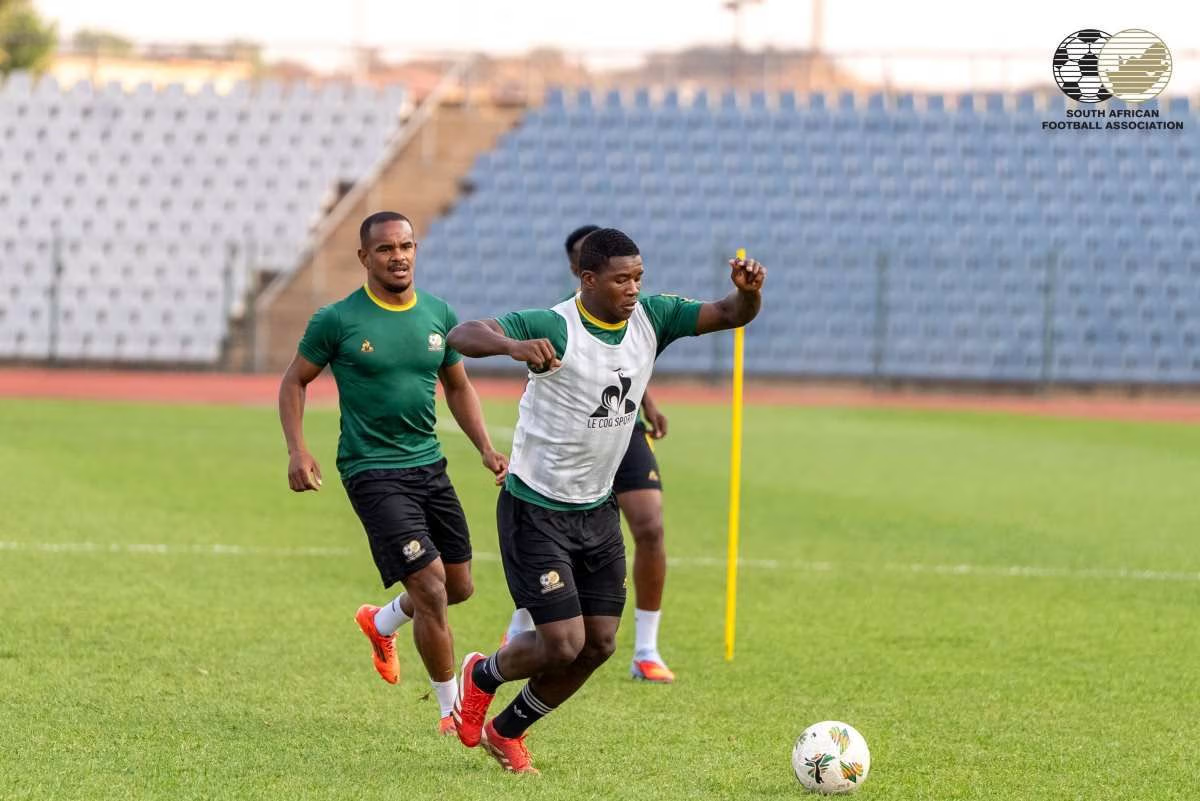
It was more than just a coach’s assessment; it was a gauntlet thrown down at the feet of South Africa’s entire footballing establishment. When Bafana Bafana head coach Hugo Broos declared that an Orlando Pirates youngster—widely believed to be the prodigious Relebohile Mofokeng—”has to go to Europe,” he wasn’t merely offering career advice. He was issuing a stark and public challenge to the perceived limits of the Premier Soccer League (PSL) and, by extension, to the nation’s sporting ambitions. This statement, delivered with Broos’s characteristic candour and directness, has reverberated throughout the South African football community, sparking renewed debate about player development, league standards, and the ultimate aspirations of the national team.
Broos’s logic is as simple as it is damning: the player is simply too good for his current environment. To stay, in the coach’s view, is to risk stagnation. The weekly grind of the PSL, he implies, cannot forge the kind of steel required to compete on the world stage. This is not just a comment on one 19-year-old’s talent; it is a critical evaluation of the very ecosystem designed to produce South Africa’s next generation of stars, pushing the conversation beyond individual potential to systemic shortcomings.

This moment cuts to the heart of a long-standing, often uncomfortable, debate in South African football. Is the PSL a destination league, capable of nurturing and retaining world-class talent? Or is it, at its best, a polished stepping stone to the more demanding, high-stakes arenas of European football? Broos has unequivocally cast his vote for the latter. His statement frames the domestic league not as the pinnacle, but as a comfortable plateau that gifted players must be brave enough to leave behind to truly unlock their potential and contribute meaningfully to the national cause.
The Rationale Behind Broos’s Bold Declaration
Hugo Broos, with his extensive experience coaching both at club level in Belgium and internationally, including a historic AFCON victory with Cameroon, speaks from a place of deep footballing insight. His directive isn’t born of whimsy but a clear understanding of the demands of elite international competition and the development trajectory required to meet them. For him, the question is not if Mofokeng is good enough, but where he can become even better.
The European Standard: A Different Kind of Crucible
What exactly does Broos see in Europe that he feels is missing in the PSL? The answer lies in several critical factors that collectively create a “different kind of crucible” for player development. European leagues, particularly the top five, offer a relentless combination of tactical sophistication, higher technical speed, and unwavering intensity week in and week out. Players are constantly pushed to their physical and mental limits, facing opponents with diverse styles and world-class coaching. This environment demands continuous learning, adaptation, and unwavering commitment to excellence, fostering resilience crucial for national team duties.
Furthermore, exposure to superior training facilities, advanced sports science, and a broader array of coaching philosophies significantly accelerates a player’s growth. In Europe, players are immersed in a culture where every minute detail, from nutrition to recovery, is optimized for peak performance. This holistic framework is challenging to replicate fully in many African leagues, including the PSL, despite its advancements.
The Perils of Stagnation: Why Staying Can Be Detrimental
Broos’s concern about stagnation is a valid one that resonates across footballing continents. When a prodigiously talented player, like Relebohile Mofokeng, consistently outperforms his domestic peers, the lack of continuous, significant challenge can lead to a plateau in development. Without constant pressure, a player’s growth can slow, or their competitive edge can dull. This isn’t necessarily a critique of the individual player’s work ethic, but rather an observation about the environment’s capacity to demand more from them.
Staying too long in a comfortable zone can lead to the development of habits that, while effective domestically, might be insufficient on the international stage. The tactical nuances, heightened physicality, and split-second decision-making of European football necessitate prolonged exposure and adaptation, best achieved by being in that environment. Broos is effectively saying that Mofokeng’s current comfort could become his future constraint if he doesn’t seek a higher challenge soon.
Historical Precedent: Lessons from South African Stars Abroad
South African football has a rich history of players who have successfully navigated the journey to Europe, validating Broos’s perspective. Icons like Lucas Radebe, whose career at Leeds United transformed him into a Premier League legend, or Steven Pienaar, who graced the pitches of Ajax, Borussia Dortmund, and Everton, are prime examples. Benni McCarthy, a UEFA Champions League winner, carved out an illustrious career across multiple European leagues. These players didn’t just play in Europe; they flourished, matured, and returned to Bafana Bafana as more complete, battle-hardened athletes.
Conversely, there are also anecdotal cases of immensely talented individuals who, for various reasons, remained in the PSL for the majority of their careers and, while successful domestically, perhaps didn’t reach their absolute peak international potential. While this is a complex issue influenced by many factors, Broos’s argument leans heavily on the belief that consistent exposure to the highest levels of competition is indispensable for maximizing a player’s talent for both club and country.
The PSL: A Destination League or a Premier Stepping Stone?
Broos’s comments reignite a fundamental debate about the identity and purpose of the Premier Soccer League. Is it an end in itself, a league robust enough to retain its best talent and build an enduring legacy? Or is its most valuable role to serve as a world-class feeder league, preparing players for bigger stages and benefiting from the associated financial and reputational uplift?
Arguments for the PSL as a Destination
The PSL has, in many respects, become Africa’s leading football league in terms of professionalism, financial stability, and marketability. Clubs like Mamelodi Sundowns and Orlando Pirates boast impressive infrastructure, competitive salaries, and a passionate fan base. For many players, the PSL offers a comfortable lifestyle, the prestige of playing for top clubs, and the opportunity to compete for domestic and continental titles without the cultural shock and intense competition of European leagues. It provides a platform where players can be local heroes, earn good money, and represent their country from a familiar base. The league’s strong brand and operational efficiency are points of national pride, suggesting it could aim to be a destination in its own right.
Embracing the “Stepping Stone” Philosophy
However, Broos’s stance champions the “stepping stone” philosophy. This perspective argues that for a nation’s footballing ecosystem to truly thrive, its most exceptional talents must test themselves against the world’s best. The financial benefits of selling players to European clubs can be substantial, allowing PSL teams to reinvest in youth academies, infrastructure, and scouting networks. Furthermore, a consistent stream of South African players excelling in Europe elevates the national team’s profile, providing Bafana Bafana with a deeper pool of internationally seasoned professionals. This model positions the PSL as a vital proving ground, a finishing school that prepares players for global excellence rather than merely domestic dominance.
The Balancing Act: A Hybrid Approach?
Perhaps the most pragmatic approach for South African football lies in a hybrid model. The PSL can continue to build its brand, professional standards, and financial strength while simultaneously fostering a culture that encourages and facilitates the export of its top talents. This would involve proactive scouting by clubs to identify future stars, investment in academies that train players with European standards in mind, and robust partnerships with European clubs for player transfers and development pathways. Such a model allows the PSL to thrive as an attractive domestic league while serving as an effective pipeline for players destined for the international stage, strengthening both club football and the national team.
Far-Reaching Implications for Key Stakeholders
The ramifications of Broos’s public pronouncement are far-reaching, directly impacting various key stakeholders within South African football, forcing them to confront difficult choices and reassess long-held strategies.
For Clubs Like Orlando Pirates and Player Agents
For clubs like Orlando Pirates, who are currently enjoying the talents of Relebohile Mofokeng, Broos’s words present a significant strategic dilemma. On one hand, retaining a generational talent like Mofokeng for domestic and CAF Champions League campaigns offers immediate glory, increased fan engagement, and a stronger competitive edge. The financial and sporting benefits of holding onto such a player are clear. On the other hand, the public pressure, coupled with a genuine desire to see their players succeed on the global stage and contribute to Bafana Bafana, complicates matters. Selling a star player for a significant fee can provide crucial funds for reinvestment, but it also creates a void that is hard to fill.
Player agents, too, are thrust into the spotlight. Their role shifts from merely negotiating contracts to carefully mapping out career trajectories that balance financial gain with optimal player development and national team aspirations. Broos’s comments empower agents to push for European moves, arguing that it is in the player’s best long-term interest, aligning individual ambition with national need. This transforms transfer negotiation into a question of national duty, adding an ethical layer to commercial decisions.
For the Premier Soccer League (PSL) Administration
Broos’s critique serves as a direct challenge to the PSL’s brand and competitive integrity. While the league has made significant strides in professionalism, marketability, and attracting sponsorship, the national coach is essentially stating that its on-field intensity and developmental capacity are insufficient for producing players ready for elite international competition. This raises profound questions for the league’s administrators:
- How do you elevate the standard of play? This might involve reviewing coaching licenses, increasing investment in grassroots football, improving refereeing standards, or even adjusting league structures to foster greater competitiveness.
- Should the league embrace its role as a premier “developer league” for Europe? This strategy could involve actively promoting its young talents to European scouts, building robust relationships with foreign clubs, and even modifying transfer policies to facilitate moves. While potentially seen as a concession, it could also be financially lucrative and immensely beneficial for the national squad, ultimately enhancing the PSL’s reputation as a launchpad for talent.
The league must decide whether to defend its weaknesses or proactively embrace a new identity aligned with global football.
For the South African Football Association (SAFA)
SAFA finds itself at a crucial juncture. As the governing body of football in the country, it bears the ultimate responsibility for the success of Bafana Bafana. Broos’s comments, coming from the national team coach, cannot be ignored. They demand a coherent strategy that supports the national coach’s vision while also fostering a healthy domestic league. SAFA’s role involves:
- Facilitating Dialogue: Brokering discussions between the PSL, clubs, and the national team coaching staff to align objectives.
- Policy Development: Implementing policies that encourage player development and provide pathways for talented individuals to move abroad responsibly. This could include identifying and nurturing young talent earlier, providing guidance on foreign contracts, and even establishing “feeder” programs.
- Investing in Youth Structures: Ensuring that grassroots and youth academies across the country are producing players with the technical and tactical foundations required for modern football, ready for both the PSL and potential European moves.
SAFA must leverage this moment to create a unified vision that prioritizes the long-term success of South African football on both domestic and international fronts.
Relebohile Mofokeng: The Archetype and the Weight of Expectation
While Broos’s statements address a systemic issue, they place an immediate, intense spotlight on the individual at the heart of the discussion: Relebohile Mofokeng. The young Orlando Pirates sensation has become the archetype for this national footballing crossroads, bearing the weight of expectation on his still-developing shoulders.
His Talent and Untapped Potential
Mofokeng’s rise has been nothing short of meteoric. His performances for Orlando Pirates have consistently showcased attributes that scream “European potential”: electrifying pace, dazzling dribbling skills, intelligent movement off the ball, and an increasingly refined final product. He possesses that rare ability to change a game with a moment of individual brilliance, a quality highly coveted in modern football. Broos’s comments underscore that Mofokeng isn’t just a good player for his age; he’s a talent with capacity to reach the pinnacle of the sport, given the right environment for continuous growth.
The Weight of Expectation: Managing a Young Prodigy’s Path
With such praise comes immense pressure. The discourse surrounding his potential move to Europe can be a double-edged sword for a 19-year-old. While it signifies recognition of his exceptional talent, it also places him under intense scrutiny from fans, media, and scouts. Managing this expectation is crucial. His club, his family, his agent, and ultimately Mofokeng himself, must make a carefully considered decision, factoring in not just potential transfer fees, but the specifics of any European offer – the league, the club’s philosophy, the coaching staff, and the likelihood of regular first-team football.
A move too early to the wrong club, or a prolonged stay in an environment that no longer challenges him sufficiently, could both hinder his development. The goal is to find a pathway that maximizes his chances of fulfilling his immense potential, benefiting both his individual career and the future of Bafana Bafana. His journey will serve as a significant case study for future South African talents.
The Road Ahead: Challenges and Opportunities for South African Football
Hugo Broos’s ultimatum has not merely sparked a debate; it has laid bare the challenges and opportunities facing South African football as it navigates its future trajectory on the global stage.
Challenges on the Path to European Integration
The path to greater European integration for South African players is fraught with challenges. Firstly, there can be significant resistance from clubs unwilling to part with their star players, especially when domestic trophies or CAF Champions League qualification are at stake. The financial considerations also play a major role; clubs will naturally seek the highest possible transfer fees, which can sometimes deter potential European suitors. Secondly, players themselves face considerable hurdles, including cultural adjustments, language barriers, adapting to a vastly different style of play, and coping with the intense pressure of highly competitive leagues. Not every player is mentally or emotionally prepared for such a transition. Finally, European scouting networks into South Africa, though improving, remain less extensive than in South America, potentially overlooking or undervaluing exceptional talent.
Opportunities for a Brighter Future
Despite these challenges, the opportunities presented by heeding Broos’s advice are substantial and could lead to a brighter future for South African football. A consistent flow of top South African talent to European leagues would inevitably lead to a stronger, more competitive Bafana Bafana, capable of regularly qualifying for and competing at major tournaments. This exposure would also raise South African football’s global profile, attracting more investment, better coaching, and improved training methodologies. Financial injections from successful transfers would allow PSL clubs to enhance youth academies, invest in infrastructure, and scout for the next generation more effectively, creating a virtuous cycle. This long-term vision places national team success at the forefront, leveraging individual player potential for collective gain.
A Call to Action for All Stakeholders
This is a pivotal moment that demands concerted action from all stakeholders. SAFA, the PSL, club owners, coaches, player agents, and even the players themselves must collectively embrace a forward-thinking approach. This means:
- Aligning Vision: Creating a unified strategy that prioritizes player development and international exposure without undermining the domestic league’s strength.
- Investing in Youth: Strengthening youth structures from grassroots to professional academies, ensuring a consistent pipeline of technically proficient and tactically aware players.
- Facilitating Transfers: Developing clear, transparent pathways and policies that support the responsible movement of players to European leagues when the timing and opportunity are right.
- Education and Support: Providing players and their families with the necessary education and support networks to navigate the complexities of international transfers and life abroad.
The future success of South African football hinges on a collaborative effort to nurture, challenge, and ultimately export its most promising talents to the global arena.
Looking forward, this is a watershed moment. Broos has moved the conversation from the quiet corridors of the South African Football Association (SAFA) into the public square. He has made it clear that his vision for a formidable Bafana Bafana is one populated by players hardened in the crucible of elite international competition. This is his long-term strategy, laid bare for all to see. The future success of the national team, he argues, depends not on who wins the PSL, but on how many of its best players graduate from it and thrive in the more demanding environments of European football.
The pressure now rests on the young shoulders of a player like Mofokeng, but the true test lies with the system around him. Whether South African football chooses to heed this blunt advice or defend its domestic turf will define the trajectory of its national ambitions for years to come.
Read the original story at The South African.
Do you believe Hugo Broos is right in urging top South African talents to move to Europe, or should the PSL focus on retaining its stars to elevate the domestic league?