The Ghost of Bullworth Academy: What Dan Houser’s ‘Bully 2’ Comments Reveal About Modern Gaming
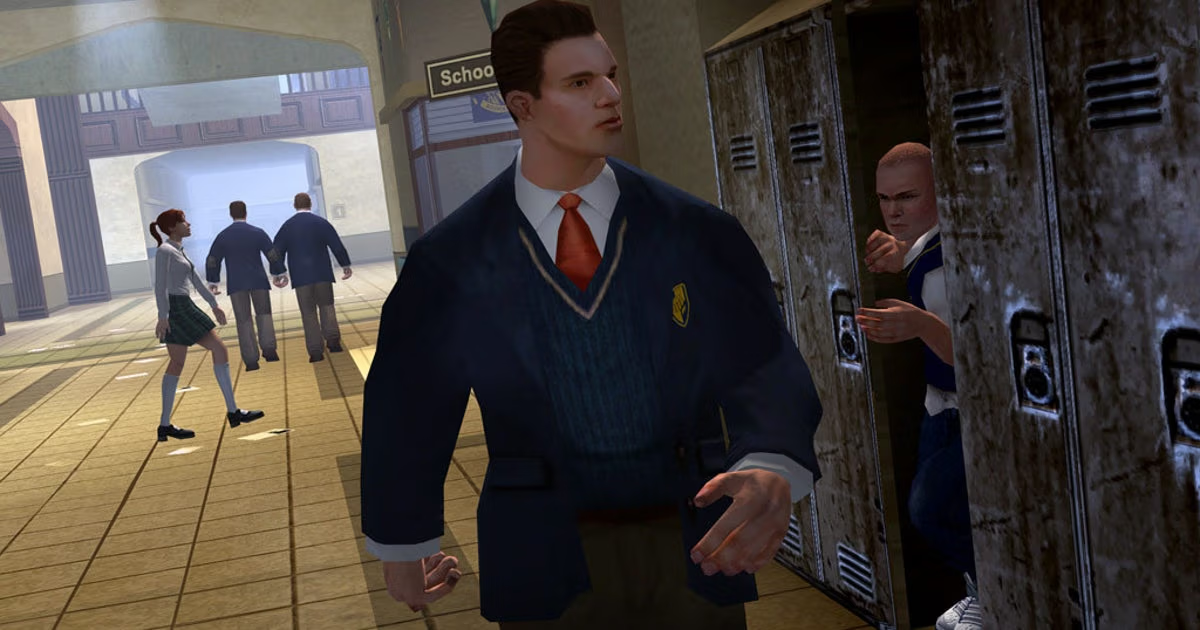
For years, it’s been the white whale of the Rockstar Games fandom. A myth whispered about in forums, fueled by supposed leaks and a collective desire to return to the hallowed, chaotic halls of Bullworth Academy. We’re talking, of course, about Bully 2. And now, we have the closest thing to a final, bittersweet answer on its fate, straight from the source.
In a recent, wide-ranging interview, Rockstar co-founder Dan Houser—the creative force behind behemoths like Grand Theft Auto and Red Dead Redemption—finally touched on the long-lost sequel. His reflection wasn’t one of a project that failed, but of a creative dream that simply ran out of runway. “It felt like a really interesting thing to do,” Houser admitted, before delivering the line that serves as both an explanation and a eulogy: “You just can’t do all the projects you want.”

And in that single sentence lies a profound truth about the state of AAA game development.
The Gravity Well of the Mega-Franchise
Let’s be clear: Houser’s comment isn’t about a lack of desire or a belief that Bully wasn’t a worthy follow-up. It’s about the brutal calculus of opportunity cost. The Rockstar Games of today is not the same studio that released the quirky, experimental, and relatively contained Bully back in 2006.
Modern Rockstar is the custodian of two of the largest, most resource-intensive entertainment properties on the planet. A single installment of Grand Theft Auto or Red Dead Redemption is a decade-long endeavor, consuming the focused energy of thousands of developers and billions of dollars. These franchises have become gravity wells—so massive and demanding that they inevitably pull all available resources, talent, and time into their orbit.
A project like Bully 2, as ambitious as it might have been, would have been a “side project.” And in today’s high-stakes development landscape, there’s no room on the balance sheet for a side project that requires hundreds of your best people. The choice was never really Bully 2 vs. nothing; it was Bully 2 vs. Red Dead Redemption 2 or Grand Theft Auto VI. In that fight, the plucky underdog was always going to lose.
The Future Isn’t Bullworth, It’s “Absurd Ventures”
What makes this revelation so telling is what Houser is doing now. After leaving Rockstar in 2020, he founded a new company, Absurd Ventures. Its mission isn’t to build one single, monolithic game but to create narrative worlds that can live across different media—books, graphic novels, podcasts, and, yes, video games.
This isn’t a coincidence. It’s a direct response to the creative constraints of the very system he helped build. He has escaped the gravity well. Houser’s new path is a search for a model where you can do more of the projects you want, because they aren’t all required to be decade-spanning, globe-conquering blockbusters.
The sad truth for fans is that the era that produced Bully, The Warriors, and Manhunt—Rockstar’s edgier, more experimental B-sides—is likely over. The scale of success has become a creative bottleneck. Innovation and quirkiness haven’t died, but in the world of AAA studios, they’ve been pushed to the margins in favor of the safer, bigger bet.
So, while we can mourn the sequel that never was, the story of Bully 2 isn’t just a nostalgic “what if.” It’s a crucial insight into the realities of modern game creation. We may never get to enroll at Bullworth Academy again, but understanding why is a lesson in itself.
Read the original story at Eurogamer.net.
What other “lost” game sequels do you wish had seen the light of day, and what do you think they could reveal about the games industry?