The Analog Echo: How a Disputed Note Illuminates Our Digital Trust Crisis
In an era defined by data, algorithms, and the relentless march of digital transformation, it’s easy to assume that the most pressing challenges to truth and authenticity reside squarely in the realm of pixels and code. Deepfakes, AI-generated content, sophisticated phishing schemes – these are the digital battlegrounds we commonly discuss on tech blogs.
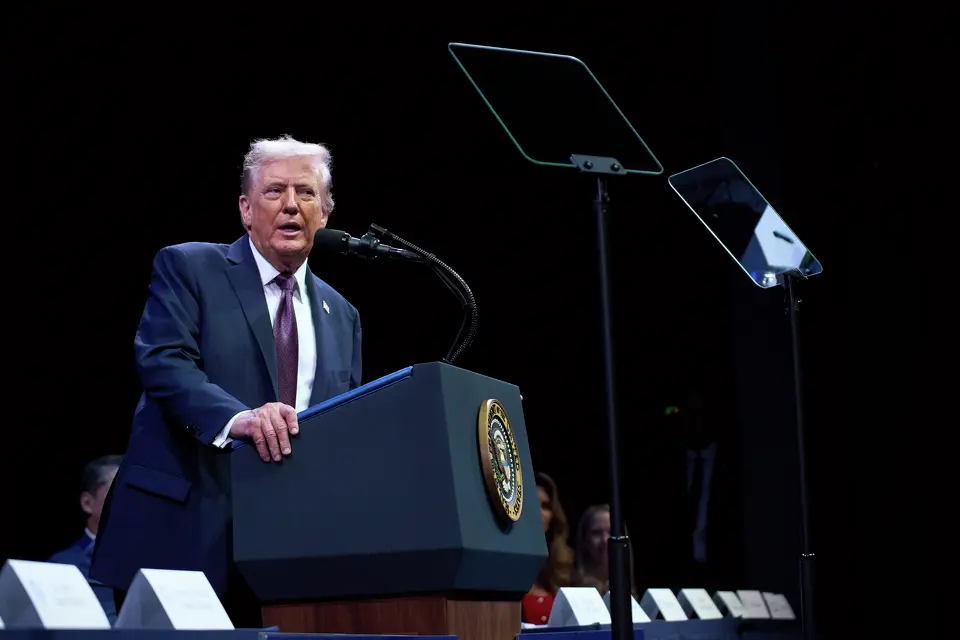
Yet, sometimes, an event rooted firmly in the analog world serves as a potent reminder of the fundamental human challenges that technology merely amplifies, rather than invents. A recent news item, concerning a physical note attributed to a prominent figure and subsequently released by Congress, offers precisely such a moment of reflection.

The note’s alleged authorship is disputed, its contents sparking immediate debate and denial. While the political specifics are less relevant to our discourse, the nature of the controversy itself — the question of who wrote what, and whether it’s truly authentic — provides a fascinating, almost anachronistic, lens through which to view our contemporary digital trust crisis.
The Enduring Quest for Authenticity
At its heart, this incident boils down to a question of provenance and verification. Was this note genuinely penned by the individual in question? Or is it a fabrication, a misattribution, or perhaps even a deliberate plant? For generations, physical documents relied on handwriting analysis, witness testimony, and chain of custody to establish their bona fides. These are slow, often fallible processes, easily mired in subjective interpretation and political machination.
Historically, verifying a physical document involved a suite of often painstaking methods. Handwriting analysis, while a specialized field, has always grappled with subjectivity; an expert’s opinion can be countered by another’s, especially in politically charged contexts. Witness testimony, once a cornerstone of legal and historical verification, is notoriously fallible, prone to the biases of memory, perception, and personal loyalties. The chain of custody, crucial for establishing an item’s unbroken journey from origin to present, can be compromised, leaving gaps that invite suspicion and doubt. Even the physical characteristics of a document—the type of ink, the paper’s watermark, the aging process—which once served as robust indicators of authenticity, can now be meticulously replicated, blurring the lines between genuine artifacts and sophisticated forgeries.
Now, fast forward to our digital present. Every email, every text, every online post faces similar, albeit technologically advanced, questions of authenticity. We wrestle with email spoofing, where malicious actors disguise their emails to appear from a trusted source, deceiving recipients into revealing sensitive information. Compromised accounts, often the result of sophisticated phishing or credential stuffing, allow bad actors to impersonate individuals or organizations, disseminating misinformation or executing fraudulent transactions.
The rise of advanced AI models has further complicated this landscape. Generative AI can produce text that is virtually indistinguishable from human writing, capable of mimicking specific styles, tones, and even complex arguments. This capability challenges the very notion of authorship, making it difficult to discern whether an article, an email, or a social media post originated from a human or an algorithm. Similarly, image and video synthesis, commonly known as deepfakes, can create entirely fabricated scenarios, presenting convincing but false visual evidence that erodes our ability to trust what we see. Even seemingly immutable metadata—timestamps, locations, and device information embedded in digital files—can be manipulated, further complicating the digital forensics required to establish provenance. The physical note’s dispute over a few lines of text echoes loudly in a world where entire digital identities and narratives can be forged with unprecedented ease and scale.
Information as a Lever: Power Dynamics in the Digital Age
Another critical takeaway from such events is the sheer power embedded in information itself, and its strategic release. Regardless of its authenticity, the public disclosure of a document with potentially damaging implications instantly reshapes narratives, fuels public discourse, and serves as a political lever. Congress, in this instance, became the conduit for this information, highlighting how institutions can control the flow and impact of sensitive data.
In the digital sphere, this phenomenon is amplified exponentially. Data leaks, whether from whistleblowers exposing corporate malfeasance or state-sponsored actors targeting political opponents, instantaneously disseminate vast troves of information, often with global repercussions. Whistleblowing, while often serving the public good by revealing corruption or unethical practices, inherently involves a strategic release of information designed to provoke a response and challenge established power structures. Government transparency initiatives, such as Freedom of Information Act (FOIA) requests, are designed to hold power accountable by making public records accessible, yet even these can be manipulated or weaponized depending on timing and context.
Conversely, state-sponsored disinformation campaigns leverage the rapid, widespread dissemination of digital information to influence public opinion, exert pressure on adversaries, or destabilize democratic processes. These campaigns can involve everything from creating elaborate fake news sites to deploying sophisticated bot networks that amplify specific narratives, drowning out credible information with a torrent of manufactured content. The very act of releasing information, whether it’s a scanned physical document or a trove of digital files, is a powerful act. It forces us to confront not just the content, but also the motivations behind its unveiling. Who gains from this disclosure—political adversaries, a specific ideology, or perhaps a segment of the public seeking transparency? Who loses—an individual’s reputation, an organization’s credibility, or the broader societal trust in institutions? And what does this mean for the concept of truth when information can be weaponized with such precision, altering public perception and shaping political outcomes with unprecedented speed and reach?
The Future Imperative: Building Digital Trust and Critical Thinking
What does this analog incident mean for the future of tech? It underscores an increasingly urgent imperative to proactively build mechanisms for trust and foster robust critical thinking skills in a digital-first world.
Robust Digital Provenance
We need more sophisticated, universally adopted technologies to establish and verify the origin and integrity of digital information. The physical world’s struggles with proof of authorship should spur innovation in the digital realm, leading to solutions that are both immutable and easily verifiable. Blockchain-based timestamping, for instance, offers a compelling solution by creating an unchangeable, publicly verifiable record of when a digital asset was created or last modified. This could be applied to critical documents, media files, or even software code, providing an audit trail that is resistant to tampering.
Advanced cryptographic signatures, which use complex mathematical algorithms to verify the authenticity and integrity of digital messages or documents, are another cornerstone. Technologies like digital certificates for secure email, authenticated document signing services, and secure communication protocols are essential. Furthermore, the development and widespread adoption of standardized metadata are crucial. Imagine universal standards that embed verifiable information about an image’s origin, the device it was captured on, and any subsequent edits, making it incredibly difficult to spoof or misrepresent. Initiatives like the Content Authenticity Initiative (CAI) or C2PA (Coalition for Content Provenance and Authenticity) are pioneering efforts in this direction, aiming to provide a “digital chain of custody” that is transparent and robust against manipulation.
Advanced Authentication and Detection
As AI gets better at creating convincing fakes, we need AI that’s equally adept at detecting them. This isn’t just about spotting deepfakes, but about flagging anomalies in text, identifying stylistic inconsistencies, and even analyzing network patterns to trace the origins of digital content. The arms race between generative AI and discriminative AI is continuous. Developing AI models capable of identifying subtle “tells” in generated content—peculiar digital artifacts in deepfake videos, specific linguistic patterns unique to LLMs, or inconsistencies in facial expressions—is paramount.
Beyond simple visual or textual detection, advanced authentication involves analyzing stylistic nuances. Just as handwriting analysts study unique penmanship, AI can be trained to recognize the distinct “voice” of human authors, spotting deviations when AI attempts to mimic. This includes analyzing grammar, vocabulary, sentence structure, and even emotional tone. Furthermore, network pattern analysis can help trace the propagation of misinformation, identifying coordinated inauthentic behavior from bot networks, state-sponsored campaigns, or organized troll farms. By understanding how information spreads and originates, we can better interdict malicious campaigns and alert the public to potential threats. These technologies will form the frontline defense in maintaining trust in our digital information ecosystem.
Critical Digital Literacy
Perhaps most importantly, this incident reminds us that technology alone isn’t the answer. The ultimate defense against misinformation, whether analog or digital, is an informed and critically thinking populace. We must educate ourselves and future generations to question sources, understand biases, and be wary of information presented without robust verification. This goes beyond traditional media literacy to encompass digital-specific challenges: understanding how algorithms shape what we see, recognizing filter bubbles and echo chambers, and discerning sponsored content from genuine news.
Developing strong critical thinking skills means actively seeking out diverse perspectives, fact-checking claims with multiple reputable sources, and understanding the motivations behind information dissemination. It involves cultivating a healthy skepticism that questions the sensational and verifies the plausible. Educational curricula, from K-12 to adult learning programs, need to integrate these skills as foundational for navigating the modern world. Public awareness campaigns can also play a vital role in empowering individuals to become more discerning consumers and creators of digital content. The ability to discern truth amidst a deluge of information is becoming a foundational skill for navigating the modern world, protecting not just individuals but the fabric of democratic societies.
Explore Digital Literacy Resources
In a rapidly digitizing world, we often focus on the gleaming new challenges. Yet, sometimes, a look back at the enduring human struggles – like verifying the authenticity of a simple note – provides the sharpest insights into the complex ethical and technological dilemmas that will define our digital future. Trust, after all, is the ultimate currency, and its value is constantly being negotiated, whether in ink or in pixels.
Read the original story at APNews.com.
Given the increasing sophistication of digital forgeries and the speed of information dissemination, what do you believe is the single most important step individuals can take to protect themselves from misinformation?