Dragon Quest VII’s Rebirth is More Than a Fresh Coat of Paint—It’s a Blueprint for Modernizing Classics
Let’s be honest: Dragon Quest VII is a masterpiece wrapped in a test of patience. For many JRPG veterans, the original PlayStation title is a badge of honor—a sprawling, 100+ hour epic with a unique, time-bending story about restoring a shattered world, island by island. It’s a game revered for its depth, its poignant narrative, and the sheer scope of its adventure. Yet, it’s also famously remembered for an opening that takes longer to get going than a ’90s dial-up connection trying to load a high-resolution image, demanding significant commitment before the true magic unfolds.
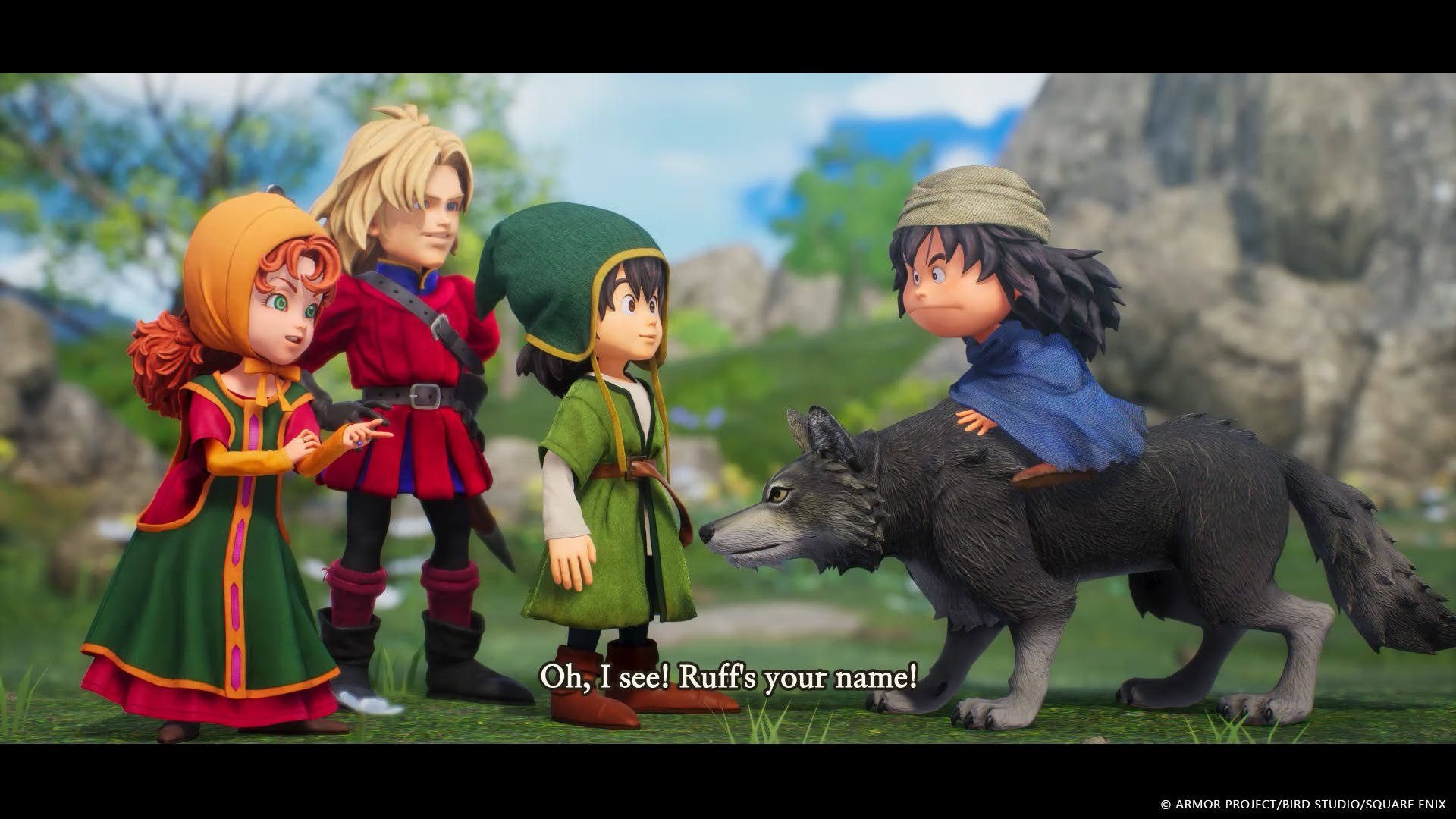
So, when news drops about a full-scale “reimagining” of this beloved beast, the immediate, almost instinctive reaction for many is to focus on the shiny new graphics. After all, visual fidelity is often the most apparent change in any modern revival. And while the visual overhaul is undoubtedly a centerpiece, the latest details reveal something far more significant. This isn’t just a remaster applying a fresh coat of pixels; it’s a surgical modernization, a thoughtful re-engineering of the entire player experience. It could very well be the new gold standard for resurrecting revered, yet flawed, classics, setting a precedent for how we approach the delicate art of game preservation and evolution in the modern era.

The Real Magic Isn’t Just How It Looks, But How It Feels
The original article dives into the expected upgrades, confirming a complete visual transformation, redesigned characters, and a revamped battle system. But to truly appreciate the genius behind this reimagining, we need to look closer at what these changes accomplish beyond surface-level aesthetics. The move to a fully 3D, vibrant world isn’t just eye candy; it’s about profoundly enhancing immersion and emotional resonance, making the player feel more connected to the world they are striving to save.
Dragon Quest VII‘s core loop involves visiting bleak, empty voids—islands that have been stripped of their life and history by an ancient evil—and, through your heroic deeds, restoring them to life in the present. In the original PlayStation game, this transformation was often implied or represented by subtle changes in sprite work and environmental textures. Now, seeing that transformation happen with modern fidelity—watching a desolate patch of sea suddenly teem with life and color, witnessing barren land sprout forests and bustling towns, or seeing formerly static character models express a wider range of emotions—amplifies the emotional core of the game in a way the limited pixels and polygons of the past never truly could. This heightened visual storytelling makes the stakes feel higher and the victories more impactful, allowing new players to appreciate the incredible world-building that veterans have always cherished.
Similarly, tweaks to the battle system are about more than just slicker animations or updated spell effects. They’re about addressing the inherent friction of a 24-year-old game design, an era when JRPG combat often prioritized turn-based strategy over pace and fluidity. Faster combat animations, a clearer and more streamlined user interface (UI), and more intuitive mechanics mean less time spent navigating clunky menus, waiting for slow spell effects to resolve, or deciphering archaic command prompts. Instead, players can dedicate more time engaging with Akira Toriyama’s iconic monster designs and strategic party management. It’s about respecting the player’s time—a crucial currency in today’s crowded gaming landscape where attention spans are shorter and expectations for seamless gameplay are higher. This shift acknowledges that while the core strategic elements should remain, the execution needs to evolve to meet modern player sensibilities.
Solving the “Three-Hour Intro” Problem: The Art of Streamlining
Acknowledging Glacial Pacing: A Historical Challenge
The most telling detail, however, lies in how the story and features are being handled. The developers are clearly aware of Dragon Quest VII‘s most infamous criticism: its glacial pacing, particularly in the opening hours. The original required what felt like an eternity of wandering through mundane castle halls, engaging in lengthy, often repetitive, dialogue sequences, and running seemingly pointless errands before you even saw your first Slime in combat. This design choice, common in JRPGs of its era, was intended to meticulously build the world and its characters, but it inadvertently created a significant barrier to entry for many players, both then and especially now.
For modern players accustomed to faster onboarding and immediate gratification, this prolonged setup can be a deal-breaker, obscuring the game’s brilliance behind a wall of narrative exposition and non-interactive exploration. While the game’s depth and eventual payoffs are legendary, getting to that point required an investment of faith and patience that fewer players are willing to give in the present gaming climate. The original 3DS remake already took significant steps to fix this, notably by making the game world visible from the start rather than shrouded in fog, and by providing clearer objectives. However, this new version seems poised to perfect the solution, learning from past attempts and applying a more comprehensive approach to initial player engagement.
Intuitive Mechanics and Swift Engagement
By streamlining the introductory hours and making the “tablet fragment” system—the key to unlocking new worlds and progressing the story—more intuitive and accessible from the outset, the development team isn’t “dumbing down” the experience. On the contrary, they are removing unnecessary barriers to entry. This involves a thoughtful restructuring of early quests, clearer visual cues for progression, and perhaps even some initial tutorial battles to introduce combat mechanics earlier. The goal isn’t to rush the narrative, but to accelerate the player’s engagement with the core gameplay loop and the unique premise of restoring lost islands.
They’re ensuring that the game’s brilliant, episodic storytelling hooks players from the start, rather than demanding a significant, front-loaded investment of faith just to reach the compelling parts. This is the crucial difference between a faithful port or a simple remaster and a truly thoughtful reimagining. It’s understanding why certain design choices were made in the past, acknowledging the strengths and weaknesses of those choices in a contemporary context, and having the confidence to improve upon them for the present without sacrificing the original vision. This approach allows new generations of players to discover the magic of Dragon Quest VII without having to overcome the same initial hurdles that famously deterred many in the past.
What This Means for the Future of JRPGs: A New Blueprint
Lessons Learned: From Remaster to Reimagining
This project feels like a culmination of lessons learned from decades of remakes, remasters, and reboots across the entire gaming industry. It’s not just about slapping on HD textures or upscaling resolutions; it’s a holistic re-evaluation of the entire player experience. Square Enix, with its vast history of groundbreaking JRPGs and a mixed track record with revivals, is showing a deep understanding of what made the original special while being unafraid to sand down its roughest edges. They understand that preserving the “soul” of a game doesn’t mean preserving its every imperfection if those imperfections hinder enjoyment for a wider audience. This goes beyond technical upgrades; it’s about curating an experience that resonates with both nostalgic fans and newcomers alike, ensuring the game’s narrative and thematic power can shine without being overshadowed by outdated mechanics.
The success of this approach could very well influence how other major publishers and developers handle their own extensive back catalogs. Instead of quick cash grabs, we could see a movement towards more respectful, yet transformative, modernizations. It’s an acknowledgment that while classic games are important cultural artifacts, they don’t have to remain frozen in time, inaccessible or frustrating for contemporary players. This is about evolution, not mere replication, demonstrating that a deep understanding of game design principles from both past and present can create something truly special and enduring.
Applying the DQVII Model to Other Classics
This is the blueprint, a shining example of how to bring a beloved classic into the modern era with care and vision. Imagine this level of care applied to other classics that are brilliant but mechanically or narratively dated. Think of a Xenogears with its stunning first disc fully realized alongside a completed second disc, boasting modernized combat and exploration that could finally do justice to its epic story and philosophical themes. Or a Chrono Cross with a more coherent narrative flow, improved pacing, and perhaps clearer character motivations, addressing some of its long-standing criticisms while retaining its unique atmosphere and innovative battle system.
The possibilities extend far beyond these two titans. What about a Final Fantasy Tactics with an updated UI, clearer job system explanations, and quality-of-life improvements that reduce grinding while maintaining its tactical depth? Or classic Suikoden titles, renowned for their vast cast of characters and intricate worlds, but often hampered by clunky menus and slow traversal, receiving similar attention? The Dragon Quest VII reimagining proves that nostalgia doesn’t have to be a cage, trapping games in their original form. You can preserve the artistic integrity and emotional core—the very soul—of a classic while building a better, more accessible, and more engaging vessel around it, making it sing for a new generation without alienating those who cherished it first. This isn’t just about bringing back an old game; it’s about ensuring its legacy for a generation that never knew it and reinforcing its greatness for those who did.
Preserving Legacy for a New Generation
Ultimately, the significance of this Dragon Quest VII project extends beyond the game itself. It speaks to a broader movement in gaming to make history accessible and enjoyable for new audiences. In an industry that often looks forward, it’s refreshing to see such a dedicated effort to look back, not with blind reverence, but with a critical and loving eye. By carefully addressing the original’s flaws while elevating its strengths, Square Enix is ensuring that a masterpiece doesn’t just endure, but thrives. This commitment to thoughtful modernization means that the profound storytelling, charming characters, and unique world of Dragon Quest VII can continue to inspire and entertain for decades to come, forging new memories while honoring old ones. And that, truly, is far more exciting and impactful than any graphical upgrade alone could ever be.
Read the original story detailing the reimagining at Nintendoeverything.com.
What other classic JRPGs do you think deserve this level of thoughtful “reimagining” and why?