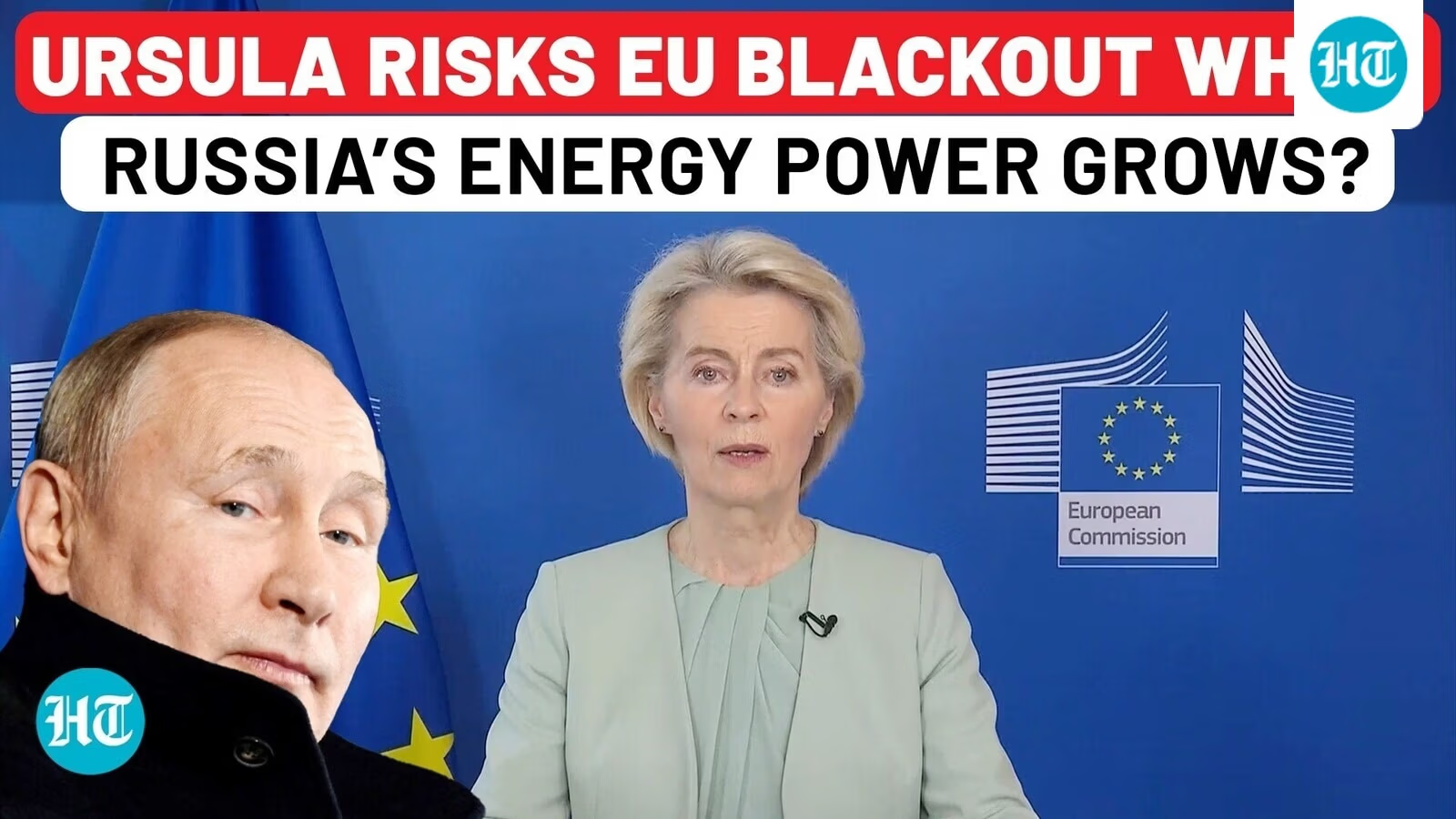
More than two years into the devastating conflict in Ukraine, the European Union’s economic confrontation with Russia has settled into a predictable yet ever-evolving rhythm of diplomacy, punishment, and strategic recalculation. With a staggering eighteen sanctions packages already deployed, the West has undeniably thrown a formidable economic gauntlet at the Kremlin. Each iteration has aimed to tighten the financial squeeze, disrupt Russia’s war machine, and ultimately compel a cessation of hostilities. Yet, as Brussels now deliberates a momentous nineteenth round of sanctions, a disquieting question hangs heavy in the European air: Is this next step a decisive blow that will finally bend Moscow to its will, or is the EU about to walk into an economic trap of its own making, exacerbating its own vulnerabilities?
The proposed target this time represents one of Russia’s last great cash cows within the European market: its highly lucrative liquefied natural gas (LNG) sector. The irony is stark. While the continent has commendably, and with significant effort, weaned itself off Russian pipeline gas – a critical achievement in reducing its energy dependence – it has simultaneously, almost inadvertently, become a critical hub for the global trade of Russian LNG. This unforeseen dependency arises from the logistics of global energy transport: major ports in Belgium, France, and Spain, equipped with specialized infrastructure, act as crucial stopovers. Here, super-chilled gas from Russia’s Arctic extraction sites is transferred from large ice-class tankers onto conventional vessels, destined for markets across the globe, predominantly in Asia.

The new sanctions initiative aims to sever this logistical artery, disrupting the intricate network that facilitates Russia’s LNG exports. On the surface, the strategic logic appears unimpeachable: cut off a key, substantial revenue stream that continues to fund Moscow’s relentless war effort in Ukraine. Yet, beneath this seemingly straightforward goal lies a complex, often opaque, web of potential unintended consequences that could reverberate far more painfully in Brussels and European capitals than in Moscow.
Russia’s Shifting Sands: Adaptation, Resilience, and the Eastern Pivot
The central paradox underpinning the effectiveness of the 19th sanctions package is Russia’s remarkable, if often underestimated, capacity for economic adaptation. While Europe engages in intricate debates and diplomatic maneuvers, Russia has been aggressively, and quite successfully, pivoting its energy exports eastward. Nations like China and India, driven by their own insatiable demand for energy and a pragmatic approach to international relations, have emerged as eager, reliable customers. This strategic reorientation isn’t merely a stop-gap measure; it represents a fundamental shift in Russia’s energy policy, accelerating its long-term ambition to diversify its market away from its traditional European buyers.
Sanctioning its LNG trans-shipments through European ports would undoubtedly create significant logistical headaches for the Kremlin. It would necessitate finding alternative trans-shipment points, potentially leading to increased shipping costs, longer transit times, and perhaps even the need for new port infrastructure or more frequent ship-to-ship transfers at sea. However, it’s increasingly unlikely to be the “knockout punch” that some in Brussels envision. Moscow has repeatedly proven adept at finding workarounds, leveraging its vast resources, diplomatic leverage, and the sheer fluidity of the global energy market. New LNG terminals are being developed on Russia’s Pacific coast, and its fleet of ice-class tankers is expanding, enabling direct shipments via the Northern Sea Route to Asia, bypassing Europe altogether. This resilience means that while Europe might disrupt a component of Russia’s supply chain, it might not significantly diminish its overall export capacity or revenue in the long run.
Europe’s Precarious Position: The Risk of a Self-Inflicted Wound
This is precisely where the risk of a self-inflicted wound becomes acutely prominent for Europe. The proposed move is fraught with peril for an economic bloc already grappling with myriad challenges. It threatens to disrupt an already fragile global energy supply chain, potentially sending energy prices soaring once again, just as European economies are struggling to regain their footing after successive crises – the COVID-19 pandemic, the initial energy shock of 2022, and persistent inflationary pressures. The intricate dance of global energy markets means that even if Europe isn’t the final consumer of the trans-shipped LNG, its role as a key logistical node means any disruption there can send ripple effects across continents, driving up prices for everyone, including European industries and households.
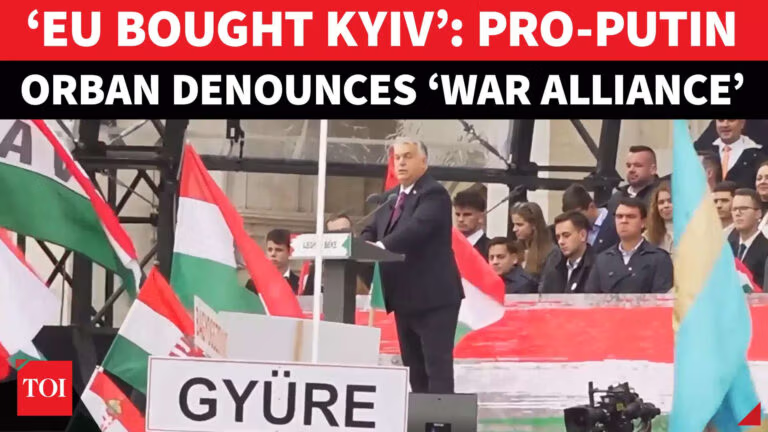
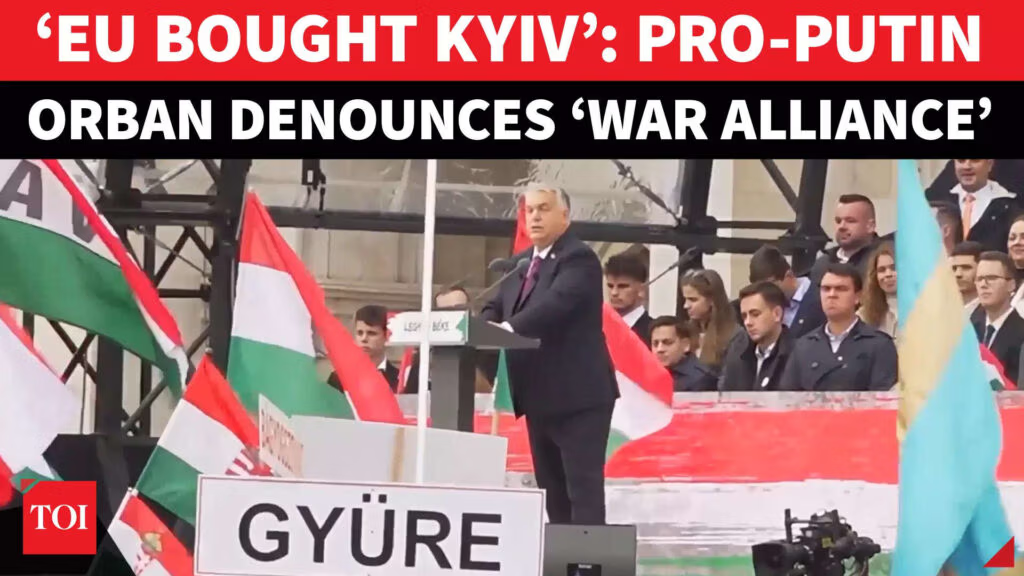
Furthermore, the countries hosting these crucial trans-shipment hubs would face direct and immediate economic blowback. Ports in Belgium, France, and Spain, which have invested heavily in the infrastructure required for LNG handling, would see significant reductions in activity, leading to job losses in port operations, logistics, and related support industries. This localized economic damage would inevitably test the already strained unity of the 27-member bloc. Nations like Hungary, under Prime Minister Viktor Orbán, have long been vocal skeptics of the sanctions regime, consistently prioritizing their national economic interests and energy security over broader EU solidarity. They are no longer alone in meticulously weighing the economic cost of continued solidarity against Russia, especially if the benefits of such measures appear increasingly ambiguous or counterproductive.
The Erosion of European Unity and the Spectre of Sanctions Fatigue
The internal cohesion of the EU is one of its greatest strengths, yet it is also its most vulnerable point when confronted with prolonged economic strain. Each new sanctions package requires unanimous agreement among member states, a process that becomes exponentially more difficult as economic pain spreads unevenly across the continent. Smaller, more energy-dependent economies, or those with significant historical ties to Russia, often bear a disproportionate burden. The 19th package, by directly impacting the economic viability of key ports, risks creating new pockets of dissent and strengthening the narrative of “sanctions fatigue.” This fatigue isn’t just about economic cost; it’s about the perceived effectiveness of the strategy itself. If sanctions are seen as causing more harm to Europe than to Russia, the political will to maintain and escalate them will inevitably erode, potentially undermining the entire Western coalition’s stance against Moscow.
Washington’s Shadow: US Pressure and European Interests
Looming over this entire debate, adding another layer of geopolitical complexity, is the subtle but undeniable pressure emanating from Washington. The United States, having transformed into a major global LNG exporter itself in recent years, stands to gain significantly from any disruption to Russian energy supply, whether pipeline gas or LNG. Reduced Russian competition in global markets translates directly into increased demand and higher prices for American LNG, bolstering its geopolitical and economic influence. This confluence of interests has led to uncomfortable, yet critical, questions in many European capitals about the true beneficiaries of a full-scale energy divorce from Russia. Is the push for ever-tighter sanctions on Russian energy genuinely serving Europe’s long-term strategic interests in energy security and economic stability, or is it, at least in part, aligning with America’s commercial ones?
It’s a delicate and often precarious dance between transatlantic unity, which remains a cornerstone of Western security, and the stark realities of economic self-preservation for European nations. While European leaders acknowledge the imperative of standing with Ukraine and punishing Russian aggression, they are also acutely aware of their domestic economic responsibilities. The narrative that Europe is sacrificing its own economic well-being for a geopolitical agenda that disproportionately benefits the United States is gaining traction in some circles, complicating policy decisions and public acceptance of further sanctions.
The Broader Geopolitical Implications of Energy Sanctions
Beyond the immediate economic impact, the debate surrounding the 19th sanctions package touches upon deeper geopolitical currents. It forces Europe to confront its strategic autonomy – or lack thereof – in energy policy. The reliance on external energy sources, coupled with geopolitical pressures, highlights Europe’s ongoing challenge to forge an independent foreign and energy policy that truly prioritizes its own long-term interests. The potential re-routing of global LNG flows and the emergence of new energy partnerships also reshapes the global energy landscape, with implications for international trade, climate goals, and power balances for decades to come. The question isn’t just about the next package; it’s about the future architecture of global energy and Europe’s place within it.
A Critical Juncture: Tightening the Noose, or Just the Rope?
Ultimately, the 19th sanctions package is more than just another turn of the screw in a protracted economic conflict. It represents a critical juncture for the entire Western coalition, particularly for the European Union. It will test, perhaps more profoundly than any previous measure, just how much more economic pain Europe is willing to endure for its professed principles and whether the strategy of maximum pressure on Russia is still yielding tangible results, or if it is approaching a point of diminishing returns. The efficacy of sanctions as a tool for behavioral change in an adversary with significant global energy leverage is being scrutinised like never before.
As the EU stands precariously on this sanctions tightrope, it must ask itself a fundamental, almost existential question: Is it truly tightening the noose around Russia’s war-funding economy, effectively choking off its ability to prosecute the conflict? Or is it, inadvertently, tightening the rope around its own economic neck, risking the long-term cohesion and economic stability of Europe itself? The answer to this complex question will not only define the immediate future of the conflict in Ukraine but will also profoundly shape the cohesion, economic resilience, and geopolitical standing of Europe for years to come. What are your thoughts on Europe’s current sanctions strategy, and do you believe the proposed LNG ban is a necessary escalation or a dangerous miscalculation?
Read the original story at Hindustan Times.