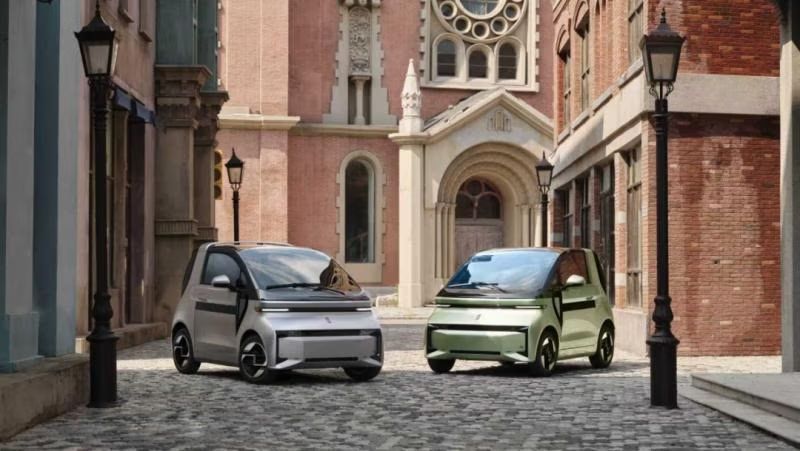
The cobblestone streets and bustling avenues of Europe are becoming the unlikely stage for a quiet, high-stakes political drama. It’s not a fight over borders or budgets, but over something far more fundamental: the very way our cities breathe, move, and function. The latest dispatch from this front comes not from Brussels or Berlin, but from the sleek, futuristic design of a new electric bicycle.
A company named Rayvolt has just unveiled its “X one” e-bike, a machine dripping with artificial intelligence, facial recognition, and avant-garde aesthetics. On the surface, this is a story about consumer tech—a fancy gadget for the urban professional. But to dismiss it as such is to miss the point entirely. The launch of products like the X one is a powerful signal of a deeper convergence of technology, public policy, and the relentless push for a greener continent. This isn’t just a bike; it’s a rolling referendum on the future of European urban life.

The Key Takeaway: Regulation as the Gatekeeper
The most telling detail in the announcement has nothing to do with the bike’s voice-command features or its regenerative braking. It’s the mention of its compliance with the European EN15194 standard. This seemingly mundane technical code is, in fact, the price of admission to the world’s most lucrative and regulated market for green mobility.
For any company, domestic or foreign, wanting to sell an e-bike in the EU, a powerful motor or a slick design is secondary. First, you must pass through the regulatory gauntlet. This underscores a central pillar of European political power: its ability to set global standards. The EU isn’t just building a single market; it’s exporting a blueprint for what it deems safe, sustainable, and acceptable. This “Brussels Effect” forces global innovators to tailor their products to European values, effectively shaping the future of technology far beyond the Union’s borders. The X one’s compliance is a quiet acknowledgment of where the real power lies.
What This Means for the Future: A Tale of Two Cities
The arrival of hyper-personalized, high-tech mobility solutions like the X one signals a critical crossroads for urban policy.
On one hand, it represents the private sector’s response to the EU’s ambitious Green Deal. These vehicles are tools in the fight against urban congestion and carbon emissions, offering a tangible path toward the climate-neutral cities of tomorrow. They promise less noise, cleaner air, and a populace empowered with efficient, personal transport. This is the gleaming, utopian vision that policymakers champion.
On the other hand, it raises thorny questions about equity and infrastructure. A premium, AI-driven e-bike is not a solution for everyone. As these sophisticated machines become status symbols for the affluent, what happens to those who still rely on underfunded public transport? We risk creating a two-tiered mobility system: one of seamless, personalized travel for those who can afford it, and one of crowded buses and infrequent trains for everyone else.
Furthermore, the proliferation of these “smart” vehicles turns our streets into massive data-collection networks. The GPS, facial recognition, and user data integral to the X one’s appeal are also a challenge for privacy regulators. How this data is governed, protected, and used will become a defining political challenge for municipal leaders across the continent.
Ultimately, the story of the Rayvolt X one is less about a single product and more about the future being built, and bought, in our cities. It highlights the delicate dance between innovation, regulation, and the political will required to ensure that the cities of the future are not just smarter and greener, but also more equitable for all their citizens. The battle for Europe’s streets has begun, and it will be fought one bike lane, one policy decision, and one technological leap at a time.
Read the original story at Openpr.com.
How do you think European cities can balance technological innovation in personal mobility with the need for equitable and accessible public transport for all citizens?