Europe’s Streets Demand a New Conversation on Palestine
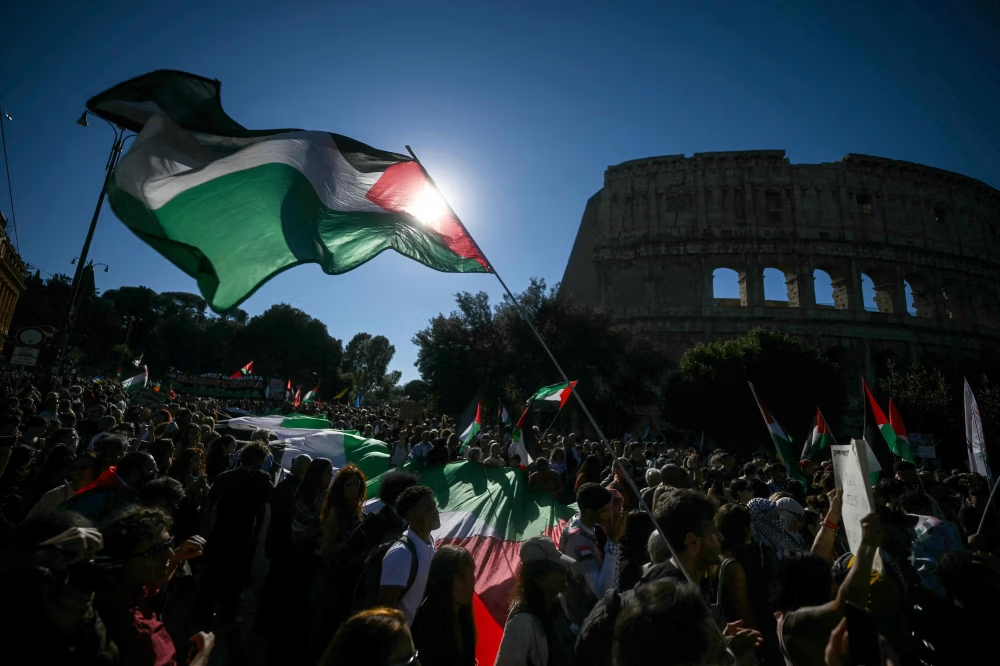
From the historic avenues of Paris to the bustling squares of London and the vibrant streets of Berlin, a unified roar echoed across Europe this weekend and in recent months. It was a sound not just of protest, but of a potential political sea change, signaling a profound shift in European public opinion regarding the Israeli-Palestinian conflict. As hundreds of thousands of people marched in solidarity with Gaza, their central cry—”We are all Palestinians”—signaled more than just sympathy for a distant conflict. It represented a direct and potent challenge to the long-held foreign policy consensus of their own governments, urging them to recalibrate their diplomatic stances in line with evolving public sentiment and a renewed focus on universal human rights.
This was not merely another demonstration, nor a sporadic outburst of discontent. The sheer scale, coordinated nature, and sustained momentum of these marches across the continent represent a groundswell of public opinion that European leaders can no longer dismiss as a fringe element or a fleeting moment of activism. For decades, European diplomacy on the Israeli-Palestine conflict has been a carefully calibrated affair, often characterized by caution, neutrality, and a preference for behind-the-scenes negotiation, conducted in the hushed halls of power in Brussels and national capitals. Now, the issue has spilled onto the streets with an undeniable force, transforming a seemingly distant foreign policy matter into a pressing domestic one, demanding immediate attention from politicians juggling international alliances and local electoral pressures.

The key takeaway from these powerful displays is the profound shift from passive sympathy to active, identifying solidarity. The slogan “We are all Palestinians” is a masterstroke of political communication, embodying a radical empathy that transcends geographical and cultural boundaries. It reframes the conflict, moving it away from a complex geopolitical dispute often presented as an intractable “ancient feud” and recasting it as a universal struggle for human rights, dignity, and justice. For the marchers, this is not about taking sides in a religious or historical battle; it’s about identifying with a people they perceive as oppressed and demanding that their leaders’ actions and their national foreign policy align unequivocally with the values of human rights, international law, and self-determination that they ostensibly espouse.
Implications for the Future of European Policy
So, what does this massive outpouring of public sentiment mean for the future of European foreign policy and the intricate dance of international relations? The impact is multifaceted and promises to reshape the political landscape for years to come.
The Precarious Position of European Leaders
First, European leaders are now caught in a particularly precarious position. While traditionally maintaining established alliances and carefully crafted diplomatic positions—especially with key partners like the United States and Israel—they are simultaneously facing immense, unprecedented pressure from a significant and increasingly vocal segment of their own electorate. This creates a difficult tightrope walk, fraught with political peril. To ignore the public’s demands and maintain the diplomatic status quo risks being seen as out of touch, undemocratic, and potentially complicit in actions that many citizens view as violations of human rights. Such a stance could lead to significant domestic political fallout, eroding trust in governments and potentially impacting electoral outcomes.
Conversely, shifting policy to accommodate public sentiment carries its own risks: diplomatic fallout with powerful allies, potential economic repercussions, and a challenge to long-standing strategic alignments. The “polite distance” or nuanced diplomatic ambiguity many governments have maintained on the Israeli-Palestinian conflict for decades is no longer tenable. Citizens are demanding clarity, moral consistency, and concrete action. This pressure extends beyond just symbolic gestures, pushing for tangible policy shifts such as more robust condemnations of Israeli settlements, calls for a definitive ceasefire, increased humanitarian aid to Gaza, or even considerations of sanctions or arms embargoes. The balance between national interests, international alliances, and domestic values has never been more challenged in this context.
A Generational and Informational Paradigm Shift
Second, this movement signals a profound generational and informational shift that is fundamentally altering how foreign policy is debated and enacted. In an era dominated by social media and instant global communication, traditional narratives are no longer solely controlled by governments and established news outlets. Raw, unfiltered accounts, powerful images, and personal stories from Gaza can bypass official channels and traditional media gatekeepers, directly reaching and galvanizing a global audience in real-time. Platforms like TikTok, X (formerly Twitter), and Instagram have become powerful conduits for information and mobilization, allowing activists to share perspectives that might otherwise be marginalized.
This movement is largely fueled by a younger, more digitally-native generation that is building a global community around a shared sense of injustice and universal human rights. This demographic, having grown up with access to diverse global perspectives and a strong ethical compass shaped by immediate information, is less beholden to historical diplomatic precedents and more responsive to humanitarian appeals. Their understanding of the conflict is often shaped by these direct, unfiltered digital narratives rather than state-sponsored briefings or traditional media analyses. This suggests that the pressure for a revised approach to Palestine is not temporary; it is a fundamental feature of the new political landscape, driven by a demographic that will increasingly influence elections and policy decisions for decades to come, ensuring sustained scrutiny and advocacy.
Beyond the Status Quo: Public Sentiment vs. Strategic Alliances
Ultimately, the marches across Europe are a clear and unequivocal sign that the status quo is being rejected by a significant portion of the European populace. This rejection extends beyond mere criticism of current policies; it’s a demand for a new calculus in foreign policy, one where public sentiment, humanitarian concern, and adherence to international law are weighed as heavily—if not more so—as strategic alliances, economic interests, and historical precedent. This challenges the very foundations of how foreign policy has traditionally been formulated and executed, pushing for a more democratic and ethically driven approach.
The activism signals a potential for long-term changes in how European governments engage with the Middle East, potentially influencing everything from trade agreements to military cooperation and diplomatic recognition. It could lead to a more assertive European stance on the two-state solution, increased engagement with Palestinian governance, and a greater willingness to challenge Israeli actions that violate international norms. The ongoing public pressure will compel leaders to not only acknowledge the protests but to respond with substantive policy adjustments, however incremental. The conversation in the corridors of European power just got a lot louder, forcing diplomats and politicians to factor in the voices from the streets into their complex equations.
Whether this wave of activism will translate into concrete, sweeping policy changes remains to be seen, given the inertia of international diplomacy and the entrenched interests at play. However, one thing is certain: the conversation in the corridors of European power just got a lot louder, irrevocably altered by the powerful roar of citizens demanding justice and accountability. How do you believe European leaders will ultimately balance the growing demands of their electorates with the geopolitical realities of their alliances?
Read the original story at Malay Mail.