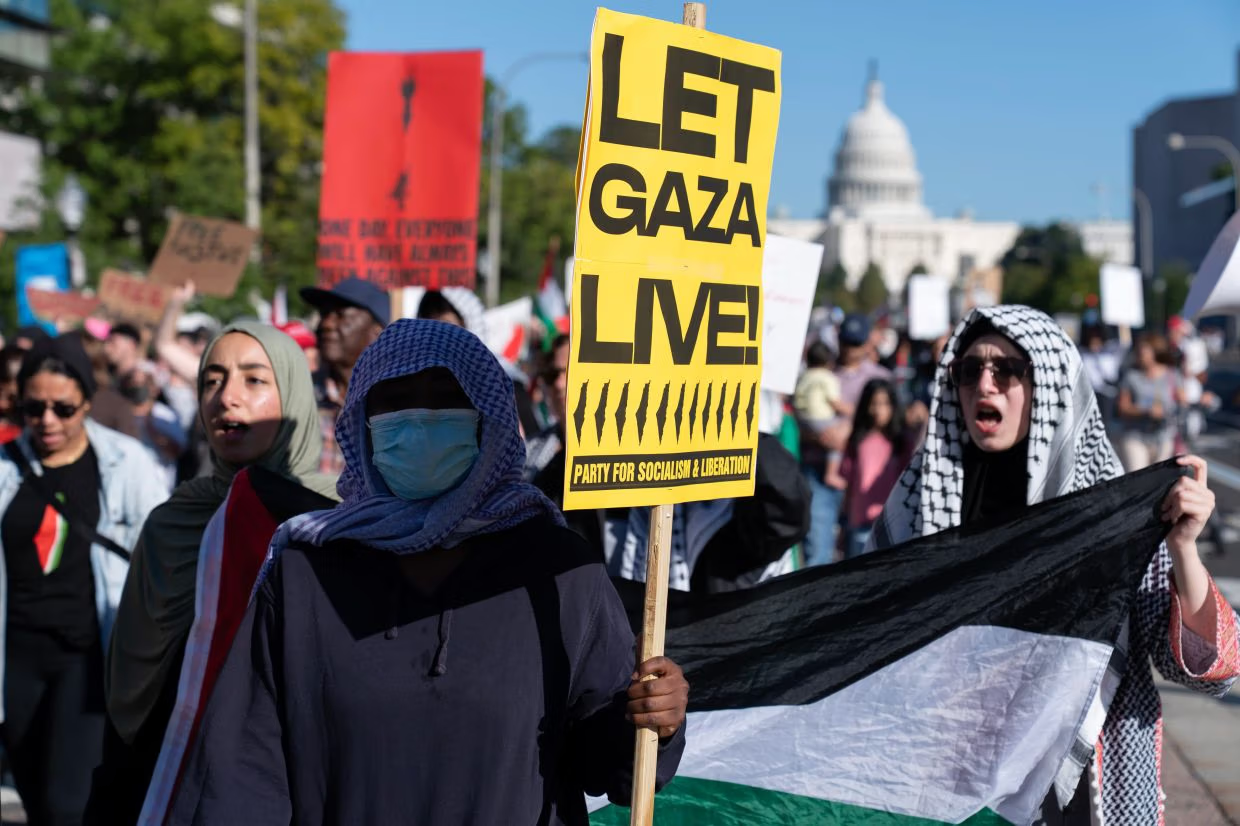
The heartbeats of Europe’s major cities pulsed to a different rhythm this weekend. It wasn’t the usual thrum of commerce or tourism, but the resonant, marching cadence of hundreds of thousands of people. From the rain-slicked avenues of London to the historic boulevards of Paris and the politically charged squares of Berlin, a seismic wave of pro-Palestinian protest has rolled across the continent, signaling far more than just a fleeting moment of dissent. This is the crystallization of a profound and growing disconnect between the governed and their governments.
While the sheer scale of the demonstrations is the immediate headline, the true story lies in what this massive mobilization signifies for the future of European foreign policy and domestic politics. For years, the official stances of many European capitals have been a carefully calibrated balancing act—condemning violence while largely upholding steadfast support for Israel’s security and aligning with Washington’s geopolitical framework. The voices roaring from the streets this weekend suggest that this calibration is no longer tenable for a significant, and increasingly vocal, segment of the population.

One of the most crucial takeaways from these marches is the composition of the crowds. This is not a fringe movement. The banners and chants were carried by a broad coalition: students who have been galvanized by social media narratives of the conflict, veteran anti-war activists, trade unionists, human rights advocates, and large diaspora communities. This diverse cross-section of society makes the movement impossible for political leaders to dismiss as extremist or marginal.
A Generational and Ideological Shift
What we are witnessing is potentially a generational tide turning. For younger Europeans, the Israeli-Palestinian conflict is not viewed through the same historical and political prisms as their parents’ or grandparents’ generations. They see a human rights and social justice issue, amplified through unfiltered digital channels. This portends a long-term shift in the bedrock of public opinion, one that will inevitably shape the political landscape for years to come.
The Tightrope for Europe’s Leaders
This outpouring of public sentiment places European leaders in an extraordinarily difficult position. In Germany, any response is freighted with the immense weight of historical responsibility. In France, the government must navigate the delicate tensions between its large Muslim and Jewish populations. In the UK, the Labour and Conservative parties alike are struggling to forge a coherent message that doesn’t alienate a core part of their electoral base.
The future implications of this are twofold. First, expect the diplomatic language from European foreign ministries to become even more cautious. The pressure from the streets may not cause an immediate U-turn in policy, but it will likely lead to louder calls for humanitarian pauses, increased aid, and a more critical tone regarding military operations. The era of writing blank checks of political support is being severely tested.
Second, and perhaps more significantly, this issue is now firmly embedded in domestic politics. It will influence party manifestos, leadership challenges, and, ultimately, elections. A politician’s stance on this distant conflict is fast becoming a litmus test for their values at home. As the streets continue to find their voice, the corridors of power in Brussels, London, and Berlin will find it increasingly difficult not to listen. The question is no longer if this public pressure will impact policy, but how—and how soon.
Read the original story at The Star.
How do you foresee these significant public mobilizations reshaping Europe’s political landscape and foreign policy in the coming years?