Beyond the Bezel: Why Ford’s CEO is Pumping the Brakes on Apple’s Dashboard Ambitions
The automotive world is undergoing a seismic shift, and it’s not just about electric powertrains or autonomous driving. While these technological advancements dominate headlines, a perhaps more subtle, yet equally profound, transformation is taking place within the very heart of the vehicle: the dashboard. The battle for the digital soul of your car is heating up, turning the once-mundane infotainment screen into a crucial battleground. A recent, forthright statement from Ford CEO Jim Farley has thrown a powerful spotlight on this brewing tension, signaling a fundamental philosophical divide that will shape the future of connected vehicles.
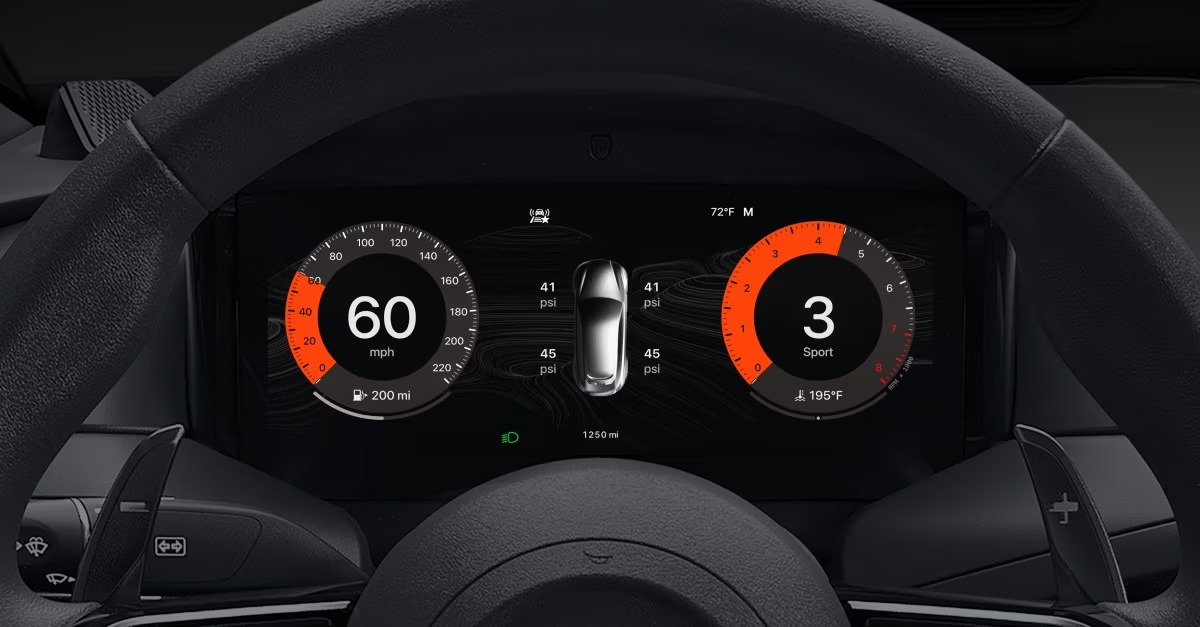
For decades, infotainment systems were often an afterthought – clunky, slow, and frustrating add-ons to a machine primarily built for motion. Then came the smartphone revolution, bringing with it Apple CarPlay and Android Auto. These platforms offered drivers a familiar, intuitive, and smartphone-like experience, which was quickly embraced as a vast improvement. But the impending next iteration of CarPlay, often referred to as “CarPlay Ultra” in industry circles, isn’t content with merely mirroring your phone’s apps. It aims for a complete takeover, intending to control and populate *every screen* in the vehicle – from the crucial instrument cluster displaying speed and charge, to the climate controls, effectively transforming your car into an Apple device on wheels.

And that’s precisely where Jim Farley, a veteran of the auto industry with a keen eye on future revenue streams, pumps the brakes. His concern isn’t about the aesthetic quality or user-friendliness of Apple’s UI – which is, admittedly, often superb and a benchmark for many. Instead, his apprehension stems from something far more fundamental and strategically vital for any automaker: data and customer relationships.
Think about the profound implications: who truly “owns” the driving experience and the associated intellectual property when Apple’s software is dictating your speedometer, displaying critical charging data for your EV, or managing your vehicle’s climate settings? More importantly, and this is the crux of the matter for Ford and other OEMs, who collects, analyzes, and ultimately leverages the invaluable stream of data generated by those interactions? Farley isn’t simply being protective of his turf; he’s fiercely guarding what he perceives as the crown jewels of the future automotive business.
Automakers are no longer just hardware manufacturers; they are rapidly evolving into software and service providers. They view software, connected services, and various subscription models as vital, high-margin revenue streams that will complement or even surpass traditional vehicle sales in the coming decades. Information about how efficiently you charge your EV, when your car needs routine service, your preferred driving modes, or even subtle driving habits, represents proprietary gold. Handing that granular, contextualized vehicle data over to a tech giant like Apple means relinquishing direct control over potential future profits, severely limiting their ability to innovate with tailored services, and, most critically, dissolving the direct, invaluable relationship with their end customer.
This isn’t an isolated skirmish; it’s merely the latest, high-profile chapter in the unfolding tech-versus-auto saga – a fundamental ideological clash that defines much of the modern automotive industry. On one side, you have tech behemoths like Apple and Google, whose core business models are built upon operating systems, software ecosystems, and relentless data collection. They perceive the car as the “ultimate mobile device,” an expansive, untapped frontier for extending their established ecosystems, deepening user engagement, and collecting even more behavioral and contextual user data. Their goal is often to become the central nervous system, regardless of the vehicle’s brand.
On the other side, you have traditional automakers like Ford, General Motors, and Stellantis, who are engaged in a rapid and expensive transformation. They are trying to evolve from mere hardware manufacturers into sophisticated, full-stack tech companies in their own right. They recognize with increasing clarity that if they become little more than “dumb pipes” or hardware shells for someone else’s software and data collection apparatus, their hard-won brand identity, unique vehicle features, and future profitability are all placed at severe, existential risk. The ability to differentiate through a truly integrated digital experience becomes paramount.
What Does This Mean for the Future of Connected Vehicles?
Jim Farley’s outspoken stance isn’t a dismissal of innovation; it’s a strategic declaration of independence for Ford and a clear articulation of where Ford believes its future lies. The implications of this burgeoning conflict are profound and will ripple through the industry for years to come.
1. Increased OEM Software Investment and In-House Development
Expect automakers to significantly double down on developing their own robust, in-house software platforms and operating systems. Companies like Ford, GM (with its Ultifi platform), and Stellantis (with its STLA Brain architecture) are pouring billions into creating unique, integrated digital experiences that they fully control. They don’t just want to be the chassis supplier; they want to be the operating system, the app store, and the service provider. This allows for deeper vehicle integration, unique brand-specific features that go beyond mere infotainment, and the crucial ability to offer new services and subscription models directly to the customer. While challenging and resource-intensive, this approach offers long-term control and strategic flexibility, safeguarding against becoming mere hardware commodities.
2. Strategic Alliances (and Clear Divides)
We’ll undoubtedly see more strategic partnerships – and more clear lines drawn in the sand. Some automakers might choose to lean into deeper partnerships with tech giants for specific, non-core features, leveraging their expertise for certain aspects of the user experience while retaining control over critical vehicle data and functions. Others, like Ford appears to be doing, will maintain a fiercely independent stance, investing heavily in building out their own app stores, voice assistants, and service ecosystems. The choice will be a complex one, balancing speed-to-market and cost-efficiency with long-term control and brand identity. For instance, while some might adopt Android Automotive OS (distinct from Android Auto) as a base, they will still customize heavily and manage data carefully to maintain their brand’s distinctiveness.
3. The Consumer’s Dilemma and Evolving Expectations
For us, the drivers and vehicle occupants, this tug-of-war between tech companies and automakers could lead to fascinating, if sometimes fragmented, choices. Will we prioritize the seamless integration of our existing smartphone ecosystem – where all our apps, contacts, and personal preferences port over effortlessly – even if it means less brand-specific car features or deeper vehicle insights? Or will we value a unique, automaker-designed digital experience that might offer more profound vehicle integration, bespoke services, and a more distinct brand identity, even if it means a slight departure from our familiar smartphone interface? The market will ultimately decide which approach resonates most with the modern driver, shaping future product development.
4. Data Privacy and Security at the Forefront
As more and more personal and vehicle-specific data flows through our cars – everything from driving patterns and location to biometric data and infotainment preferences – questions of privacy, data ownership, and cybersecurity will become paramount. This battle isn’t just for control of the dashboard screen; it’s for control of our digital lives on the road. Automakers will need to be transparent about what data is collected, how it’s used, and how it’s protected, especially as regulations like GDPR and CCPA continue to evolve globally. Building consumer trust around data handling will be a key differentiator and a significant challenge for both auto and tech companies vying for dashboard dominance, making it a central theme in future automotive discourse.
Jim Farley’s stance isn’t a dismissal of innovation; it’s a strategic declaration of independence for Ford and a profound commitment to owning the customer relationship and the vehicle’s digital future. It underscores a fundamental belief that the car’s soul, its invaluable data, and its direct connection to the customer must remain tethered to the automaker. The battle for the dashboard is heating up, and its outcome will shape not just our daily drives, but the entire automotive industry for decades to come.
Read the original story at The Verge.
What are your thoughts on this digital tug-of-war? Would you prefer a fully integrated Apple or Google experience in your car, or do you value a unique, automaker-designed digital interface that keeps your data within the vehicle brand’s control?