More Than Just a ‘Candy Crusher’: Fortnite’s Halloween Hiccough and the Future of Viral Marketing
The digital age has fundamentally reshaped how brands interact with their audiences. It has gifted companies incredible avenues for connection, engagement, and viral marketing, allowing messages to spread globally in mere moments. This unprecedented connectivity, while offering immense opportunities, also presents significant challenges. The same channels that enable rapid growth can, just as swiftly, turn a meticulously planned campaign into an unexpected, meme-fueled rollercoaster. Epic Games, the powerhouse behind the cultural phenomenon Fortnite, recently experienced this firsthand with its “Fortnitemares” Halloween tease, all thanks to a celebrity’s keen eye and a playfully mischievous comment.
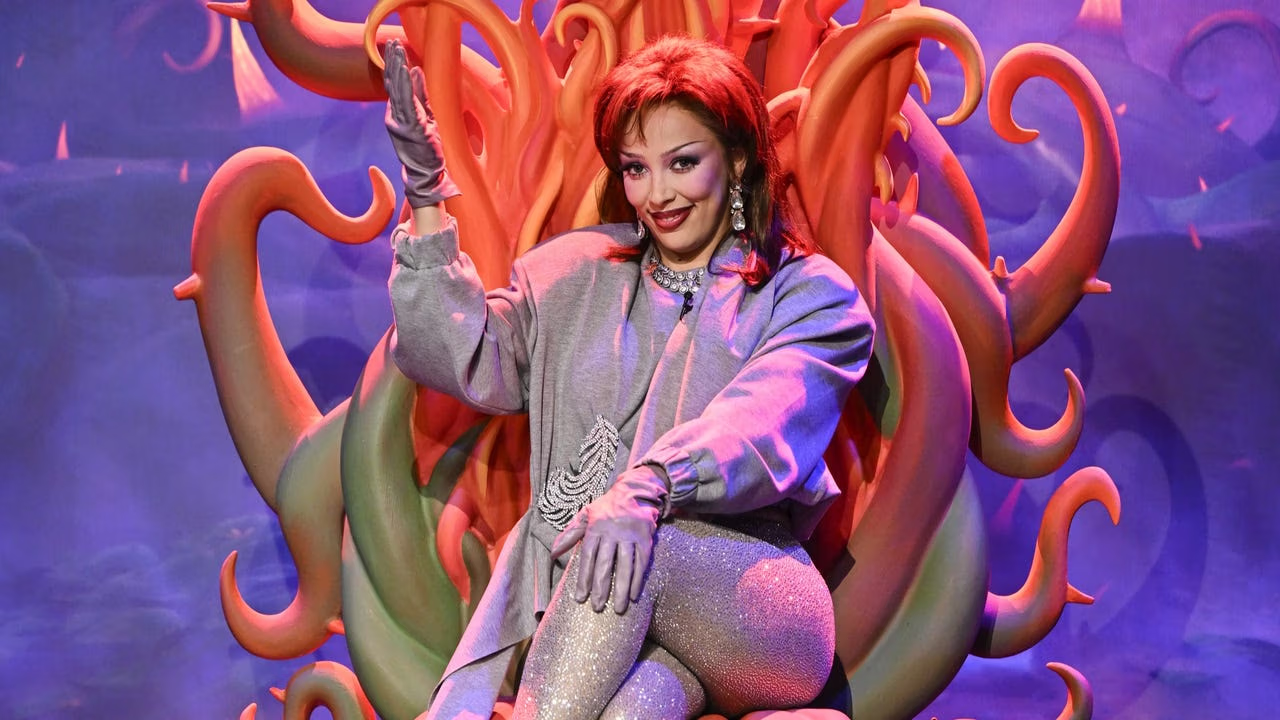
In a scenario that perfectly encapsulates the unpredictable nature of modern digital marketing, Epic Games was diligently gearing up for its annual Halloween spectacular, “Fortnitemares.” As part of their promotional rollout, they dropped a tantalizing glimpse of a new character, complete with a distinctive, staff-like “weapon.” The internet, ever vigilant, quickly spotted the reveal. Enter Doja Cat, the multi-talented artist known for her sharp wit and massive social media presence. Upon seeing the new character, she chimed in, spotting what she believed to be her likeness. Her follow-up observation, however, truly ignited the digital fuse: she playfully suggested that the character’s unique implement bore an uncanny resemblance to a certain adult toy. And just like that, the internet did what the internet does best – it ran with it, transforming a spooky tease into an overnight sensation.

What was intended as a suspenseful Halloween buildup quickly devolved into a flurry of jokes, memes, and widespread speculation. The “candy crusher” became the subject of countless witty remarks and reinterpretations across social platforms. Epic Games, caught in the unexpected maelstrom, was compelled to issue an official clarification, stating unequivocally that the item was, in fact, a “candy crusher” designed for the game’s Halloween theme. This seemingly minor incident, far from being just a chuckle-worthy blip, offers some profound and lasting insights into the precarious dance of brand messaging, celebrity influence, the dynamics of public perception, and the untamed beast that is social media in the context of viral marketing and brand management.
The Double-Edged Sword of Social Engagement and Viral Marketing
In a world where authentic engagement is the ultimate currency, brands actively seek out opportunities for organic virality. They yearn for their content to be shared, discussed, and celebrated without the explicit push of paid advertising. Fortnite, with its colossal player base, deeply embedded cultural omnipresence, and history of innovative marketing, is no stranger to this pursuit. Its entire ecosystem thrives on community interaction, fan creativity, and shared experiences. However, this incident serves as a stark and powerful reminder of the immense power – and potential peril – of the individual voice, especially when that voice belongs to a celebrity with a massive and highly engaged following like Doja Cat.
Doja Cat’s initial comment, whether intended as a genuine observation or a playful jab, instantly reframed Epic Games’ narrative. The innocuous “candy crusher” was recontextualized and reimagined as something else entirely in the public consciousness. This reinterpretation quickly gained traction, demonstrating how rapidly a carefully planned message can be hijacked, twisted, reinterpreted, and spread far beyond a brand’s original intent. For marketers, this highlights the fragility of control in the digital sphere. While brands strive for authenticity and connection, they simultaneously surrender a degree of control over their messaging once it enters the public domain, particularly when amplified by influential figures. The incident underscores that while seeking viral fame, brands must also prepare for viral infamy or, at the very least, unexpected deviations from their intended message. The quest for organic reach often comes with the inherent risk of unpredictable public interpretation, making robust social media monitoring and crisis communication strategies absolutely essential for modern digital marketing.
Brand Perception vs. Public Perception: A Fine Line in Digital PR
Fortnite boasts an incredibly vast and diverse audience, spanning demographics from young children and pre-teens to seasoned adult gamers and casual players. This broad appeal is a cornerstone of its success, but it also presents a unique challenge in terms of brand messaging and public relations. While humor, even edgy or provocative humor, is often appreciated and can even enhance brand appeal in certain online spaces, brand associations need incredibly careful management, especially when a significant portion of your audience includes minors. The accidental implication of an adult theme, however fleeting or unintended, can raise eyebrows among parents, media watchdogs, and even some players, forcing a company into a defensive position or immediate damage control.
This “candy crusher” saga is a stark reminder that in the highly scrutinized digital arena, every detail, every design choice, and every potential interpretation must be meticulously considered. What a brand intends to communicate through its visuals and messaging can be vastly different from what its diverse audience perceives. Cultural nuances, individual experiences, and the collective imagination of the internet can all contribute to unintended interpretations. For a brand like Fortnite, which prides itself on being accessible and fun for all ages, maintaining a family-friendly image while also appealing to an older, more ‘meme-savvy’ demographic is a constant tightrope walk. A misstep, however minor, can lead to negative press, parental backlash, and ultimately, impact brand trust and loyalty. Therefore, understanding the multi-faceted nature of your audience’s perception is paramount in crafting an effective and safe digital marketing strategy.
The Untamable Narrative: When Clarification Fuels the Fire
Epic Games’ swift clarification that the item was, in fact, a “candy crusher” was an entirely necessary and appropriate step from a crisis communication perspective. It aimed to correct the narrative and reaffirm the brand’s intended message. However, in the age of rapid-fire viral content and meme culture, such a clarification often does little to extinguish the flame of controversy or humor. Instead, it can inadvertently draw more attention to the initial misinterpretation – a classic example of the digital Streisand Effect. By officially acknowledging the “joke,” Epic inadvertently gave it more oxygen, further embedding the alternative interpretation into the public consciousness.
The narrative had already left the station, powered by the collective imagination, the undeniable humor of the situation, and the sheer speed of social media sharing. Once a story, or a meme, gains traction on platforms like X (formerly Twitter), TikTok, and Instagram, it develops a life of its own, becoming almost impossible for a brand to fully control or reel back in. Brands increasingly find themselves in a reactive position, scrambling to redirect or reframe a story that has already been written, spread, and amplified by the masses. This phenomenon underscores the challenge of managing online reputation in real-time, where the speed of response is critical, but even a perfect response might not fully undo the virality of a misinterpretation. It’s a testament to the power of the internet user to co-create, and sometimes completely redefine, a brand’s public image, regardless of corporate messaging.
Looking Ahead: Vigilance, Humility, and a Dash of Humor in Marketing Strategy
So, what profound lessons does this “candy crusher” saga impart for the future of marketing, brand management, and digital PR, particularly within the dynamic tech and gaming space? This incident offers critical insights for any brand navigating the unpredictable currents of social media influence and viral marketing.
Hyper-Scrutiny of Design and Content
Going forward, brands should expect to implement even more rigorous internal reviews of all promotional materials, marketing campaigns, and in-game assets. This isn’t just about avoiding offensive content; it’s about anticipating every possible interpretation, connotation, and cultural implication, especially in a visual-first world. Teams will need to consider how shapes, colors, symbols, and even the names of items might be perceived across diverse demographics and cultural backgrounds. This might involve extensive A/B testing, focus groups, and even bringing in cultural consultants to preempt potential misinterpretations. For global brands like Epic Games, this scrutiny is amplified by the need to navigate varied cultural norms and sensitivities across different regions. What seems innocuous in one market could be highly problematic in another. This proactive approach to design review becomes a crucial layer of defense against unintended viral moments.
Proactive and Advanced Social Listening
Companies will need to invest even more heavily in sophisticated, real-time social media monitoring tools and dedicated human teams. This isn’t just for tracking positive sentiment or identifying brand advocates; it’s crucially about detecting potential misinterpretations, emerging narratives, and rapidly spreading controversies before they escalate. Advanced social listening tools can track mentions, sentiment shifts, trending topics, and identify key influencers (both positive and negative) discussing the brand. Having systems in place to quickly identify a brewing storm, assess its scale, and understand its root cause is paramount. This enables a brand’s digital PR and social media teams to react with agility, whether through a swift clarification, a humorous acknowledgement (if appropriate), or a strategic silence. The speed of detection and analysis directly impacts the ability to manage or mitigate a viral crisis effectively. As mentioned in industry best practices, effective social listening is the foundation of modern crisis communication.
Strategic Celebrity Engagement: Balancing Organic and Controlled
While celebrity endorsements and organic mentions remain incredibly powerful tools for amplifying brand reach and credibility, this incident underscores the unpredictable nature of organic, unscripted celebrity interaction. Brands might become even more meticulous in how they foster and react to such engagements. For planned collaborations, contracts may include clearer guidelines on messaging and potential pitfalls. For organic mentions, brands need a predefined strategy: when to engage, when to retweet, when to offer a lighthearted response, and when to respectfully clarify. The goal is to harness the power of celebrity influence while minimizing the risk of unintended narrative shifts. It’s about building genuine relationships with influencers who understand and align with the brand’s values, reducing the likelihood of public gaffes and ensuring that any organic engagement still broadly serves the brand’s strategic goals.
Embracing the Unexpected (Carefully and Strategically)
While Epic Games understandably had to clarify the nature of its “candy crusher,” there’s also a subtle, more advanced lesson in managing virality: sometimes, a well-placed, lighthearted, and brand-aligned response can not only diffuse tension but even capitalize on the unexpected attention. This is a tricky balance, requiring a deep understanding of the brand’s voice, its audience’s humor, and the specific context of the situation. Not every viral moment demands serious damage control; some can be opportunities for playful engagement that showcase a brand’s humanity and ability to laugh at itself. However, this strategy is fraught with risk. A poorly judged humorous response can easily backfire, making the brand appear tone-deaf or dismissive. It requires exceptional judgment, a quick wit, and an absolute alignment with the brand’s core values and audience expectations. Brands like Wendy’s or Duolingo have famously mastered this art, but it’s not a universal solution. For Fortnite, with its broad and often young audience, navigating this line is particularly challenging, making clarification often the safer, albeit less exciting, route.
Fortnite’s Halloween hiccough serves as a fascinating and potent case study in the volatile alchemy of modern marketing. It’s a compelling illustration of a world where one celebrity’s tweet can unexpectedly shift a carefully planned campaign’s entire trajectory, proving that in the digital wild, even the most established giants aren’t immune to the unpredictable whims of virality. Brands must navigate this landscape with an unprecedented level of awareness, agility, continuous learning, and perhaps, a slightly thicker skin. The future of viral marketing isn’t just about creating shareable content; it’s about mastering the art of listening, reacting, and adapting in real-time to an audience that is not just consuming but actively co-creating the brand narrative. This incident reiterates that in the digital era, marketing is an ongoing conversation, not a monologue, and sometimes the conversation takes unexpected, meme-filled turns.
What do you think is the single most important lesson brands should take from incidents like the “candy crusher” saga when planning their future digital marketing campaigns?