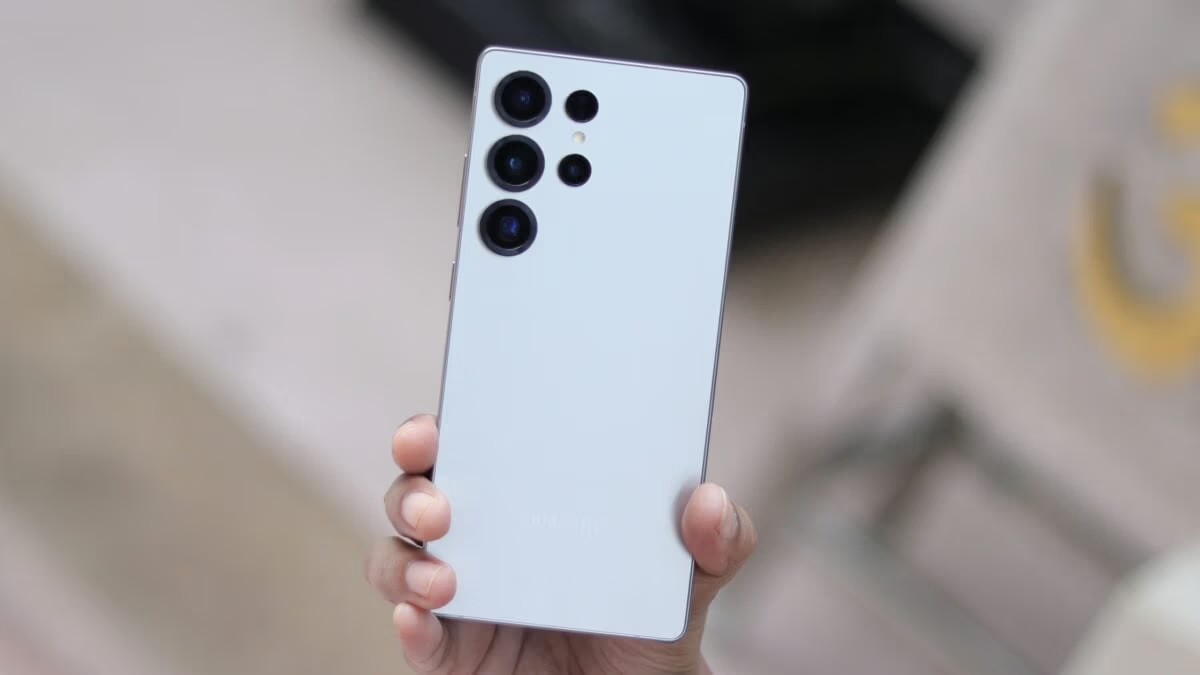
A Glimpse into Tomorrow: The Galaxy S26 Ultra’s Camera Redesign
The tech world never sleeps, and neither does the rumor mill. Even as we eagerly await the Galaxy S25 Ultra, a tantalizing glimpse into Samsung’s more distant future has surfaced, sparking considerable buzz and setting a new benchmark for anticipation. Leaks, often a reliable precursor to official announcements, provide an exciting window into the innovative strides manufacturers are planning years in advance. This latest whispers from the digital ether revolve around the unreleased Galaxy S26 Ultra, Samsung’s potential premium flagship for 2026, suggesting a design philosophy that could redefine its iconic aesthetic.
A “real-life” photo, reportedly of a case for the enigmatic Galaxy S26 Ultra, hints at a significant redesign that could mark a pivotal new chapter for the brand’s most celebrated and powerful smartphone. This isn’t just about a minor cosmetic adjustment; it speaks to a deeper architectural shift, particularly concerning the device’s camera array – often the defining feature of any Ultra model. For years, the Samsung Galaxy Ultra series has sported a distinctive visual signature: individual, “floating” camera lenses that protrude elegantly, almost defiantly, from the back panel. This design was a hallmark of minimalist power, reflecting sophisticated hardware beneath a sleek exterior. It was an aesthetic that became synonymous with the Ultra’s cutting-edge capabilities and premium feel. Now, if the leaked image is accurate, that era of individual lens prominence might be drawing to a close, paving the way for a bolder, more integrated approach.

The photo suggests a dramatic shift, moving away from the familiar individual lens cutouts to a more unified, perhaps pill-shaped or island-style enclosure for the multiple camera sensors. This isn’t just a minor tweak; it’s a fundamental reimagining of one of the Ultra’s most recognizable visual elements, signaling Samsung’s readiness to innovate not just internally, but externally as well, to maintain its edge in the fiercely competitive premium smartphone market. Such a bold move would undoubtedly generate immense discussion among tech enthusiasts and consumers alike, pondering the strategic reasons behind such a significant design pivot.
This early leak offers a compelling opportunity to delve into the potential motivations and implications behind such a significant design evolution. Why would Samsung, a company renowned for its iterative refinement of successful designs, choose to abandon a visual language that has defined its top-tier flagships for years? The answer likely lies at the intersection of aesthetics, engineering, durability, and the relentless pursuit of superior photographic performance.
Why the Shift? Unpacking the Possibilities Behind the Galaxy S26 Ultra Camera Redesign
Such a significant design pivot, especially for a flagship as established and critically acclaimed as the Ultra, rarely happens in a vacuum. It’s a calculated move, often driven by a confluence of factors aimed at improving the product, appealing to new market segments, or facilitating future technological advancements. Let’s unpack the most compelling possibilities that could prompt Samsung to move in this new design direction for the Galaxy S26 Ultra.
1. Aesthetics and Differentiation: Forging a New Visual Identity
In a crowded and increasingly homogenized smartphone market, standing out is paramount. While the “floating lens” design had its undeniable charm and established a clear visual identity for the Galaxy S Ultra series, a consolidated camera module could offer a fresher, more modern, and perhaps even more sophisticated look. This allows Samsung to visually distinguish the S26 Ultra not only from its predecessors but also from its immediate competitors, many of whom have adopted variations of multi-lens arrays. The unified aesthetic can convey a sense of purposeful integration, suggesting that the camera system is not merely a collection of individual parts, but a cohesive, powerful whole. This strategic aesthetic shift could be Samsung’s way of forging a new visual identity for the next generation of its premium smartphones, making the S26 Ultra a vanguard of future design language. It’s about setting trends, not just following them, and reasserting Samsung’s position as an innovator in smartphone aesthetics. A streamlined, more integrated camera bump can also contribute to a perception of improved build quality and a more seamless overall design, appealing to users who value minimalist elegance.
2. Enhanced Durability and Protection: Safeguarding Advanced Camera Technology
Another compelling reason for a unified camera module is the promise of enhanced durability and superior protection for the sensitive and increasingly expensive lenses within. Individual camera lenses, by their very nature, are more exposed. They are prone to micro-scratches from everyday use, accumulation of dust and lint in the crevices around their bezels, or even direct impact damage from accidental drops. As camera systems grow more complex, integrating larger sensors and intricate optical stabilization mechanisms, the cost of repairing or replacing these components escalates significantly. A unified housing, perhaps covered by a single, robust piece of sapphire glass or reinforced Gorilla Glass, could provide a more comprehensive and robust shield against these common hazards. This integrated approach minimizes exposed edges and provides a stronger, more resistant barrier, which is an increasingly valuable feature for a device users carry everywhere. It represents a practical improvement in the longevity and resilience of the device’s most critical hardware, directly addressing user concerns about smartphone resilience and the integrity of their high-performance cameras.
3. Accommodation of Advanced Camera Technology: Pushing the Boundaries of Mobile Photography
This is perhaps the most exciting and strategically significant prospect for the Galaxy S26 Ultra. A larger, contiguous camera module isn’t just for aesthetics; it could directly signify the integration of even more ambitious and groundbreaking camera hardware. The internal real estate required for cutting-edge photography components is substantial, and a unified design provides the necessary flexibility for engineers. We could be looking at several major advancements:
- Larger Sensors: A bigger module could house significantly larger primary camera sensors, allowing for greater light capture, improved low-light performance, and more natural depth-of-field (bokeh) effects directly from the hardware. Larger sensors are the holy grail of mobile photography, delivering richer detail and dynamic range.
- More Advanced Periscope Zoom Lenses: Current periscope lenses already take up considerable internal space. A larger module could allow for even longer focal lengths, more sophisticated optical zoom capabilities, or even variable aperture mechanisms within the periscope itself, pushing beyond the 10x optical zoom barrier or offering improved versatility across zoom ranges.
- Improved Optical Image Stabilization (OIS): The space could accommodate more advanced OIS systems, such as sensor-shift stabilization (similar to Apple’s implementation) or even more sophisticated gimbal-like stabilization for unprecedented video smoothness and sharper low-light photos. These systems require more movement space within the module.
- New Computational Photography Components: As the line between hardware and software in photography blurs, a design optimized for future tech makes perfect sense. This might include dedicated computational photography components like specialized ISPs (Image Signal Processors) or NPUs (Neural Processing Units) that require more internal real estate and robust thermal management, enhancing real-time image processing, AI-driven features, and overall photo quality.
- Additional Sensors: A larger module could also house new types of sensors, such as an advanced LiDAR scanner for improved autofocus and augmented reality, or even spectroscopic sensors for novel health or environmental sensing applications, further broadening the phone’s utility.
By consolidating the camera system, Samsung can optimize internal layout, improve thermal dissipation for high-performance components, and integrate a wider array of technologies that simply wouldn’t fit or function optimally in individually housed lenses. This move unequivocally signals Samsung’s commitment to pushing the boundaries of smartphone photography, making the Galaxy S26 Ultra camera a true powerhouse.
4. Manufacturing Efficiency: Streamlining Production and Assembly
While perhaps less glamorous from a consumer perspective, manufacturing efficiency can be a significant driver for design changes in high-volume production. A unified camera module *could* potentially streamline the assembly process compared to precisely aligning and securing multiple individual lenses. Each individual lens assembly requires meticulous calibration, dust-free sealing, and robust attachment to the phone’s chassis. Consolidating these into a single module might reduce the number of discrete components that need to be handled, aligned, and sealed on the assembly line. This could lead to reduced manufacturing costs per unit, fewer quality control issues related to individual lens misalignments, and a faster overall production cycle. Such efficiencies, when scaled across millions of units, can translate into significant cost savings for Samsung, which can then be reinvested into research and development, passed on to consumers, or contribute to healthier profit margins. It’s a pragmatic approach to optimizing the complex industrial process of building a cutting-edge flagship smartphone.
What This Means for the Future: Implications of the Galaxy S26 Ultra Redesign
This early leak, though unconfirmed and subject to change, offers a powerful glimpse into Samsung’s potential design philosophy for its top-tier devices. If this design language sticks, it signals profound implications for the brand, the industry, and the user experience.
A New Era for Ultra: Redefining Samsung’s Premium Identity
The Galaxy S26 Ultra might be the vanguard of a bold new visual identity for Samsung’s most premium smartphones. Moving away from an established and highly recognizable “floating lens” look towards something more bold, integrated, and visually cohesive, marks a significant departure. This shift suggests Samsung is willing to take calculated risks to redefine its aesthetic and ensure its flagship devices remain visually distinctive and forward-thinking. This new design language could influence future iterations of the Galaxy S series, and potentially even other Samsung product lines, creating a unified and modern brand aesthetic. It’s about evolving with consumer tastes and ensuring the Ultra series continues to feel fresh and cutting-edge, not just in technology but also in form factor. The challenge will be to ensure this new identity is embraced by loyal Samsung users while attracting new ones.
Industry Trends: Convergence on Camera-Centric Design
The shift toward larger, more prominent, and often unified camera enclosures is a discernible trend we’ve seen across the smartphone industry. From Apple’s distinctive square camera modules on the iPhone Pro series to Google’s unique “visor” design on the Pixel phones, and even Chinese manufacturers like Xiaomi and Oppo integrating substantial camera bumps, the camera array has increasingly become the defining aesthetic feature of a smartphone. With front screens reaching near bezel-less uniformity, the rear camera housing has become the primary canvas for design differentiation. Samsung might be converging on a design language that unequivocally prioritizes camera technology as the defining aesthetic feature of a smartphone, acknowledging that mobile photography is arguably the single most important differentiating factor for high-end devices today. This convergence reflects a broader industry consensus that consumers value camera performance above almost all other features, and a prominent, well-designed camera module visually communicates this commitment.
User Experience Evolution: Ergonomics, Durability, and Everyday Use
A significant design change like this inevitably raises questions about its impact on the user experience. How will this larger, perhaps thicker, module affect the phone’s balance, its feel in hand, or even critical aspects like case compatibility? A larger, unified module might mean a thicker top section of the phone, potentially shifting the center of gravity and requiring different ergonomic considerations to ensure a comfortable and balanced grip. This could influence one-handed use and overall comfort during extended periods. Furthermore, case manufacturers will need to adapt quickly to accommodate the new design, potentially leading to new styles and challenges in providing robust protection without adding excessive bulk. The infamous “desk wobble” – where phones with protruding camera bumps don’t lie flat on a surface – might either be exacerbated or mitigated depending on the module’s precise thickness and distribution. Ultimately, Samsung will need to ensure that while pushing design and technological boundaries, the everyday practicalities and premium feel that users expect from an Ultra device remain uncompromised.
Ultimately, this early glimpse of the Galaxy S26 Ultra isn’t just about a new look; it’s about what that look enables. It suggests Samsung is actively pushing the boundaries of design to facilitate and house even more ambitious technological advancements, particularly in the realm of mobile photography. The perennial dance between form and function continues, and with the S26 Ultra, it appears Samsung is ready to lead with a fresh, bold, and highly integrated step, setting the stage for the next generation of premium smartphone experiences. This leak underscores that even as we marvel at current innovations, the future of mobile technology is always in active development, promising exciting changes just around the corner.
What are your thoughts on this potential camera redesign for the Galaxy S26 Ultra? Do you prefer the individual “floating” lenses or a more unified camera module, and why?