From ‘Wir Schaffen Das’ to ‘Wir Sind Deutsch’: A Family’s Citizenship Tells the Story of Germany’s Great Migration Gamble
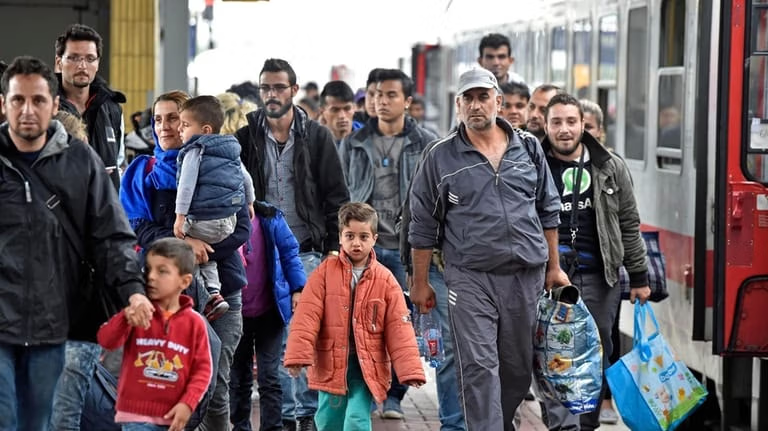
A decade ago, Europe was convulsed by a refugee crisis that tested its borders, its politics, and its very identity. In the eye of that storm stood Germany and its then-Chancellor, Angela Merkel, whose defiant mantra, “Wir schaffen das” (“We can do this”), opened the doors to over a million asylum-seekers, many fleeing the civil war in Syria. It was a seismic moment—a humanitarian impulse that would reshape the nation’s demographics and fuel a fierce political backlash that still reverberates today.
Now, nearly ten years later, in a quiet municipal office in a town in former East Germany, we see the human result of that gamble. Mohamad Al-Ali, his wife, and their children, who fled Damascus in 2015, have officially become German citizens. Their story is more than a personal victory; it’s a powerful microcosm of the complex, challenging, and surprisingly resilient legacy of Merkel’s decision.

The Al-Ali family’s journey from asylum-seekers to citizens offers a tangible answer to the question that once dominated headlines: Could this work? For them, the answer is a resounding yes, but it was a success forged through grueling work. It meant mastering the notoriously difficult German language, navigating a dense bureaucracy, and finding a place in a new society. Mohamad, now a city bus driver, and his children, who speak fluent German and consider the country their home, represent the quiet, often unseen process of integration that has been happening in towns and cities all across Germany.
This personal milestone, however, is set against an increasingly unsettling political backdrop. The Al-Alis now hold passports in a region where the far-right, anti-immigrant Alternative for Germany (AfD) party finds its strongest support. The very policy that gave them refuge has also catalyzed a potent political counter-movement that questions the place of immigrants, particularly from Muslim-majority countries, in German society. Their success story, therefore, exists in a state of tension—a testament to the possibility of integration in a nation still fiercely debating its meaning.
What Does This Moment Signify for the Future?
The key takeaway is that the true legacy of the 2015 decision is not found in parliamentary debates or protest signs, but in the generation of children like the Al-Alis. They are the living embodiment of “Wir schaffen das.” Having spent most of their formative years in Germany, their identity is not one of transit, but of belonging. They are the new Germans who will navigate the country’s future, contributing to its economy, culture, and civic life.
The Al-Ali family’s citizenship is not the end of the story, but a critical new chapter. It proves that integration is possible, but it doesn’t erase the deep political divides that remain. It serves as a potent human counter-narrative to the rhetoric of failure and fear. Nearly a decade on, the question is no longer simply whether Germany can do this, but what kind of nation it will choose to become with its newest citizens.
Read the original story at Newsday.
What are your thoughts on the Al-Ali family’s journey and its implications for Germany’s future identity?