Beyond the Blade: Why ‘Ghost of Yotei’ Signals the Next Evolution of Open-World Storytelling
Let’s be honest: following up a game like Ghost of Tsushima is a monumental task. Sucker Punch’s 2020 masterpiece wasn’t just a game; it was a cultural moment. It was a stunningly beautiful, mechanically tight love letter to samurai cinema that let millions of us live out our Kurosawa-fueled fantasies. So, when rumors of a successor started swirling, the big question wasn’t just “Will it be good?” but “How could it possibly be better?”
According to a new review from The Washington Post, the answer isn’t about adding more icons to the map or simply polishing the graphics. The successor, titled Ghost of Yotei, succeeds by digging deeper. It’s a game that sharpens the blade not just for combat, but for carving out a story with a level of “raw feeling” that redefines what a revenge epic can be.

This isn’t just another sequel. It’s a signpost for the future of the entire genre.
From a Picturesque Postcard to a Brutal Poem
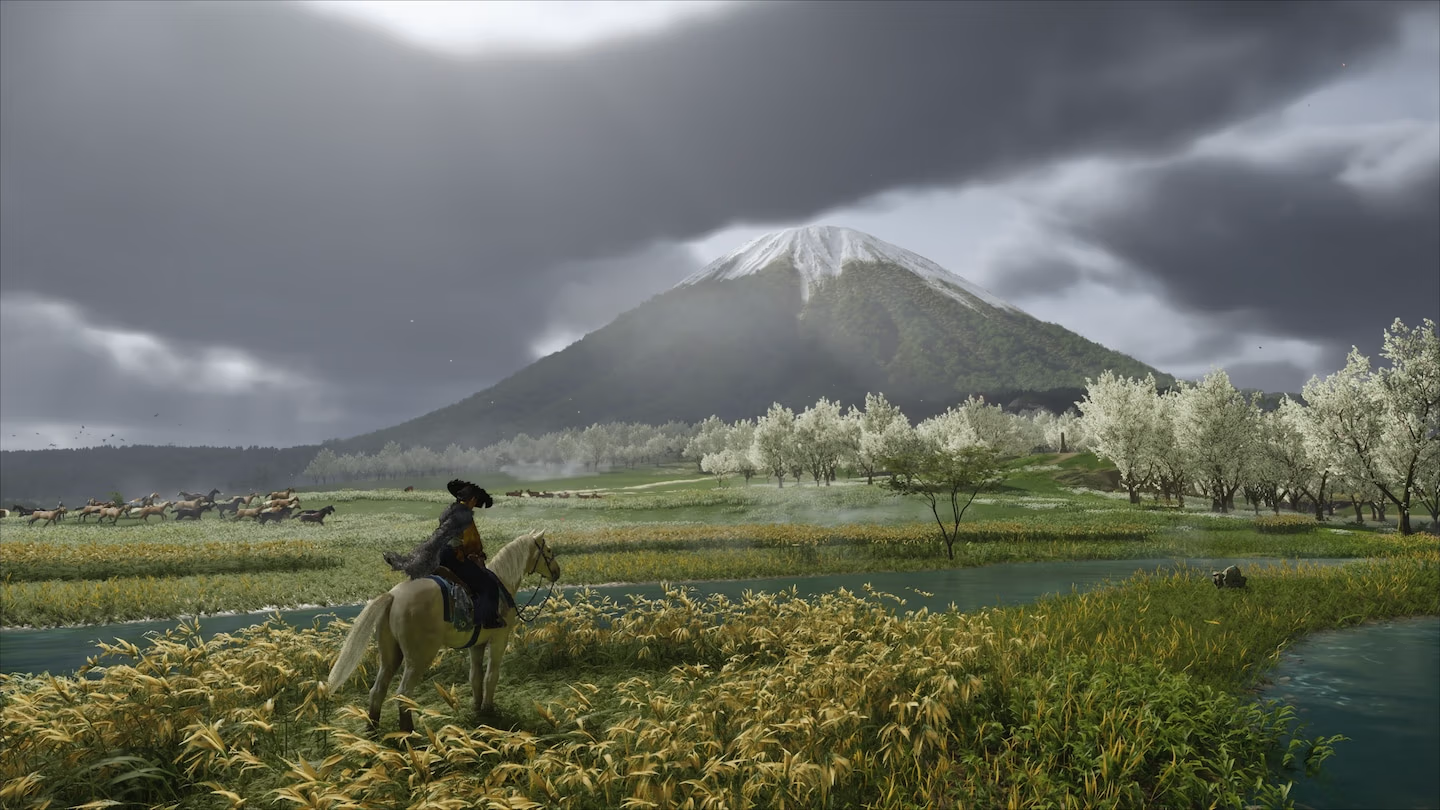
The first Ghost was beautiful. In fact, its picturesque beauty was one of its defining features. Every windswept pampas field and golden-leafed forest felt like a painting you could walk through. But The Post’s review suggests Yotei trades some of that pristine beauty for something far more evocative: atmosphere.
Set in the rugged, snow-blasted landscapes reminiscent of Japan’s northern island of Hokkaido (home to the real Mount Yōtei), the world itself is no longer just a backdrop—it’s an antagonist. The “raw feeling” starts here. Instead of a land simply scarred by invasion, we get a land that is inherently harsh and unforgiving. This shift from aesthetic beauty to atmospheric tension is a crucial evolution. It means the environment is intertwined with the protagonist’s struggle, making their quest for vengeance feel less like a heroic tour and more like a desperate, teeth-gritted crawl toward a goal.
Sharpening the Soul, Not Just the Steel
The Washington Post’s piece highlights that Yotei “sharpens the samurai revenge formula.” This is key. It’s not about reinventing the wheel, but making the wheel feel essential. The fluid, satisfying combat of Tsushima is likely still there, but the emotional context surrounding it has been deepened.
What does that mean for us, the players? It means every action carries more weight. A stealth takedown isn’t just a cool animation; it’s a grim necessity. A standoff isn’t a stylish mini-game; it’s a life-or-death gamble where you can feel the protagonist’s pulse hammering.
This is the future I’m excited about. For years, AAA gaming has been in an arms race for graphical fidelity and sheer scale. We’ve mastered photorealism. But Ghost of Yotei seems to be chasing something more elusive: emotional fidelity. It’s the idea that the story isn’t just what you see in cutscenes, but what you feel when you’re pushing the thumbstick through a blizzard, when your controller rumbles with a parry that barely saved your life. The focus is shifting from the power of the hardware to the soul of the experience.
The Takeaway: Narrative Maturity is the New Next-Gen
Ghost of Yotei is proving that the most compelling way forward for familiar genres is not through revolution, but through emotional maturation. The samurai revenge story is a tale as old as time, but by infusing it with this “raw feeling,” the developers are showing that there are still profound, human stories to tell within its framework.
This is a game that trusts its audience to appreciate nuance over spectacle. It suggests a future where open worlds are measured not by their square mileage, but by their emotional depth. It’s a future where we talk less about the number of quests and more about the single, unforgettable moments of quiet desperation or hard-won triumph.
The ghost isn’t just a warrior anymore; it’s the lingering feeling the game leaves you with, long after the credits roll. And that’s a far more powerful legacy to build.
Read the original story at The Washington Post.
What are your hopes for the future of open-world storytelling, and what other games have achieved this ’emotional fidelity’ for you?