The Google Gadget Game: Why Timing Your Tech Purchases is Everything
In the exhilarating, often dizzying world of consumer tech, few companies keep us on our toes quite like Google. From the annual fanfare of new Pixel phones to the subtle yet significant upgrades across their smart home and wearable lines, there’s always something new brewing in Mountain View. This relentless march of innovation, while undeniably exciting, presents a unique challenge for consumers: when exactly is the right time to buy?
Google’s ecosystem, a sprawling network of devices ranging from smartphones and smartwatches to smart speakers and streaming dongles, is designed to be interconnected and ever-evolving. This commitment to continuous improvement means that features, performance, and even the fundamental user experience can shift dramatically from one generation to the next. For those looking to invest in Google’s hardware, understanding this dynamic is paramount to avoiding buyer’s remorse.

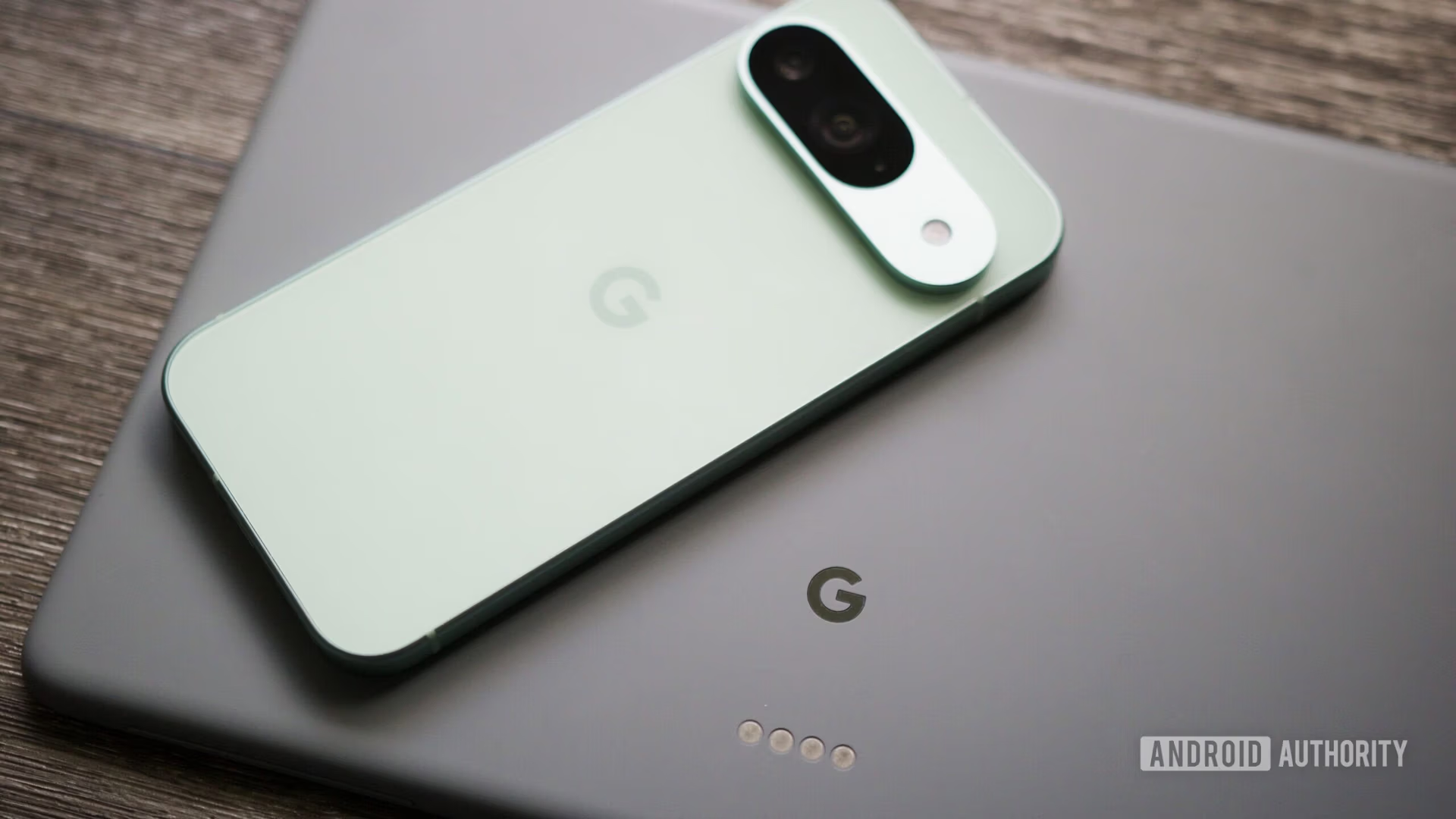
A recent piece from Android Authority served as a timely reminder, highlighting a crucial truth in the Google ecosystem: sometimes, the smartest tech purchase is no purchase at all – at least not yet. Their cautionary list of Google gadgets to potentially sidestep right now isn’t a knock on the quality of current products, but rather a sharp, insightful reminder of Google’s predictable, yet often unforgiving, hardware refresh cycle. It underscores the importance of strategic timing, not just for financial savings, but for maximizing the value and longevity of your tech investments.
The Perpetual Refresh Cycle: A Double-Edged Sword
Google’s strategy, especially with its first-party hardware, often follows a well-defined and remarkably consistent pattern. This rhythm is essential to understand for anyone considering a purchase within their extensive product portfolio. Primarily, we see:
- Annual Flagship Releases: These are the star attractions, primarily the Pixel phones and increasingly, the Pixel Watch. These devices are the primary vehicles for Google’s latest Tensor chips and cutting-edge AI features, showcasing the pinnacle of their mobile and wearable innovation.
- Periodic Updates for Ecosystem Devices: Products like Pixel Buds, Chromecasts, Nest devices, and even smart displays receive less frequent but still significant generational leaps. While not on an annual cycle, these updates often introduce substantial improvements in audio quality, processing power, connectivity, or smart home integration.
This relentless cycle serves as a double-edged sword, presenting both advantages for Google and unique challenges for us, the consumers. For Google, it means a continuous stream of new products to showcase its advancements, keep its ecosystem fresh, and compete vigorously in a crowded market. Each new generation often serves as a canvas for the latest in Tensor processing and integrated AI, which are central to Google’s vision for the future. It allows them to push the boundaries of what’s possible with on-device intelligence and seamless cross-device functionality.
However, for us, the consumers, it means a thrilling pipeline of innovation, but also the very real risk of buyer’s remorse. Purchasing a device just months before its successor is unveiled can mean missing out on significant performance boosts, crucial new features, or simply a better-optimized experience – often at the same price point. Imagine buying a Pixel phone only to find a significantly better camera, a faster chip, or a revolutionary AI feature launched in the next iteration shortly after your purchase. Or, equally frustrating, watching the device you just bought see a sharp price drop as retailers clear stock for the new model.
Decoding Google’s Hardware Release Patterns
Understanding Google’s predictable, yet often aggressive, release schedule is your first line of defense against premature tech purchases. While there are always whispers and leaks, Google tends to stick to a consistent rhythm for its major hardware announcements, especially for its flagship lines.
The “Made by Google” hardware event in the fall (typically October) is the marquee show for the latest Pixel phones and Pixel Watches. This event sets the tone for Google’s hardware strategy for the next year, often revealing significant advancements in their Tensor SoC, camera technology, and on-device AI capabilities. Similarly, the Google I/O developer conference in spring (May) often provides tantalizing glimpses of upcoming software features and occasionally teases new hardware directions or updates to ecosystem devices like Nest or Chromecast, even if the full product launch isn’t until later.
Beyond the flagships, other devices have their own rhythms. Pixel Buds typically see a refresh every 1.5 to 2 years, introducing improvements in audio quality, battery life, and smart features. Nest devices and Chromecasts tend to have longer refresh cycles, often 2-3 years, but these updates are usually substantial, bringing new designs, better performance, or entirely new functionalities like Matter support. Being aware of these general timelines empowers you to anticipate when a new generation might be on the horizon, allowing you to time your purchase for either the latest tech or the best deals on previous generations.
Smart Buying in the Google Age: What This Means for Your Wallet
The core takeaway here isn’t to avoid Google products – far from it. Google produces some of the most innovative and user-friendly tech on the market. Instead, the lesson is to approach your purchases strategically, armed with knowledge about their refresh cycles. Are you eyeing that shiny new Pixel phone or smartwatch? Patience can be your greatest ally.
Here’s how to apply this strategic thinking to your tech budget and upgrade plans:
Anticipate the Unveiling: Dodge the Pre-Launch Pitfall
Google’s “Made by Google” hardware events in the fall are highly predictable, serving as the launchpad for their latest flagship phones and watches. The period in the 2-3 months leading up to these events is often the riskiest time to purchase these devices. Buying during this window almost guarantees that your new gadget will be superseded by a superior model, sometimes with a revolutionary feature or a significant performance bump, just weeks after your purchase. This can lead to instant obsolescence and a gnawing sense of buyer’s remorse. Keep an eye on tech news outlets for rumors and official announcements; these are your best indicators for when to hold off on new Google gadget purchases.
Look for Deals AFTER New Releases: The Post-Launch Gold Rush
Conversely, the absolute best time to buy a current model (if you don’t need the absolute cutting edge) is often immediately after its successor has been announced. As retailers and Google itself prepare to stock the new inventory, they invariably slash prices on the previous generation to clear stock. This period, often extending through major shopping events like Black Friday and Cyber Monday following a fall launch, can yield substantial savings on still-excellent devices. If your primary goal is value and you’re comfortable not having the very latest, this is your sweet spot for Google tech deals.
Consider the “Long Tail” of Software Support: Investing in Longevity
Newer devices generally mean longer software update support, a crucial factor for security, new features, and the overall longevity of your device in the Android world. Google has been commendable in extending its software support windows for Pixel devices, but a newer model inherently starts with a longer runway. This means more years of security patches, Android version updates, and access to the latest Google features. For a device that you plan to keep for several years, investing in the latest generation of Google hardware can pay dividends in sustained performance and relevance.
Assess Your Needs Versus the Hype: Is the Latest Always Necessary?
It’s easy to get caught up in the excitement of new tech. However, a strategic buyer asks: do I truly need the incremental upgrades of the next generation? For many users, a year-old Pixel phone or a previous-generation Pixel Watch offers incredible performance, a fantastic camera, and all the essential smart features at a significantly reduced price. Evaluate your personal usage patterns and priorities. If the current model meets all your needs, waiting for the new one might be unnecessary, unless the price drop on the older Google gadget is your primary motivator.
Navigating the AI Frontier: Why Newer Often Means Smarter
Google’s hardware strategy is inextricably linked to its advancements in Artificial Intelligence (AI) and Machine Learning (ML). This is particularly evident in their Tensor chips, which are custom-designed to excel at on-device AI processing. Each new generation of Pixel phones, and increasingly the Pixel Watch, serves as a crucial platform for showcasing Google’s latest breakthroughs in AI, making the refresh cycle even more impactful for consumers of smart devices.
Older devices, while still capable, may struggle to fully leverage the cutting-edge AI features introduced in newer generations. This isn’t just about software; it’s about the underlying hardware. A newer Tensor chip brings more efficient and powerful Neural Processing Units (NPUs) that can handle complex AI tasks directly on the device, leading to faster image processing, more accurate voice recognition, enhanced real-time translation, and more sophisticated predictive functionalities. Features like Magic Editor, enhanced Call Screen capabilities, or advanced health metrics on a smartwatch often rely heavily on the specific AI capabilities of the latest hardware, making Google’s newer gadgets inherently smarter.
Therefore, for consumers who prioritize having the smartest, most integrated, and most capable Google AI experience, waiting for the next generation often means gaining access to a significantly more intelligent device. It’s not merely an incremental performance bump; it’s a leap in how the device understands and assists you. This focus on AI justification gives Google a strong reason to consistently refresh its hardware and gives consumers a strong reason to consider the timing of their AI-centric tech purchases carefully.
The Future: A More Refined, More Demanding Ecosystem
This persistent refresh cycle isn’t just about driving sales; it speaks to the future of Google’s overarching hardware strategy. As their ecosystem matures and becomes more deeply integrated, the distinctions between generations become increasingly pronounced. Each new iteration isn’t just a minor bump; it’s often a significant leap in AI capabilities, integration with other Google services, and the overall user experience.
This puts continuous pressure on Google to deliver genuinely compelling upgrades with each cycle, justifying the perceived obsolescence of the previous generation. They are not merely selling gadgets; they are selling a vision of a seamlessly connected, intelligently assistive life powered by Google AI. This vision necessitates hardware that can keep pace with their ambitious software developments, pushing the boundaries of what’s possible with on-device intelligence.
For us, it means becoming savvier consumers. The days of buying a gadget and expecting it to be “current” for several years are largely over, especially in the rapidly evolving world of Google’s AI-driven hardware. Patience isn’t just a virtue; it’s often the smartest financial and technological decision you can make. By understanding the rhythm of Google’s innovation and applying a strategic approach to your purchases, you can ensure that your tech investments provide maximum value, longevity, and enjoyment.
The future of Google’s hardware is always just around the corner, and often, it’s worth waiting for the right moment to step in. What strategies do you use to time your tech purchases, especially when it comes to constantly evolving brands like Google?