The Dawn of a New Era: Handheld PC Gaming’s Revolution
The gaming world loves a good debate, and lately, few topics have sparked as much lively discussion as the meteoric rise of handheld PCs. When the ASUS ROG Ally burst onto the scene, offering a potent blend of raw power and Windows flexibility in a portable form factor, it wasn’t just another gadget announcement. It was a clear signal: the future of gaming is increasingly untethered, and the lines we once drew between our gaming experiences are blurring faster than ever before. This new wave of devices is fundamentally redefining what we expect from portable play, promising an uncompromised, full-fledged gaming experience wherever we go, a stark contrast to the often-limited offerings of previous generations of portable consoles.
For years, portable gaming largely meant the dedicated ecosystems of Nintendo’s DS/Switch line, the PlayStation Vita’s niche appeal, or the ubiquitous convenience of mobile phones. While each carved out its own significant territory and fanbase, none truly offered the expansive, unbridled library and customizability of PC gaming on the move. Gamers often had to choose between portability and performance, or between a curated console experience and the open world of PC titles. However, a perfect storm of technological advancements has now ushered in a new, exciting era, fundamentally changing the landscape and democratizing access to a vast universe of titles, making genuine PC gaming in the palm of your hand a tangible reality.

Technological Triumphs Paving the Way for Portable Powerhouses
This revolution in handheld PC gaming isn’t a fluke; it’s the culmination of significant breakthroughs across various hardware and software fronts, meticulously engineered to work in harmony within a compact form factor. At the heart of these modern marvels are increasingly powerful, yet remarkably efficient, AMD and Intel mobile processors. Chips like AMD’s Ryzen Z1 Extreme, purpose-built for handhelds, or Intel’s latest mobile CPUs with integrated Xe graphics, deliver desktop-class performance in incredibly small power envelopes. This efficiency is critical, allowing demanding AAA titles to run smoothly on the go without excessive battery drain, a feat previously thought impossible for such small devices. Advanced APU (Accelerated Processing Unit) designs integrate CPU and GPU onto a single die, optimizing communication and power management for peak mobile performance, further enhanced by technologies like AMD’s FidelityFX Super Resolution (FSR) which intelligently upscales games to maintain high frame rates.
Beyond the raw silicon, stunning high-refresh-rate displays are shrinking to handheld sizes, offering vibrant colors, deep contrasts, and resolutions that ensure crisp visuals. Whether it’s a 120Hz IPS panel on the ROG Ally or the vivid OLED screens appearing in some high-end models, these aren’t just small screens; they are meticulously engineered visual interfaces that immerse players fully. Capacitive touch capabilities further enhance the versatility, allowing for intuitive navigation of the Windows environment or specific game controls. Coupled with fast NVMe SSD storage, load times are slashed to mere seconds, making the transition between games or levels almost instantaneous and significantly improving the overall responsiveness of the operating system. Moreover, the ever-growing maturity of digital storefronts like Steam, Epic Games, GOG, and Battle.net, alongside robust cloud gaming services such as Xbox Cloud Gaming and NVIDIA GeForce Now, means that entire libraries are instantly accessible, often with cross-save functionality that seamlessly bridges the gap between your desktop gaming rig and your new portable powerhouse, truly making your games accessible everywhere.
The ASUS ROG Ally: A Glimpse into Unparalleled Versatility
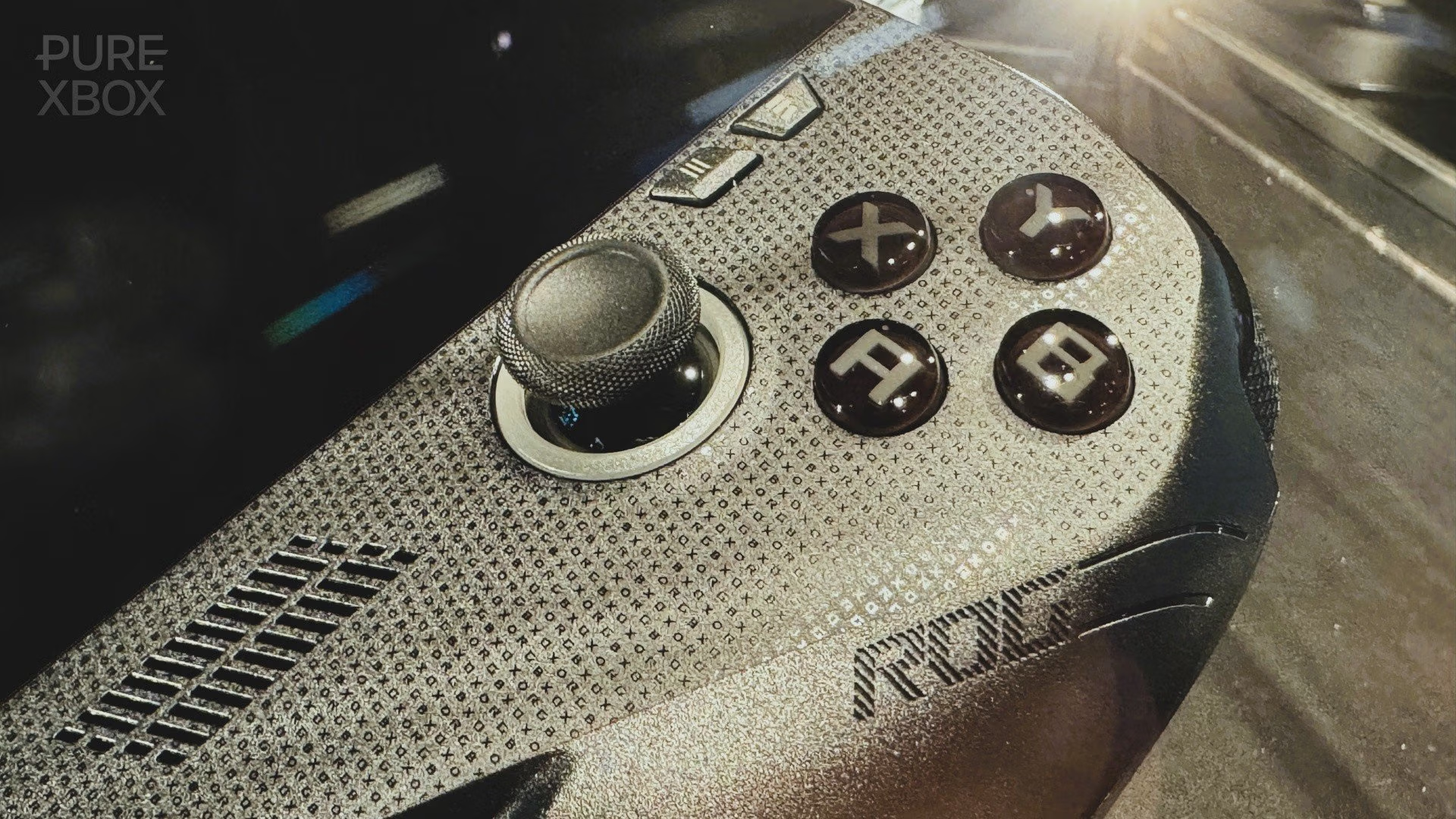
The ASUS ROG Ally, upon its highly anticipated launch, didn’t just join the handheld PC market; it expanded its definition. With its powerful hardware and the strategic choice of a full Windows operating system, it made a bold statement: the era of truly uncompromised PC gaming on the go has arrived. Its distinctive “Xbox” moniker, initially a source of curiosity, quickly clarified its intent – a strong nod to its seamless, out-of-the-box compatibility with Xbox Game Pass on Windows, rather than indicating any direct console lineage. This device represents a significant stride in offering a fully integrated Windows experience in a form factor previously reserved for dedicated gaming consoles or stripped-down mobile operating systems, changing expectations for what a portable gaming device can realistically achieve.
Beyond Steam: Unlocking Your Entire PC Library, Unfettered
By embracing a full Windows operating system, the ROG Ally offers unparalleled versatility that goes far beyond the confines of a single digital storefront. This is perhaps its most compelling feature. You’re not just limited to playing Steam games, as comprehensive as that library is; you’re effortlessly running titles from Epic Games, GOG, Battle.net (encompassing franchises like Call of Duty, Diablo, and World of Warcraft), and yes, the entire, extensive Xbox Game Pass for PC library. This level of freedom means your existing PC game purchases, accumulated over years across various platforms, and your ongoing subscriptions are instantly transferable and playable on your portable device. There’s no need to repurchase games or be locked into a specific walled-garden ecosystem, liberating gamers from platform restrictions and truly bringing their entire digital collection into the palm of their hand. The ROG Ally effectively transforms the handheld from a supplementary device into a primary gaming platform capable of handling virtually any PC title you own, a level of access previously unimaginable for portable hardware.
This device isn’t just about gaming on the go; it’s about taking your entire digital ecosystem with you. The flexibility of a full Windows installation means the Ally can easily transcend its gaming capabilities. Need to check your email, browse the web, install a specific productivity app, or even engage in some light content creation like image editing or document preparation? A Windows-based handheld like the ROG Ally is fully capable, blurring the lines between a dedicated gaming machine and a miniature, highly portable PC. Its ergonomic design, responsive controls, and vibrant screen make it comfortable for extended use, whether you’re battling foes or tackling spreadsheets. This multifaceted utility caters to the modern gamer’s dynamic life, offering a powerful tool that adapts to various needs throughout the day, truly making it a versatile companion for both work and play.
A Vibrant and Competitive Handheld PC Market
This burgeoning market is far from a solo act; it’s a dynamic, rapidly evolving, and fiercely competitive landscape. The success of Valve’s Steam Deck paved the way, demonstrating a ravenous appetite for portable PC gaming that many in the industry had previously underestimated. Its innovative approach to an optimized Linux-based OS (SteamOS) and a cohesive user experience within the Steam ecosystem proved that a substantial market existed for dedicated PC handhelds, sparking a new gold rush. Now, with major players like ASUS confidently entering the fray, and formidable competitors like Lenovo with the groundbreaking Legion Go, alongside innovative smaller brands like Ayaneo, GPD, and ONEXPLAYER rapidly iterating, we’re witnessing a healthy, competitive landscape. This isn’t just about brand loyalty or capturing market share; it’s fundamentally about pushing technological boundaries, responding directly to consumer demand, and ultimately enhancing the portable gaming experience for everyone involved.
Innovators and Challengers: Who’s Leading the Charge?
Each new entrant into the handheld PC market brings its unique strengths, design philosophies, and innovative features to the table, ultimately benefiting us, the gamers, with an unprecedented level of choice and increasingly sophisticated ways to play. This competition is a powerful engine for progress, driving rapid advancements in every aspect of these devices:
- Valve Steam Deck: The undeniable pioneer that ignited the mainstream handheld PC market. Renowned for its strong integration with the Steam ecosystem, highly optimized SteamOS (utilizing Proton for Windows game compatibility), and exceptional community support. Its focus on accessibility, a curated user experience, and robust trackpads for versatile input set a high initial bar for the category, proving that portable PC gaming could be both powerful and user-friendly.
- ASUS ROG Ally: A direct and formidable competitor to the Steam Deck, distinguishing itself with a full Windows OS for unparalleled game launcher compatibility and higher-refresh-rate displays (up to 120Hz). Its powerful AMD Ryzen Z1 Extreme APU delivers exceptional performance in a sleek, ergonomic chassis, making it a favorite for those seeking maximum compatibility and raw power without compromising on portability.
- Lenovo Legion Go: Entering the market with an emphasis on a strikingly larger 8.8-inch QHD+ display and innovative detachable controllers, reminiscent of the Nintendo Switch but infused with the full power and versatility of a Windows PC. Its unique form factor offers greater flexibility, allowing users to game traditionally, use it as a tablet, or detach the controllers for a “FPS mode” with a built-in kickstand, providing a truly adaptable gaming and media consumption experience.
- Ayaneo, GPD, ONEXPLAYER: These boutique brands have been innovating in the handheld PC space for many years, often pushing boundaries with premium features, varied form factors (including clamshell designs and sliding screens), and high-end specifications. They cater to enthusiasts seeking cutting-edge performance, unique ergonomic considerations, or specific niche features, consistently challenging the status quo and introducing new ideas to the market.
This intense competition fosters rapid innovation across the board. We’re seeing continuous improvements in ergonomics, ensuring comfortable extended play sessions, better screen technologies with higher resolutions, brighter panels, and faster refresh rates, more powerful and energy-efficient chips, and clever software integrations that streamline the user experience. The result is a diverse array of options, allowing gamers to choose a device that perfectly aligns with their budget, preferred features, and specific gaming habits. This healthy rivalry ensures that the technology continues to advance at an astonishing pace, leading to ever-more capable, versatile, and enjoyable portable gaming experiences for everyone.
The Future is Flexible: What’s Next for Portable PC Gaming?
Looking ahead, the implications of this handheld PC revolution are profound and far-reaching, promising to reshape not just how we play, but how we interact with our digital worlds entirely. We are on the cusp of a truly integrated gaming future, where the boundaries between dedicated gaming devices, general-purpose computers, and cloud services become increasingly fluid and irrelevant. This isn’t just about playing games; it’s about experiencing your entire digital life in a more adaptable, accessible, and personal way. The inherent flexibility offered by these powerful, Windows-based handhelds is poised to utterly transform how we think about gaming hardware, making it a central hub for all digital activities.
Blurring Lines and Expanding Horizons for Gaming and Beyond
Imagine a world where your gaming identity isn’t tied to a specific console or a stationary PC, but floats freely across devices, accessible anywhere, anytime. Your saves, achievements, and entire game library will be seamlessly available whether you’re at your desk, on your couch, or on a cross-country flight. This future is not a distant dream; it is already rapidly taking shape, driven by cloud synchronization, cross-platform accounts, and the inherent portability of these devices.
- Further Integration with Cloud Streaming: Expect to see even deeper, more sophisticated integration with cloud gaming services. While local processing remains crucial, the synergy with services like Xbox Cloud Gaming, GeForce Now, and Amazon Luna will make high-fidelity gaming possible even on less powerful handhelds, or extend the battery life of more powerful ones by offloading processing to the cloud. The handheld could evolve into a premium front-end for both local and cloud-rendered titles, offering a truly hybrid gaming model where players choose the best source for each game based on their internet connection and power needs. This dual approach will allow access to graphically intensive titles without needing top-tier local hardware for every game, expanding libraries exponentially.
- Hybrid Device Evolution: We might see further blurring of lines between handhelds, tablets, and even ultrabooks. These devices could morph into truly hybrid solutions, offering robust gaming performance when desired, then seamlessly transforming into productivity tools or media consumption devices for work or entertainment. Imagine a handheld that effortlessly docks into a keyboard and mouse setup, becoming a compact desktop PC for office tasks, or connects to a larger screen for an immersive big-screen gaming experience, all while being a powerful standalone device on the go. Future iterations might integrate advanced AI capabilities, stylus support for creative work, or even cellular connectivity for always-on internet access, making them indispensable personal computers.
- Democratizing PC Gaming: The flexibility, relative affordability, and all-in-one nature of these Windows-based handhelds are set to democratize access to the massive and diverse PC game library. This potentially opens up PC gaming to a whole new demographic who might have been intimidated by the cost, complexity, or stationary nature of traditional desktop setups. For many, a single handheld PC could serve as their primary computing device for gaming, entertainment, and even light work, lowering the entry barrier significantly. It removes financial and technical hurdles, making PC gaming more approachable, inclusive, and ubiquitous than ever before, fostering a new generation of PC gamers who experience their favorite titles without being tethered to a desk.
The ASUS ROG Ally’s early buzz, and the broader trend it represents, isn’t just about a new piece of hardware. It’s about a fundamental paradigm shift in how we access, consume, and experience our favorite digital worlds. This transformation promises a gaming future that is powerful, personal, and undeniably, wonderfully portable. And frankly, we’re here for it, eagerly anticipating the next innovations and evolutions in this exciting and dynamic space.
Discover Your Next Portable Gaming Adventure! Explore the Latest Handheld PCs Today.
Read the original story at Pure Xbox.
What are your thoughts on the incredible rise of handheld PC gaming? Which device are you most excited about, and why? Do you believe these devices will eventually replace traditional gaming consoles or even entry-level gaming desktops for many users? Share your comments and predictions below!