Heart Machine’s Hard Reset: What the End of Hyper Light Breaker Tells Us
The landscape of indie game development is a vibrant, often volatile ecosystem. For every breakout success, there are countless ambitious projects that never see the light of day, or worse, are cut short mid-flight. This week, news emerged from Heart Machine, the acclaimed studio behind the mesmerising Hyper Light Drifter, that serves as a stark reminder of these challenging realities facing many independent game studios.
The studio has announced significant layoffs and, perhaps more tellingly, the complete cessation of development on their highly anticipated follow-up, Hyper Light Breaker. This isn’t just a bump in the road; it’s a hard reset, and one that carries profound implications for the studio, its talented staff, and the wider indie gaming scene struggling with escalating development costs and intense market competition.
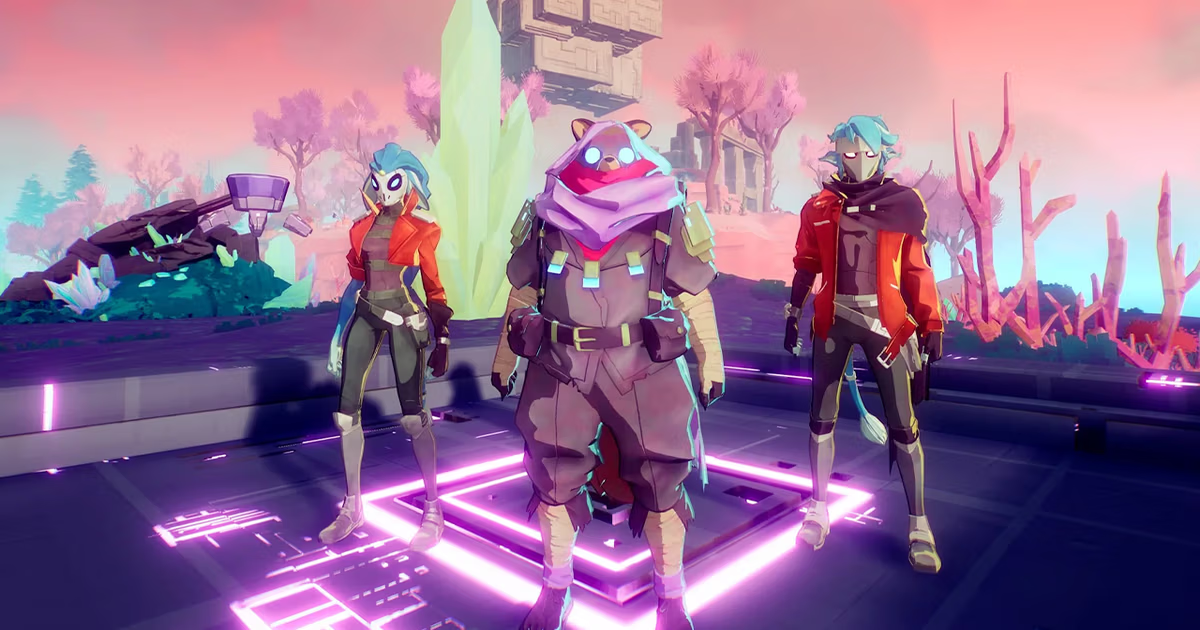
For many, Hyper Light Drifter was a masterclass in atmospheric storytelling, tight combat, and evocative world-building. Its success established Heart Machine as a creative force, renowned for its unique art style and challenging gameplay. Anticipation for Hyper Light Breaker – an expansion of that beloved universe, albeit with a different gameplay loop focused on a 3D roguelike adventure – was palpable. Breaker had been navigating the challenging waters of Early Access, a pathway often lauded for its potential to foster community involvement and iterative design. Yet, even with player feedback and a dedicated fanbase, the project has now been shelved, highlighting the inherent risks in this development model.
The Precarious Promise of Early Access in Indie Game Development
This development highlights the double-edged sword of Early Access, particularly for independent game developers. While it ostensibly offers a lifeline for smaller studios to fund ongoing development, gauge player interest, and gather crucial feedback throughout the production cycle, it also carries immense, often underestimated, pressure. Developers in Early Access are constantly balancing burgeoning community expectations with ambitious roadmaps, all while confronting the inherent financial strains of ongoing production without a steady stream of full-price sales.
The model requires a delicate equilibrium: releasing a game that is stable and engaging enough to attract players, but also incomplete enough to warrant continuous updates and improvements based on feedback. This iterative process can lead to scope creep, where player suggestions or internal ambitions push the project far beyond its initial vision, exhausting resources and extending timelines. Cancelling a game already in Early Access, as Heart Machine has done with Hyper Light Breaker, is a difficult, costly decision, indicating that the path forward, despite best intentions and dedicated effort, was no longer viable from a financial, creative, or logistical standpoint. It prompts a crucial question for the entire indie sector: when does unwavering commitment to a creative vision become an unsustainable risk in the face of market realities and player feedback?
For a studio like Heart Machine, the challenges of transitioning from the acclaimed 2D experience of Hyper Light Drifter to a 3D roguelike in Breaker likely presented unforeseen technical and design hurdles. Early Access, while providing data, might have also revealed that the core gameplay loop or the overall player experience wasn’t resonating as strongly as hoped, necessitating fundamental changes that were too expensive or time-consuming to implement. This decision, therefore, reflects a pragmatic acknowledgement of these difficulties and a commitment to long-term sustainability over short-term perseverance on a struggling project.
A Strategic Retreat to Familiar Ground: Heart Machine’s IP Leverage
Heart Machine isn’t shutting down entirely, which is a significant relief for its fans and the talented individuals who remain. Instead, the studio is pivoting its focus back to its roots: the highly successful and beloved Hyper Light Drifter. They plan to support and expand upon their flagship title, alongside exploring “future projects.” This move is a textbook example of a studio, facing adversity and the harsh realities of a challenging development cycle, returning to its strongest asset and most reliable foundation.
In an industry increasingly marked by uncertainty, intense competition, and high development costs, leaning on a beloved and established intellectual property (IP) is often a far safer bet than forging entirely new paths, especially when the latter has proven difficult, as was the case with Hyper Light Breaker. The original Hyper Light Drifter possesses strong brand recognition, a loyal and passionate fanbase, and a proven gameplay formula. This strategic retreat allows Heart Machine to leverage existing goodwill, reduce marketing costs for new content, and work within a framework they know intimately and have mastered.
Expanding upon Hyper Light Drifter could mean a variety of things: new story content, challenging new game modes, console ports, remastered versions, or even smaller, more focused spin-offs within the same universe using a similar engine or artistic direction. Such an approach minimises risk while potentially reigniting interest in their seminal work and generating new revenue. It’s a pragmatic, if painful, strategic retreat that prioritises the studio’s long-term health and creative output by building upon its existing strengths, rather than continuing to invest in a project that faced insurmountable hurdles. The “future projects” will likely benefit from this recalibration, allowing the team to approach new ideas with renewed focus and a more sustainable development model.
Broader Industry Echoes: The Unsettling Trend of Game Industry Layoffs
This news from Heart Machine also resonates deeply with a broader, unsettling trend across the entire games industry, impacting both indie and AAA studios. 2023 was a year defined by unprecedented layoffs, with thousands of talented professionals losing their jobs across various companies, from massive publishers to smaller, independent outfits. And unfortunately, 2024 shows little sign of easing up, with new layoff announcements continuing to surface regularly.
Several factors contribute to this volatile economic climate. Post-pandemic overhiring, where many companies expanded rapidly to meet perceived demand, is now being corrected. Rising development costs for increasingly complex games, coupled with a saturated market where countless titles compete for player attention and disposable income, create immense financial pressure. Evolving consumer habits, including a move towards subscription services and a greater selectivity in purchases, also impact revenue streams. Even critically acclaimed and commercially successful studios, both indie and AAA, are grappling with these harsh economic realities. Heart Machine’s situation underscores that even critical acclaim, a devoted fanbase, and a strong creative vision are not always enough to fully insulate a studio from the unforgiving economic currents of modern game development.
The high cost of maintaining large teams, the difficulty in predicting market trends, and the ever-present pressure from investors (even in smaller capacities) contribute to a climate where tough decisions, like project cancellations and layoffs, become necessary for survival. This trend highlights a significant challenge for the entire industry: how to foster innovation and creativity while ensuring financial stability and sustainable growth in a fiercely competitive global market.
What This Means for the Future of Indie Game Development
For indie developers, Heart Machine’s experience with Hyper Light Breaker serves as a sobering and crucial lesson: innovation is vital for standing out, but so is long-term sustainability. The allure of expanding a beloved universe or venturing into an entirely new genre is powerful and creatively exciting, but it must be tempered with realistic assessments of available resources, development timelines, technical capabilities, and crucially, market appetite. Studios might need to scrutinise their ambitions more closely, perhaps opting for projects with clearer scopes and more manageable risks.
We might see more studios opting for iterative improvements on existing, successful titles rather than grand, entirely new ventures, at least in the short term. This could mean more DLC, expansions, or direct sequels that build upon proven mechanics and existing fan bases, rather than creating entirely new intellectual properties or making drastic genre shifts. The pressure to deliver a polished, successful product out of the gate will likely intensify, making the Early Access model even riskier and demanding a higher level of completeness and quality at the initial launch phase.
For players, the hope remains that Heart Machine, unburdened by the specific pressures and challenges of Breaker, can channel its formidable creative energy into refreshing Drifter and crafting new experiences that capture the magic of their original triumph. This hard reset offers an opportunity for refocus and rejuvenation. Fans of their distinct art style and profound world-building can anticipate renewed attention to the foundational game that captivated so many. Their future projects will be watched with keen interest, as they navigate this new chapter, potentially emerging stronger and more focused from this difficult period.
While the cancellation of Hyper Light Breaker is undoubtedly a blow, especially for those affected by the layoffs and the dedicated community who supported its Early Access journey, it’s also a pivotal moment of recalibration for Heart Machine. It’s a stark testament to the brutal, beautiful world of game development, where artistic passion meets economic realities, and sometimes, a hard reset is not just advisable, but the only sustainable way forward for a studio to continue creating the games players love.
Connect with Us for More Indie Game Insights
Read the original story at Gamedeveloper.com.
What are your thoughts on Heart Machine’s decision to halt development on Hyper Light Breaker and focus back on Hyper Light Drifter? How do you think this reflects the current state of indie game development?