For the better part of a decade, the smartphone industry has been on a relentless quest for the perfect object. We crave a device that is a seamless, monolithic slab of glass and metal—impossibly thin, impossibly powerful, and impossibly durable. We want a phone that feels like a river stone in the hand but can survive a tumble onto concrete. But what if that pursuit has reached its breaking point?
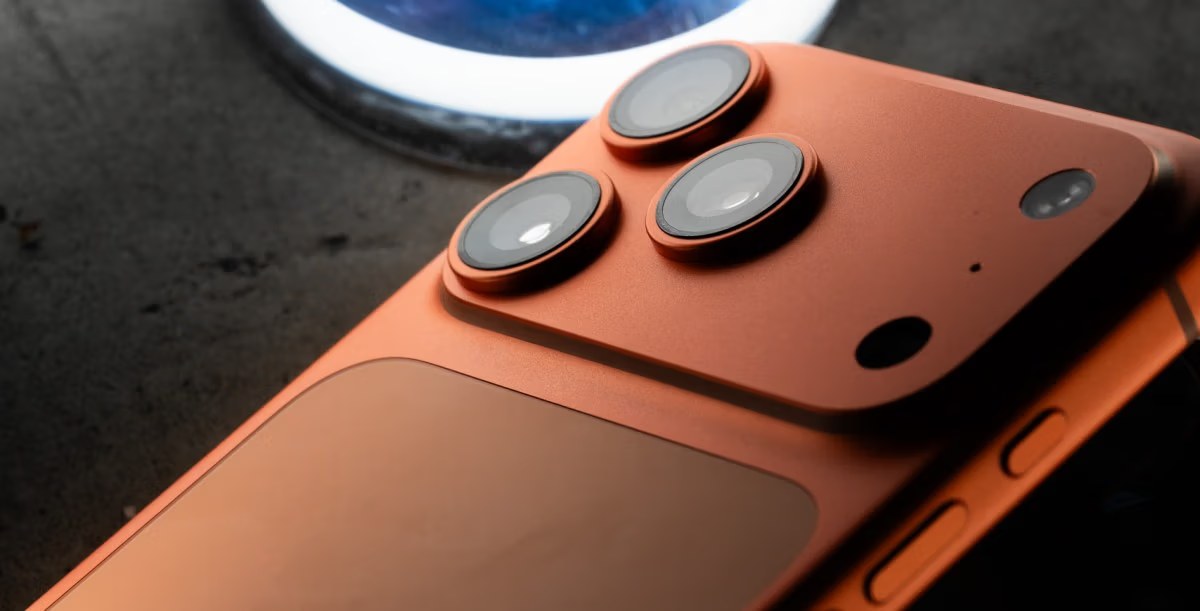
A new report from The Verge suggests that Apple’s upcoming iPhone 17 Pro could arrive with a surprising Achilles’ heel: a new, cutting-edge anodized finish that is far more susceptible to scratches than current models. And while the knee-jerk reaction might be frustration, this rumor, if true, signals something far more significant about the future of device design and our relationship with technology.

This isn’t just about a potential “Scratchgate 2.0.” It’s about the fundamental trade-offs that happen at the bleeding edge of material science.
The Designer’s Trilemma: Pick Two
When creating a physical product like an iPhone, engineers and designers are constantly juggling a trilemma of weight, aesthetics, and durability. You can usually optimize for two, but the third will suffer.
Aesthetics + Durability = Heavy
Think stainless steel or chunky, ruggedized gear. It’s tough and looks premium, but you feel it in your pocket.
Lightweight + Durability = Compromised Aesthetics
This is the realm of tough plastics and composites. They’re practical and strong but often lack that high-end, cold-to-the-touch feel we associate with luxury tech.
Aesthetics + Lightweight = Fragile
This appears to be the direction Apple might be heading.
The report hints that this new anodization process could allow for a more advanced matte texture, stunning new color possibilities, or even a significant reduction in weight. In Apple’s world, the feel of a device is paramount. They may be betting that users will value a device that feels lighter and more elegant in the hand, even if it means it won’t look pristine for as long.
The Return of the Case and the Rise of Patina
For years, Apple has been subtly encouraging us to go caseless. With innovations like Ceramic Shield and increasingly tough titanium frames, the naked iPhone has become a status symbol—a declaration of confidence in both the device’s resilience and your own carefulness.
If the iPhone 17 Pro is indeed a scratch magnet, that era could come to an abrupt end. This move could single-handedly revitalize the phone case and screen protector industry, making them less of an option and more of a necessity for anyone who wants to preserve their device’s resale value.
But there’s another, more philosophical angle. What if Apple is subtly pushing us to embrace imperfection? For years, we’ve treated our phones as precious jewels to be preserved in glass boxes. Perhaps this is a shift towards viewing them as tools once more—tools that acquire a unique patina over time. Like a well-worn leather wallet or a favorite pair of jeans, the scratches and scuffs on an iPhone could become part of its story, a physical record of its journey with you. It’s a romantic notion, but one that runs counter to the current obsession with flawless resale condition.
What This Means for the Future
This isn’t a bug; it’s a feature of a new design philosophy. If Apple, the industry’s trendsetter, is willing to sacrifice scratch resistance for other gains, it sends a powerful message. It suggests that the war for sheer durability may be over, replaced by a new focus on in-hand feel, weight, and new aesthetic frontiers.
Competitors like Samsung and Google will face a choice: follow Apple down this path of beautiful fragility, or double down on toughness and market their devices as the durable alternative.
Ultimately, the iPhone 17 Pro could force us all to ask a simple question: What do we value more in our technology—immaculate perfection that lasts forever, or an evolving object that bears the marks of a life well-lived? Apple seems to be placing its bet. The rest of us will have to decide if we’re ready to live with the consequences.
Read the original story at The Verge.
What are your thoughts on this potential shift in smartphone design? Would you prioritize a lighter, more aesthetically pleasing phone that scratches easily, or a more durable, heavier device?