
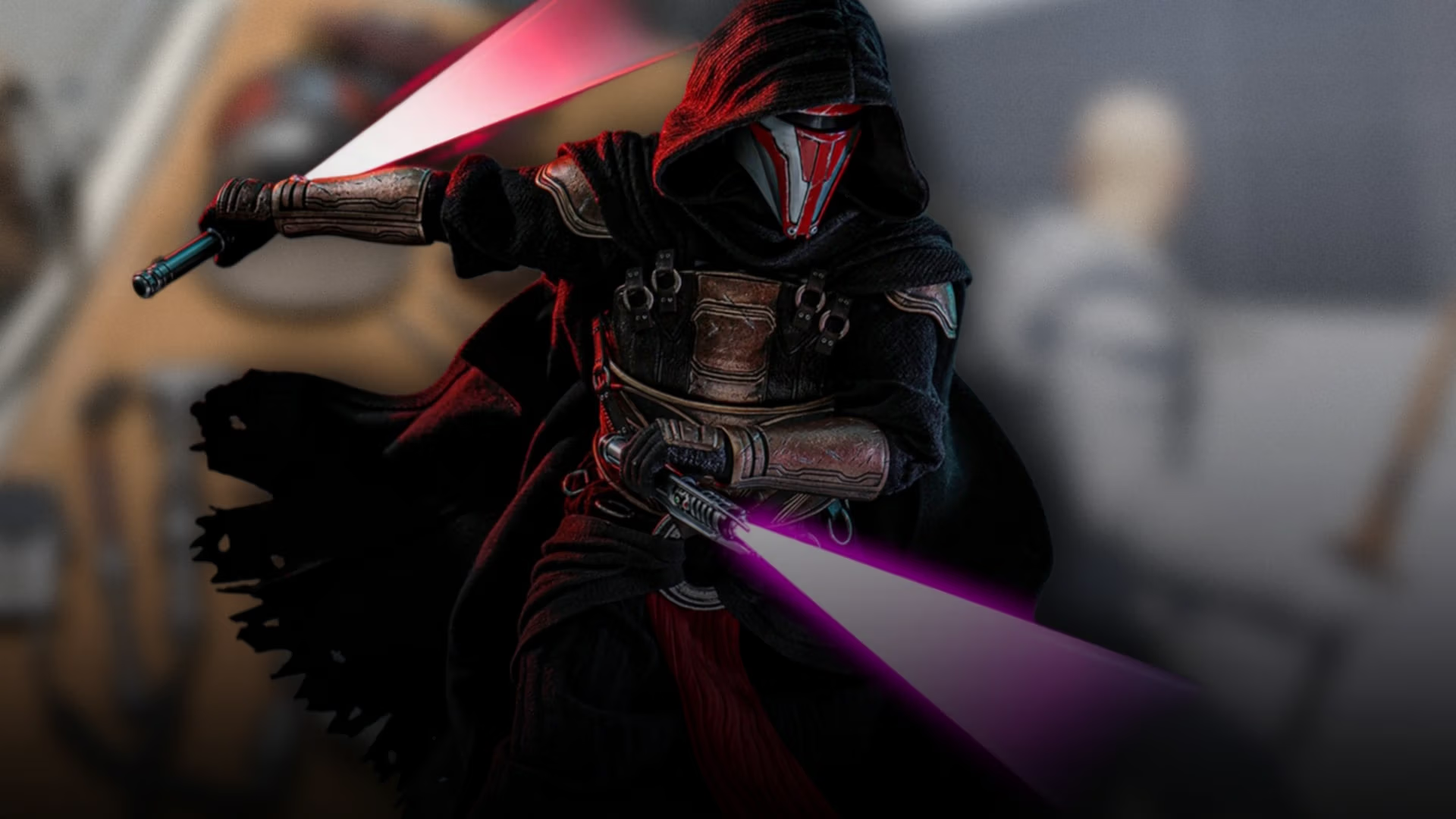
Few games cast a shadow as long and as beloved as Star Wars: Knights of the Old Republic. BioWare’s 2003 RPG epic isn’t just a classic; it’s a foundational text for many gamers, a beacon of unparalleled storytelling, meaningful player choice, and rich character development in a galaxy far, far away. Its intricate narrative, memorable companions, and impactful decisions carved out a legacy that few titles can match, establishing it as one of the greatest role-playing games of all time and a cornerstone of the Star Wars expanded universe. So, when a remake was officially announced, the collective sigh of relief and excitement from fans was almost palpable, promising a modern return to a cherished era.
Fast forward to today, and the journey of the KOTOR Remake has been anything but smooth. What began with such fanfare quickly descended into a quiet struggle, marked by initial reports of significant developmental struggles, internal restructuring, and a rumored studio switch from Aspyr, the original developer, to the more experienced Saber Interactive. The project has largely fallen silent since, leaving fans in a state of anxious anticipation. That is, until a recent flurry of discussion was sparked by the surfacing of what appear to be early development screenshots from Aspyr’s cancelled rendition, offering a tantalizing, if bittersweet, peek behind the curtain of a troubled production.

These leaked images, while clearly not indicative of a final product, have ignited fresh dialogue and renewed hope, showcasing an early vision for the KOTOR Remake that many had begun to fear might never materialize. They confirm that, at one point, the dream of a revitalized Old Republic was indeed taking shape, actively being forged in the fires of development. Yet, these are not merely pretty pictures for nostalgic reverie; they are echoes of a challenging development cycle that offers profound insights into the intricate world of modern game production and the perilous path of attempting to resurrect a legend.
A Glimpse into What Could Have Been: Unpacking the Aspyr Leaks
The leaked screenshots offer a fascinating, albeit nascent, look at Aspyr’s initial vision for the KOTOR Remake. We see environments that evoke iconic locations like the bustling cityscape of Taris and potentially the serene plains of Dantooine, meticulously reimagined with modern fidelity. Character models, including what appears to be an early rendition of Revan or a companion, suggest a significant visual overhaul was indeed underway, aiming to bridge the gap between the blocky, albeit charming, graphics of 2003 and the cinematic detail expected today. Furthermore, glimpses of revamped UI elements hint at an attempt to modernize the player experience while respecting the original’s functional design.
For fans, this was more than just a leak; it was a moment of tangible connection to a project that had become shrouded in mystery. It offered a glimpse of how beloved landscapes and characters might look with the power of contemporary game engines, sparking conversations about art direction, character design philosophies, and the delicate balance between faithful recreation and necessary modernization. While these images are clearly in an early stage—likely featuring placeholder assets, unoptimized textures, and unfinished lighting—they confirm that a significant, ground-up rebuild was on the cards, not merely a high-definition remaster. This initial visual proof reignited the fervent hope among the fanbase that the KOTOR Remake truly exists and that its rebirth, however arduous, is still a possibility.
But these aren’t just pretty pictures for idle speculation; they’re echoes of a challenging development cycle that offers insights into the intricate world of game production and the perilous path of remaking a legend. The raw, unpolished nature of the assets displayed in these early development shots inherently speaks volumes about the technical hurdles and scope management issues that Aspyr likely encountered. Such early visuals often signify a foundational stage where engine stability, asset pipelines, and core gameplay loops are still being established, hinting at the immense undertaking and the potential for scope creep when trying to bring a sprawling RPG into the modern era.
The Shifting Sands of Development: A Tale of Two Studios
The reported shift of the KOTOR Remake project from Aspyr, a studio primarily known for its extensive experience in porting and remastering classic titles, to Saber Interactive, a studio with a stronger track record of AAA development (including the highly successful *World War Z* and the technically impressive *Witcher 3* Switch port), wasn’t just industry gossip. It was a stark and public reminder of the immense undertaking a full-fledged remake of this caliber truly is. Aspyr, while deeply familiar with the KOTOR IP through their porting efforts, likely found themselves ill-equipped for the monumental task of rebuilding an entire game from scratch, which requires a fundamentally different skillset and infrastructure than adapting an existing title.
The technical challenges inherent in remaking a game from 2003 are staggering. It’s not merely about updating textures and models; it’s about re-engineering core systems, often from scratch, for modern hardware and player expectations. This includes everything from combat mechanics and AI behaviors to physics engines, animation systems, and intricate quest scripting—all of which demand a level of expertise in engine development and cutting-edge asset creation that goes far beyond what’s typically required for a port or remaster. Aspyr’s commendable experience in delivering faithful ports, while valuable for understanding the original game’s essence, likely wasn’t tailored for the extensive engine work, intricate asset creation, and iterative design required for a project of this colossal scale and intense fan scrutiny. The reported delays and eventual studio transition underscore the vast chasm between updating an existing game and completely rebuilding a beloved, complex RPG for a new generation.
Saber Interactive, on the other hand, brings a different set of credentials to the table. Their work on titles like World War Z showcases their capability in developing robust game engines for large-scale action, while their Witcher 3 Switch port demonstrated an extraordinary talent for optimization and maintaining visual fidelity on challenging hardware. This experience suggests a studio better equipped to tackle the fundamental engineering challenges of a KOTOR Remake, including building a stable foundation, managing large teams, and delivering AAA-level polish. However, inheriting a project mid-development, especially one reportedly fraught with issues, presents its own unique set of hurdles, from navigating existing codebases and assets to re-establishing a clear vision and timeline. The transition itself, regardless of Saber’s capabilities, signifies a substantial loss of time and resources, pushing the release window further into an uncertain future.
Here’s the key takeaway: modern game development, especially for beloved, expansive RPGs like *Knights of the Old Republic*, is an Everest-level climb. It’s not just about updating graphics; it’s about re-engineering core systems, often from scratch, for modern hardware and player expectations, which demands astronomical budgets, immense teams, and years of dedicated work. This saga underscores the critical importance of matching studio capabilities with project ambition, particularly when dealing with IPs that carry immense emotional weight for a massive fanbase. Publishers, in their quest to capitalize on nostalgia and satisfy fervent fan demand, must carefully evaluate whether a chosen studio’s strengths truly align with the monumental task at hand, rather than simply banking on brand recognition or existing familiarity with the source material. Miscalculations at this stage can lead to costly delays, studio struggles, and ultimately, fan disappointment.
The Future’s Murky Vision: Navigating the Remake Economy
So, what does this mean for the future of the KOTOR Remake? The prevailing silence since the rumored studio switch leaves us in limbo, fueling widespread speculation and, for many, a gnawing uncertainty about when, or even *if*, we’ll ever get to experience the revitalized Old Republic. The lack of official updates from either Sony (who initially announced the remake) or Embracer Group (Aspyr and Saber’s parent company) only intensifies the rumor mill, creating a vacuum that is quickly filled with both fervent hope and cynical doubt. This silence is particularly impactful for a project built on such a foundation of fan love; transparency, even when difficult, often serves to reassure and manage expectations more effectively than prolonged quiet.
The KOTOR Remake saga is becoming a bellwether for the “remake economy” in gaming. The demand for meticulously crafted returns to classic IPs is higher than ever, driven by nostalgia and the desire for beloved stories with modern gameplay and visuals. We’ve seen incredible successes, such as the *Resident Evil* remakes and *Final Fantasy VII Remake*, which not only honored their originals but also pushed boundaries. However, we’ve also witnessed cautionary tales like *Warcraft 3 Reforged* or the disastrous *The Lord of the Rings: Gollum*, which highlight the extreme risks involved in mismanaging a beloved IP or failing to meet quality standards. Players aren’t just looking for a coat of paint; they expect a thoughtful reimagining that respects the original’s narrative integrity and gameplay loops while pushing technological boundaries and introducing quality-of-life improvements that enhance the experience without diluting its essence.
This evolving landscape of player expectations means that developers undertaking remakes face immense pressure. They must walk a tightrope between preserving the magic of the past and innovating for the future, between satisfying veteran fans and attracting new players. The KOTOR Remake’s journey thus far exemplifies this delicate dance between fan expectations, developmental realities, and the challenges of bringing a cherished past into a cutting-edge future. A successful KOTOR Remake could set a new gold standard, proving that challenging and complex RPGs can indeed be resurrected beautifully. Conversely, a troubled or ultimately cancelled project could send a chilling message to publishers considering similar ventures for other beloved but aging franchises like *Mass Effect*, *Dragon Age Origins*, or *Fallout: New Vegas*, potentially leading to a more conservative approach to IP revitalization.
Ultimately, these leaked images, even in their early state, reignite the hope that the KOTOR Remake is out there, somewhere, being forged. They are a tangible sign that the journey, however rocky, began with genuine intent and progress. But they also stand as a testament to the immense pressures, complexities, and inherent difficulties involved in resurrecting a classic, reminding us that even with the Force on its side, the path to greatness is rarely smooth, and the gap between concept and delivery can be vast.
Read the original story at mp1st.com.
What are your hopes and fears for the KOTOR Remake, and which classic game would you love to see get a faithful, yet modern, overhaul next?