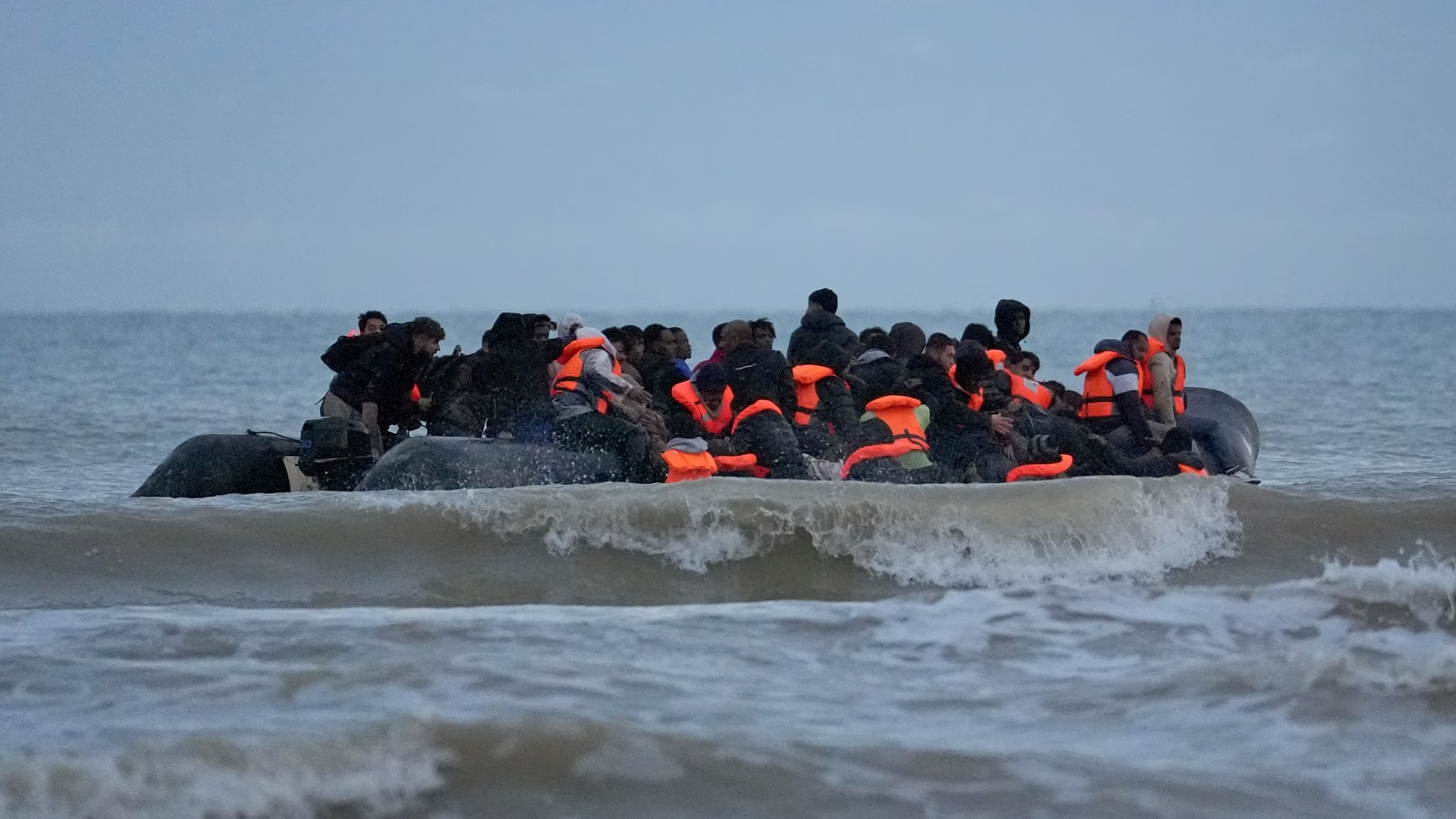
In a moment of rare political candour that cuts through the noise of the election trail, a key member of Keir Starmer’s shadow cabinet has articulated a view long held on the right but often downplayed on the left: the UK’s reputation for generosity is a significant “pull factor” for migrants crossing the Channel.
Shabana Mahmood, Labour’s Shadow Justice Secretary, offered a blunt assessment that moves the immigration debate onto new ground. Speaking on the motivations of those making the perilous journey in small boats, she stated plainly that migrants “believe we are the most generous country in Europe.”

This is more than just a soundbite; it’s a strategic pivot. For years, the debate has been mired in a binary argument: one side blaming porous borders and criminal gangs, the other focusing on global instability and the lack of safe routes. By acknowledging the power of perception—the belief that Britain offers a better, more welcoming system—Mahmood tacitly accepts that the problem isn’t just about stopping the boats, but also about addressing the allure that fills them in the first place.
What This Means for the Political Battleground
Mahmood’s admission is a calculated move designed to neutralise a key Conservative attack line. The Tories have consistently accused Labour of being soft on immigration, a party unwilling to face the “tough truths” of the crisis. By voicing this truth herself, Mahmood attempts to seize the narrative of pragmatism. The unspoken message is clear: We understand the problem in its entirety, and unlike the current government, we have a credible plan to fix it.
This reframes the election choice. It’s no longer a simple contest between a “tough” Conservative party and a “compassionate” Labour one. Instead, Labour is positioning the debate as one of competence versus chaos. Mahmood was quick to slam the government’s record, asserting the Tories have “lost control of our borders,” and branding the flagship Rwanda scheme a costly “gimmick.”
Labour’s proposed solution—smashing the criminal smuggling gangs and accelerating the processing of asylum claims to quickly remove those without a right to be here—is presented as the practical, effective alternative. It’s a strategy aimed at winning over voters who are frustrated with the current situation but skeptical of the Rwanda plan’s ethics and efficacy.
The Future of the Immigration Debate
Looking ahead, this moment signals a significant convergence in British politics. Both major parties now publicly agree that the small boats must be stopped and that “pull factors” are a real and present issue. The ideological chasm on the diagnosis of the problem is shrinking, even if the proposed cures remain worlds apart.
For a potential Labour government, Mahmood’s words provide political cover. Should they win power, they can pursue tougher measures on border security and returns, arguing they are simply acting on a problem they openly identified while in opposition. It allows them to triangulate, appealing to the centre-ground by demonstrating they are not naive idealists but clear-eyed realists.
The core challenge remains immense for whichever party forms the next government. But with this admission, the terms of the debate have subtly but decisively shifted. It is no longer a question of if the UK’s appeal is a driver of migration, but what a future government is prepared to do about it.
Read the original story at The Sun.
What are your thoughts on Labour’s strategic pivot in the immigration debate? Share your perspective in the comments below!