At Europe’s Edge, a Nation Chooses Its Destiny
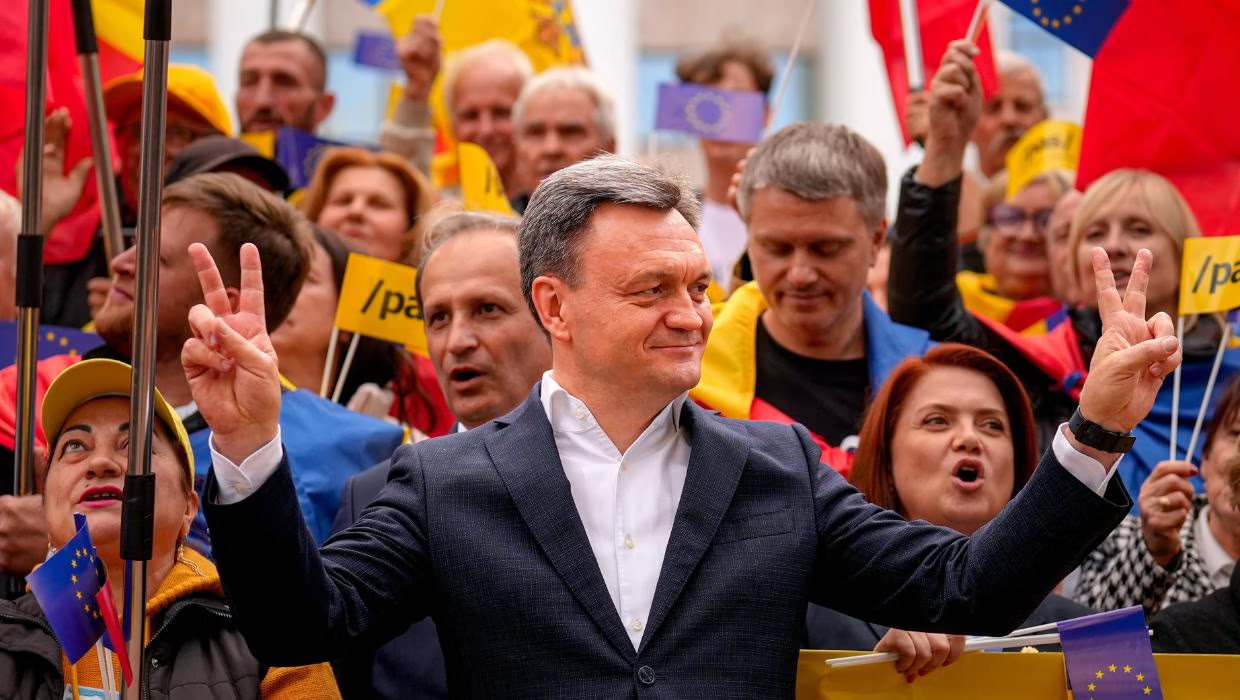
On the geopolitical fault line between an expanding Europe and a resurgent, revanchist Russia, the small, landlocked nation of Moldova is holding its breath. This autumn, its citizens will head to the polls not just to elect a president, but to answer a profound question that will define their future for generations: East or West?
Moldova, a country of approximately 2.5 million people, has long been a historical crossroads, caught between empires and ideologies. Bordered by war-torn Ukraine to the east and EU member Romania to the west, its strategic location makes its orientation a matter of significant concern for Brussels and Moscow alike. The upcoming election, paired with a nationwide referendum on pursuing European Union membership, is far more than a domestic political contest. It is a bellwether for the continent, a high-stakes test of the EU’s gravitational pull against the long, enduring shadow of the Kremlin.

For Moldova, a country historically caught in the orbits of greater powers, from the Ottoman and Russian empires to Soviet domination, this moment represents an unprecedented opportunity for profound self-determination. The choice is stark: integrate into a democratic, rules-based European order, or risk being pulled back into an authoritarian sphere of influence that has historically stifled its development and sovereignty.
President Sandu’s Vision: A Western Future
At the heart of this national crossroads is President Maia Sandu, a Harvard-educated former World Bank economist who has staked her entire political identity on steering Moldova decisively toward the West. Elected on an anti-corruption platform, Sandu embodies the aspirations of a generation that dreams of a modern, democratic nation, anchored in the rule of law and fully integrated into the European family. Her administration has tirelessly pursued reforms aimed at strengthening democratic institutions, improving governance, and aligning Moldova’s legal and economic frameworks with EU standards.
For her supporters, joining the EU is not merely an economic opportunity; it is a fundamental escape from a history of entrenched corruption, oligarchic control, and persistent Russian interference that has long stifled the country’s potential. They believe that EU membership offers the best path to genuine stability, prosperity, and the establishment of independent institutions that can resist external pressures. The promise of a transparent judiciary, higher living standards, and access to the vast European single market are powerful motivators for those who envision a future free from the cycles of poverty and political manipulation.
Sandu’s government has actively embraced the EU accession process, completing significant legislative and administrative reforms under immense pressure. Her unwavering commitment to this pro-European course has positioned her as a symbol of hope for many Moldovans, demonstrating that a small nation can indeed chart its own destiny against formidable geopolitical headwinds.
The Battle on Two Fronts: Economic Hardship vs. European Dream
But this inspiring vision is clashing with the harsh realities of daily life for many Moldovans. The battle for Moldova is being fought on two fronts: in the hearts of those who dream of a European future, and in the empty pockets of those struggling with the cost of that dream. Moldova remains one of Europe’s poorest countries, and economic vulnerabilities are easily exploited.
President Sandu’s government made the difficult, but strategically necessary, decision to sever its reliance on cheap Russian gas—a painful but crucial step in its pivot to Europe and an assertion of energy independence. This move, while lauded by Western partners, coincided with a global energy crisis and inflationary pressures, leading to a surge in domestic energy prices and a significant cost-of-living crisis across the country. For many ordinary citizens, particularly in rural areas or among vulnerable populations, the abstract promise of EU integration feels distant compared to the immediate challenge of heating their homes or affording basic necessities.
The pro-Russian opposition has masterfully weaponized this economic anxiety. They tap into a powerful nostalgia for a bygone era of perceived stability and affordability under closer ties with Moscow. Their campaign promises a return to affordable energy, greater market access to Russia for Moldovan goods, and closer political and economic integration with Moscow-led blocs. Their message is simple, potent, and resonates deeply with segments of the population: the European dream, they argue, is an expensive luxury Moldova cannot afford, and the West is demanding too high a price for its friendship.
This narrative is amplified by ongoing challenges, including a brain drain of young professionals seeking opportunities abroad, which further exacerbates the economic strain. The opposition frequently highlights the economic benefits of previous relationships with Russia, contrasting them with the current hardships, thereby presenting a seemingly simpler and more immediate solution to Moldova’s economic woes.
The Kremlin’s Hand: Hybrid Warfare and Disinformation
This internal division is not merely organic; it is being actively inflamed from abroad. The Kremlin is not a passive observer in this critical election; it is a key player, deploying its full hybrid warfare playbook to influence the outcome. According to Western intelligence agencies and Moldovan officials, Moscow is engaged in a relentless campaign to destabilize the country and undermine its pro-European trajectory.
A continuous, relentless stream of disinformation floods social media platforms and pro-Russian media outlets within Moldova, aiming to discredit Sandu’s government, sow social chaos, and convince Moldovans that their future lies not with Brussels, but with a resurgent Russia. This includes narratives accusing Sandu of sacrificing national interests for Western approval, fabricating stories about economic collapse, and exploiting existing societal grievances to fuel discontent. Cyberattacks, influence operations, and the alleged funding of anti-government protests are all part of this concerted effort to destabilize the nation and tilt the electoral scales.
Adding another layer of complexity is the breakaway region of Transnistria, a Moscow-backed separatist territory within Moldova’s internationally recognized borders, where thousands of Russian troops are stationed. While not directly participating in the Moldovan elections, Transnistria’s status is a constant leverage point for the Kremlin, capable of being inflamed to create further instability and distract from the pro-European agenda. The fear of escalation in this frozen conflict serves as a potent reminder of Russia’s enduring influence and its capacity to disrupt Moldova’s sovereignty.
The Geopolitical Stakes: Ripples Beyond Borders
This is what makes the Moldovan election so critically important, not just for its citizens, but for the wider region and for Europe. The outcome will send ripples far beyond its borders, influencing the trajectory of other aspiring EU members and testing the resolve of democratic nations against authoritarian influence.
A victory for President Sandu and a “yes” vote on the EU referendum would be a powerful affirmation of European values on the bloc’s eastern flank. It would solidify a pro-Western, democratic buffer state directly next to war-torn Ukraine, providing a crucial element of regional stability. Such an outcome would represent a significant strategic setback for Vladimir Putin’s persistent efforts to rebuild a sphere of influence and reassert Russian dominance over its former Soviet satellites. It would demonstrate conclusively that even in the face of immense economic pressure, sophisticated disinformation campaigns, and historical ties, the allure of a democratic, rules-based order, coupled with the promise of prosperity and security, can prevail.
Conversely, a rejection of the European path, or a victory for the pro-Russian opposition, would be a resounding triumph for the Kremlin. It would demonstrate that Russia can still effectively leverage economic dependencies, historical grievances, and targeted disinformation to pull nations back into its orbit, effectively destabilizing the EU’s immediate neighbourhood. This would lead to the creation of a pro-Russian wedge state on the very edge of the European Union, potentially undermining regional security and encouraging further Russian aggression in its periphery. For Ukraine, it would mean another potentially hostile or at least uncooperative neighbour on its already besieged border, complicating supply lines and regional alliances. For Europe, it would be a stark and sobering reminder that the ideological battle for the continent’s future is far from over, and that the contest between democracy and authoritarianism is being fought on every frontier.
A Moment of Profound Choice
As Moldovans prepare to cast their ballots, they are weighing two profoundly different futures. Their decision will not only chart the course for their small nation of 2.5 million people but will also offer a crucial insight into the shifting tides of power, influence, and aspiration in a newly contested Europe.
The choice is complex, influenced by deep historical roots, present economic anxieties, and future aspirations. Will Moldova embrace its European destiny, despite the immediate costs, or will it succumb to the siren song of a past intertwined with Russian dominance? The world watches intently.
Read the original story at Stuff.
Given Moldova’s pivotal decision, what do you believe are the most critical factors that will ultimately sway its citizens towards either a European or a more Russia-aligned future?