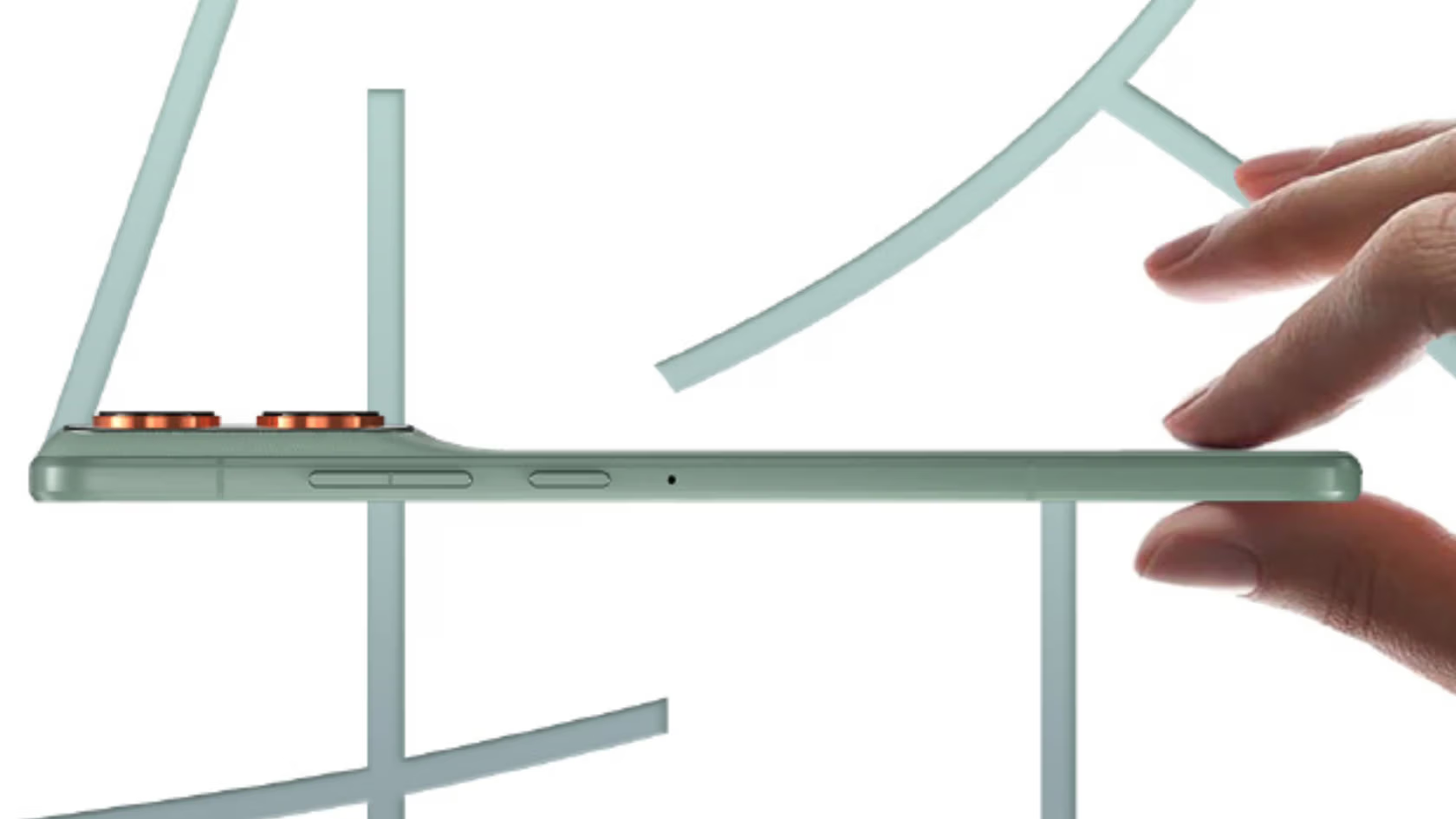
The Battery Revolution is Here, And Motorola Might Be Leading The Charge
For years, the flagship smartphone equation felt like a zero-sum game. You wanted a sleek, impossibly thin device? You implicitly signed up for a battery that barely saw you through dinner. Craved all-day power? Be prepared for a device that felt like a brick in your pocket. It was a compromise we’d all begrudgingly accepted, a silent agreement that elegance and endurance couldn’t truly coexist. This inherent trade-off has been a source of constant frustration for consumers, often forcing them to choose between aesthetics and practical usability. The vision of a truly powerful, long-lasting phone that also felt premium in the hand seemed perpetually out of reach, confined to concept renders rather than retail shelves.
But what if that unspoken rule is about to be shattered? What if a manufacturer is finally ready to deliver a no-compromise experience, combining cutting-edge design with unparalleled battery performance? This isn’t just a hopeful dream; it’s rapidly becoming a tangible reality, signaling a significant shift in the smartphone industry’s priorities. The expectation of having to carry a power bank or constantly hunt for an outlet might soon become a relic of the past, as a new era of smartphone endurance dawns.

Recent whispers from the tech world suggest Motorola, with its upcoming Edge 70 (or whatever its final moniker will be), isn’t just playing to win – it’s rewriting the rules of the game entirely. We’re talking about a rumored 6,000 mAh battery paired with a blistering 125W wired charging speed, all potentially encased in a design thin enough to make some of its more established rivals blush. If these specs hold true, this isn’t just an incremental upgrade; it’s a gauntlet thrown directly at the feet of every other premium smartphone manufacturer, including the likes of Samsung’s future Galaxy S25 Edge and Apple’s theoretical iPhone Air. This bold move by Motorola could catalyze a much-needed innovation sprint, compelling competitors to rethink their own battery strategies.
Beyond the Numbers: Why This Is a Game-Changer
The leaked specifications for the Motorola Edge 70 are more than just impressive figures on a spec sheet; they represent a fundamental challenge to long-held beliefs about smartphone design and functionality. These rumors, if confirmed, offer genuinely insightful clues into the future direction of premium smartphones and what consumers can realistically expect from their next device. Let’s delve into why these potential advancements are so pivotal for the entire mobile ecosystem.
1. Defying the Physics of Thinness: The 6,000 mAh Marvel
A 6,000 mAh battery in a flagship-grade, presumably thin device, is nothing short of an engineering marvel. For far too long, “thin” has been synonymous with “battery anxiety,” forcing users to sacrifice power for aesthetics. Historically, achieving such a large capacity meant a thicker, heavier phone, as conventional battery technology struggled to pack more energy into smaller volumes without compromising safety or cost. This led to a stalemate where design teams prioritized sleekness, leaving battery life as an afterthought or a feature reserved for “plus” or “ultra” models that often came with added bulk.
If Motorola can deliver a truly massive power cell without compromising on svelte aesthetics, they’re demonstrating significant advancements in battery density, internal design optimization, and thermal management that the rest of the industry desperately needs to catch up on. This could involve innovative battery cell stacking technologies, like those seen in some foldable phones, or the adoption of new battery chemistries such as silicon-carbon composite anodes which allow for higher energy density per unit volume compared to traditional graphite. Furthermore, sophisticated internal component rearrangement and highly efficient heat dissipation systems are crucial to integrating such a large battery in a slim form factor without thermal issues. This means users might finally get the best of both worlds: a phone that feels premium and sleek, yet offers endurance that lasts not just all day, but potentially into a second day of moderate use, drastically enhancing the user experience.
2. Charging That Changes Your Habits: The 125W Transformation
125W charging isn’t just fast; it’s transformative. This level of rapid power delivery fundamentally alters how we interact with our devices, turning a chore into a momentary pause. Imagine the convenience: plugging in your phone for a quick 5-minute coffee break and getting enough charge to last you hours, or topping up from near-empty to 50% in under 10 minutes. This eliminates the frantic search for an outlet when your battery icon dips into the red at 15% and removes the need for overnight charging rituals that have become ingrained in our daily routines. It shifts the paradigm from constant vigilance over battery levels to opportunistic, super-fast top-ups.
The implications extend beyond mere speed. This level of charging empowers users with unprecedented freedom from the wall socket. It means less reliance on power banks when traveling, more spontaneous usage throughout the day, and a significant reduction in “battery anxiety” – the pervasive fear of running out of power. To achieve 125W safely and efficiently, manufacturers like Motorola employ advanced technologies such as dual-cell battery designs, which split the battery into two smaller units that can charge simultaneously, reducing heat and stress on individual cells. Paired with intelligent charging algorithms and specialized GaN (Gallium Nitride) chargers, these systems optimize power delivery while protecting battery health over the long term. This isn’t just about topping up quickly; it’s about fundamentally reshaping our mobile lifestyle and providing a sense of liberation from tethered charging.
3. A Challenge to the Established Order: Forcing Innovation
For years, Apple and Samsung have set the pace in the premium smartphone market, often dictating the “acceptable” limits for battery size and charging speeds in their flagship offerings. While their devices excel in many areas – camera technology, display quality, and software ecosystems – battery endurance and charging speeds haven’t always been their standout features. Many users of iPhones and Galaxy S series phones have expressed desires for more robust battery life, often feeling that these industry leaders have prioritized other features over addressing this core user pain point. Their slower charging speeds, often around 20-45W, pale in comparison to the 100W+ solutions already prevalent in several Chinese brands, though these have often been seen as niche offerings.
Motorola’s aggressive move with the rumored Edge 70 could force these giants to reconsider their own priorities. Can they continue to rely on strong brand loyalty and ecosystem lock-in when a competitor is offering a vastly superior power experience, potentially in an equally compelling package? This bold challenge from Motorola could spark a much-needed innovation race in a crucial area that directly impacts daily user satisfaction. It compels the entire industry to acknowledge that battery performance is no longer a secondary consideration but a primary driver of purchasing decisions for a significant segment of consumers. If Motorola succeeds in delivering on these promises, it will send a clear message: the market demands better battery solutions, and those who ignore this demand risk falling behind.
The Future: More Than Just Specs
This isn’t just about Motorola building a potentially great phone; it’s about what this kind of innovation signals for the entire industry. The ramifications of a premium device successfully integrating massive battery capacity with ultra-fast charging and a sleek design are profound. If battery life and lightning-fast charging can be achieved without sacrificing design, performance, or other flagship features, then the next generation of flagships across the board could look very different, pushing the boundaries of what we consider a “complete” smartphone experience.
Prioritization of User Pain Points: For too long, manufacturers have focused on incremental camera improvements, slightly faster processors, or marginal display enhancements. While these are valuable, they often overlook fundamental frustrations like battery life. A breakthrough like the Motorola Edge 70 could shift the industry’s focus from these often subtle upgrades to tackling fundamental user pain points more directly. It could mean greater investment in battery research and development, improved power management software, and innovative ways to integrate larger power cells without adding bulk. This re-prioritization could lead to a more user-centric design philosophy where core usability trumps minor aesthetic tweaks.
Differentiated Flagship Experiences: In a market often criticized for homogeneity, battery endurance could emerge as a significant differentiator, becoming as crucial a selling point as camera prowess, display quality, or chipset performance. Consumers might start making purchasing decisions not just based on who has the best camera, but who offers the most reliable, long-lasting power experience. This would foster healthier competition, encouraging brands to carve out unique niches based on practical advantages rather than just brand prestige or marginal technical leads in other areas. The “battery phone” might no longer be a utilitarian brick but a premium, desirable device.
Accelerated Battery Technology and Sustainability: This push could spur further research and development into more efficient battery cells and power management solutions across the entire supply chain. Innovations in solid-state batteries, silicon-anode technology, and even graphene-based cells, currently in various stages of research, could see accelerated development and adoption. Furthermore, improving battery longevity and charging efficiency has significant environmental implications, reducing the frequency of device replacement driven by degrading battery performance and decreasing overall energy consumption during charging cycles. A phone that lasts longer per charge and over its lifespan is a more sustainable phone.
Motorola’s rumored Edge 70 isn’t just a phone; it’s a statement. It suggests a future where users don’t have to choose between a phone that looks good, feels great in the hand, and one that lasts. It’s a bold move that could well redefine what we expect from a premium smartphone, proving that sometimes, the most exciting innovation happens where you least expect it. The era of compromise in smartphone design and battery performance might finally be drawing to a close, ushering in an age of genuine liberation for mobile users. This move could empower consumers more than any other innovation in recent memory.
Read the original story at Android Authority.
Do you believe Motorola’s potential battery breakthrough will truly force other major manufacturers to rethink their strategies, or will brand loyalty continue to overshadow practical advancements?