The Rumor Mill: A Symptom of Shifting Sands
The gaming industry has always been fertile ground for speculation, but few rumors have captured the collective imagination quite like the notion that Microsoft was preparing to exit the console hardware business. This narrative gained immense traction primarily because Xbox itself has been remarkably transparent about its multi-platform ambitions for Game Pass. Their stated strategy is clear: to meet players wherever they are, and porting some of their beloved first-party titles like Hi-Fi Rush, Grounded, and Sea of Thieves to rival platforms such as PlayStation and Nintendo Switch was a bold, undeniably player-friendly move. It signaled a profound acknowledgment that the traditional “console wars” model, built on strict exclusivity and walled gardens, might be too restrictive in an increasingly interconnected and digitally native gaming landscape.
However, the leap from “Xbox games are going multi-platform” to the definitive pronouncement that “Xbox hardware is dead” was a significant and, as it turns out, premature misinterpretation. This widespread leap in logic highlighted an industry and a fan base grappling to make sense of a company that is clearly not content with the status quo. Microsoft isn’t abandoning its roots; it’s actively expanding its branches and redefining what it means to be a gaming platform. The initial reaction, while understandable given the seismic shifts Xbox has initiated, underscored a fundamental misunderstanding of the company’s long-term vision, which clearly still encompasses a physical, dedicated gaming device.

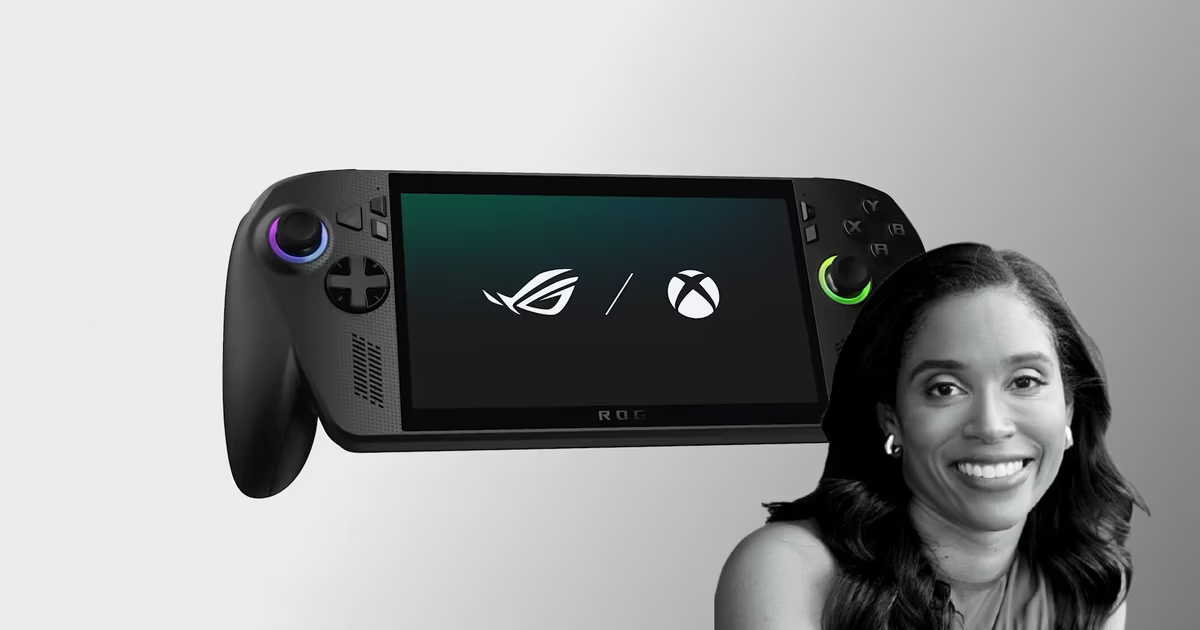
The compelling story of a pivot purely to software and cloud services resonated because it felt strategically coherent in a world moving towards digital access and subscription models. Many saw it as a calculated retreat, a strategic concession to focus purely on the lucrative Game Pass ecosystem and software development, allowing players to access Xbox content on any screen, rendering dedicated Xbox hardware seemingly obsolete. Yet, Phil Spencer’s unequivocal confirmation of a next-generation Xbox console in development serves as a stark reminder that reality, as often happens with such narratives, has a way of throwing a wrench in the works. This isn’t just a casual acknowledgment; it’s a profound reaffirmation of Microsoft’s unwavering commitment to the hardware space, telling us several crucial things about where Xbox is heading and what the future of gaming might truly look like.
Why Hardware Still Matters to Xbox
If some of Xbox’s most popular titles are now readily available on cross-platform devices, the natural question arises: why bother with a dedicated console at all? Phil Spencer’s recent confirmation provides a crucial and emphatic answer: innovation. He didn’t just confirm a new console; he specifically emphasized the importance of delivering “the largest technological leap you’ve ever seen in a generation.” This isn’t merely about raw power or bigger numbers; it’s profoundly about what a tightly integrated hardware and software ecosystem uniquely allows you to do, offering a controlled environment for groundbreaking advancements that fragmented platforms cannot easily achieve.
A Playground for Innovation
At its core, a dedicated console represents a singular vision for interactive entertainment. Unlike the sprawling, varied ecosystem of PC gaming, a console offers a controlled, optimized environment. This allows engineers to design custom silicon, meticulously crafted processors and GPUs tailored specifically for gaming workloads. It enables developers to push boundaries with unique processing architectures, explore advanced cooling solutions, and integrate cutting-edge features like accelerated ray tracing or ultra-fast solid-state drives (SSDs) without contending with a myriad of hardware configurations. This tight integration of hardware and software is the crucible where true technological leaps are forged, giving birth to experiences simply not feasible on less controlled platforms or standard off-the-shelf components. The Xbox Series X and S already demonstrated the power of this approach with their Velocity Architecture, and the next generation promises to take this integration to unprecedented levels, exploring new frontiers in graphical fidelity, physics simulation, and immersive feedback.
The Game Pass Gateway
While Game Pass will undoubtedly continue its expansive journey to other devices – appearing on smart TVs, mobile phones, and even through web browsers – the Xbox console remains its definitive, premium access point. It is the optimal experience, designed from the ground up to seamlessly showcase the service’s vast and ever-growing library, alongside its cutting-edge cloud streaming capabilities. The console provides the most reliable and highest-fidelity experience for Game Pass subscribers, acting as the primary hub where players can fully immerse themselves in the ecosystem. This dedicated hardware ensures that players receive the best possible performance, lowest latency, and most consistent graphical output, making it the preferred choice for those who value an uncompromised gaming experience and want to truly maximize their Game Pass subscription. The console isn’t just a device; it’s the ultimate curated portal to Microsoft’s expansive gaming universe.
A Strategic Foothold
In the broader, fiercely competitive tech ecosystem, having a physical touchpoint – a dedicated console – keeps Xbox relevant and prominent as a primary gaming platform. It’s more than just a piece of hardware; it’s a powerful statement that Microsoft is a core player, not merely a service provider offering software on others’ devices. This physical presence is absolutely vital for cultivating deep brand loyalty, shaping market perception, and, critically, attracting top-tier game development studios and intellectual property. Major publishers and developers often gravitate towards platforms that offer a robust installed base and dedicated support, knowing their most ambitious titles will find a home where they can truly shine. An Xbox console in millions of homes ensures that Microsoft maintains direct influence over the gaming experience, fostering a loyal community and securing its place at the forefront of interactive entertainment innovation, providing a solid foundation for future growth and strategic partnerships.
What This Means for the Future
The unequivocal confirmation of a next-gen Xbox console signals a fascinating and dynamic evolution for Microsoft’s gaming division, rather than the widely rumored retreat. It suggests a more sophisticated and flexible strategy designed to thrive in a rapidly changing industry, blurring the lines of traditional console rivalries and focusing on a holistic player experience.
The New Exclusivity Paradigm
We are likely to witness a significantly more nuanced approach to exclusives in the coming generation. It’s plausible that some games, particularly those meticulously crafted to showcase bleeding-edge console technology and architectural advancements, might remain Xbox/PC exclusive. This strategic choice would serve to drive hardware adoption and highlight the unique capabilities of the new console. Conversely, other titles, especially those with broader appeal, lower technical barriers, or those that could significantly benefit from wider market penetration, could continue to go multi-platform. This flexible strategy allows Microsoft to maximize reach for Game Pass subscriptions while simultaneously leveraging its hardware to deliver unparalleled, platform-defining experiences. This dual-pronged approach could very well become a blueprint for the wider industry, demonstrating how to balance platform exclusivity with broad accessibility.
Continued Console Innovation
The promise of “the largest technological leap” means we can confidently expect Microsoft to continue investing heavily in research and development. We might see further, deeper integration of artificial intelligence (AI) to create more dynamic worlds and smarter NPCs, pushing the boundaries of realism and immersion. Expect significant advancements in cloud-native capabilities, making game streaming and hybrid gaming experiences even more seamless and pervasive. Innovation could extend to entirely new forms of interactivity, perhaps leveraging haptics, unique controller designs, or even novel display technologies. We could even see unexpected changes in console design, moving beyond the traditional black box to more modular or environmentally conscious forms. The “console wars” will undoubtedly continue, but the focus will shift from a mere tally of exclusive titles to a more profound competition over who offers the most compelling, innovative, and deeply integrated platform experience, challenging competitors to match or exceed these advancements.
A Healthier Gaming Ecosystem
Ultimately, sustained competition is the bedrock of innovation, and Microsoft’s firm commitment to hardware is excellent news for gamers everywhere. With Xbox steadfastly in the console arena, giants like Sony and Nintendo will continue to face strong pressure to evolve their own platforms, push their technological boundaries, and enhance their services. This dynamic rivalry benefits consumers immensely, translating directly into more choices, better technology, and ultimately, a richer and more diverse library of games. It ensures that the industry remains vibrant and forward-looking, constantly pushing the boundaries of what’s possible in interactive entertainment. The competitive landscape will continue to drive developers to create more ambitious, visually stunning, and emotionally resonant experiences, preventing stagnation and ensuring that the future of gaming remains as exciting as its past.
The narrative of Xbox exiting the console hardware business was an intriguing thought experiment, a compelling “what if” scenario that captured significant attention. But Microsoft’s swift and firm clarification reminds us that the company, while undeniably evolving its strategy in sophisticated ways, still sees a vital and integral role for its own dedicated hardware in shaping the very future of interactive entertainment. The Xbox console is not dead; in fact, it’s just getting started on its next big act, poised to deliver groundbreaking experiences for a new generation of players.
What specific technological leap or innovation are you most excited to see in the next generation of Xbox?
Read the original story at Eurogamer.net.