A Dual-Screen Dream? Nintendo’s Next Console Could Unbox a DS Renaissance
Nintendo. The name alone conjures images of groundbreaking innovation, unexpected hardware designs, and a deep reverence for the joy of play. From the revolutionary D-pad of the NES, the portable phenomenon of the Game Boy, the analog stick of the Nintendo 64, to the motion controls of the Wii and the hybrid nature of the Switch, Nintendo has consistently defied conventional wisdom, opting to carve its own, often wildly successful, path. They are a company that rarely follows industry trends, instead choosing to define them. So, when whispers emerge about a new Nintendo patent, particularly one hinting at a return to a beloved but complex hardware design, the tech world leans in, eager to decode the tea leaves and imagine what marvel might be next.
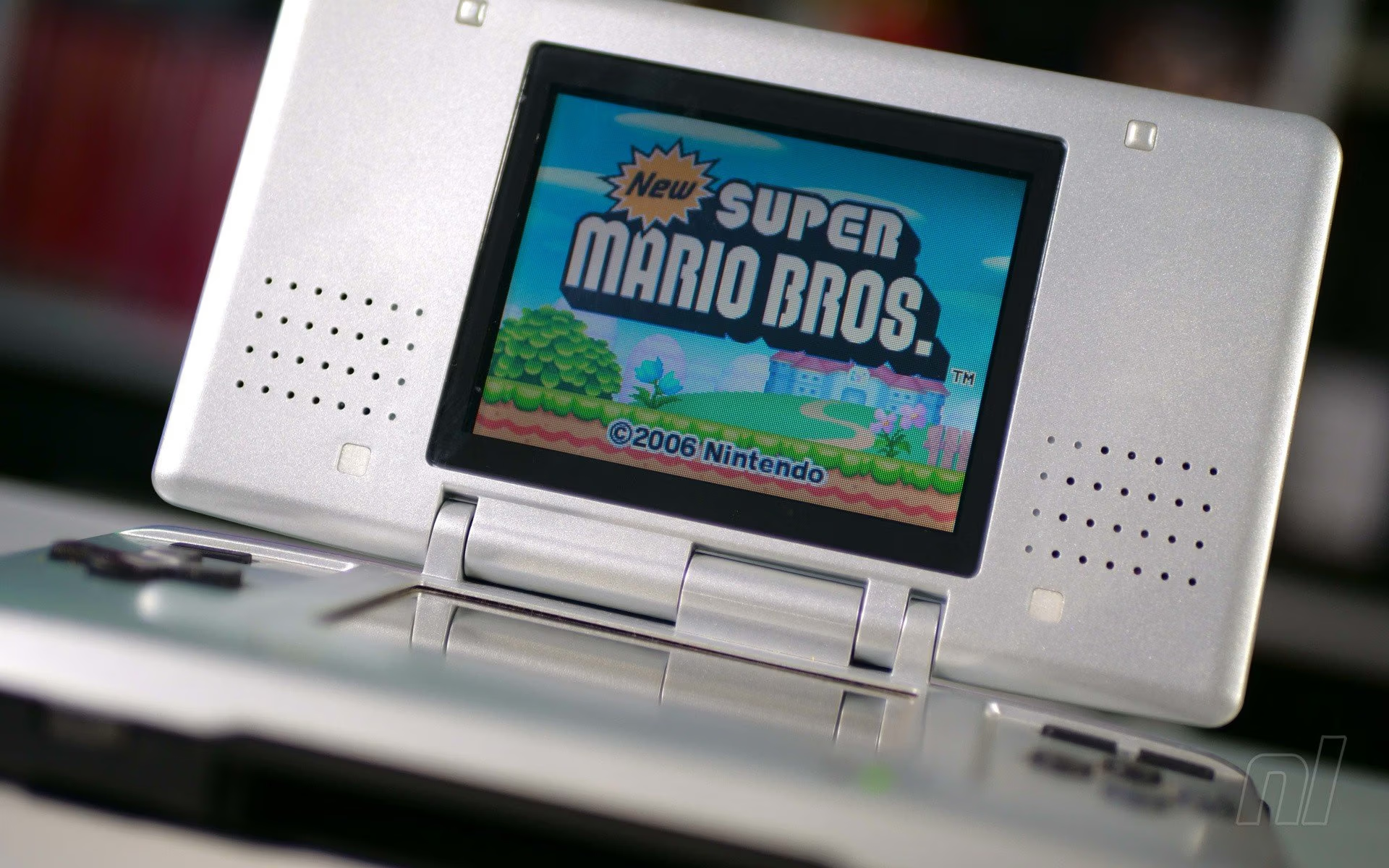
The latest buzz, rippling through the gaming community and tech blogs, centers around a patent filing that strongly suggests Nintendo might be preparing to reintroduce us to the magic of DS games on a future console. This isn’t just idle speculation; a patent indicates serious research and development, a tangible commitment to exploring a concept. If true, this move transcends mere nostalgia; it could represent a strategic masterstroke, fundamentally altering the launch landscape for their next-generation hardware and providing an unparalleled value proposition from day one.

The prospect of a DS renaissance is a tantalizing one, promising to unlock a treasure trove of unique gaming experiences for a new era. It speaks volumes about Nintendo’s commitment to its legacy while simultaneously looking to the future, potentially merging the best of both worlds in a way only they can achieve.
Decoding the Dual-Screen Dilemma: Bridging the Gap Between Eras
Let’s be clear: we’re talking about a patent, a theoretical blueprint, not a confirmed feature. Patents are often filed for concepts that may never see the light of day, serving as protective measures or exploratory ventures. However, the implications of this particular patent are undeniably fascinating. The Nintendo DS and 3DS families weren’t just popular; they were revolutionary, thanks to their iconic dual-screen setup and ubiquitous touch input. This unique architecture, while defining a generation of handheld gaming and enabling completely new gameplay mechanics, also presents a significant challenge for modern console compatibility. How do you faithfully adapt two screens – one of which is touch-sensitive – onto a single, potentially larger, display?
The Technical Hurdles of Dual-Screen Emulation
Emulating the DS and 3DS poses unique technical challenges that go far beyond simply running older software. Firstly, there’s the aspect ratio and resolution mismatch. The DS had two separate screens, each with a specific resolution and often displaying distinct information crucial for gameplay. Merging these onto a single screen without distortion or sacrificing readability is a complex UI problem. Secondly, and perhaps most crucially, is the touch input. Many DS games, from *Nintendogs* to *The Legend of Zelda: Phantom Hourglass* and *Spirit Tracks*, were entirely built around stylus input on the bottom screen. Simply mapping this to a standard analog stick or button would fundamentally alter, or even break, the game experience. Games like *Elite Beat Agents* or *Trauma Center* are almost entirely touch-based, making direct porting without a touch interface impossible.
Innovative Solutions for a Modern Renaissance
This is precisely where Nintendo’s ingenuity would truly shine. If this patent indicates a serious intent, it suggests they’ve cracked, or are close to cracking, this seemingly insurmountable design hurdle. We could see a range of sophisticated UI solutions:
- Dynamic Split-Screen Display: The most straightforward approach, where both screens are displayed simultaneously on a single, larger display. This could involve various layouts: vertical split, horizontal split, or even a picture-in-picture mode where the “bottom” screen minimizes to a corner, invoked by a button press.
- Contextual Shifting: The console could intelligently detect when the bottom screen’s content is critical and dynamically adjust its prominence, perhaps shifting the main game view to a smaller window while expanding the touch screen for interaction.
- Integrated Touch Panel: The next-generation console’s controller itself might incorporate a small, dedicated touch panel, akin to the Wii U GamePad or even a more advanced version of the Steam Deck’s trackpads, which could act as the “bottom screen.” This would maintain the tactile experience.
- Mobile Device Integration: As the patent hints, perhaps a clever use of the console’s potential new features, like integration with a mobile device (smartphone or tablet) as a separate, secondary touch screen. This would leverage existing technology, reducing hardware cost while delivering the authentic experience. Imagine playing a DS game with your phone acting as the touch screen, connected wirelessly to your console.
The very fact that they are exploring a *patent* for this suggests a deep dive into solving these problems, moving beyond simple emulation to a true integration of the DS/3DS experience into a contemporary console ecosystem. It points to a meticulous approach to preserving the original intent of these games while making them accessible for modern play.
More Than Just Nostalgia: A Strategic Power Play for Launch
The return of DS games would be far more than just a trip down memory lane. While the nostalgia factor is undeniably immense, especially for a generation that grew up with these systems, from a strategic business perspective, this could be an absolute game-changer for Nintendo’s next console launch.
The Immense Power of Nostalgia and a Vast Library
Millions grew up with the Nintendo DS and 3DS, experiencing iconic titles that defined their childhoods and teenage years. Imagine reconnecting with beloved franchises like *Pokémon Diamond/Pearl/Platinum* or *Black/White*, venturing through the quirky mysteries of *Professor Layton*, solving intricate cases in *Ace Attorney*, managing a virtual pet in *Nintendogs*, or improving cognitive skills with *Brain Age*. The dual-screen Zelda adventures, *Phantom Hourglass* and *Spirit Tracks*, used their unique controls to fantastic effect. Even titles like *Fire Emblem: Awakening* on 3DS were pivotal for their respective series. This isn’t just a few Virtual Console titles; it’s a massive, diverse catalog of critically acclaimed, best-selling games that could instantly make a new console a must-have for a staggering range of players, from casual puzzle enthusiasts to hardcore RPG fans.
Addressing the Perennial “Launch Window Drought”
One of the most persistent problems plaguing new hardware launches is the dreaded “launch window drought.” Consumers are often hesitant to invest in a brand-new console that has only a handful of first-party titles and a sparse third-party lineup. We’ve seen this issue impact previous consoles, including Nintendo’s own Wii U, which struggled to build momentum due to a limited early software library. Even highly anticipated consoles from competitors often suffer from a period where there simply aren’t enough compelling games to justify the initial investment, forcing early adopters to wait months for a robust content offering.
By launching a new system with the immediate, out-of-the-box availability of the vast, critically acclaimed DS and 3DS library, Nintendo could effectively circumvent this problem entirely. This provides an instant buffet of content, offering hundreds of hours of engaging gameplay to keep early adopters entertained and engaged while new, next-generation titles are being developed and released. It instantly makes the console a more attractive proposition, guaranteeing value from day one.
A Win for Preservation and Modern Enhancements
For players, this means unprecedented access to gaming history. Physical DS and 3DS cartridges can degrade, and the digital storefronts (like the 3DS eShop) eventually close, making these unique gaming experiences increasingly difficult to access and preserve. Bringing them to a new console ensures that these titles remain accessible and enjoyable for new generations, rather than being trapped on aging, potentially failing hardware. It’s a significant win for game preservation, allowing the legacy of these groundbreaking systems to continue thriving.
Furthermore, such a return wouldn’t just be about emulation; it would open the door for potential modern enhancements. Imagine playing *Ocarina of Time 3D* with upscaled graphics, smoother frame rates, or improved controls that leverage the new console’s capabilities. Quality-of-life improvements such as save states, rewind features, or even community-driven online multiplayer for games that originally only supported local play could breathe new life into these classics. These thoughtful additions could make the experience even better than the original, blending nostalgia with contemporary convenience and performance.
The Future is Bright, and Potentially Dual-Screen
This rumored patent is a potent reminder of Nintendo’s unique position in the gaming world. While many competitors chase raw graphical power and high-fidelity realism, Nintendo consistently innovates on the *experience*. Their success with the Nintendo Switch, a console that prioritizes versatile playstyles and accessible fun over bleeding-edge specs, is a testament to this philosophy. Bringing back DS games wouldn’t just be about leveraging legacy; it would be a testament to their continued commitment to making unique, accessible, and deeply engaging gameplay experiences that transcend technological fads.
It paints a picture of a future where Nintendo’s next console isn’t just a successor in terms of power, but a gateway to the rich, imaginative history of their own pioneering designs. It suggests a console ecosystem that respects its past while boldly stepping into the future, offering unparalleled breadth of content from launch. This blend of innovation, nostalgia, and strategic foresight is quintessential Nintendo, and it reinforces why they remain such a beloved and unpredictable force in the industry.
We’ll have to wait and see if this patent ever materializes into a tangible feature, or if it remains another fascinating “what if” in Nintendo’s storied history. But for now, the prospect alone is enough to spark immense excitement and fuel speculation about a future where our dual-screen dreams might just come true, once again proving that with Nintendo, the only constant is delightful surprise.
Read the original story at Nintendo Life.
What classic Nintendo DS or 3DS game would you be most excited to replay on a new console, and how do you imagine its dual-screen mechanics would adapt to a single or reimagined display?