
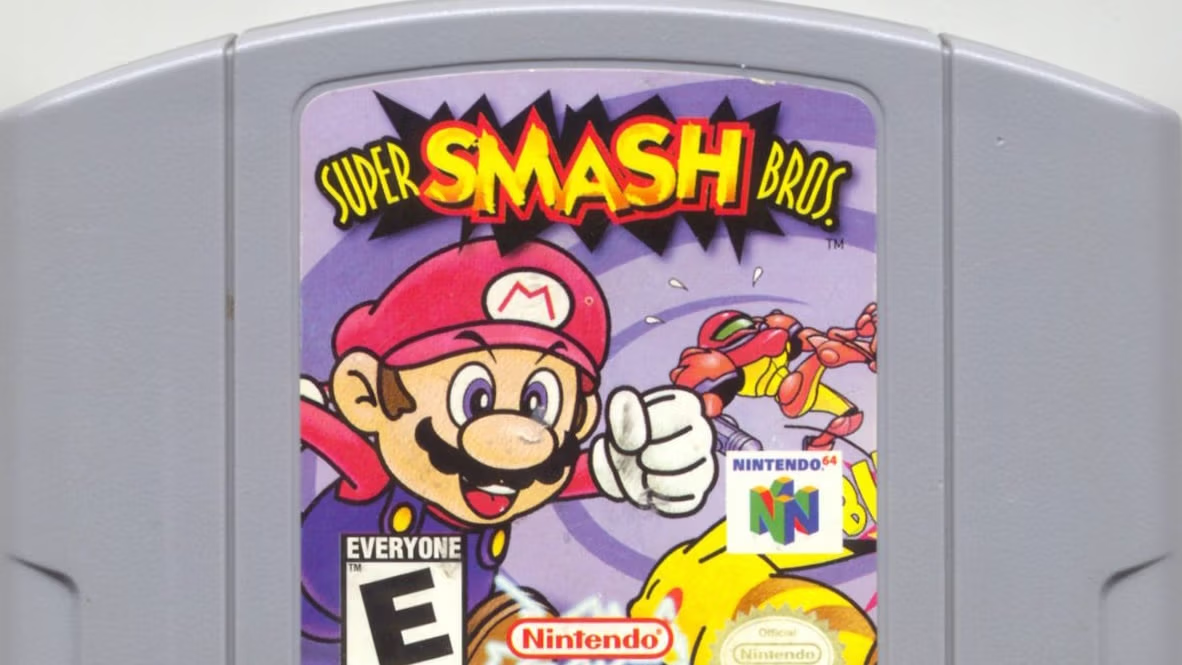
Remember the visceral thunk of an N64 cartridge sliding into the console? The triumphant fanfare of the Super Smash Bros. intro? The booming announcer’s voice urging you to “CHOOSE YOUR CHARACTER!”? For millions, this was the gateway to countless hours of frantic, four-player fun. It’s a core memory etched into the brains of a generation.
But what if that triumphant moment never came? What if you picked your fighter, eagerly hit “Start,” and were met not with the familiar “3, 2, 1, GO!” but with a system crash? For years, this might have been written off as a faulty cartridge or a dusty console.

But thanks to the tireless work of game preservationists, we now know it was something far more deliberate: a brilliant, 25-year-old prank left by Nintendo’s developers for pirates.
The Perfect Bait-and-Switch
Recently, the video game preservation group Forest of Illusion, sifting through a leak of the original Super Smash Bros. source code, unearthed a clever piece of anti-piracy code. It’s not your typical, blunt-force “This is an illegal copy” message. Oh no, that would be far too simple.
Instead, Nintendo’s approach was a masterclass in psychological warfare.
A pirated copy of Smash 64 would load up just fine. The menus would work. The music would play. You could navigate to the character select screen and gaze upon the original eight fighters. You could pick Mario, Link, or Pikachu, assign controllers, and get hyped for the match. The game lulls the pirate into a false sense of security, making them think their illicit copy works perfectly.
Then, the moment they try to start the actual game—the entire reason they wanted it in the first place—the system crashes. Every single time. It’s the digital equivalent of a perfectly timed prank, designed not just to stop piracy, but to maximize the pirate’s frustration.
The Art of Creative Anti-Piracy
This discovery is more than just a funny bit of trivia; it’s a window into a bygone era of game development. Before the days of always-online DRM and invasive server-side checks, developers often fought piracy with creativity and a bit of playful cruelty.
This Smash Bros. trick belongs in the hall of fame alongside other legendary examples. Think of Earthbound, which would let pirates play the entire, lengthy RPG only to crash the game and delete their save file during the final boss battle. Or the modern classic, Game Dev Tycoon, which punishes pirates by having their in-game studio go bankrupt… because their games are being pirated.
These methods weren’t just security measures; they were an art form. They were a developer’s personal, coded message to those trying to steal their work. They were clever, bespoke traps that respected the player’s intelligence enough to outsmart them, rather than simply locking them out with a digital sledgehammer.
What This Means for Gaming’s Past and Future
The fact that we’re only discovering this now, a quarter-century after the game’s release, is a testament to the importance of digital archaeology. As source code and development assets for classic games surface, we’re peeling back layers of history and learning more about the creators and the challenges they faced. Every line of code tells a story, and this one reveals a development team with a sharp wit and a clever solution to a persistent problem.
It also serves as a stark contrast to today’s anti-piracy landscape. Modern DRM is often criticized for being a blunt instrument, sometimes even punishing legitimate players with performance issues or restrictive online requirements. Looking back at Nintendo’s elegant little trap in Smash 64, you can’t help but feel a little nostalgic for a time when the cat-and-mouse game between developers and pirates felt more like a clever chess match than a brute-force war.
This little ghost in the machine reminds us that the games we love are full of secrets, not just in their worlds, but in their very DNA. And it proves, once and for all, that nobody holds a grudge quite as gracefully—or as hilariously—as Nintendo.
What’s your favorite creative anti-piracy measure from gaming history, or what kind of clever trick would you hide in your own game?
Read the original story at Kotaku.