The Hypothetical October 2025: Gaming’s Future Battlegrounds Explored
Picture this: autumn leaves falling, the air crisp, and your gaming console glowing with an impossible dilemma. Not just one, but a veritable avalanche of highly anticipated, triple-A titles all dropping within the same few weeks. While it sounds like a gamer’s fever dream – or perhaps a nightmare for their wallet – a recent speculative dive from Kotaku dared to imagine just such a scenario: a hypothetical October 2025 so stacked it could rewrite the record books for industry competition and player choice. This thought experiment isn’t just about specific titles; it’s a profound look into the evolving dynamics of game releases, marketing strategies, and consumer behavior in a hyper-competitive market.
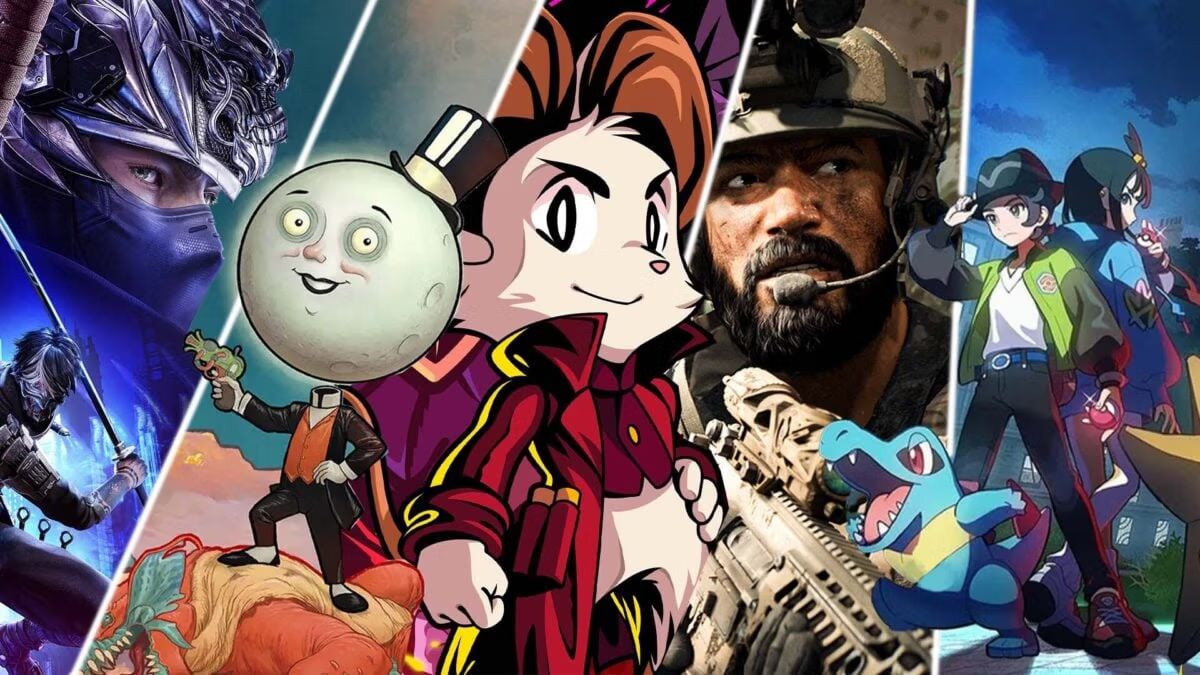
At the heart of this imagined future lies a clash of titans, emblematic of the broader gaming industry trends. We’re talking the next evolution of a military shooter behemoth, potentially Battlefield 6 (or whatever its designation might be), going head-to-head with the groundbreaking open-world ambition of a new Pokémon Legends title. And that’s just the tip of the iceberg, with other beloved, if sometimes more niche, franchises like Ninja Gaiden also penciled in. On the surface, it’s a playful “what if” that sparks immediate excitement and trepidation among players — but beneath the surface, it illuminates some profound truths about the trajectory of the gaming industry and the increasing pressures on developers and publishers alike.

The Perils and Promises of a Packed Calendar for Game Releases
The most immediate and striking takeaway from such a hypothetical scenario is the sheer, unadulterated marketing chaos it would unleash. In an industry increasingly defined by meticulously crafted hype cycles, multi-million dollar advertising campaigns, and intense pre-order battles, a month like October 2025, as envisioned, would be less a gaming season and more a gladiatorial arena. Publishers would find themselves in an unprecedented scramble for media attention, influencer endorsements, and precious advertising real estate, likely driving up costs significantly and making it exponentially harder for any single title to dominate the conversation. The “share of voice” would be fractured across multiple giants, diluting the impact of even the most aggressive marketing pushes and making it a challenge for even established brands to maintain top-of-mind awareness among potential buyers.
For players, this presents the ultimate “too many games, too little time (and money)” conundrum. The decision fatigue would be immense, transforming what should be a joyous season into a stressful exercise in prioritization. Do you prioritize the immersive, large-scale warfare and competitive multiplayer of a new Battlefield entry, known for its epic scale and destruction? Or do you delve into the expansive, creature-collecting wonders and exploration of a new Pokémon Legends title, promising innovative gameplay loops and a vast world to uncover? Or perhaps a third, unexpected contender from a different genre entirely, like the fast-paced action of a revived Ninja Gaiden, captures your imagination with its promise of challenging combat and unique narrative? This intense competition for consumer attention means that gamers would be forced to make difficult choices, potentially missing out on excellent titles simply due to limited financial resources, lack of available playtime, or the sheer inability to engage with every compelling release simultaneously.
This hypothetical lineup unequivocally underscores the immense power and critical importance of release scheduling in the modern gaming landscape. Developers and publishers pour hundreds of millions of dollars, countless hours of labor, and years of creative vision into these projects. Their launch window is not merely a date on a calendar; it’s a make-or-break moment that dictates initial sales, shapes public perception, and sets the trajectory for a game’s long-term success, especially for live-service titles that rely on sustained player engagement. A crowded month forces every title to fight exponentially harder for visibility, for coveted review scores that can profoundly sway purchasing decisions, for sustained social media chatter that fuels organic interest, and ultimately, for consumer dollars. It’s a high-stakes gamble where only the most compelling, the most polished, and the most deeply ingrained franchises truly stand a chance of dominating the sales charts and capturing the zeitgeist amidst the overwhelming noise. Strategic timing can be as crucial as the game’s quality itself in securing commercial success.
What Does This Mean for Gaming’s Future? Navigating the Competitive Landscape
If such a concentrated release window were to become a reality, even in part, the implications for the future of the gaming industry are far-reaching and transformative. It would force a rapid evolution in strategy for every stakeholder, from indie developers struggling for a foothold to established platform holders vying for ecosystem dominance.
The Rise of Strategic Diversification in Game Release Schedules
Publishers would increasingly look to diversify their offerings, not just in genre but crucially in how and when they reach players. This could manifest in several ways: we might see more staggered global launches to maximize regional impact and prevent cannibalization of sales; strategic early access periods (both paid and public betas) would become even more critical to build anticipation, gather feedback, and create an engaged community ahead of the official launch. Furthermore, there could be a greater reliance on subscription services, such as Xbox Game Pass or PlayStation Plus Extra/Premium, to soften the initial purchase barrier. Placing a highly anticipated title directly onto a subscription service from day one can instantly provide a massive player base and mitigate the risk of being overshadowed by competing AAA launches. We might also see more experimentation with episodic releases or unique monetization models designed to capture player attention outside of a traditional upfront purchase, spreading out the financial commitment and content delivery over time.
Even Greater Emphasis on Early Buzz and Sustained Hype Cycles
To cut through the unprecedented noise of a packed release month, games will need to generate unprecedented levels of hype and community engagement long before their official release. This means a significant intensification of pre-launch marketing efforts, pushing the boundaries of what constitutes an effective hype cycle. Think early reveal trailers designed to break the internet, innovative and interactive marketing campaigns that involve the community directly, and sustained, transparent community engagement that builds an unshakeable launch-day momentum. Playable demos, extensive beta tests, in-depth developer diaries, and carefully curated influencer partnerships would become even more vital to ensure a game remains top-of-mind amidst the deluge of other announcements and reveals. The goal would be to cultivate a dedicated core audience that is already deeply invested and ready to buy on day one, regardless of other simultaneous releases.
The Double-Edged Sword of Franchise Power and the Challenge for New IPs
While established names like Battlefield and Pokémon undeniably benefit from massive, built-in fanbases and instant brand recognition, a crowded market means even these giants can’t afford to rest on their laurels. The expectation for innovation, graphical fidelity, compelling narratives, and new gameplay mechanics rises with each iteration. Each new entry must justify its existence and deliver substantial evolution to keep players engaged and prevent “franchise fatigue” – a phenomenon where even loyal fans grow tired of similar experiences or feel that incremental updates don’t warrant a full-price purchase. For newer IPs or smaller indie titles, such a crowded landscape becomes an even greater, almost insurmountable, challenge. They are forced to find genuinely unique selling propositions, disruptive gameplay mechanics, or exceptionally strong artistic visions to capture attention or risk being completely overshadowed by the marketing might and established appeal of AAA franchises. Their path to success would rely heavily on viral word-of-mouth, critical acclaim, or a strong, cultivated niche appeal over time.
Player Behavior Shifts: Towards More Selective and Considered Game Acquisition
In a world of abundant choice and limited resources, gamers might become significantly more selective and strategic in their purchasing habits. The immediate “must-buy day one” impulse, while still present for highly anticipated titles, could be tempered by the sheer volume of choices and the increasing financial burden. Players might increasingly wait for comprehensive reviews from trusted sources, digital sales events, or even the eventual inclusion of games in subscription services before committing their hard-earned money and precious gaming time. This shift could lead to a more considered, less impulse-driven approach to game acquisition, where value, longevity, and community feedback play a larger role in decisions. The infamous “backlog” of unplayed games would only grow larger, further influencing future purchases as players prioritize clearing existing commitments before diving into new ones, potentially delaying sales for many titles.
The Continued Digital Dominance Facilitates and Intensifies Competition
While physical releases will likely persist for collectors and specific markets, a packed digital storefront makes it significantly easier for players to jump between multiple new titles without ever leaving their couch. This unparalleled convenience of digital distribution facilitates the “avalanche” scenario by removing traditional logistical constraints like physical manufacturing, shipping, and shelf space limitations that once spread out releases. However, this convenience doesn’t solve the fundamental problem of time constraints; in fact, the ease of access only intensifies the competition, as every game is just a few clicks away from being directly compared against its rivals. This continued digital dominance also means publishers have more direct control over pricing, distribution, and promotional events, allowing for dynamic strategies to navigate crowded windows, but also placing a greater emphasis on discoverability within crowded digital marketplaces.
The Kotaku piece, while a fun and insightful thought experiment, serves as a fascinating lens through which to view the future of our industry. It highlights the eternal dance between developer ambition to create groundbreaking experiences, publisher strategy to maximize reach and revenue, and player desire for compelling entertainment that respects their time and money. Whether October 2025 looks exactly like this imagined scenario or not, the underlying pressures – the demand for bigger, better, and more frequent experiences – will undoubtedly continue to shape the gaming landscape for years to come. The only certainty is that the battle for our attention (and our wallets) will only intensify, making strategic planning and genuine innovation more critical than ever.
Read the original story at Kotaku.
Given the potential for such a packed release schedule, how would you prioritize your game purchases and playtime, and what strategies do you think developers should adopt to stand out in a hyper-competitive market?