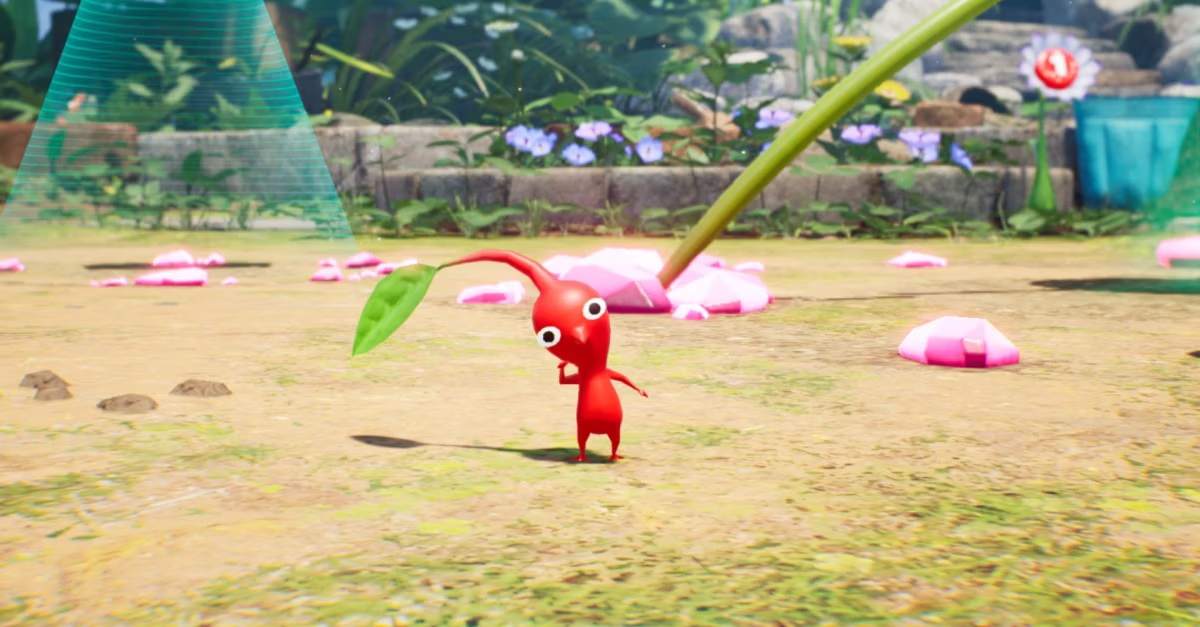
For weeks, the internet buzzed with theories. Nintendo had dropped a cryptic video titled “Close To You,” a beautifully shot, slightly unsettling sequence of everyday objects from an unfamiliar, ground-level perspective. Was it a new Switch model? A groundbreaking new IP? A philosophical statement on scale and perspective? The hype machine was in full swing, fueled by pure, unadulterated mystery. The internet was alight with speculation, dissecting every frame, analyzing every shadow, and debating what this enigmatic glimpse into a miniature world could possibly portend for the gaming giant.
But this wasn’t just a marketing campaign for Pikmin. It was Pikmin. The genius of Nintendo’s approach, as revealed through subsequent announcements, wasn’t merely using a viral video to build anticipation for Pikmin 4. It was embedding the very essence of the game within the marketing itself. The tiny, unassuming figures we saw navigating gigantic staplers and forgotten coins? Those were Pikmin. The vast, overgrown landscapes? Our very own backyards, seen through the eyes of an alien, miniature explorer. This wasn’t just a trailer; it was an immersive preamble, reframing an entire franchise and offering a masterclass in how to build genuine, resonant hype, transforming passive viewers into active participants in the mystery.

This particular campaign offered a profound demonstration of how to transcend conventional marketing. It didn’t just showcase gameplay; it delivered a palpable feeling, a tangible experience of the game’s core premise, long before players ever picked up a controller. By placing us directly into the shoes – or rather, the tiny, multi-faceted eyes – of a Pikmin, Nintendo didn’t just build excitement; they cultivated a deep, empathetic connection to the game’s world and its unique perspective. It transformed the reveal from a simple announcement into a shared discovery, an “aha!” moment that resonated deeply with both long-time fans and curious newcomers alike.
Beyond the Obvious: A New Paradigm for Game Marketing
Nintendo’s “Close To You” campaign for Pikmin 4 didn’t just achieve viral status; it redefined what’s possible in game promotion. It moved beyond the traditional unveilings of cinematic trailers and gameplay demos, instead opting for a strategy that blurred the lines between marketing and an actual playable experience. This “Pikmin-perspective marketing” offers a blueprint for developers aiming to forge deeper connections with their audience and unlock a new dimension of hype.
The Power of Immersive Storytelling
One of the most profound takeaways from Nintendo’s campaign is the immense power of immersive storytelling in game marketing. They didn’t just tell us about Pikmin; they made us experience it, however briefly, through the beautifully crafted “Close To You” video. This goes far beyond typical teasers that merely show glimpses of gameplay or cinematic cutscenes; it’s about crafting a sensory prelude that brings players into the world before they even press start. By inviting us into the game’s unique perspective before the full reveal, they created a deeper, more visceral connection to the upcoming title.
Imagine the possibilities if other developers were to adopt this groundbreaking strategy. A horror game, for instance, could tease its atmosphere not through jump scares, but through a bespoke, interactive audio experience that uses binaural sound to simulate the chilling whispers and distant creaks of its haunted setting, or a haptic feedback demonstration that allows players to feel the subtle vibrations of a monstrous presence approaching. For a racing game, a pre-launch experience might involve a carefully designed haptic feedback system that allows users to feel the distinct rumble of a high-performance engine, the subtle resistance of the steering wheel on different terrains, or the exhilarating G-forces of a sharp turn, all without seeing the full vehicle or track. This kind of experiential marketing pushes the boundaries from passive consumption to active, sensory engagement, creating a memory and an anticipation that traditional trailers simply cannot replicate.
This approach transforms a simple advertisement into an integral part of the game’s narrative journey. It creates a “proof of concept” for the game’s central mechanics or atmosphere, demonstrating its unique selling points in an unforgettable way. Players aren’t just told the game is immersive; they are given a taste of that immersion directly, fostering a genuine excitement that stems from personal connection rather than just visual spectacle. It leverages curiosity and human intuition, inviting the audience to solve a puzzle and then rewarding them with a brilliant, satisfying reveal, making the eventual gameplay even more resonant.
Elevating Existing IPs
The “Close To You” campaign didn’t just build hype for a new game; it effectively breathed new life and a fresh narrative dimension into Pikmin, a beloved but perhaps less mainstream Nintendo franchise. This demonstrates a crucial strategy for elevating existing IPs, especially those that might be considered niche or have been dormant for some time. It subtly reminded us of the series’ core concept – miniature aliens navigating a colossal human world – in a way that felt both fresh and profoundly insightful, even to long-time fans.
Instead of merely announcing “Pikmin 4 is coming, here are better graphics,” Nintendo opted to recontextualize the entire series. They reminded players of the unique perspective the franchise offers, making the familiar feel novel again. This strategy could be an invaluable blueprint for revitalizing or reintroducing other cherished, perhaps dormant, IPs across the industry. Imagine a classic adventure game re-marketed with a campaign that subtly explores its lore from a previously unseen perspective, sparking conversations and reigniting interest without relying solely on nostalgic appeal.
For developers looking to bring back a beloved franchise, this means moving beyond a simple graphical update or a direct sequel. It’s about finding the core, unique essence of that IP and presenting it in a way that feels both reverent to its origins and fresh for a contemporary audience. By reframing the narrative, showcasing a unique design philosophy, or even inviting players to interact with a fragment of the game’s universe in an unexpected way, developers can spark renewed curiosity in long-time fans and simultaneously intrigue a completely new generation of players. This approach not only builds anticipation for the next installment but also reinforces the enduring legacy and unique charm of the entire franchise, ensuring its continued relevance in a crowded market.
The Art of the Slow Burn
In an era of immediate gratification, relentless social media trends, and constant leaks, Nintendo chose ambiguity and a gradual unfolding, a strategic technique best described as “the art of the slow burn.” They trusted their audience to engage with the mystery, to speculate, and ultimately, to have that satisfying “aha!” moment when the Pikmin reveal finally arrived. This deliberate pace, far from causing frustration, amplified the eventual reveal, making it incredibly impactful and truly memorable.
This approach stands in stark contrast to the modern trend of bombarding audiences with information and immediate gameplay showcases. By withholding direct information and instead offering a cryptic, visually compelling experience, Nintendo tapped into a fundamental human desire for discovery and problem-solving. The community-driven speculation, the shared theories across forums and social media, became an integral part of the marketing campaign itself. This communal puzzle-solving built a profound sense of investment among potential players, transforming passive viewers into active investigators.
The slow burn tactic suggests that sometimes, the most effective marketing isn’t the loudest or most direct, but the one that allows a narrative to unfurl organically, rewarding patience with genuine insight and a profound sense of satisfaction. It proves that mystery, when expertly crafted and strategically deployed, can be a far more powerful marketing tool than overt promotion. It creates a vacuum of information that users are compelled to fill with their own theories, fostering a deeper engagement and ultimately making the payoff of the reveal all the more potent and celebrated. This kind of marketing isn’t just about selling a product; it’s about crafting an experience around the product that begins long before its release.
The “Close To You” video and its Pikmin revelation isn’t just a footnote in gaming history; it’s a testament to Nintendo’s unique blend of creativity and business acumen. It reminds us that at its best, game marketing isn’t just about selling a product; it’s about extending the game’s magic, building anticipation that’s as fulfilling as the gameplay itself, and proving that even the most miniature of creatures can inspire the grandest of narratives. It’s a peek into a future where the line between game and promotion blurs, creating experiences that are memorable long before the cartridge even hits the console, fostering a deep connection and genuine excitement that lasts.
Read the original story at The Verge.
What other video game marketing campaigns have successfully created this kind of immersive, slow-burn hype for you?