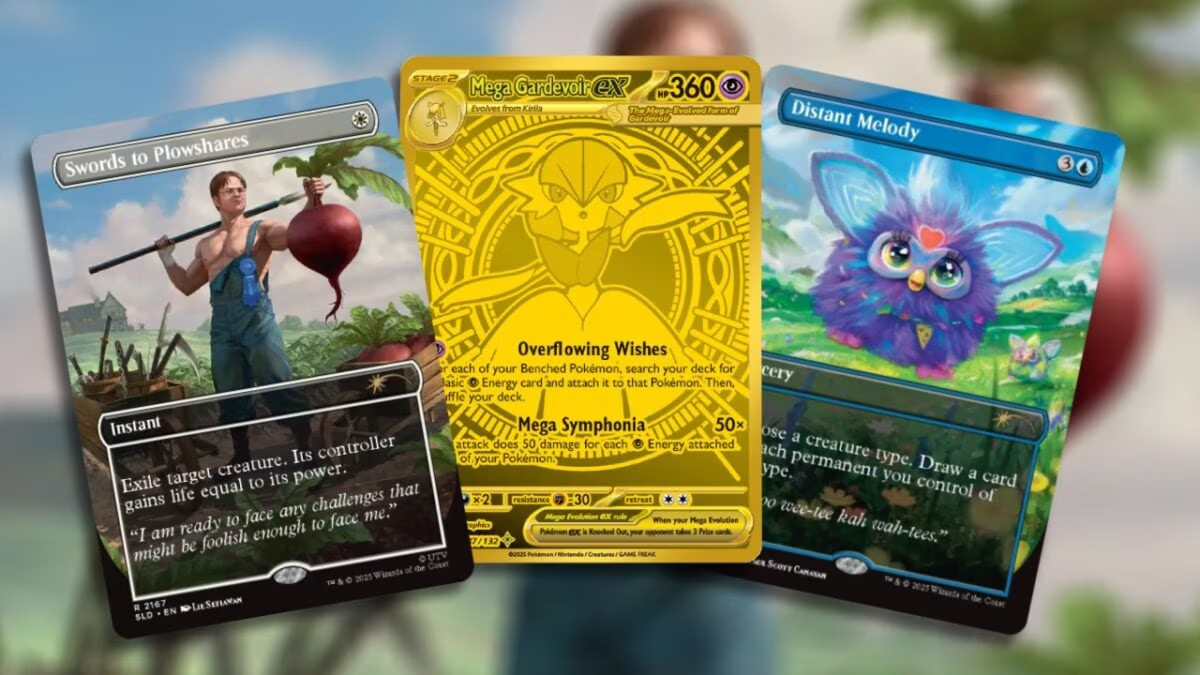
For decades, games like Pokémon and Magic: The Gathering have done more than just entertain; they’ve built vibrant communities, sparked countless imaginations, and introduced players of all ages to the joys of strategic thinking, collecting, and social interaction. From the electrifying thrill of pulling a rare foil card to the comforting camaraderie found at a local game store, these physical card games are much more than mere pastimes—they are cultural touchstones for millions around the globe. Yet, beneath the surface of record-breaking sales figures and ever-increasing hype cycles, a silent but profound crisis is brewing, one that threatens to sever an entire generation from these beloved and formative experiences.
The insidious culprit behind this looming crisis isn’t a waning interest in the games themselves; quite the opposite, in fact. Instead, it’s a pervasive and deeply frustrating phenomenon: the widespread rise of the opportunistic reseller, often pejoratively called “scalpers.” We are talking about individuals who, often armed with sophisticated bots and an unwavering singular focus on maximizing profit, systematically snap up every new release, every booster pack, and every essential starter deck the very moment it hits physical or digital shelves. This isn’t about the healthy and legitimate secondary market that exists for genuinely rare and collectible single cards; rather, it’s about a calculated strategy that actively denies basic accessibility to the very products designed for everyday play, casual enjoyment, and—most critically—new player entry.

Imagine the scene: a child, eyes wide with genuine excitement and anticipation, eagerly walks into their local retail store, clutching allowance money, hoping to finally buy their very first Pokémon deck and begin their journey. Only to find the shelves perpetually barren, picked clean by unseen forces. Or picture a curious teenager, inspired by friends already engrossed in the strategic depths of Magic: The Gathering, wanting to dip their toes into the game, but facing exorbitant markups of two, three, or even four times the retail price on essential introductory products from online scalpers. This isn’t a hypothetical, exaggerated scenario; it is, unfortunately, the increasingly lived experience for a growing number of aspiring players and their exasperated parents who simply want to participate in a wholesome hobby.
This persistent issue transcends mere inconvenience; it represents a systemic threat to the long-term viability and health of these iconic franchises. The very essence of a successful, enduring game franchise lies in its inherent ability to consistently replenish and expand its player base. A steady influx of new blood brings fresh perspectives, injects vitality into competitive scenes, ensures a diverse and thriving community, and fundamentally fuels future growth and innovation. When the entry point to a game becomes an invisible, yet effectively insurmountable, barrier constructed of artificial scarcity and grotesquely inflated prices, that vital pipeline of new players inevitably dwindles and eventually dries up.
The Invisible Barrier to Entry: How Scalping Threatens the Future of Tabletop Gaming
The problem of scalping creates an insidious barrier to entry, particularly for younger players and those new to the hobby. Unlike existing collectors or competitive players who might have established networks or deeper pockets for the secondary market, new players often rely on the retail experience—walking into a store and buying a product at its intended price point. When this fundamental pathway is blocked, the ripple effects are profound. These games thrive on community, on face-to-face interaction, and on the shared experience of learning and playing together. Without easy access to foundational products, the chance for these vital community bonds to form is severely hampered.
Long-Term Implications: A Generation Lost to Scarcity
Consider the devastating long-term implications. If a child cannot find an affordable starter pack, they cannot learn the basic rules of the game. If they cannot learn to play, they won’t develop an attachment to the characters, the lore, or the strategic depth that makes these games so engaging. Consequently, they won’t become the next generation of dedicated collectors who invest heavily in rare cards, the competitive players who sustain the professional circuits, or the passionate community organizers who foster local play groups and events. Instead, facing frustration and disappointment, they are far more likely to drift towards readily accessible digital games—which, while enjoyable, often lack the tactile satisfaction and the unique local community aspect of physical card games—or simply abandon the idea of tabletop gaming altogether for other hobbies. The magic, quite literally, is lost before it can even begin to enchant.
This erosion of the new player pipeline isn’t just a concern for the companies; it’s a concern for the entire ecosystem of local game stores, content creators, event organizers, and ultimately, the existing player base itself. A shrinking pool of new players means less diverse strategies, less vibrant local scenes, and eventually, a decline in overall interest and innovation. It’s a slow burn, but the consequences are irreversible once a generation is effectively locked out.
What Does This Mean for the Future? Players vs. Speculators
This escalating issue forces industry giants like The Pokémon Company International and Wizards of the Coast (the venerable creators of Magic: The Gathering) to confront a fundamental and uncomfortable question: Are their games primarily designed and produced for players, or for speculators? While a strong collector value can certainly signal a healthy and desirable brand, when that value becomes so inflated and predatory that it completely overshadows basic accessibility, it risks cannibalizing the very foundation of the game itself—its player base. The perceived value of a brand can quickly sour into resentment if its products become perpetually out of reach for its core audience.
The future of these cherished franchises demands a serious and urgent rethink of current strategies and priorities. This could manifest in several crucial ways, each with its own set of challenges and potential benefits:
Rethinking Distribution Models and Enforcing Purchase Limits: Companies might need to fundamentally re-evaluate their entire distribution network. This could involve exploring new direct-to-consumer (DTC) models that prioritize actual players over bulk buyers, perhaps through verified accounts or lottery systems. Implementing robust and actually enforced purchase limits at all retail points, both online and brick-and-mortar, is crucial. This might involve requiring ID verification for larger purchases or linking purchases to loyalty programs to identify and restrict known scalpers. Distributing more product directly to trusted local game stores, which are community hubs and often better equipped to identify and serve their player base, could also be a vital step. The goal here is to ensure that products land in the hands of those who intend to play, not just flip.
Increased Print Runs (and Associated Risks): Flooding the market with significantly larger print runs of popular sets, especially entry-level products like starter decks and booster boxes, could directly address the scarcity issue. By making products widely and consistently available, the artificial price inflation driven by scalpers would naturally deflate. However, this strategy carries inherent risks. An oversupply could potentially devalue existing collections, leading to upset among long-term collectors and investors who have a vested interest in the scarcity and rising value of their cards. It’s a delicate and intricate balance between satisfying the demand of new players and maintaining the perceived value for the established collector base.
Digital as the Default or Primary Entry Point: If physical products continue to be excessively difficult or prohibitively expensive to acquire, an increasing number of potential players may simply opt for the digital versions of these games, such as Pokémon TCG Live or Magic: The Gathering Arena. While these platforms offer a convenient and accessible way to engage with the game mechanics and strategy, they fundamentally offer a different kind of engagement. Digital play, while valuable, doesn’t fully replicate the tactile joy of shuffling a physical deck, the excitement of physically opening a booster pack, or the invaluable face-to-face social interaction and local community aspect that has always been a cornerstone of physical card games. Relying too heavily on digital could inadvertently diminish the unique cultural value of the physical products.
Brand Erosion and Loss of Goodwill: Ultimately, if the pervasive frustration and disappointment among aspiring players and their parents persist, it will inevitably chip away at the immense goodwill these beloved brands have meticulously cultivated for decades. The inherent joy and excitement associated with opening a new pack, discovering a powerful card, or engaging in a friendly game with friends is slowly but surely replaced by exasperation, resentment, and a profound sense of exclusion. This sustained negativity can lead to irreparable brand erosion, making it significantly harder to attract future generations of players, even if the accessibility issues are eventually resolved.
The passion, creativity, and innovative game design poured into these incredible games deserve a fair chance to reach the hands of players, especially the new ones who represent the lifeblood of the hobby. The profound challenge for these industry giants isn’t merely about designing compelling new sets or introducing groundbreaking mechanics; it’s about safeguarding the very future of their communities against external forces that prioritize short-term profit over the enduring joy and playability that built these empires. If they fail to adequately address this crisis, we might just look back and lament that an entire generation of potential players slipped through our fingers, forever denied the magic of tabletop gaming.
Read the original story at Kotaku.
What are your thoughts on the reseller crisis in tabletop gaming? Have you or someone you know been impacted by the struggle to find products at retail price? Share your experiences in the comments below!