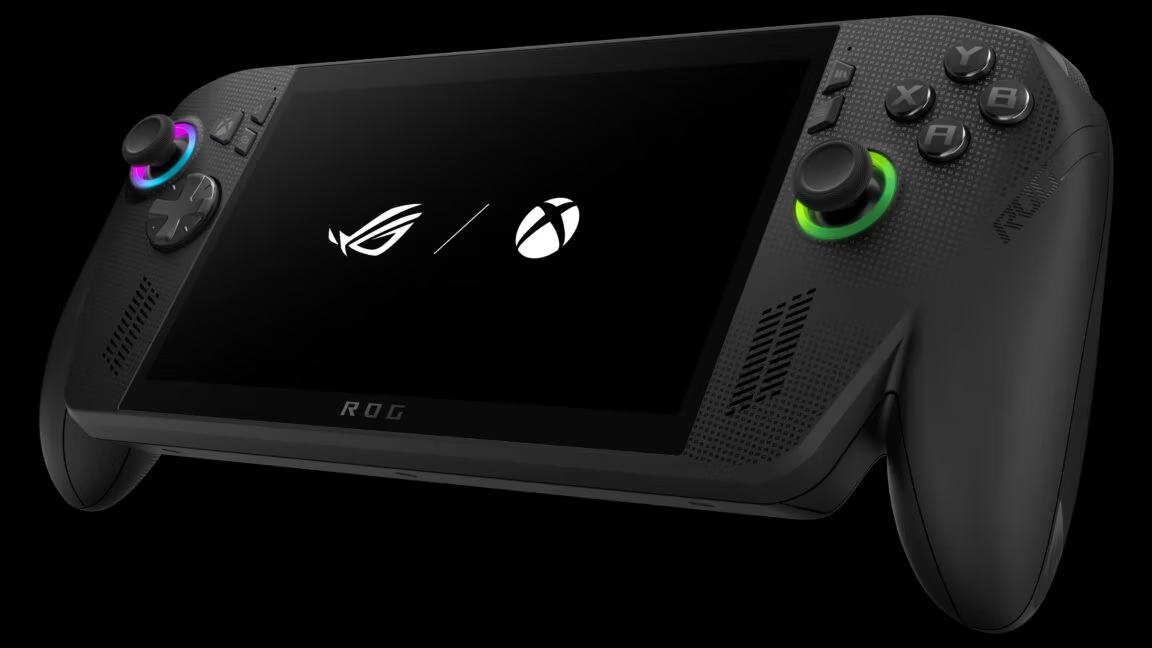
The world of portable gaming PCs has been a whirlwind of innovation, nostalgia, and a dash of delightful chaos. Before the Steam Deck ignited the modern handheld renaissance, niche devices like the GPD WIN and AYA NEO offered glimpses into this future, catering to enthusiasts willing to compromise on ergonomics or performance. However, it was Valve’s bold entry that truly catapulted the segment into the mainstream consciousness, demonstrating the immense demand for high-fidelity PC gaming on the go. Following closely, ASUS threw its hat into the ring with the original ROG Ally, a powerful Windows-based contender that promised even greater versatility and raw horsepower. This rapid evolution, characterized by quick iterations and ambitious features, has set the stage for the next generation of devices, continuously pushing the boundaries of what’s achievable in a compact form factor.
Now, with the intense buzz surrounding the highly anticipated ROG Xbox Ally X – amplified by early insights like those from Ars Technica – it’s abundantly clear that we are not just witnessing another minor update, but rather entering a new, more refined, and ultimately more mature era for handheld gaming. The industry is moving beyond the initial excitement of “can it run games?” towards a meticulous focus on “how flawlessly and enjoyably can it run them, and for how long?” This significant shift indicates a substantial investment from manufacturers who are listening intently to community feedback and striving for perfection in this burgeoning market, addressing both performance and crucial quality-of-life improvements.

While we haven’t yet delved into the full details of Ars Technica’s comprehensive review – which many expect to be a deep dive into every aspect of this new machine – the very existence and deliberate moniker of the “ROG Xbox Ally X” speaks volumes about the strategic direction this burgeoning market is headed. It’s not merely about pushing raw specifications; it’s about a concerted, holistic effort to perfect the entire portable PC gaming experience, from battery life and software stability to ergonomic comfort and deep ecosystem integration. The “X” isn’t just a letter; it’s a promise of an elevated, more complete device, engineered to overcome the previous generation’s limitations and set new benchmarks for what a Windows handheld PC can achieve.
Key Takeaways (Inferred from the “X” Factor)
1. Maturation, Not Just Iteration
The “X” in a product name, particularly within a tech refresh cycle, typically signifies much more than a minor spec bump or a slight aesthetic tweak. It suggests a profound refinement, a ‘second pass’ at a concept, often directly addressing the core pain points and most common criticisms of its predecessor. For the original ROG Ally, these concerns were frequently centered around its less-than-stellar battery life, which often left users tethered to power outlets during longer gaming sessions, limiting its true portability. Software stability, particularly with ASUS’s custom Armoury Crate SE overlay, was another significant area flagged for improvement, with users reporting occasional glitches, performance inconsistencies, and a sometimes clunky user interface that detracted from the console-like experience. Beyond these, subtle ergonomic tweaks, improved haptic feedback, or even enhanced button durability were also on many wish lists, reflecting a desire for a more premium and robust build quality.
Given this context, we can confidently infer that the Ally X likely comes to the table with a substantial boost in endurance, potentially featuring a much larger battery pack – a critical upgrade for any portable device aiming for true freedom and extended playtime away from a charger. Alongside this, expect a more polished and intuitive user interface through a heavily optimized Armoury Crate SE, designed to make game launching, performance profile adjustments, and system settings a seamless and reliable experience. Furthermore, it’s highly probable that this new handheld PC will incorporate upgraded components that not only push performance boundaries for demanding modern titles but also prioritize efficiency, allowing for better performance per watt and contributing to that crucial battery longevity. This isn’t just Ally 1.5; it’s a bold statement of ASUS’s unwavering commitment to the platform’s long-term viability and its ambition to deliver a truly premium portable gaming solution that feels complete and ready for prime time.
2. The “Xbox” Integration: A Strategic Alignment
The inclusion of “Xbox” directly within the product’s official name is arguably the most intriguing and strategically significant aspect of the ROG Xbox Ally X. It is highly unlikely to signal a departure from the open, versatile Windows operating system, which remains a core strength of PC handhelds, offering unparalleled game compatibility and software flexibility across various launchers like Steam, Epic Games Store, and GOG. Instead, the branding points towards a deeper, more profound, and utterly seamless integration with Microsoft’s sprawling gaming ecosystem. Imagine a device truly optimized from the ground up for Xbox Game Pass, with a user experience that feels less like a portable Windows PC trying to emulate a console, and more like a dedicated, purpose-built Xbox gaming machine that *just so happens* to run the full power of Windows under the hood.
This enhanced integration could manifest in several exciting ways: perhaps through enhanced UI overlays that prioritize Game Pass libraries and cloud streaming options, offering instant access to hundreds of titles. It could also include dedicated Xbox-branded buttons on the device itself that offer instant access to key Xbox features like party chat, achievements, or even directly launching into the Game Pass application without navigating through multiple menus. Crucially, it could also involve bespoke software optimizations at a system level, working in tandem with the hardware to ensure that jumping into Game Pass titles – whether locally installed or streamed via Xbox Cloud Gaming – is an absolute breeze, offering console-like simplicity and reliability. This is not just a marketing ploy; it’s a strategic move designed to leverage Microsoft’s vast, ever-growing game library and robust cloud infrastructure directly into a powerful, premium portable form factor, giving the Ally X a distinct competitive edge against other Windows handhelds and even the Steam Deck, particularly for those deeply embedded in the Xbox ecosystem.
3. Focus on Longevity and User Experience
An “X” model, especially one following a successful but critiqued initial release, often signifies a design that has been put through the wringer, extensively tested, and refined with direct user feedback as a guiding principle. This implies a rigorous focus on aspects that directly impact the long-term enjoyment and reliability of the device. Expect significant improvements in overall durability, potentially through higher-quality build materials, reinforced chassis elements, or more robust ports (like USB-C) that can withstand the rigors of frequent travel, charging, and intensive use. Enhanced cooling solutions are also a strong possibility, moving beyond simply functional to actively extending component lifespan and maintaining peak performance during extended gaming sessions, perhaps with more efficient vapor chambers, redesigned heat pipes, or fan arrays that are both quieter and more effective, preventing thermal throttling.
Furthermore, the user experience extends directly to the interaction points: this could mean higher-quality displays, perhaps incorporating cutting-edge OLED technology for superior contrast, true blacks, and vibrant colors, or offering higher refresh rates for smoother, tear-free gameplay. More tactile and durable controls, including improved joysticks (potentially with Hall Effect sensors to combat dreaded drift, a common issue in handhelds), more responsive triggers, and better-feeling, more robust buttons, are also likely areas of focus to enhance the gaming experience. The handheld PC market is rapidly moving past the rudimentary “can it run games?” phase towards a more sophisticated and demanding inquiry: “how *well*, how *comfortably*, and for *how extended a period* can it run them, providing a truly premium and reliable experience?” The ROG Xbox Ally X aims to answer these questions decisively, cementing its place as a top-tier portable gaming PC that prioritizes the user at every touchpoint.
What This Means for the Future
The Handheld PC is Here to Stay – and Grow Up
The launch of the ROG Xbox Ally X, particularly with its refined approach and strategic branding, unequivocally signifies that the handheld PC segment is far from a passing fad. This category is not only here to stay but is actively maturing at an accelerated pace, proving its long-term viability. Manufacturers like ASUS, Valve, Lenovo, and MSI are investing heavily in research and development, rapidly iterating on designs, and, critically, listening intently to their vibrant and vocal communities for continuous improvement. We are witnessing a clear maturation of the product category, moving beyond initial proof-of-concept devices to genuinely sophisticated machines that offer a complete and compelling experience. These aren’t just scaled-down laptops; they are becoming truly compelling as both powerful portable PCs for productivity (given their Windows OS) and dedicated, immersive gaming machines in their own right. This sustained investment and rapid innovation are fostering a healthy competitive environment that ultimately benefits consumers, pushing the boundaries of what’s possible in portable gaming and solidifying the handheld PC as a legitimate and essential part of the gaming landscape.
Ecosystems Will Define the Experience
While raw processing power, efficient cooling, and superior display technology will always remain crucial factors in the competitive handheld PC market, the battleground is increasingly shifting towards the strength and seamlessness of the underlying gaming ecosystem. The Steam Deck, for instance, has carved out an incredibly loyal following thanks to its highly optimized SteamOS, its vast and deeply integrated Steam library, and the Proton compatibility layer that makes Windows games run smoothly, offering a curated, console-like experience. The ROG Xbox Ally X, on the other hand, is clearly aiming to be the premier Windows-based, Game Pass-centric portable experience. By embracing and integrating deeply with Microsoft’s Xbox ecosystem, it provides a compelling proposition for users already invested in Game Pass or those who prefer the broader compatibility and flexibility of the Windows operating system for their entire PC game library across various launchers. This fierce competition between distinct ecosystems – one built predominantly around Steam, the other around Windows and Xbox – will undoubtedly drive intense innovation in software optimization, deep-seated integration, and overall ease of use, ultimately leading to a more diverse and feature-rich selection of devices for consumers.
A Spectrum of Choice
As these portable gaming devices become more refined and specialized, we’ll likely see an even clearer delineation in the market, allowing consumers to choose a device that perfectly aligns with their priorities and preferred gaming ecosystem. On one end, there will be the highly optimized, curated experience exemplified by the Steam Deck, offering a console-like simplicity and a deeply integrated software environment tailored specifically for gaming. On the other end, powerful, versatile, yet perhaps more open Windows-based options like the Ally X will cater to users who demand maximum flexibility, broader software compatibility (beyond just games), and direct access to their entire PC game library across various launchers. The prominent “Xbox” branding helps the Ally X carve out its distinct niche, making the choice significantly clearer for consumers who prioritize seamless access to Xbox Game Pass titles, the broader Windows gaming ecosystem, or who simply prefer the familiarity and versatility of the Windows operating system for all their portable computing needs, from gaming to light productivity. This burgeoning spectrum ensures that there’s a perfect handheld PC for virtually every type of gamer, catering to different preferences and budgets.
Closer Convergence of PC, Console, and Cloud
The ROG Xbox Ally X, particularly with its explicit “Xbox” branding and Windows foundation, blurs the lines between traditional PC gaming, console gaming, and cloud-based experiences even further than before. It represents a powerful, hybrid device that can effortlessly tap into the full breadth of PC gaming – from Steam to Epic Games Store to GOG, allowing users to consolidate their entire digital library – while also providing a potentially superior portable gateway to the Xbox console experience through Game Pass, mimicking a dedicated Xbox handheld. Furthermore, its inherent PC nature means it can seamlessly leverage cloud streaming services, including Xbox Cloud Gaming and GeForce Now, for demanding titles, effectively extending its playable library beyond local hardware limitations and future-proofing its capabilities without needing local hardware upgrades. This profound convergence means more ways to play games, unprecedented access to a vast array of titles regardless of platform, and a future where the question of “where you play” becomes far less restrictive and more fluid than “what you play.” It signifies a new era where your entire gaming library, spanning multiple platforms and generations, can truly be at your fingertips, wherever you are.
The ROG Xbox Ally X isn’t just another handheld; it’s a profound testament to the industry’s burgeoning commitment to and belief in the future of portable gaming. It promises a more polished, more integrated, and ultimately more compelling experience that will undoubtedly shape the next wave of innovation in a market that shows no signs of slowing down. Its strategic positioning, coupled with expected hardware and software refinements, marks it as a pivotal device that could truly define the next generation of handheld PC gaming, solidifying its place as a formidable contender.
Read the original story at Ars Technica.
What are your thoughts on the “Xbox” integration in the ROG Xbox Ally X, and how do you think it will impact the future competition in the handheld PC market?