Moscow’s Double-Edged Message to NATO: A Warning Wrapped in Reassurance
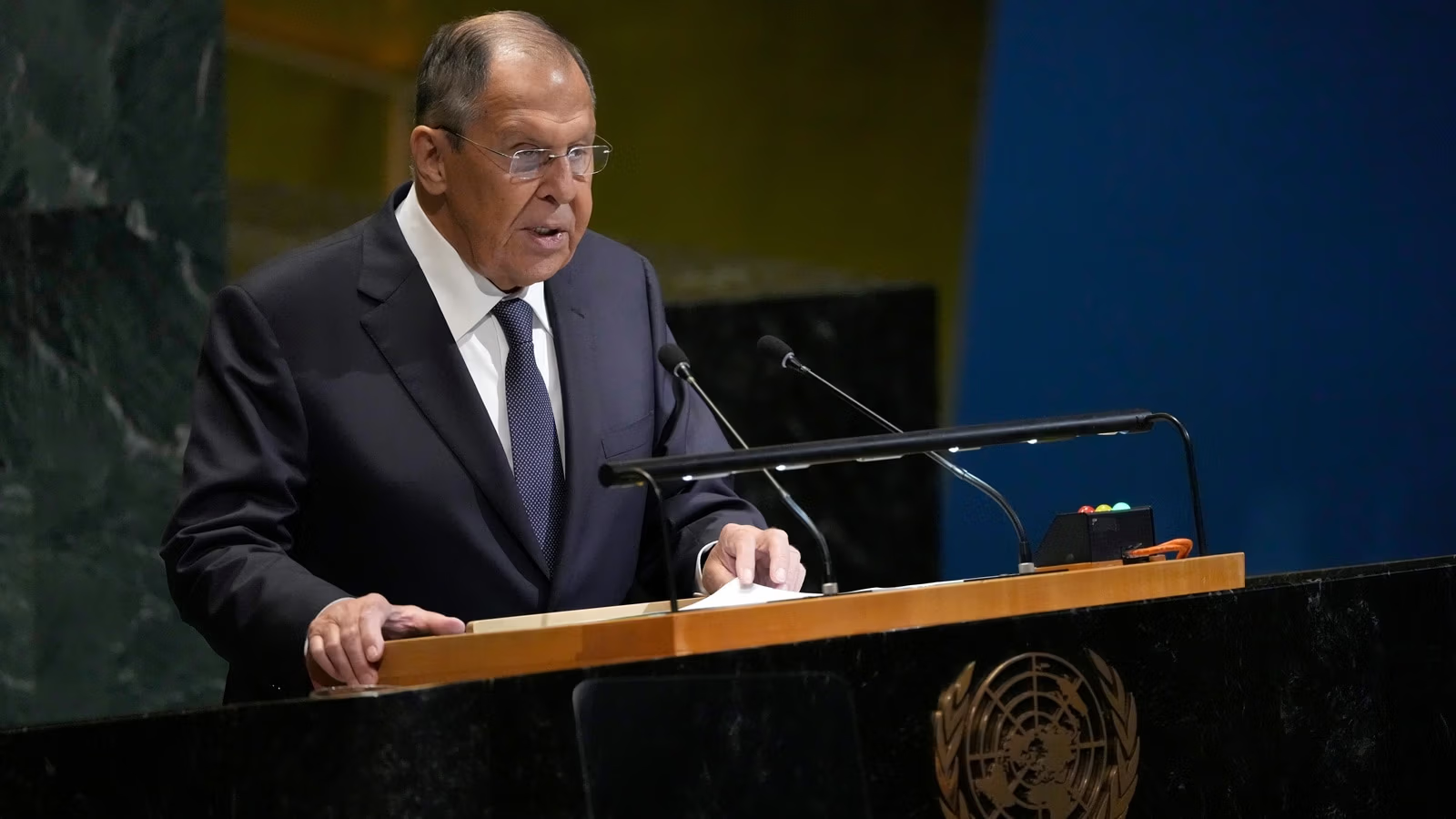
In the venerable, often echoing halls of the United Nations, a critical arena where diplomatic rhetoric shapes global perception and words can be as potent as any weapon, Russia has recently executed a sophisticated and revealing strategic play. During a pivotal Security Council meeting, convened at its own behest, Moscow’s chief envoy delivered a pronouncement seemingly meticulously crafted to resonate in every major capital from the ancient boulevards of Paris to the political nerve centers of Washington D.C.: Russia holds “no plans” to launch an attack against Europe or any member states of the North Atlantic Treaty Organization (NATO).
At its immediate surface, this declaration presented itself as a clear gesture of de-escalation, a seemingly genuine diplomatic olive branch extended into an atmosphere charged with soaring international tensions. In a world gripped by the ongoing Ukraine conflict and widespread anxieties about its potential spillover, such a statement could be interpreted as a genuine plea for stability. It appeared, to many observers, to be an attempt to cool overheated rhetoric and prevent further escalation, offering a moment of potential relief.

However, for those accustomed to deciphering the intricate language of geopolitics, a deeper scrutiny quickly reveals the unmistakable presence of an iron fist encased within this velvet glove of reassurance. This was far from a simple, straightforward appeal for peace. Instead, it emerged as a highly calculated maneuver within a pervasive and high-stakes psychological war, directly calibrated as a riposte to the West’s increasingly assertive and often confrontational rhetoric. This response was particularly sharpened by recent statements from French President Emmanuel Macron, who notably refused to definitively rule out the possibility of deploying Western ground troops to Ukraine – a proposition that has sent ripples of concern across European capitals and beyond.
The Envoy’s Unmistakable Red Line: Beyond Mere Reassurance
Russia’s Permanent Representative to the UN, Ambassador Vasily Nebenzya, did not merely offer blanket reassurances designed to soothe anxieties. His address was meticulously structured to deliver a dual message, a stark and unmistakable ‘red line’ drawn in the sand of international discourse. The initial, seemingly benign declaration that Moscow harbors no aggressive intent towards NATO members was immediately and starkly juxtaposed with a chilling counterpoint: any “aggression” against Russia itself would be met with a “most decisive response.” This phrasing leaves little to the imagination and serves as a potent warning against any perceived encroachment.
The strategic intent behind this pronouncement is multifaceted. By coupling a pledge of non-aggression with a firm warning against perceived aggression, Russia aims to achieve several objectives within its overarching geopolitical strategy. First, it seeks to deter any further emboldened action or rhetoric from the West, particularly concerning direct military involvement in the Ukraine conflict. Second, it serves to define, from Moscow’s perspective, the boundaries of acceptable Western support for Kyiv, implicitly labeling anything beyond a certain threshold as “aggression.” This subtle yet firm diplomatic maneuver attempts to reshape the international understanding of escalation risks, emphasizing Russia’s preparedness for a robust response to any perceived existential threat.
What constitutes “aggression” in Moscow’s view is, of course, open to interpretation, but past statements and actions suggest it could encompass anything from the supply of advanced long-range weaponry, intelligence sharing that directly impacts Russian operations, to the potential deployment of even a small contingent of Western forces onto Ukrainian soil. The ambiguity inherent in “most decisive response” adds another layer of deterrence, leaving potential adversaries to ponder the full scope of Russia’s capabilities and willingness to escalate. This is a crucial element of its ongoing psychological warfare strategy against the West, aimed at influencing the strategic calculus of NATO nations and global security at large.
Two Critical Takeaways from Russia’s UN Posture
This calculated intervention at the UN Security Council meeting offers not just a glimpse but a profound insight into two fundamental dynamics shaping the current state of the global geopolitical conflict. Understanding these takeaways is paramount for any accurate analysis of the enduring Ukraine conflict and its broader implications for global security.
The Fierce Battle for Narrative Control
Firstly, it is undeniably clear that the battle for narrative control is as fiercely contested as the actual fighting on the ground in Ukraine. Russia meticulously utilizes platforms like the UN to craft and disseminate a specific version of events, consistently painting itself as the aggrieved party, the victim compelled to react to an encroaching and hostile Western alliance. This strategy involves leveling accusations that the West has become a “direct participant” in the conflict, not merely through economic sanctions or humanitarian aid, but fundamentally by supplying Kyiv with increasingly sophisticated weaponry, intelligence, and training, thereby fueling the conflict.
Moscow is acutely aware of the growing sentiment of war fatigue permeating many Western nations. It understands that populations, facing economic pressures and a prolonged conflict, are increasingly susceptible to narratives that question the sustainability and wisdom of continued aid to Ukraine. Russia skillfully attempts to leverage this fatigue, framing Western leaders not as defenders of democracy but as reckless warmongers, pushing the world perilously close to a catastrophic direct confrontation between nuclear powers. By repeatedly asserting, “We don’t want this fight, but we will defend ourselves,” Russia aims to sow deep divisions within the Western alliance and amplify the voices of those in the West who are already calling for a reduction or cessation of military and financial aid to Ukraine.
This strategic messaging is designed to achieve several interlocking goals. It seeks to erode public support for Kyiv in democratic nations, thereby weakening the political will of Western governments to maintain their robust support. It also aims to legitimize Russia’s actions on the international stage, portraying its aggression as a defensive measure against NATO expansion and Western proxy warfare. This ongoing psychological warfare forms a critical front in the overall conflict, influencing public opinion, electoral outcomes, and ultimately, policy decisions across the globe, impacting long-term global security.
Shifting Realities: The Evolving Calculus of Conflict
Secondly, the very nature of what is considered politically and militarily possible in this conflict is undergoing a profound and rapid transformation. Just a year, or even a few months ago, the mere suggestion of Western “boots on the ground” in Ukraine was largely considered a fringe, almost fantastical concept, universally dismissed by mainstream political discourse as a direct and unavoidable path to a Third World War. The idea was too provocative, too dangerous, and seemed to contravene decades of established Cold War doctrine aimed at preventing direct confrontation between major powers.
Today, the landscape has dramatically shifted. The unthinkable is now being openly debated and even seriously considered by the leader of a major nuclear-armed NATO power – French President Emmanuel Macron. This dramatic shift in discourse reflects an evolving calculus within Western capitals, driven by the protracted nature of the Ukraine conflict, the strategic imperative to prevent a Russian victory, and a growing frustration with the limitations of current support models. Russia’s recent statement at the UN, therefore, is a direct and forceful consequence of this evolving calculus.
Moscow views this open discussion of direct intervention with immense alarm and is attempting to slam the door decisively on that possibility. It is a clear and urgent attempt to re-establish a boundary that it feels the West is beginning to dangerously erase, implicitly warning that such a move would fundamentally alter the conflict’s parameters and trigger an unprecedented response. This aspect of Russia’s diplomatic maneuver is perhaps the most critical for understanding its strategic thinking: it is directly responding to perceived escalation from the West and aiming to reset expectations regarding its own red lines and thresholds for engagement. This dynamic significantly impacts the assessment of future global security challenges.
The West’s Dismissal: An Unbridgeable Chasm of Realities
The Western response to Russia’s UN address, swiftly articulated by Britain’s Deputy UN Ambassador, James Kariuki, was to summarily dismiss the entire session as nothing more than a “distraction.” London’s framing of the meeting was unequivocal: it was portrayed as a transparent and cynical attempt by Moscow to divert global attention away from its ongoing, unprovoked aggression against Ukraine, and to overshadow the conveniently stage-managed presidential election widely anticipated to cement Vladimir Putin’s autocratic rule for another term. This immediate and stark rejection underscores the profound and seemingly unbridgeable chasm that exists between the two sides’ fundamental interpretations of reality.
On one side of this chasm, Russia steadfastly maintains a narrative of self-defense, portraying its actions in Ukraine as a necessary response to an encroaching, hostile West, particularly the expansion of NATO towards its borders. In this narrative, Russia sees itself as safeguarding its legitimate security interests and protecting Russian-speaking populations. The narrative of the West as a direct participant in the Ukraine conflict serves to legitimize Moscow’s own military operations and rally domestic support by framing the conflict as an existential struggle against external adversaries.
On the other side, the Western perspective is diametrically opposed. It views the conflict as a brutal, imperialist assault by a larger, nuclear-armed neighbor against a sovereign, independent nation. From this vantage point, Russia’s actions are a clear violation of international law and a direct threat to the rules-based international order. The idea that Russia is a victim, or that its UN session was anything other than a cynical propaganda exercise, is met with incredulity and outright rejection. This fundamental disagreement over the very nature of the conflict makes any genuine dialogue or path to de-escalation incredibly fraught and challenging.
The Western dismissal, therefore, is not merely rhetorical. It signals a continued refusal to legitimize Russia’s narrative or to give credence to its diplomatic overtures when they are perceived as disingenuous. This steadfast stance, while demonstrating unity and resolve, also highlights the immense difficulty in finding common ground for negotiation or even shared understanding. The inability to agree on basic facts – who is the aggressor, who is the victim – means that both sides continue to operate within entirely different frameworks, increasing the risk of miscalculation in this dangerous geopolitical chess match that impacts global security.
A Clarification, Not a Cooling: The Perilous Geopolitical Chess Match
Looking ahead, this pointed exchange at the UN Security Council signifies not a desired cooling of international tensions, but rather a worrying clarification of them. We appear to be entering a new, more explicit phase where both sides are openly and forcefully signaling their respective thresholds for direct conflict. The subtlety of veiled warnings is giving way to increasingly blunt pronouncements, raising the stakes and making the parameters of potential escalation clearer, yet no less terrifying.
While Russia adamantly insists it has no desire to widen the war beyond Ukraine – a statement often met with skepticism in Western capitals given its past actions – it is simultaneously making it brutally clear that it views deeper Western involvement as an existential threat that it simply will not tolerate. This “deeper involvement” is broadly defined, encompassing anything from the deployment of long-range missiles with the potential to strike deep into Russian territory, to direct military advisors on the ground, or, most critically, overt troop deployments by NATO member states. Each of these actions, from Moscow’s perspective, pushes the boundaries of a proxy war closer to a direct confrontation, thereby necessitating a “most decisive response.”
This dynamic transforms the current geopolitical landscape into an intensely complex and perilous chess match. Every public statement, every diplomatic maneuver, and every military aid package delivered to Kyiv is not just an action but a carefully weighed move, designed to elicit a specific response or to test the resolve of the opposing side. The stakes in this game are unimaginably high, impacting global security, economic stability, and the very potential for regional and even global conflict. The world watches, mesmerized and apprehensive, as these strategic moves unfold.
Consequently, this is far from a step back from the brink of wider conflict. It is, instead, a meticulous, nerve-wracking dance right along the very edge. While the world is being told that there is currently “no plan” for a wider war – a statement that offers a sliver of hope – the accompanying warnings of what specific actions could irrevocably trigger such a wider confrontation are growing louder, more explicit, and increasingly alarming than ever before. The international community is being put on notice, compelled to grapple with scenarios that were once consigned to the realm of theoretical discussion, now looming as frighteningly tangible possibilities.
The Road Ahead: Navigating Escalation and De-escalation
As the geopolitical situation continues to evolve, understanding the potential pathways for both escalation and de-escalation becomes paramount. Following Russia’s explicit warnings and the West’s firm dismissal, the immediate future is poised at a critical juncture. For NATO and its allies, the challenge lies in maintaining robust support for Ukraine while carefully calibrating responses to avoid crossing Russia’s declared “red lines,” yet without appearing to capitulate to Moscow’s demands. This delicate balancing act involves continuous strategic reassessment, intelligence sharing, and unified diplomatic messaging within the context of global security.
Conversely, Russia’s next moves will be scrutinized for any signs of testing Western resolve. Will Moscow escalate its operations within Ukraine in response to continued Western aid, or will it seek to further consolidate its territorial gains? The interplay between military actions on the ground and diplomatic rhetoric will continue to shape the contours of the conflict. The danger of miscalculation remains high, particularly as both sides operate with fundamentally different understandings of sovereignty, aggression, and legitimate security interests.
The role of other international actors and institutions is also critical. While the UN Security Council remains a crucial forum for discourse, its efficacy in resolving this particular conflict is hampered by Russia’s veto power. Other diplomatic channels, non-governmental organizations, and neutral states may play increasingly important roles in fostering communication and exploring potential off-ramps, however unlikely they seem currently. The global community’s ability to navigate this complex web of tensions will ultimately determine the future of the Ukraine conflict and broader European global security.
Ultimately, navigating this period requires a combination of robust defense postures and shrewd, patient diplomacy. Western leaders are walking a tightrope: demonstrating unwavering support for Ukraine’s sovereignty and territorial integrity, while simultaneously working to prevent a direct, catastrophic confrontation with a nuclear-armed Russia. The signals exchanged at the UN are not the end of this high-stakes dialogue, but merely another chapter in a protracted and dangerous geopolitical struggle.
Further Reading and Context
For a deeper dive into the original reporting and to gain further context on Russia’s statement and the surrounding diplomatic environment, we recommend reviewing the primary source. Understanding the nuances of such critical international events often benefits from consulting various perspectives and direct reports.
Read the original story at The Indian Express.
What are your thoughts on Russia’s strategy and the West’s response? How do you foresee the Ukraine conflict evolving given these explicit warnings and the ongoing geopolitical chess match?