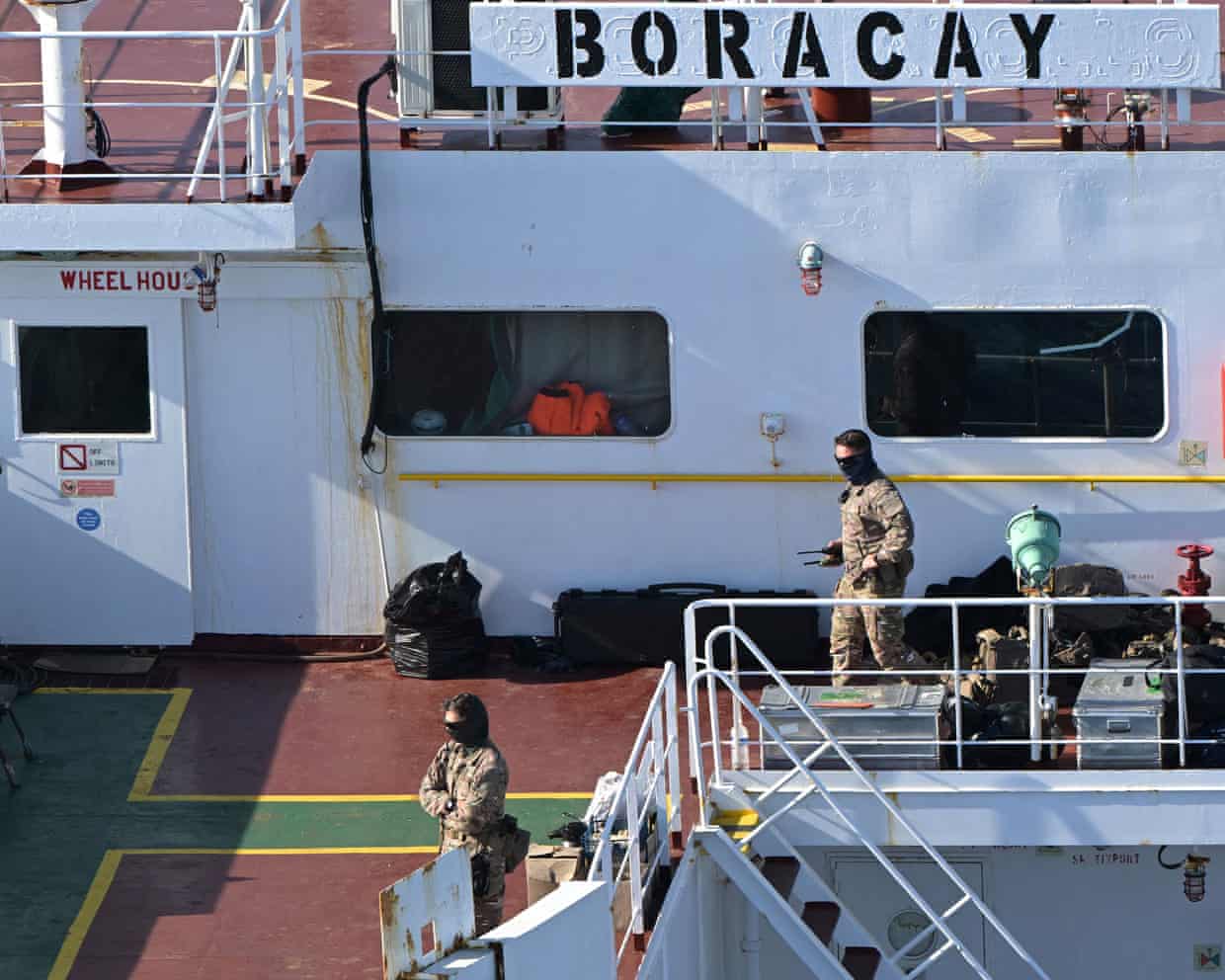
Russia’s Ghost Ships: From Sanctions-Busting to a New Front in Europe’s Drone War
For years, the story of Russia’s “shadow fleet” has been one of economic survival—a murky armada of aging tankers and anonymous cargo ships skirting sanctions to keep Moscow’s oil flowing. These ghost ships, often sailing under flags of convenience from nations like Liberia, Panama, or the Marshall Islands, and frequently disappearing from automatic identification system (AIS) tracking, were a symbol of a Kremlin adept at navigating the grey zones of international law. Their primary mission was to circumvent Western financial penalties, maintain oil revenues vital for Russia’s economy, and supply its war machine, illustrating a resilience and cunning in the face of unprecedented economic pressure. The vessels, many past their operational prime, operated with minimal oversight, creating an opaque network that confounded regulators and insurers alike.
But now, according to a stark warning from Ukrainian President Volodymyr Zelenskyy, the purpose of this fleet has undergone a sinister and profoundly dangerous evolution. They are no longer just tools of commerce, however illicit; they are becoming instruments of war. In a statement that redraws the map of the conflict, Zelenskyy alleges that Russia is now using these civilian vessels as mobile, clandestine launchpads for drones. These are not the long-range missiles fired from established military bases or naval destroyers, but smaller, harder-to-trace unmanned aerial vehicles (UAVs) designed for harassment, surveillance, and disruption—targeting European infrastructure, jamming GPS signals, and testing NATO’s coastal defenses.

This accusation, if proven, represents a profound and dangerous escalation of Russia’s hybrid warfare doctrine. It transforms what was primarily a logistical and financial problem for the West into a direct and immediate security threat. By weaponizing ostensibly civilian maritime traffic, Russia is deliberately blurring the lines between commercial activity and military aggression in a way that is specifically designed to paralyze a conventional response. The implications are vast, extending far beyond the immediate battlefields of Ukraine and casting a long shadow over the stability and security of Europe’s vital maritime routes.
Key Takeaways from This Alarming Development
The Frontline Is Now at Sea
The conflict is no longer contained within Ukraine’s borders; it is effectively being projected across the vast expanse of European waters. By weaponizing its shadow fleet, Russia is creating a low-level, deniable military presence that spans the Baltic, North, and Mediterranean Seas. This mobile and ever-shifting frontline exists just off Europe’s shores, forcing nations to be on high alert not just on their eastern flank, but along their entire coastlines and throughout their exclusive economic zones. The implications are staggering: every civilian vessel, particularly those with a suspicious operational profile, could potentially harbor a threat. This expansion of the battlefield demands constant vigilance, stretching naval and aerial surveillance resources thin across thousands of miles of vital shipping lanes.
The targets of these alleged drone attacks could include critical European infrastructure, such as offshore wind farms, subsea communication cables, gas pipelines, and major ports. Such attacks, even if minor, could cause significant economic disruption, sow panic, and create a climate of fear. Imagine a drone swarm launched from a seemingly innocuous tanker disrupting operations at a major port or targeting a vital energy terminal. The psychological impact alone would be immense, testing the resilience and response capabilities of European nations. This strategy represents a significant shift from traditional naval warfare, where military vessels engage military targets; instead, it weaponizes the global commons, turning civilian assets into potential instruments of stealth aggression.
A Strategic Nightmare for NATO
Zelenskyy’s claim presents NATO with a wicked, multi-faceted problem that strikes at the heart of international maritime law and collective defense. How does a naval alliance respond to a hostile act perpetrated from a civilian-flagged vessel in international waters? Intercepting and boarding a commercial ship without irrefutable proof of its hostile intent is a highly escalatory act, fraught with legal, diplomatic, and economic peril. Such an action could be construed as an act of piracy or aggression itself, undermining the very international order NATO seeks to uphold. It could trigger a complex web of legal challenges, diplomatic condemnations, and even retaliatory measures from Russia, which would undoubtedly seize on any perceived overreach to bolster its narrative of Western aggression.
Yet, to do nothing is to permit Russia to conduct hostile operations with impunity, effectively conceding the maritime grey zone to Moscow. This inaction would embolden Russia, inviting further and potentially more audacious attacks, while simultaneously eroding NATO’s credibility and its ability to protect its members. Russia is keenly exploiting the West’s commitment to the rule of law and established international norms, betting that its adversaries will be too cautious, too constrained by legal frameworks, and too risk-averse to act decisively against a vessel that, on paper, is just a simple tanker transporting oil or other goods. This strategic dilemma highlights a critical vulnerability in the West’s defense posture, demanding innovative legal and operational frameworks to address this new form of aggression without triggering a wider conflict.
The Evolution of Plausible Deniability
This alleged strategy is a masterclass in 21st-century hybrid conflict, pushing the boundaries of plausible deniability to unprecedented levels. The operational model is ingeniously simple yet incredibly effective: a drone is launched from a nondescript ship, which then quickly melts back into busy shipping lanes, its AIS transponder potentially switched off or spoofed, its identity obscured by a labyrinthine ownership structure. If the drone is downed or recovered, tracing it back to its specific launch point, let alone proving direct state sponsorship, becomes incredibly difficult, often impossible.
Russia can deny everything, blaming “rogue actors,” “Ukrainian provocations,” “technical malfunctions,” or simply dismissing the accusations as Western propaganda. This allows Moscow to achieve strategic objectives—harassment, intelligence gathering, infrastructure probing—without ever crossing a clear red line for war that would necessitate a conventional military response from NATO. It’s a strategy of a thousand cuts, designed to sow discord, create anxiety, test response times, and drain the resources of adversary nations. Each incident, though perhaps minor on its own, contributes to a cumulative effect of instability, uncertainty, and a constant, low-grade threat perception. This constant psychological pressure, combined with the difficulty of assigning definitive blame, makes it profoundly challenging for Western nations to formulate a coherent and proportionate response, thereby weakening their resolve and creating internal divisions.
What This Means for the Future
This development signals that the containment of Russia has entered a challenging new phase, one where the traditional boundaries of conflict are deliberately and dangerously blurred. The very tool created to evade economic sanctions—the shadow fleet—has now been repurposed for military ends, highlighting a significant intelligence and policy failure on the part of Western nations. The sheer scale of the shadow fleet, estimated to number hundreds of vessels, makes comprehensive surveillance an immense undertaking. Monitoring these ships, tracking their movements, and anticipating their potential hostile actions requires an unprecedented level of international cooperation, technological investment in satellite imagery, AI analytics, and human intelligence.
Going forward, the West will be forced to confront uncomfortable and urgent questions that could redefine international maritime law and security protocols. Will maritime rules of engagement need to be rewritten to address the ambiguity of civilian vessels acting as military platforms? What legal precedents will be set if a NATO warship intercepts a civilian-flagged vessel suspected of drone launches? Will the principle of “innocent passage” need to be re-evaluated in contested zones? Furthermore, surveillance of these “ghost ships” will have to be massively increased, treating them not just as sanctions-busters but as potential, active threats to national security. This shift in perception and policy will require significant investment in intelligence gathering, naval assets, and cybersecurity defenses across Europe.
The risk of miscalculation is now dangerously high. A tense encounter between a NATO warship and a Russian-operated tanker, possibly involving warning shots, a boarding attempt, or even accidental damage, could easily spiral out of control, triggering an unintended escalation. Such an incident could quickly draw in multiple nations, transforming a grey-zone conflict into a direct confrontation with potentially catastrophic consequences. The weaponization of civilian shipping also threatens the very fabric of global trade, raising insurance premiums, increasing shipping costs, and creating dangerous choke points in vital maritime arteries. This erosion of trust in the safety of international waters could have far-reaching economic impacts.
Zelenskyy’s warning is therefore more than just another battlefield update; it is a profound declaration that the shadows of this war are lengthening, stretching far beyond the trenches of Ukraine and into the vital arteries of global trade and communication. The open seas, once a symbol of freedom and interconnectedness, are fast becoming the new grey zone in Europe’s long and perilous confrontation with Moscow. The international community must now grapple with how to respond to an adversary willing to weaponize every available tool, even those traditionally considered civilian, to achieve its geopolitical aims without triggering a full-scale war.
Read the original story at The Guardian.
What are your thoughts on how international law and maritime security protocols should adapt to counter this new form of hybrid warfare, particularly when civilian vessels are implicated?