Unmasking Russia’s Escalating Shadow War in Europe
For years, the warnings from a chorus of intelligence agencies across the Western world have been clear and increasingly urgent: Russia’s aggression against its perceived adversaries would not be confined solely to the digital battlefields of cyberspace or the insidious influence of disinformation campaigns. These predictions, once seen by some as hypothetical, have now materialized into a stark and unsettling reality. A startling new report, drawing on extensive intelligence, now suggests that this new, more perilous phase of conflict is not only here, but has been quietly yet relentlessly escalating in our midst, dramatically shifting its focus from the abstract digital realm into the tangible, physical world with potentially devastating and widespread effects across the European continent.
This report serves as a chilling validation of those earlier warnings, confirming that Europe is no longer merely contending with abstract threats, but with concrete acts of physical aggression. The transition from cyberattacks on governmental networks and social media-based influence operations to actual infrastructure damage and industrial sabotage marks a significant and dangerous escalation in Russia’s ongoing hybrid warfare strategy. This evolution demands a fundamental re-evaluation of national security paradigms and an immediate, coordinated response from European leaders and security apparatuses.

The Anatomy of a Low-Level Assault: 110 Acts of Sabotage
At the heart of this alarming revelation is a comprehensive and meticulously detailed report, brought to light by Balkan Insight, which has painstakingly connected a staggering 110 acts of sabotage across the European continent directly to Russian intelligence services. These are not merely isolated incidents, nor do they fit the romanticized, almost quaint image of clandestine operations from Cold War spy novels, characterized by shadowy figures exchanging microfilms in dark alleys. Instead, what this report unveils is a gritty, ruthless, and unmistakably 21st-century campaign of disruption. This campaign encompasses a wide array of physical attacks, including but not limited to, targeted arson, deliberate infrastructure damage, and sophisticated logistical disruptions. The overarching objective, crystal clear to analysts, is to systematically weaken European resolve and support for Ukraine, simultaneously aiming to sow widespread chaos and deep-seated division from within the very fabric of European societies.
The methodology employed in uncovering these links is crucial. Intelligence agencies, through painstaking forensic analysis, surveillance, and human intelligence, have been able to trace a common thread through seemingly disparate events. This involves identifying recurring patterns of operation, tracing financing flows, monitoring communication intercepts, and even tracking known Russian intelligence operatives and their proxies who have been active in the vicinity of these incidents. The sheer volume of incidents – 110 identified attacks – underscores the systematic and pervasive nature of this campaign, pointing not to random criminal acts, but to a coordinated, strategic directive emanating from Moscow. This isn’t just about causing damage; it’s about sending a message, creating an atmosphere of insecurity, and raising the domestic cost of continued support for Kyiv.
A Chilling Mosaic of Disruption: Targets and Tactics
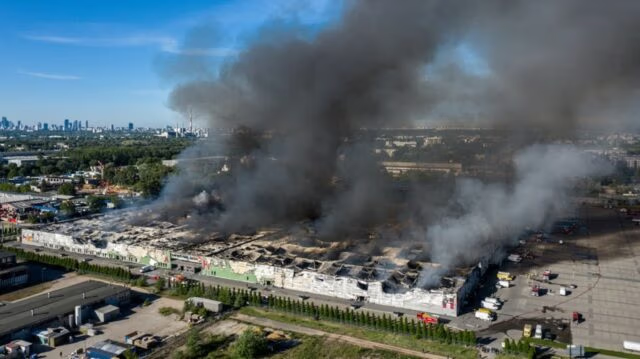
The findings of the Balkan Insight report paint a truly chilling mosaic of a continent under a sustained, low-level assault, where the targets are often seemingly mundane yet strategically vital components of civilian life and military support. From mysterious fires erupting at factories in Germany and Poland – facilities specifically known for producing crucial military aid and components destined for Ukraine – to the deliberate and precise cutting of vital railway signaling cables in the strategically important Baltic states, the individual incidents, when viewed in isolation, might appear to be random accidents or even localized criminal acts. However, when these numerous incidents are meticulously pieced together and analyzed through the lens of counter-intelligence, they reveal an unmistakable and deeply troubling pattern: the signature of a coordinated, widespread “shadow war” being waged by the Kremlin against European stability and security.
Consider the implications of these targeted attacks. Fires at factories producing military aid directly impede the flow of essential supplies to Ukraine, directly impacting its ability to defend itself. This tactic aims to create bottlenecks in the supply chain, increase production costs, and potentially discourage further investment in military manufacturing by raising the perceived risk. The cutting of railway signaling cables, particularly in the Baltics, a region critical for NATO’s eastern flank defense and logistical movements, represents a highly calculated act. Such disruption can severely hamper both civilian transportation and, more importantly, military mobility, creating delays for troop deployments, equipment transfers, and emergency responses. These acts are not about spectacular explosions; they are about grinding down logistical efficiency, inducing economic losses, and fostering a pervasive sense of vulnerability. This approach leverages plausible deniability, making it exceedingly difficult to attribute responsibility definitively in real-time, thereby complicating any unified, robust response.
Moreover, the choice of targets extends beyond direct military support industries. It includes critical infrastructure vital for economic stability and social cohesion. Disrupting energy networks, communication lines, or transportation hubs creates cascading effects, affecting ordinary citizens, businesses, and government functions. This strategy is designed to create a cumulative psychological toll, generating public frustration and eroding trust in governmental ability to protect its citizens and maintain order. The goal is to make the population weary of the conflict, implicitly blaming their governments for the ensuing domestic disruptions and costs, rather than the true instigator.
Evolution of the Kremlin’s Strategy: From Territory to Erosion of Resolve
What this comprehensive report unequivocally signifies is a crucial and profound evolution in the Kremlin’s strategic calculus regarding its engagement with the West. This isn’t primarily about the annexation of territory through conventional military force, as seen in Ukraine. Rather, it represents a sophisticated and insidious campaign fundamentally aimed at eroding the collective resolve of European nations. It is a calculated strategy of a “thousand cuts,” meticulously designed to create a constant, unnerving friction on the home front, destabilizing societies from within and rendering continued support for Kyiv politically and economically untenable for European governments.
This low-cost, high-impact strategy hinges on several key components. Firstly, it leverages deniability by frequently employing proxies, including organized criminal gangs and ideologically motivated extremist groups, to carry out the attacks. This intentional blurring of lines makes direct attribution immensely challenging for Western intelligence agencies and complicates any unified retaliatory response. Secondly, by specifically targeting critical supply chains, industrial sites, and transportation networks, Moscow aims to inflict significant economic damage and create tangible domestic inconvenience. The objective is to make the ongoing support for Ukraine feel prohibitively costly, both in financial terms and in terms of domestic stability and security, thus pressuring governments to scale back their commitments or even cease their aid altogether. The psychological aspect is equally vital: by fostering an environment of fear, uncertainty, and constant low-level disruption, the Kremlin seeks to sow discord, amplify existing societal grievances, and undermine public confidence in democratic institutions.
This strategic shift represents a clear understanding by the Kremlin of Western democracies’ vulnerabilities. Unlike authoritarian regimes, democracies are sensitive to public opinion, economic pressures, and the perceived safety and well-being of their citizens. By exploiting these sensitivities through hybrid tactics, Russia avoids direct military confrontation, which would invite a swift and overwhelming NATO response, while still achieving significant strategic objectives. It is a long game, designed to incrementally weaken Western unity, drain resources, and ultimately force a reconsideration of policies deemed hostile to Russian interests without ever crossing the threshold of conventional warfare.
Europe’s Urgent Alarm Bell: Rethinking National Security
This report, therefore, is far less a historical accounting of past events and much more of an urgent and reverberating alarm bell for the entire European continent. The implications are profound and demand immediate, structural changes in how national security is conceptualized and implemented. European security services, traditionally focused on classic counter-espionage – identifying and neutralizing foreign spies gathering classified information – must now fundamentally shift their operational focus towards a broader, more robust counter-sabotage footing. This paradigm shift means treating seemingly random industrial accidents, infrastructure failures, or unexplained fires with an entirely new, elevated level of suspicion and scrutiny, recognizing them as potential components of a wider, coordinated adversarial campaign rather than isolated unfortunate occurrences.
The very definition of national security is rapidly expanding beyond traditional military defense and intelligence gathering. It now encompasses the resilience and protection of critical civilian infrastructure, industrial capacity, and economic stability. In this new era of grey-zone warfare, the safety and operational integrity of a warehouse in Warsaw, a railway switchyard in Estonia, or a chemical plant in Germany are as much a part of the frontline defense against foreign aggression as a fortified trench in the Donbas. Protecting these domestic assets is no longer merely an economic or law enforcement matter; it is a vital component of national defense. This requires enhanced intelligence sharing among EU and NATO members, the development of specialized forensic capabilities to detect and attribute sabotage, and public awareness campaigns to foster vigilance without inducing panic. Furthermore, it necessitates closer collaboration between intelligence agencies, law enforcement, and private sector entities responsible for critical infrastructure, creating a robust, multi-layered defense against these pervasive threats.
Navigating the Grey Zone: The Challenge of Retaliation
This new battlefield of shadows, characterized by its ambiguity and plausible deniability, forces profoundly uncomfortable and complex questions upon European leaders. The most pressing among them is perhaps the fundamental dilemma of retaliation: how do you effectively respond or deter an adversary who consistently strikes through proxies, operates in the grey zone between peace and war, and meticulously cultivates plausible deniability? Traditional responses, honed over decades of Cold War diplomacy and military doctrine, often feel inadequate or inappropriate in this novel context.
A conventional military response, for instance, is almost entirely off the table. The very nature of these attacks – deniable, often non-lethal, and lacking clear state insignia – means that a direct military counter-strike would be seen as a disproportionate escalation, lacking clear justification under international law, and carrying immense risks of broadening the conflict beyond manageable parameters. Conversely, a purely diplomatic response, while necessary, often feels woefully insufficient when faced with concrete acts of physical destruction and disruption. While sanctions, condemnations, and expulsions of diplomats have their place, they do not directly address the immediate physical threat to infrastructure and the psychological impact on populations. This “grey-zone warfare” is deliberately designed to paralyze decision-making, exploit the inherent seams and divisions within Western alliances, and push the boundaries of acceptable aggression without triggering a full-scale military confrontation. It seeks to exhaust opponents through attrition and indecision, leveraging democratic societies’ aversion to escalation and their need for clear attribution before acting decisively.
Developing effective countermeasures requires innovative thinking beyond traditional statecraft. It calls for enhanced counter-intelligence capabilities, superior cyber defense, resilient infrastructure, rapid response mechanisms, and perhaps most importantly, a unified political will to call out and confront Russia’s tactics, even when attribution is not 100% conclusive to the public eye. This might include coordinated legal actions against proxies, public exposure campaigns, and targeted defensive measures designed to harden European infrastructure against future attacks. The challenge is to craft a response that is firm and deterrent without falling into the trap of escalation that Moscow clearly desires.
The Frontline is Everywhere: Preparing for What’s to Come
The Kremlin’s message, distilled from these numerous acts of sabotage and detailed in the Balkan Insight report, is disturbingly clear and unambiguous: the conflict is not, and will not be, contained solely to the battlefields of Ukraine. It is being actively fought in our ports, along our vital railways, within our industrial factories, and across the digital networks that underpin our modern societies. This report doesn’t merely document a series of past events; it provides an ominous blueprint for what is almost certainly to come, outlining the persistent and evolving nature of Russia’s aggressive posture towards Europe.
The challenge now facing Europe is formidable and multifaceted. It requires a radical recalibration of defense strategies, a significant investment in resilience, and an unprecedented level of cooperation among member states. More profoundly, it demands a concerted effort to educate and inform European citizens about the true nature of this “shadow war”—a war that many of its citizens don’t even know is being waged in their midst. Until there is widespread public awareness and understanding of these threats, the adversary will continue to exploit the perceived complacency and the difficulty of unified action. Europe must prepare not just for potential military threats on its borders, but for a continuous, insidious campaign designed to destabilize, divide, and weaken its societies from within. The question is no longer if these attacks will happen, but how effectively Europe can fight back and build resilience in a war that deliberately seeks to remain unseen and unacknowledged.
What steps do you believe European governments should prioritize to effectively combat Russia’s escalating shadow war and ensure the safety of critical infrastructure?