The Shadow War Goes Orbital: Russia’s Prying Eyes in Space Put Germany on High Alert
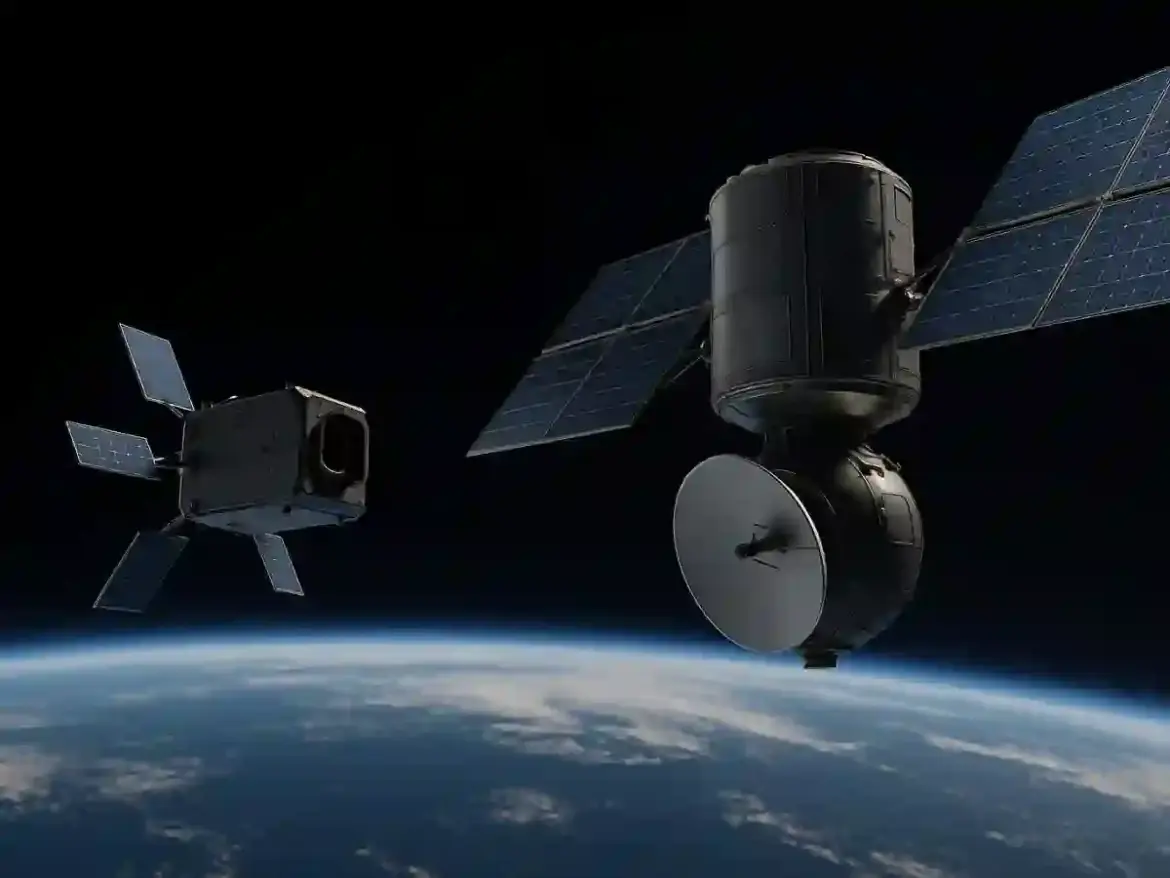
The cold, silent vacuum of space has just become the latest, and perhaps most unnerving, front in the simmering standoff between Russia and the West. In a stark announcement that peels back the curtain on this high-stakes orbital game, German Defense Minister Boris Pistorius has confirmed that Russian satellites are actively maneuvering in geostationary orbit to monitor the communications of the German military, the Bundeswehr. This alarming development signals a profound shift in geopolitical competition, extending the “gray zone” of conflict into the celestial expanse above us.
Speaking from Finland, Pistorius didn’t mince words. This isn’t a case of passive, long-distance listening; it’s a deliberate and aggressive act. He described a “very remarkable” situation where Russian satellites are purposefully approaching German assets. This is the celestial equivalent of someone not just watching your house from across the street, but walking up and pressing their ear against your window, probing for vulnerabilities and gathering sensitive intelligence. Such targeted orbital surveillance represents a direct challenge to the security of Germany and, by extension, NATO, raising critical questions about the future of space security and international conduct in this vital domain.

This revelation is more than just a spy-versus-spy anecdote; it’s a critical signal of how the nature of modern conflict is evolving. As nations increasingly rely on space-based infrastructure for everything from military communications to daily civilian life, the implications of such aggressive maneuvers by Russian satellites are far-reaching and necessitate an urgent re-evaluation of Western defense strategies. The silent ballet of espionage in geostationary orbit underscores the growing importance of space as a contested cosmos, demanding robust responses and clear red lines from the international community.
Key Takeaway 1: The “Gray Zone” is Now 36,000 Kilometers High
For years, analysts have talked about Russia’s mastery of “hybrid warfare”—a murky blend of cyberattacks, disinformation campaigns, economic coercion, and deniable military action designed to destabilize adversaries without crossing the threshold of conventional armed conflict. Minister Pistorius explicitly framed this orbital surveillance as an integral part of that same strategy, effectively extending the “gray zone” of conflict into the furthest reaches of Earth’s immediate orbital environment. The space domain, once the exclusive province of scientists and explorers, is now an active and volatile theater for geopolitical competition, where strategic advantage is sought through silent, calculated maneuvers rather than overt aggression.
By repositioning its satellites so close to a NATO member’s critical infrastructure, Moscow is sending a clear and unambiguous message: no domain is off-limits, and we possess the capability and intent to touch what you hold dear without ever firing a shot. This escalation of the “gray zone” conflict to geostationary orbit—a domain crucial for global communications, navigation, and intelligence—magnifies the stakes significantly. At an altitude of 36,000 kilometers, the potential for catastrophic miscalculation, accidental collision, or deliberate disruption carries exponentially higher risks, not only for military operations but also for the civilian infrastructure that underpins modern society. The intentional proximity of these Russian satellites transforms passive observation into an active form of strategic harassment and reconnaissance, pushing the boundaries of what constitutes peacetime intelligence gathering and edging closer to what could be considered an act of aggression in the contested cosmos.
The move also serves to test the resolve and reaction time of Western powers. How will NATO respond to an ambiguous but undeniably hostile act in space? The lack of established international norms and a clear “rulebook” for orbital conduct means that each such incident sets a precedent, incrementally eroding the peaceful uses of space and solidifying its status as a critical warfighting domain. This constant pressure, delivered through advanced space capabilities, aims to sow uncertainty, force defensive expenditure, and gain an intelligence edge, all while maintaining a veneer of deniability characteristic of hybrid warfare. It forces Germany and its allies to confront their vulnerabilities in space, compelling them to invest heavily in resilience and deterrence in this rapidly evolving front.
Key Takeaway 2: This is About Capability and Intent
The act of repositioning a satellite in geostationary orbit is far from a trivial undertaking; it is a complex, costly, and deliberate maneuver that requires significant technical prowess and strategic planning. Geostationary orbit, located approximately 35,786 kilometers (22,236 miles) above Earth’s equator, is a highly coveted orbital slot where satellites appear to hover over a fixed point on the ground, making them ideal for continuous communication and surveillance. The fuel and precision required to adjust a satellite’s position in this orbit are substantial, underscoring not only Russia’s sophisticated technical capabilities but, more importantly, its strategic intent.
This isn’t a passive dragnet of data collection where satellites merely sweep broadly for signals. Instead, the deliberate approach of Russian satellites towards German assets indicates targeted, aggressive intelligence-gathering aimed specifically at the military nerve center of one of Europe’s most powerful nations. Such close-quarters orbital surveillance allows for highly specific signal intelligence (SIGINT) collection, potentially intercepting sensitive Bundeswehr communications, understanding operational patterns, and identifying critical vulnerabilities. The data collected could provide invaluable insights into German and, by extension, NATO military planning, deployment strategies, technological capabilities, and communication protocols, offering a significant strategic advantage in any future conflict scenario.
Beyond intelligence acquisition, these maneuvers serve a potent dual purpose: they gather invaluable intelligence on German and NATO military communications while simultaneously acting as a powerful form of intimidation. Moscow is reminding Berlin, and by extension the entire alliance, of its pervasive reach and its ability to compromise what they hold dear, even in the supposedly secure domain of space. This overt display of orbital surveillance capabilities acts as a psychological weapon, designed to highlight the Bundeswehr’s vulnerabilities and foster a sense of insecurity. It’s a clear message that Russia not only possesses advanced space assets but is also willing to employ them assertively to project power and exert pressure on Western security architecture, solidifying the notion that space is rapidly becoming a key battleground for strategic supremacy.
What This Means for the Future: A Contested Cosmos
This incident is a sobering validation of Germany’s new national security strategy, which for the first time explicitly identifies space as a critical domain vital to national security and defense. Minister Pistorius’s unequivocal warning that “we can’t be naive” signals a fundamental shift in Berlin’s security posture, a pragmatic recognition that the era of a post-Cold War “peace dividend” has definitively expired. The leisurely approach to space affairs, once a luxury, has been replaced by an urgent imperative to secure and defend orbital assets against increasingly sophisticated and aggressive threats. This understanding is now driving significant investments and policy re-evaluations across Germany and its NATO allies, who all share a deep reliance on space-based systems.
Looking ahead, this development forces several critical and interconnected questions for Germany and its NATO allies, demanding immediate and innovative solutions to secure their interests in a rapidly weaponized domain. The implications extend beyond military capabilities, touching upon international law, diplomatic norms, and the very stability of global security.
1. How do you deter aggression in space?
This is arguably the most complex question posed by Russia’s orbital maneuvers. When a cyberattack can be traced, potentially sanctioned, and an overt border incursion can be met with conventional military force, what is the appropriate, proportionate, and effective response to a satellite that gets a little too close for comfort in the vacuum of space? The traditional concepts of deterrence, built around terrestrial military might, do not directly translate to the unique environment of orbit. The “rulebook” for orbital conduct and the precise definitions of aggression, harassment, or attack in space have yet to be universally written or agreed upon. This legal and diplomatic void creates dangerous ambiguity, increasing the risk of misinterpretation or unintended escalation.
The urgent need for clear doctrines, international red lines, and agreed-upon norms of behavior in space has never been more apparent. NATO and its allies must develop a comprehensive framework that includes diplomatic pressure, economic sanctions, and potentially even reciprocal orbital maneuvers or the deployment of counter-space capabilities as part of a credible deterrence strategy. Without such a framework, aggressive actions like this Russian orbital surveillance could become normalized, gradually eroding the peaceful and stable use of outer space for all nations. Establishing these norms requires multilateral dialogue, but also a credible threat of consequence for those who choose to violate them.
2. Is Western space infrastructure resilient enough?
Modern militaries are utterly dependent on satellites for an extensive range of critical functions: secure communications, precise navigation (GPS), intelligence gathering, early warning systems, and even weather forecasting. This close-quarters monitoring by Russian satellites is not merely a reconnaissance mission; it is also a probe, assessing the vulnerabilities of Western space assets and their ground infrastructure. It’s just one subtle step away from potential disruption, jamming, spoofing, or even outright kinetic or non-kinetic attack. A successful attack on these vital assets could cripple military operations, disrupt economies, and severely impact civilian life.
This incident accelerates the urgent race to develop more resilient, diversified, and defensive space capabilities. This includes deploying constellations of smaller, more numerous satellites that are harder to target, developing advanced encryption for communications, and building robust ground segments resistant to cyber and electronic warfare attacks. Furthermore, there is a growing imperative to explore and invest in active defense capabilities in space, which could involve technologies to detect, track, and potentially neutralize hostile objects, or even deploy offensive counter-space capabilities as a deterrent. The ability to “fight through” a degraded space environment or swiftly replace compromised assets is becoming a cornerstone of modern military planning, shifting from a passive reliance on space to an active defense of the contested cosmos.
3. Will space become the next flashpoint?
As nations increasingly view space as a warfighting domain—a critical battleground where future conflicts might be won or lost—the risk of an incident in orbit sparking a conflict on Earth grows significantly. The silent, orbital ballet reported by Minister Pistorius is a stark reminder that the next major global conflict might not begin with a bang on the ground or a cyberattack on critical infrastructure, but with a silent, calculated move in the heavens. The challenges of attribution in space—determining precisely who is responsible for an incident—further complicate matters, making rapid de-escalation difficult and increasing the potential for miscalculation.
An accidental collision due to aggressive maneuvering, an intentional jamming event, or even the deployment of a destructive anti-satellite weapon (ASAT) could have cascading effects, creating vast fields of space debris that endanger all orbital assets and potentially triggering a conventional response on Earth. The weaponization of space, whether through direct kinetic means or more subtle electronic warfare and cyber attacks against satellite systems, represents a profound escalation of global tensions. Maintaining stability in this new frontier requires not only robust defensive capabilities but also a concerted international effort to establish guardrails and prevent the heavens from becoming an unregulated arena for confrontation, lest the silence of space be shattered by the irreversible consequences of terrestrial conflict.
Ultimately, this is more than a technical report on satellite positioning. It is a profound political warning shot, illuminating the quiet but relentless pressure Russia is applying to Western security architecture. The shadow war is no longer confined to the digital ether or covert operatives; it is being waged in the cold, dark expanse above our heads, irrevocably changing the landscape of global security and demanding an urgent, coordinated response from the international community.
Read the original story at Event Coverage.
Given the escalating shadow war in orbit, what specific diplomatic and defensive measures do you believe Germany and its NATO allies should prioritize to secure their space assets and deter further aggression?